
We restated Robert Nozick’s mental model of imaginary worlds in our previous post. Next, in the second subsection of Chapter 10 of ASU (pp. 307-309), Nozick hits the pause button to compare and contrast his model of possible worlds with the actual world. Here, Nozick explores the line between fantasy and the feasible, giving several reasons why we won’t be able to realize his model of possible worlds in the actual world. Among these are conflict, friction, and closed borders.
- Conflict and war. What happens when the worlds come into conflict with each other? Or as Nozick notes (p. 307): “Unlike the model, in the actual world communities impinge upon one another, creating problems of foreign relations and self-defense and necessitating modes of adjudicating and resolving disputes between the communities.”
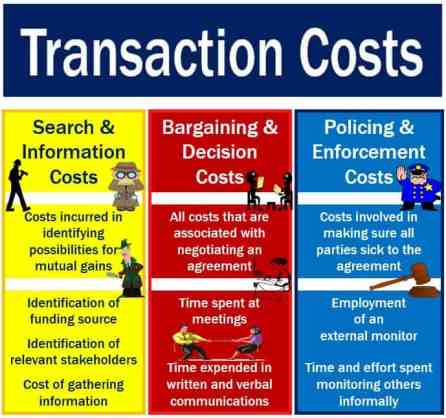
- Friction. Another obstacle are information costs (ibid.): “In the actual world, there are information costs in finding out what other communities there are, and what they are like, and moving and travel costs in going from one community to another.”
- Closed borders. Imagine living in Communist Cuba or East Berlin during the Cold War, or as Nozick puts it (pp. 307-308), “in the actual world, some communities may … try to prevent [their members] from freely leaving their own community to join another. This raises the problem of how freedom of movement is to be … enforced when there are some who will wish to restrict it.”
In short, these problems will make it difficult, if not impossible, to project his model of possible worlds onto the actual world. Nevertheless, as Nozick notes, sometimes the second best is good enough, citing R. G. Lipsey & Kelvin Lancaster’s influential paper, “The General Theory of the Second Best,” Review of Economic Studies, Vol. 24, No. 1 (Dec. 1956), pp. 11-32, available here. In other words, just because Nozick’s model of possible worlds diverges from the actual world, doesn’t mean we should give up our search for utopia. We will review Nozick’s “framework for utopia” in our next post.










 prior probability