
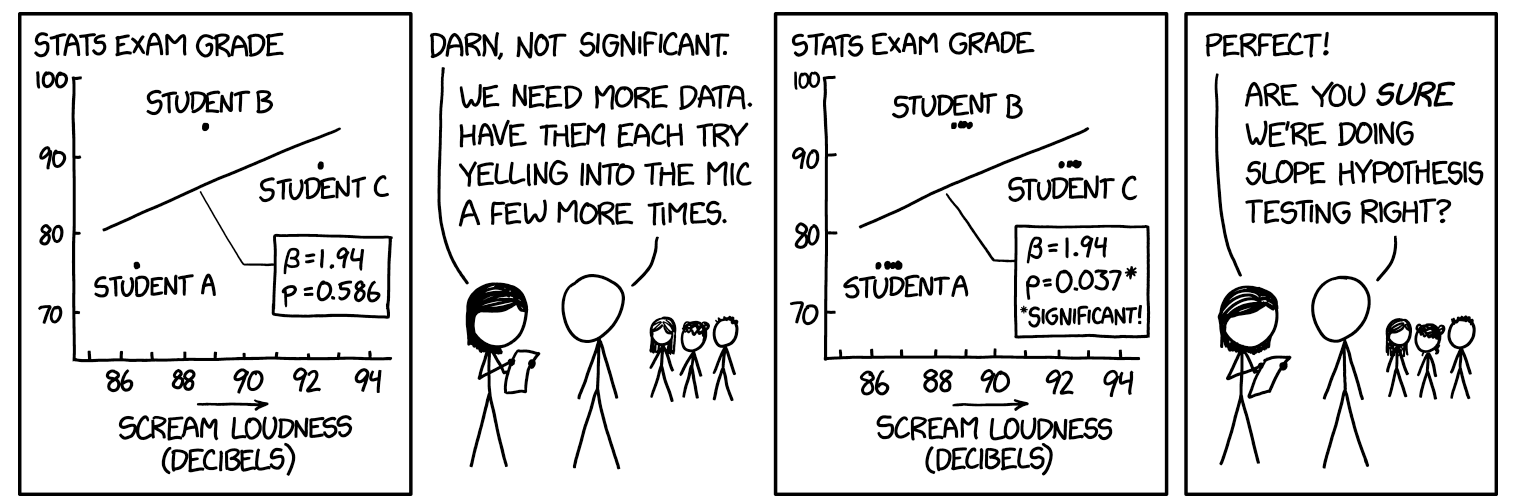
That is the title of this new paper by Ian D. Gow, a professor of accounting at the University of Melbourne, who concludes that most of the findings published in the top journals in his field are of dubious value, if not worthless. Why? Because many researchers in academic accounting engage in rampant data manipulation or p-hacking, if Gow is to be believed! As it happens, I have blogged about p-hacking, “data dredging”, and other forms of research misconduct before (see here and here, for example), but I have always assumed that no self-respecting social science researcher would allow himself to fall into those traps (see, for example, this 2022 paper by Saltiero et al.), but if Gow’s conjecture is correct — if these shoddy methods are the “dominant mode of research in academic accounting” — then it would mean that most research in academic accounting is, to quote Gow, “a largely pointless exercise” or of “limited value” at best.
By way of comparison, I recently mentioned (see here) this scathing critique by Adam Mastroianni of the “cognitive bias craze” in experimental psychology. Among other things, Mastroianni’s critique not only highlights the now-infamous 2015 study in which 60% of psychology studies failed to replicate; he further notes how resistant the field’s dominant paradigms has been to this replication failure. Now, let’s return to academic accounting. According to my reading of Professor Gow’s damning paper, accounting is in even worse scholarly shape than experimental psychology is! At least psych researchers have attempted to replicate their studies. So, what is to be done? I will consider some possible methods for taming this massive elephant in a future post.







 prior probability
Pingback: The p-hacking of the ChatGTP wolves | prior probability