
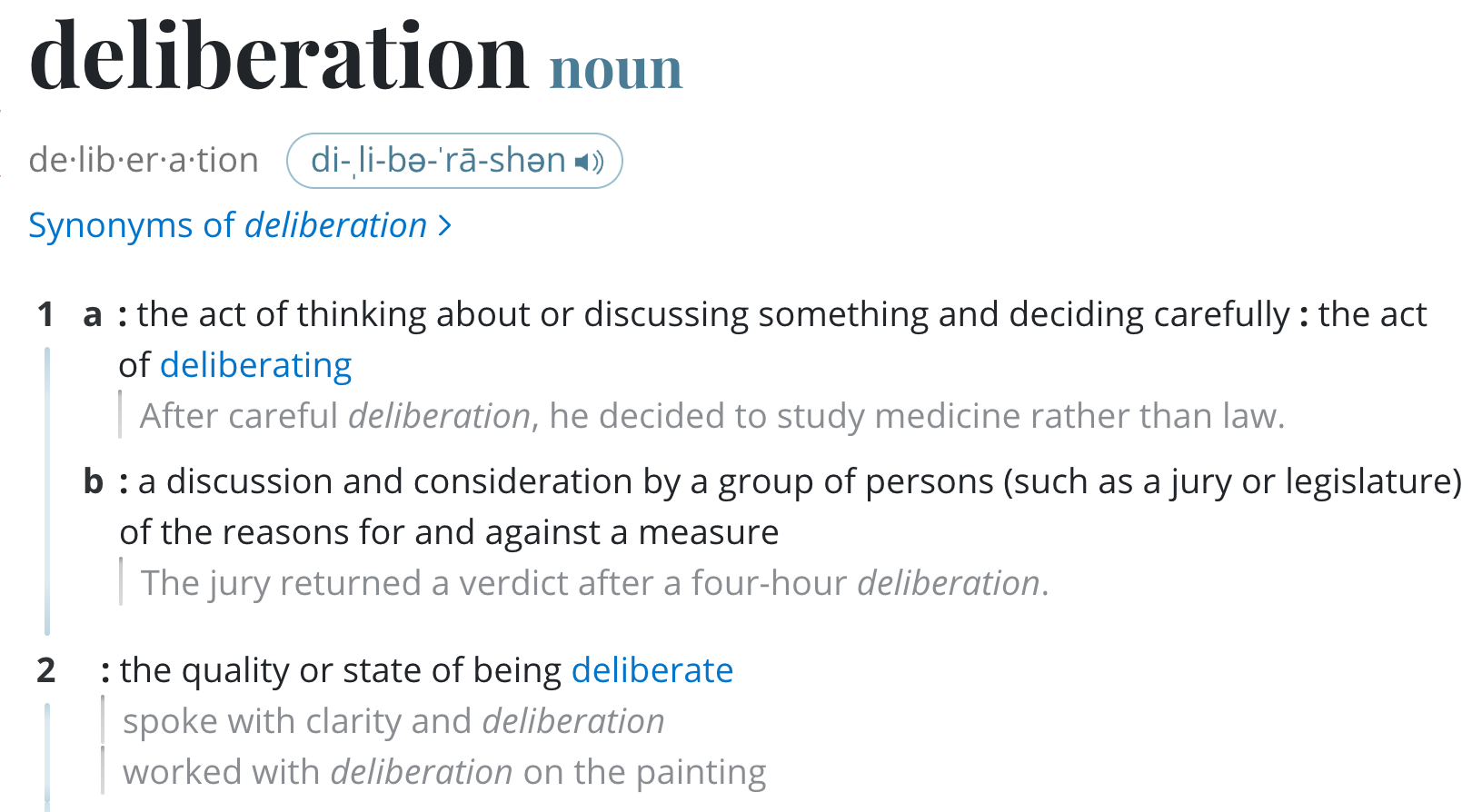
“As there are two cases in which it will generally be advantageous to lay some burden upon foreign for the encouragement of domestic industry, so there are two others in which it may sometimes be a matter of deliberation ….” (Wealth of Nations, IV.ii.37, emphasis added)
Thus far this week (see here, here, and here), we have surveyed Adam Smith’s first two exceptions to free trade. In summary, Exception #1 includes all tariffs, duties, or outright prohibitions in support of national defense, such as the British Navigation Acts, while Exception #2 consists of “targeted tariffs” (my term) on specific imports when the equivalent domestically-produced goods are subject to local excise taxes.
But as the passage quoted above indicates, the father of economics identifies two additional exceptions that may — or may not — be “advantageous” (ibid.), depending on a country’s particular circumstances. For Smith, these last two exceptions to free trade will require further “deliberation” (ibid.) to determine whether they are “advantageous”, i.e. to decide whether their overall benefits outweigh their costs. So, what are these last two Smithian special cases? One (Exception #3) is “revenge tariffs” (my term) or so-called “reciprocal tariffs” (paging President Trump!), or in the immortal words of Adam Smith himself:
“The [first] case in which it may sometimes be a matter of deliberation how far it is proper to continue the free importation of certain foreign goods is, when some foreign nation restrains by high duties or prohibitions the importation of some of our manufactures into their country. Revenge in this case naturally dictates retaliation, and that we should impose the like duties and prohibitions upon the importation of some or all of their manufactures into ours. Nations, accordingly, seldom fail to retaliate in this manner.” (Wealth of Nations, IV.ii.38)
The other exception to free trade (#4) is what I like to call the inertia argument, a pragmatic departure from the general Smithian rule that trade barriers are bad and counterproductive. For Smith, when “a great multitude of hands” (i.e. a large number of workers) are already employed in firms and industries shielded from foreign competition, protectionist tariffs that are already on the books should either remain in place or be reduced only gradually “by slow gradations” to avoid the upheaval of throwing a lot of people out of work all at the same time:
“The [second] case in which it may sometimes be a matter of deliberation, how far, or in what manner, it is proper to restore the free importation of foreign goods, after it has been for some time interrupted, is, when particular manufactures, by means of high duties or prohibitions upon all foreign goods which can come into competition with them, have been so far extended as to employ a great multitude of hands. Humanity may in this case require that the freedom of trade should be restored only by slow gradations, and with a good deal of reserve and circumspection.” (Wealth of Nations, IV.ii.40)
In addition, in the course of explaining these two additional exceptions to free trade, the Scottish philosopher-economist also makes a number of deep and fascinating observations about politics, rent-seeking, and the self-regulating nature of labor markets. Among other things, Smith draws a sharp distinction between “the science of a legislator” on the one hand and “that insidious and crafty animal, vulgarly called a statesman or politician” on the other; he denounces in no uncertain terms “the sophistry of merchants and manufacturers” as well as “the clamorous importunity of partial interests” more generally; and most importantly, he also presents a spirited defense of “natural liberty” and explains why labor markets are able to adjust to new conditions. Each of these observations deserves further study, but in the meantime, I will describe Smith’s qualified defense of reciprocal tariffs in my next post.










 prior probability
Pingback: Recap of Adam Smith’s exceptions to free trade | prior probability
Pingback: Adam Smith’s finest chapter | prior probability