
Conclusion: A Smithian Defense of Donald Trump’s Trade Madness?
I will conclude my “Smith versus Trump” series today by explaining why, when it comes to trade policy, Adam Smith and Donald Trump might be on the same page, after all. In summary, while it’s true that President Trump’s despotic “liberation day” anti-trade decree cannot be defended on either humanitarian or national security grounds (see my previous two posts), what if Trump’s trade policy were a calculated gamble or negotiating tactic to get other countries to open their markets and agree to unconditional free trade?
To begin with, according to Donald Trump and his MAGA defenders, the current global trading system is rigged against us (see here, for example), for many of our trading partners have been “ripping us off” for years, especially through disguised non-tariff barriers. (For further reference, check out this primer on “Tariff and Non-Tariff Barriers Imposed on the United States by Foreign Nations” by Paige Hauser.) Assuming for the sake of argument that this premise is true, then not only does President Trump have a point; he also has no less an authority than the great Adam Smith on his side! Let me explain.
Although Adam Smith makes a strong case for free trade — indeed, I am a lifelong free-trade libertarian because of Smith –, the Scottish philosopher-economist is also a realist. He concedes in Book IV, Ch. 2 of The Wealth of Nations that when one country imposes trade barriers on another country, revenge and retaliation are in order. Or in the immortal words of the great Adam Smith himself: “Revenge in this case naturally dictates retaliation, and that we should impose the like duties and prohibitions upon the importation of some or all of their manufactures into ours. Nations, accordingly, seldom fail to retaliate in this manner” (WN, IV.ii.38).
But at the same time, Smith also makes it clear in The Wealth of Nations that the ultimate or end goal of revenge tariffs should be to open markets: “There may be good policy in retaliations of this kind, when there is a probability that they will procure the repeal of the high duties or prohibitions complained of” (WN, IV.ii.39). Furthermore, Smith defends the temporary harms caused by revenge tariffs on instrumentalist grounds: “The recovery of a great foreign market will generally more than compensate the transitory inconveniency of paying dearer during a short time for some sorts of goods” (ibid.). Sound familiar?
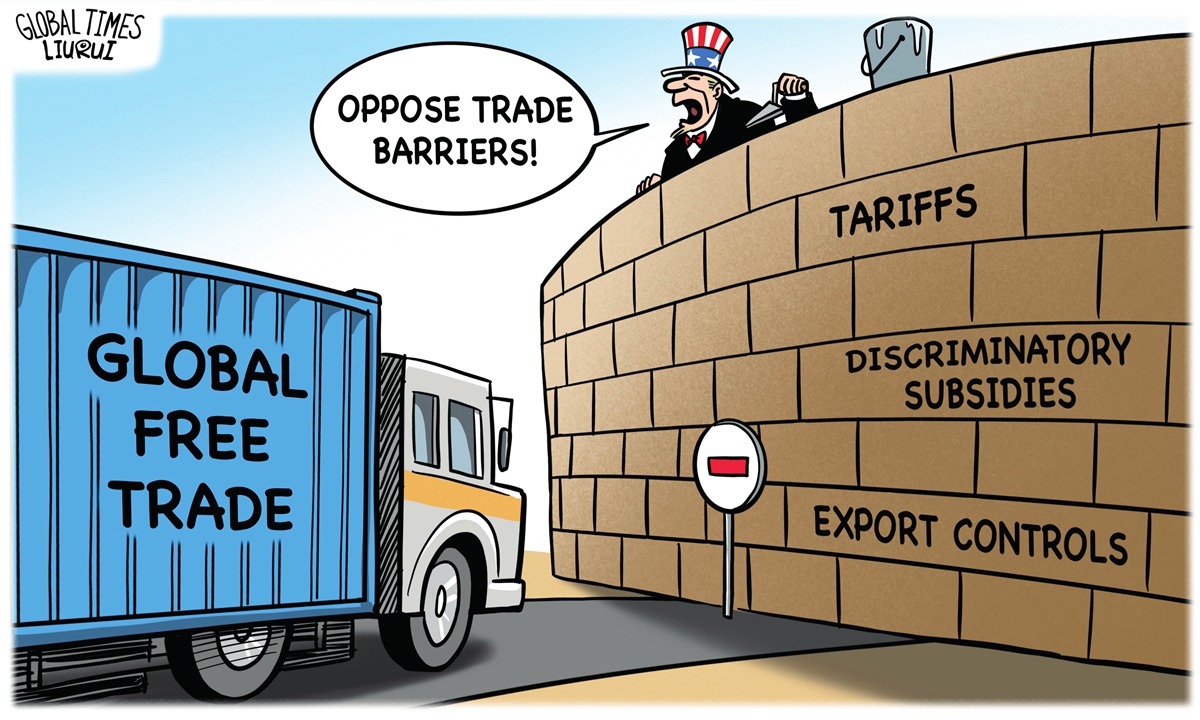
So, if you agree with President Trump’s premise that other countries have been “ripping us off” for years (admittedly, a big if, for this premise might not be true of all countries), and if you agree with Adam Smith’s argument that revenge tariffs are justified so long as the overall or long-term goal is to promote free trade (another big if, since revenge tariffs could trigger a destructive “tit-for-tat” trade war; cf. the cartoon below), then why not give Donald Trump — as erratic, fickle, and despotic as he may seem — the benefit of the doubt? On this view, perhaps there is a method to Trump’s trade madness.
To sum up, President Trump’s trade policy is either an astute and cunning ploy designed to usher in a new golden age of peace and prosperity, or it is a desperate and dangerous gamble that could blow up in our faces, igniting a destructive worldwide trade war and making everyone worse off in the short and long run. Either way, Trump has decided to begin his second term with an ambitious but risky venture, a high-stakes strategem whose final outcome is uncertain. Is this wager worth taking? Alas, only time will tell …










 prior probability