
Act II, scene i of “David Hume in the Library of Babel”
In my previous three posts (see here, here, and here), we revisited the first three paragraphs of Jorge Luis Borges’ The Library of Babel. Today, I will turn to the middle part of Borges’ story, or “Act II” of my retelling of this tale (paragraphs 4 to 11).
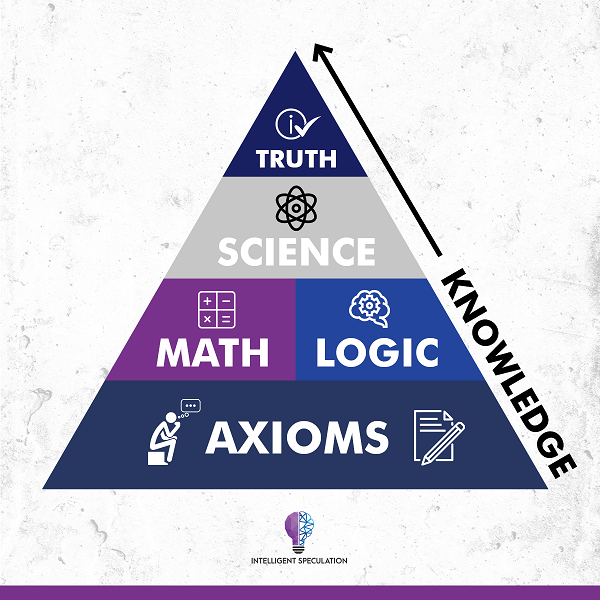
In summary, our Humean narrator begins Act II by describing the fundamental “axioms” or basic laws, so to speak, that govern the meta-logic of the Universal Library:
1st: “The Library has existed ab æternitate.” (Para. 4, emphasis in the original)
2nd: “There are twenty-five orthographic symbols.” (Para. 5, emphasis in the original)
3rd: “In all the Library, there are no two identical books.” (Para. 7, emphasis in the original)
From these premises, our unnamed narrator concludes that “the Library is ‘total’—perfect, complete, and whole—and that its bookshelves contain all possible combinations of the twenty-two orthographic symbols (a number which, though unimaginably vast, is not infinite)—that is, all that is able to be expressed, in every language.” (Para. 7, emphasis added, parenthetical in the original) But given that the books in the Universal Library consist of a random distribution of 25 symbols, how does one find meaning in any of these enigmatic texts? Stay tuned: I will proceed to Act II of “David Hume in the Library of Babel” in my next post …










 prior probability
Pingback: Borges’ paradox | prior probability