
Buchanan versus Samuels, round 3
In my previous post, we outlined the case of Miller et al. v. Schoene (the red cedar tree rust case) in which the Supreme Court created a “police power” exception to the Takings Clause. Today, I will address a different question: why did two great academic economists, James Buchanan and Warren Samuels, take an interest in this old case but disagree over how it was decided?
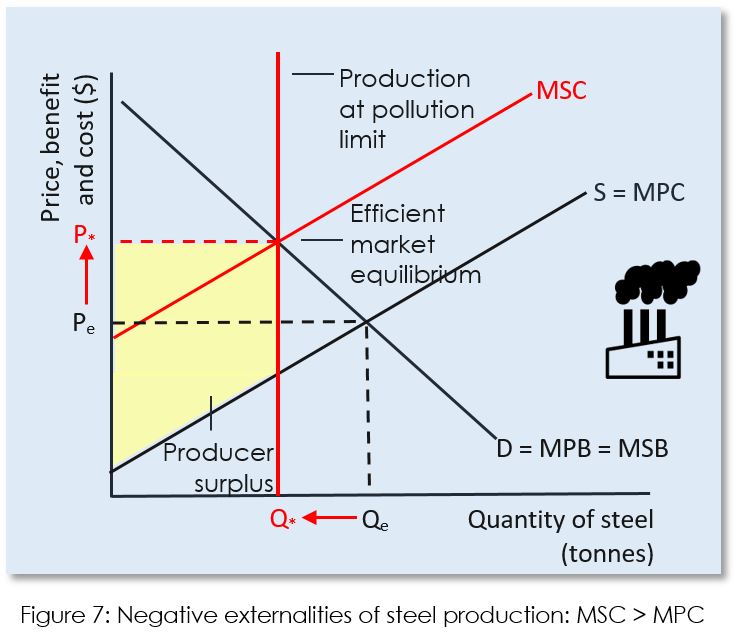
To begin (sorry, Richard!), it’s easy to see why two economists would take an interest in a case like Miller et al. v. Schoene, for this case illustrates what Ronald Coase calls the problem of harmful effects or what mainstream economists call “negative externalities.” But why did they chose the cedar tree case (Miller et al. v. Schoene) specifically, and why did they clash over its outcome? To answer these questions, we must first turn to Samuels’s 1971 paper in the Journal of Law & Economics. (See Warren J. Samuels, Interrelations between Legal and Economic Processes, Journal of Law & Economics, Vol. 14, No. 2 (1971), pp. 435-450.) It was this paper that fired up Buchanan and led to their exchange, and in the introduction to his 1971 paper, Samuels provides several general reasons why he decided to write about the cedar tree rust case.
For starters, for Samuels Miller et al. v. Schoene has all “the constituent elements of most if not all legal-economic problems, cases, or situations.” (Samuels 1971, p. 435) The second, somewhat redundant, reason Samuels gives is that this case is “beautifully illustrative of the interrelations of legal and economic processes.” (Ibid. In fact, Samuels’s paper is titled “Interrelations between legal and economic processes.”) And the third reason Samuels chose to write about this case was because it “is not a case with which one can get readily emotionally or ideologically involved thereby adversely affecting one’s powers of perception and analysis ….” (Ibid., pp. 435-436)
In short, Professor Samuels consciously chose a boring case in order to explore the relationship between law and economics. Like Ronald Coase (the editor of the Journal of Law & Economics from 1964 to 1982), he was specifically interested in the problem of “harmful effects” or negative externalities. In my next post, I will revisit Samuels’ economic analysis of the cedar tree case and explain why Buchanan took exception to Samuels’ analysis.










 prior probability
Pingback: Coase’s blind spot | prior probability
Pingback: James Buchanan-Warren Samuels Postscript | prior probability