
I will begin wrapping up my review of the late Alasdair MacIntyre’s 2023 essay On Having Survived the Academic Moral Philosophy of the 20th Century with three closing thoughts. To begin, my first observation is that the natural law approach to philosophy can be summed in three words: don’t harm others. That is, MacIntyre’s three “unconditional commitments” — avoid harming others, keep your promises, and never lie — boil down to one simple moral rule: the harm-avoidance principle. Why? Because, broadly speaking, broken promises and lies are just specific types of harms. That is, whenever you break a promise or tell a lie, one way or another you are harming someone, either the person to whom the promise was made or the person to whom the lie was told.
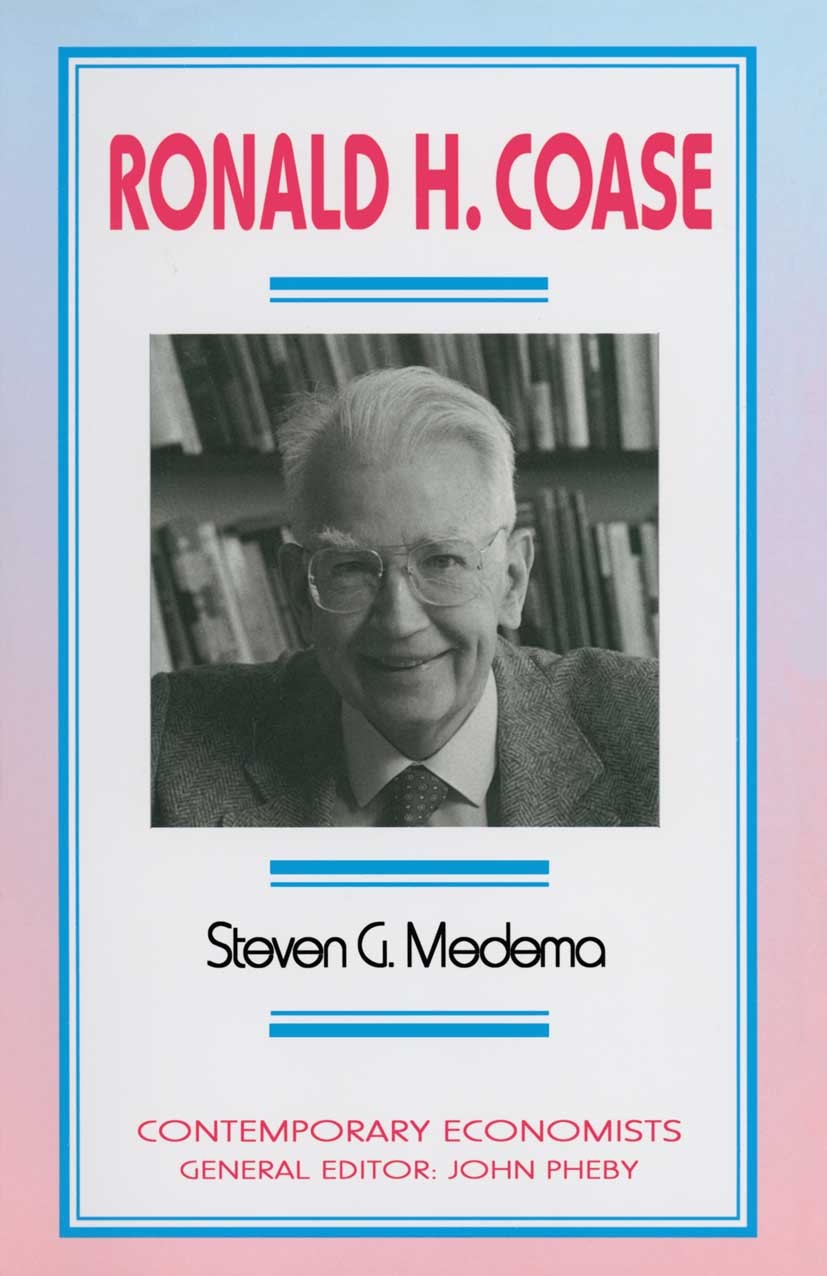
Next, my second point is that any moral philosophy based purely on harm-avoidance is going to be an empty one. Again, why? Because as the late Ronald Coase taught us long ago (see here), harms are almost always a reciprocal problem. Simply put, whenever B accuses A of harming his (B’s) interests, it is almost always the case that both A and B are responsible for the harm, or in the immortal words of Coase (emphasis added by me): “The question is commonly thought of as one in which A inflicts harm on B and what has to be decided is: how should we restrain A? But this is wrong. We are dealing with a problem of a reciprocal nature. To avoid the harm to B would inflict harm on A. The real question that has to be decided is: should A be allowed to harm B or should B be allowed to harm A? The problem is to avoid the more serious harm.” To ignore this fundamental insight is what I call the philosophers’ fallacy.
Lastly, my third and final observation (for now) is that Alasdair MacIntyre is not the only eminent philosopher to commit the philosophers’ fallacy. Consider, for example, John Stuart Mill’s conclusion in his 1859 essay On Liberty: “The only purpose for which power can be rightfully exercised over any member of a civilized community, against his will, is to prevent harm to others.” (For an overview of Mill’s harm principle, see § 3.1 of David Brink’s entry for “Mill’s Moral and Political Philosophy” in The Stanford Encyclopedia of Philosophy (2022), available here.) Mill’s harm principle can, in turn, be traced to Adam Smith, who defines justice as restraint from harming others: “Mere justice is, upon most occasions, but a negative virtue, and only hinders us from harming our neighbor.” (For a survey of the Scottish philosopher’s conception of justice, see James R. Otteson, “Adam Smith on Justice, Social Justice, and Ultimate Justice”, Social Philosophy & Policy, Vol. 34 (2017), pp. 123-143, which is available here.)
But if harms are indeed a reciprocal problem, then we are going to need some external criterion or other moral principle — above and beyond the harm-avoidance principle itself — for balancing competing harms in any given situation, i.e. for deciding which harm to privilege and which to restrain. For Coase, that external moral principle is some form of crass consequentialism: we “must avoid the more serious harm”, i.e. choose the lesser evil. Coase’s economic approach to harms, however, presupposes our ability to assign some type of monetary or other numerical value to competing harms, and here is where Coase’s approach can falter or leave us hanging, so to speak, for what if one of the harms is purely aesthetic? Or, relatedly, what if the competing harms are incommensurable, i.e. what if the competing harms cannot be measured on the same scale?
Is there any way out of this incommensurability conundrum, or is the philosophers’ fallacy simply an unavoidable one in the domains of morals, politics, and law, especially in a highly diverse and pluralistic society like ours? As it happens, I am hoping to address these fundamental philosophical questions in a future work. In the meantime, however, I will formally conclude my review of MacIntyre’s 2023 essay on a more positive note in the next day or two …







 prior probability
you are very good to finish your excellent posts with a cliff hanger..
Pingback: Alasdair MacIntyre postscript | prior probability
Pingback: End-of-year review: my other 2025 projects | prior probability