
Correction (10/22): Based on the textual analysis of TMS in my 22 October blog post, I have to update my 21 October post below. To the point, I now see that Adam Smith is using the same set of metaphors (judge and tribunal) to refer to two different entities: (a) to the impartial spectator or man within the breast (Smith uses both of these terms interchangeably), and (b) to the deity/God, depending on whether the word judge is capitalized or not. If it is not capitalized (as in the first of the two TMS passages quoted below), Smith is referring to the impartial spectator/man within the breast. If, however, Judge appears with a capital “J” (as in the second TMS passage quoted below), Smith is referring to God.
In my previous post, we saw how Adam Smith describes the impartial spectator as an “examiner and judge” (TMS, III.i.6) as well as a “great judge and arbiter” (TMS, III.iii.4). But is this imaginary magistrate an external entity, a deity or supreme being (God), or is he just a mental or internal process, a fiction of our moral imaginations (our conscience)? As it happens, Smith uses many other legal locutions — such as the words “appeal”, “judgment”, “sentence”, and “tribunal” — to describe the workings of his impartial spectator:
“But though man has, in this manner, been rendered the immediate judge of mankind, he has been rendered so only in the first instance; and an appeal lies from his sentence to a much higher tribunal, to the tribunal of their own consciences, to that of the supposed impartial and well-informed spectator, to that of the man within the breast, the great judge and arbiter of their conduct.” (TMS, III.ii.32)
“In such cases [i.e. when people think we are guilty of an offense we, in fact, did not commit] the only effectual consolation of [a] humbled and afflicted man lies in an appeal to a still higher tribunal, to that of the all-seeing Judge of the world, whose eye can never be deceived, and whose judgments can never be perverted. A firm confidence in the unerring rectitude of this great tribunal, before which his innocence is in due time to be declared, and his virtue to be finally rewarded, can alone support him under the weakness and despondency of his own mind, under the perturbation and astonishment of the man within the breast, whom nature has set up as, in this life, the great guardian, not only of his innocence, but of his tranquillity.” (TMS, III.ii.33)
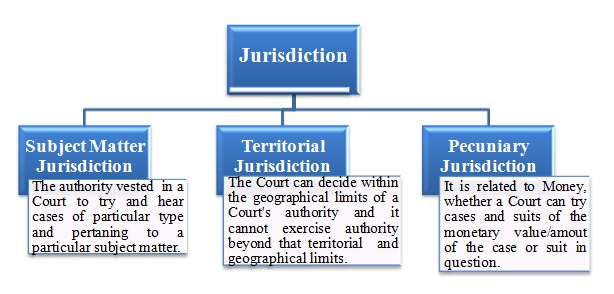
In addition, Smith uses yet another legal term to compare and contrast “[t]he jurisdiction of the man without”, i.e. the point of view of the flesh-and-bones man who is being judged, and “[t]he jurisdiction of the man within”, i.e. that of the judge (TMS III.iii.5, my emphasis). The word “jurisdiction” is telling here, as this is a legal term of art that refers to the authority of a court or judge to decide a case or controversy.
But is Smith using these legal terms in a metaphorical or in a literal sense? Our original question is still on the table: is Smith’s moral magistrate more like a divine judge (perfect and infallible), or is he more like a common law judge (well-informed but imperfect)? In short, what kind of judge/tribunal is the impartial spectator? (To be continued …)










 prior probability
Pingback: Adam Smith’s *supposed impartial spectator* | prior probability