
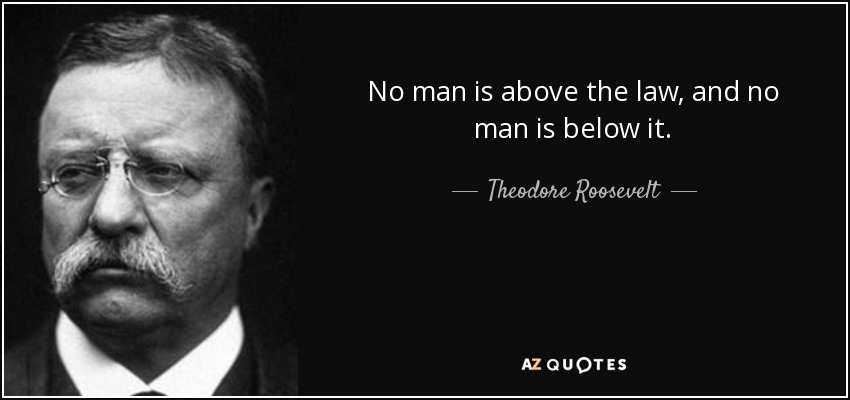
I now want to conclude my thoughts on the rule of law by presenting my preferred definition of this fundamental concept. For me, rule of law is an aspiration or ideal: no one — no matter how powerful or rich — should be able to flout the law or “buy their way out” (so to speak) if they get into trouble, or in the words of A. V. Dicey: “every man, whatever be his rank or condition, is subject to the ordinary law of the realm and amenable to the jurisdiction of the ordinary tribunals.” Put another way, the legal equivalents of papal indulgences are incompatible with rule of law.
Thus far, we have seen three different conceptions of the rule of law: 1. aspirational (i.e. no one is above, or below, the law), 2. procedural (the law game must be fair), and 3. substantive (the rules of the game must be clear before the game is played). The fact that the phrase “rule of law” can be defined in so many different ways poses one last (for now) puzzle. What is their common thread, if any?







 prior probability