
“Folly and injustice seem to have been the principles which presided over and directed the first project of establishing those colonies; the folly of hunting after gold and silver mines, and the injustice of coveting the possession of a country whose harmless natives, far from having ever injured the people of Europe, had received the first adventurers with every mark of kindness and hospitality.” (WN, IV.vii.59)
Adam Smith continues his attack on colonialism in Part 2 of Chapter 7 of Book IV of The Wealth of Nations (available here). Although Part 2 of this chapter is titled “Causes of Prosperity of New Colonies”, a better title would be “Causes of Poverty of the Colonies”, for Smith exposes the truth about greedy merchants in the mother countries: he explains how their mercantilist monopolies have hindered the economic growth and development of Europe’s newly-acquired colonies in the Americas. (Nota bene: Smith has a lot to say in this chapter, so no mere summary or synopsis can do it justice. I will therefore fast-forward to the very end of Part 2 of Chapter 7 (Paragraphs 57 to 64), where Smith recaps his scathing critique of European colonialism.)
To begin, what motivated so many Europeans to colonize the Americas in the first place? Smith explains that European colonialism was not the result of some wise policy or preordained plan. These colonizers were willing to cross the dangerous waters of the Atlantic only because things were so bad at home:
“The English Puritans, restrained at home, fled for freedom to America, and established there the four governments of New England. The English Catholics, treated with much greater injustice, established that of Maryland; the Quakers, that of Pennsylvania. The Portuguese Jews, persecuted by the Inquisition, stripped of their fortunes, and banished to Brazil, introduced by their example some sort of order and industry among the transported felons and strumpets by whom that colony was originally peopled, and taught them the culture of the sugar-cane. Upon all these different occasions it was not the wisdom and policy, but the disorder and injustice of the European governments which peopled and cultivated America.” (WN, IV.vii.61; my emphasis)
Worse yet, according to Smith, the settlement and expansion of Spain’s colonies was even more haphazard and entrepreneurial:
“The conquest of Mexico was the project, not of the council of Spain, but of a governor of Cuba …. The conquerors of … almost all the other Spanish settlements upon the continent of America, carried out with them no other public encouragement, but a general permission to make settlements and conquests in the name of the king of Spain. Those adventures were all at the private risk and expense of the adventurers.” (WN, IV.vii.62; my emphasis)
In both cases, British North American and Spanish South America, the governments of the mother countries provided little support: “The government of Spain contributed scarce anything to any of them [the Spanish adventurers in search of gold and silver mines]. That of England contributed as little towards effectuating the establishment of some of its most important colonies in North America.” (WN, IV.vii.62) The mother countries took notice of their new colonies only after the fact:
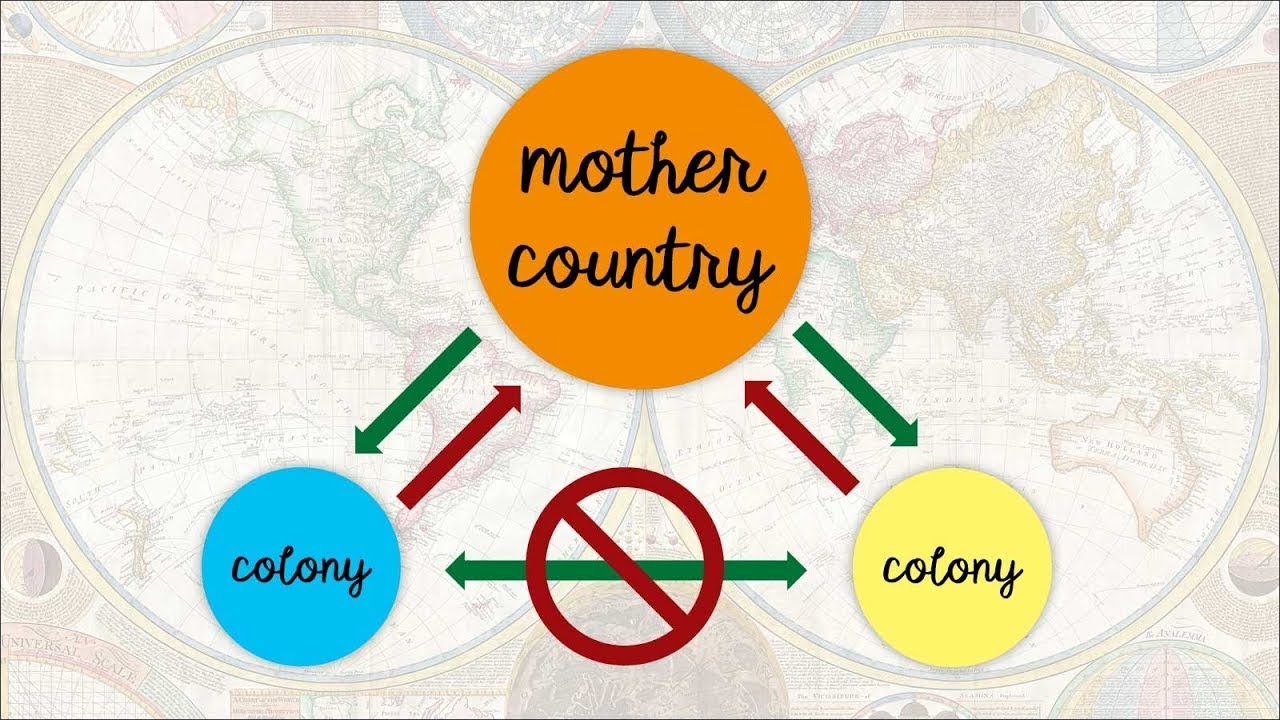
“When those [new colonies] … had become so considerable as to attract the attention of the mother country, the first regulations which she made with regard to them had always in view to secure to herself the monopoly of their commerce; to confine their market, and to enlarge her own at their expense, and, consequently, rather to damp and discourage than to quicken and forward the course of their prosperity. In the different ways in which this monopoly has been exercised consists one of the most essential differences in the policy of the different European nations with regard to their colonies. The best of them all, that of England, is only somewhat less illiberal and oppressive than that of any of the rest.” (WN, IV.vii.63; my emphasis)
In other words, as soon as the colonists became prosperous, the mother countries began to economically rape and pillage them by establishing lucrative trade monopolies — and in the case of Spain, through the outright theft of raw materials. Smith further shows how these predatory mercantilist policies benefit a cabal of powerful and well-connected merchants in the mother countries at the expense of everyone else. (To be continued …)







 prior probability