
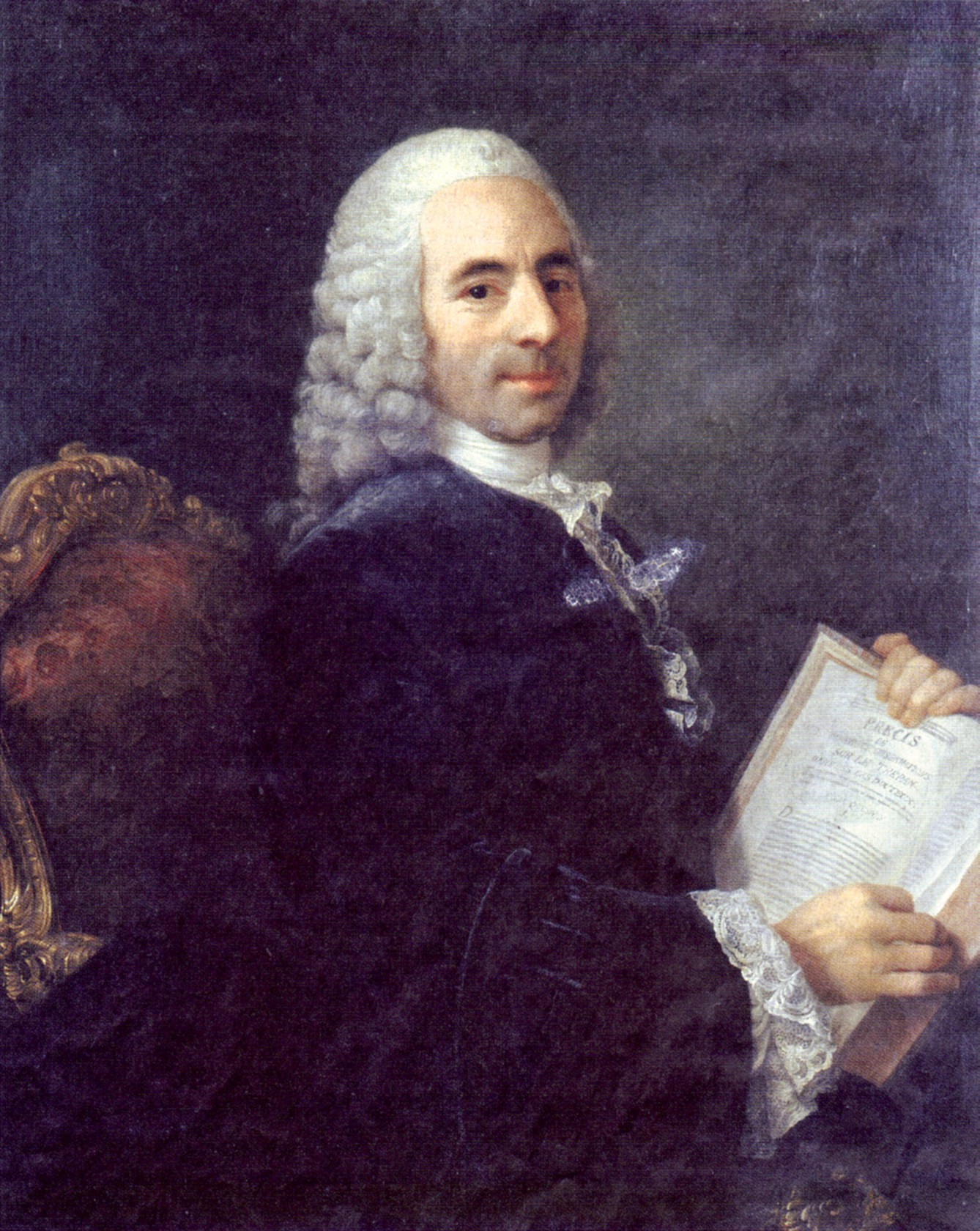
Adam Smith concludes Book IV of his magnum opus with a critical survey of one of the leading schools of political economy of his day (the Age of Enlightenment), that of the French économistes led by the incomparable royal doctor François Quesnay. In brief, if it took the Scottish philosopher all of eight lengthy chapters to survey and refute the main tenets of the so-called “mercantile system” and the doctrine of the balance of trade (or what I have been referring to as “mercantilism/protectionism” or “MP”), Smith is able to dispose of the system of his colleague and friend, Quesnay, in but a single chapter, Chapter 9 of Book IV of The Wealth of Nations.
Although Adam Smith concedes that the French économistes were right about many things — for example, they opposed mercantilist regulations and defended free trade and minimal government interference in the economy — Smith smells a rat: Doctor Quesnay and his followers committed a major theoretical blunder, one that undermined their entire economic theory. What was this fatal fallacy? Smith finally gets around to telling us in Paragraph 29 of this chapter: “The capital error of this system, however, seems to lie in its representing the class of artificers, manufacturers, and merchants as altogether barren and unproductive.” (WN, IV.ix.29; my emphasis)
Say what?!?!
The talented doctor Quesnay had even built and refined a beautiful macro-economic model, the inscrutable Tableau économique (pictured below) or what Smith refers to as “the Œconomical Table” (WN, IV.ix27), to prove this fallacious observation. In summary, Quesnay’s model consists of an idealized and self-contained economic system consisting of “three classes” or categories of economic actors, three Weberian “ideal types”, so to speak: (1) landowners, (2) artisans & merchants, and (3) farmers. To cut to the chase, what Quesnay’s model purports to show is that agriculture — and only agriculture — is a “productive” activity! Why? Because farmers produce a physical surplus of goods (e.g. grain) exceeding their costs of production. Artisans and merchants, by contrast, consume as much value in food and raw materials as they produce, thus creating no net gain for society. Manufacturing, for example, merely transforms existing raw materials; it does not add new intrinsic value to the nation’s wealth; while commerce (i.e. the buying and selling of raw materials and manufactured goods) merely moves existing sources of wealth around instead of creating new wealth. (See WN, IV.ix.13.)
Although Smith carefully and patiently picks apart Quesnay’s egregious economic fallacy in Paragraphs 30 to 37 of Chapter 9 of Book IV of his magnum opus, Smith graciously concedes that Quesnay’s system, “with all its imperfections is, perhaps, the nearest approximation to the truth that has yet been published upon the subject of political œconomy ….” (WN, IV.ix.38) Why? Because Quesnay and his disciples got two big things right:
“Though in representing the labour which is employed upon land as the only productive labour, the notions which it inculcates are perhaps too narrow and confined; yet in representing the wealth of nations as consisting, not in the unconsumable riches of money, but in the consumable goods annually reproduced by the labour of the society, and in representing perfect liberty as the only effectual expedient for rendering this annual reproduction the greatest possible, its doctrine seems to be in every respect as just as it is generous and liberal.” (WN, IV.ix.38)
Be that as it may, there is a larger lesson in this chapter: beware of grandoise systems, complex models, and ambitious blueprints that require absolute perfection. They are like little castles built of sand — they will crumble as soon as they make contact with the waves of the real world. For Smith, it was their fetish for perfection that led Quesnay and his economic sect astray:
“Some speculative physicians seem to have imagined that the health of the human body could be preserved only by a certain precise regimen of diet and exercise, of which every, the smallest, violation necessarily occasioned some degree of disease or disorder proportioned to the degree of the violation. Experience, however, would seem to show that the human body frequently preserves, to all appearances at least, the most perfect state of health under a vast variety of different regimens; even under some which are generally believed to be very far from being perfectly wholesome…. Mr. Quesnai, who was himself a physician, and a very speculative physician, seems to have entertained a notion of the same kind concerning the political body, and to have imagined that it would thrive and prosper only under a certain precise regimen, the exact regimen of perfect liberty and perfect justice. He seems not to have considered that, in the political body, the natural effort which every man is continually making to better his own condition is a principle of preservation capable of preventing and correcting, in many respects, the bad effects of a political œconomy, in some degree, both partial and oppressive. Such a political œconomy, though it no doubt retards more or less, is not always capable of stopping altogether the natural progress of a nation towards wealth and prosperity, and still less of making it go backwards. If a nation could not prosper without the enjoyment of perfect liberty and perfect justice, there is not in the world a nation which could ever have prospered.” (WN, IV.ix.28; my emphasis)
In other words, Adam Smith is, above all, a pragmatist: we must take economic and government actors as they are — warts and all — and not as we would like them to be!







 prior probability