
We now turn to the last major subsection of Book V, Chapter 2 of The Wealth of Nations: “Taxes upon Consumable Commodities” (WN, V.ii.k). Here, Adam Smith makes a number of timeless points, all of which are still relevant today:
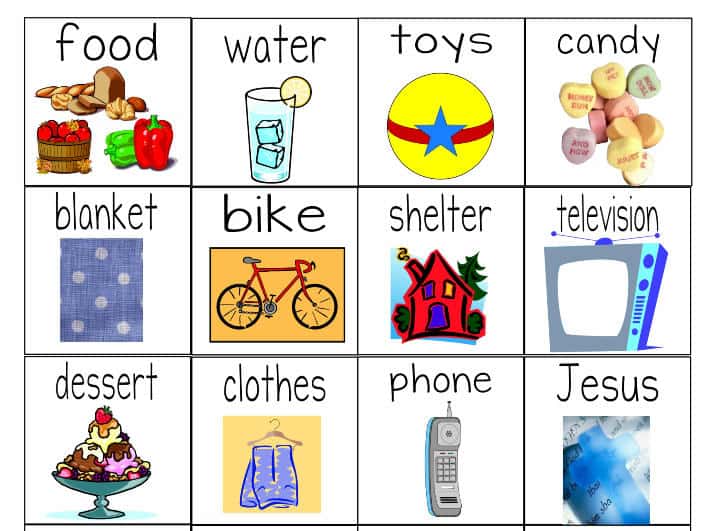
A. NEEDS VERSUS WANTS: SMITH’S BROAD DEFINITION OF ‘NECESSARIES’
First off, Smith not only identifies two major type of consumer goods — “necessaries” and “luxuries” — he also explains in Paragraph 3 of this subsection why necessary goods should be defined broadly:
“By necessaries I understand not only the commodities which are indispensably necessary for the support of life, but whatever the custom of the country renders it indecent for creditable people, even of the lowest order, to be without. A linen shirt, for example, is, strictly speaking, not a necessary of life. The Greeks and Romans lived, I suppose, very comfortably though they had no linen. But in the present times, through the greater part of Europe, a creditable day-labourer would be ashamed to appear in public without a linen shirt, the want of which would be supposed to denote that disgraceful degree of poverty which, it is presumed, nobody can well fall into without extreme bad conduct. Custom, in the same manner, has rendered leather shoes a necessary of life in England. The poorest creditable person of either sex would be ashamed to appear in public without them…. Under necessaries, therefore, I comprehend not only those things which nature, but those things which the established rules of decency have rendered necessary to the lowest rank of people. All other things I call luxuries ….” (WN, V.ii.k.3; my emphasis)
B. THE ECONOMICS OF TAXES ON CONSUMER GOODS DEPENDS ON WHAT TYPE OF GOODS ARE BEING TAXED: NECESSARIES OR LUXURIES
Why does Smith draw this distinction between necessary goods and luxury goods? Because for Smith the economics of a sales tax depends on the type of good being taxed. According to the Scottish scholar, the ultimate effect of a tax on necessary goods is to “diminish the extent of their sale and consumption.” (WN, V.ii.k.9) Why? Because a tax on necessary goods produces the following three-step chain reaction:
- Initiation phase (step one): A tax on necessary goods will increase the prices of those good by at least the amount of the tax, if not more (see WN, V.ii.k.4)
- Propagation phase (step two): This overall increase in the prices of necessary goods will then have the macro effect of increasing the cost of labour because workers will need to be paid more in order to afford those necessary goods (ibid.)
- Termination phase (step three): An increase in the cost of labour will, in turn, further increase the cost of consumer goods (WN, V.ii.k.5)
A sales tax on luxury goods, by contrast, will not increase the cost of labour: “It is otherwise with taxes upon what I call luxuries, even upon those of the poor. The rise in the price of the taxed commodities will not necessarily occasion any rise in the wages of labour.” (WN, V.ii.k.6) To recap:
“Taxes upon luxuries have no tendency to raise the price of any other commodities except that of the commodities taxed. Taxes upon necessaries, by raising the wages of labour, necessarily tend to raise the price of all manufactures, and consequently to diminish the extent of their sale and consumption.” (WN, V.ii.k.9)
C. HIGH TAXES WILL GENERATE LESS TAX REVENUE
Last (for now), but not least, Smith explains why high taxes on consumer goods — regardless whether such goods are classified as necessaries or luxuries — can be counter-productive in one of two ways:
“High taxes, sometimes by diminishing the consumption of the taxed commodities, and sometimes by encouraging smuggling, frequently afford a smaller revenue to government than what might be drawn from more moderate taxes.” (WN, V.ii.k.33)
In order words, demand curves slope downward and incentive effects. As a general rule, we see an inverse relationship between a good’s price and the quantity demanded, so the higher the tax on good X, the lower the demand for X. And in addition, high taxes on consumer goods give smugglers an incentive to find new and create ways to evade the tax in the first place!
D. ADAM SMITH’S BOTTOM LINE: TAX LUXURIES, NOT NECESSARIES
After his discussion of smuggling — of which I will have more to say in my next post — Smith concludes: “It must always be remembered, however, that it is the luxurious and not the necessary expence of the inferior ranks of people that ought ever to be taxed.” (WN, V.ii.k.44; my emphasis) Nota bene: I will discuss Adam Smith’s expert analysis of the economics of smuggling in greater detail in my next post.







 prior probability