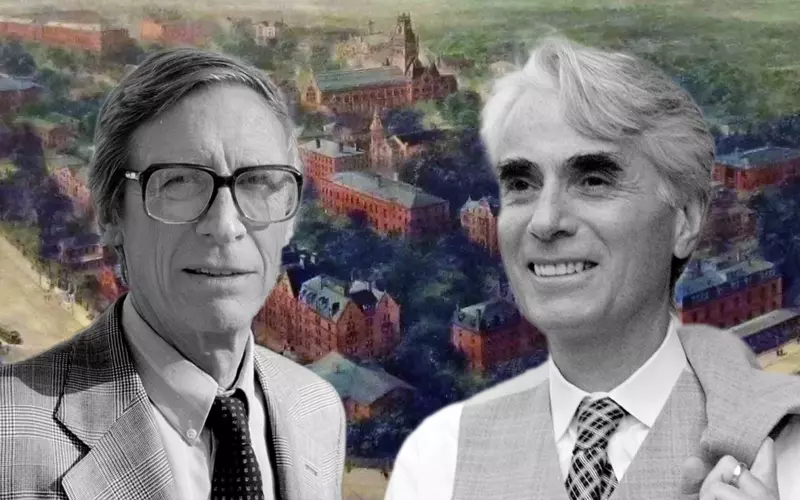
Life, liberty, and John Locke

Nota bene: this is the fourth of a series of blog posts on “the paradox of politics”; footnotes are below the fold.


“… where there is no law there is no freedom.” –John Locke, Second Treatise (quoted in Strauss & Cropsey 1987, p. 477)

In my previous post, we saw Thomas Hobbes’s elegant “social contract” solution to the paradox of politics: although men have the natural liberty to do whatever they please in a state of nature, they agree to transfer their liberty and other natural rights to a sovereign in exchange for protection. No mention of Hobbes, however, would be complete without John Locke (1632–1704), for Locke, building on Hobbesian foundations, presents a new and improved social contract solution.

For starters, although Locke’s picture of human nature appears to be more benign and pleasant than Hobbes’s, he ultimately agrees with Hobbes that the state of nature will often resemble a state of war. [1] Why? Because, as Locke himself concedes, “there is no common superior … to appeal to for relief” when one’s natural rights are violated in the state of nature. (p. 217) [2] In addition, Locke agrees with Hobbes that men will replace the state of nature with a sovereign or civil government: “I [Locke] easily grant, that civil government is the proper remedy for the inconveniences of the state of nature, which must certainly be great, where men may be judges in their own case ….” (p. 216, Locke’s emphasis)

So, how is Locke’s social contract theory any different from Hobbes’s. Simply put, Locke turns the logic of Hobbes’s social contract on its head. For Hobbes, we transfer our natural rights when we agree to the social contract for our mutual protection. Hobbes’s sovereign is not only our benefactor and protector; he is also our ultimate master. For Locke, it’s the other way around: we enter into a social contract to preserve our natural rights; the people are the ultimate masters!

There is another crucial difference between Hobbes and Locke: their definitions of natural liberty are totally different. Hobbes, for example, defines natural liberty as the right to do as one pleases: “The right of nature … is the liberty each man hath to use his own power as he will himself for the preservation of his own nature; that is to say, of his own life; and consequently, of doing anything which, in his own judgement and reason, he shall conceive to be the aptest means thereunto.” (p. 180) Locke, by contrast, imposes a limitation on our natural liberty: the harm principle. According to Locke, even when we are in the state of nature, we have a moral or natural law obligation not to harm others:

“The state of nature has a law of nature to govern it, which obliges every one: and reason, which is that law, teaches all mankind, who will but consult it, that being all equal and independent, no one ought to harm another in his life, health, liberty, or possessions.” (p. 214, Locke’s emphasis)

Locke’s harm principle sounds a lot like John Stuart Mill’s, but Locke’s conception of the harm principle is grounded in God-given natural law, whereas Mill’s is grounded in the principle of utility. But regardless of its source (God versus utility), Locke’s harm principle is crucial because it not only explains the ultimate purpose of civil government and law (harm prevention); it also appears to solve the paradox of politics by imposing an outer limit on government power, a red line that neither law nor politics may not cross. But does Locke’s solution (or Mill’s, for that matter) really work? Alas, it does not. (To be continued …)

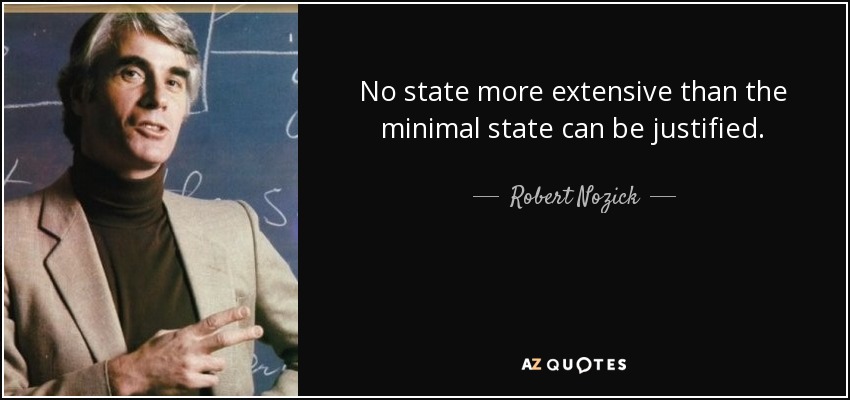
John Locke quote: All mankind... being all equal and independent, no one  ought...
Continue reading
Posted in Uncategorized | 2 Comments

The ghost of Thomas Hobbes

Nota bene: this is the third of a series of blog posts on “the paradox of politics”; footnotes are below the fold.


Is the paradox of politics, the central tension between law and liberty, soluble? Alas, the most popular solutions generally consist of empty clichés or trite rhetorical devices, such as the oxymoronic idea of “ordered liberty” [1] or the well-worn distinction between liberty (good) and license (bad). [2] Why are these incantations utterly useless? Because they are way too fuzzy in scope to be of much help. Simply put, they fail to spell out where, precisely, we should draw the line between law and liberty.

In place of these tired platitudes, let’s turn to some of the greatest Anglo-American minds in modern political philosophy, beginning with Thomas Hobbes (1588–1679). His elegant but extreme solution to the law-liberty dilemma has two stages. (See especially chapters 13 to 30 of Hobbes’s 1651 treatise Leviathan, available here or here.) First, Hobbes imagines what life would be like in a pre-political state of nature, i.e. a world without any laws or government. Although men in this hypothetical condition enjoy absolute autonomy — what Hobbes’s calls “natural liberty”[3] — this freedom, to put it mildly, is a precarious one. In one of the most famous sentences of all time, Hobbes writes:

“In such condition [the state of nature] there is no place for industry, because the fruit thereof is uncertain: and consequently no culture of the earth; no navigation, nor use of the commodities that may be imported by sea; no commodious building; no instruments of moving and removing such things as require much force; no knowledge of the face of the earth; no account of time; no arts; no letters; no society; and which is worst of all, continual fear, and danger of violent death; and the life of man, solitary, poor, nasty, brutish, and short.” (p. 179)

Next, Hobbes postulates a fictional covenant or “social contract” in which men agree to transfer their natural liberty to an absolute sovereign in exchange for protection:

“… men agree amongst themselves to submit to some man, or assembly of men, voluntarily, on confidence to be protected by him against all others. This latter may be called a political Commonwealth, or Commonwealth by Institution ….” (p. 190)

For Hobbes, we must collectively surrender our natural liberty to a strong central authority. Why? Because without an absolute sovereign or “Leviathan” with unlimited and indivisible power to punish wrongdoers, social life would soon descend into a brutish “war of every man, against every man” (p. 179). In short, we exchange liberty for safety.

Hobbes’s dark view of man — and his drawing of the law-liberty line in such a lopsided fashion — appears harsh, if not extreme. It is even tempting to dismiss this 17th-century political theorist as a proto-fascist, since his theory of politics can be used to justify dictatorships. But in fairness to Hobbes, he lived through some very tough and turbulent times: the English civil wars from 1642 to 1651, one of the most bloody and brutal periods in British history. According to Britain’s National Army Museum (see here or here), a larger proportion of the population in England, Wales, and Ireland were killed or maimed during the Civil Wars than in the First World War!

Yet, be that as it may, Hobbes’s approach to politics has a fatal flaw, one that is even more troubling than the law-liberty dilemma with which we began this series: the sovereign is supposed to protect us from each other, but who protects us from the sovereign? [4] Does this second-order Hobbesian paradox have a solution, or does the ghost of Thomas Hobbes continue to haunt us? Are all governments doomed to end in tyranny? (To be continued …)

The office of the sovereign, be it a…” Thomas Hobbes Quote
Happy birthday, Kleber!
Continue reading
Posted in Uncategorized | 2 Comments

The paradox of politics: prologue

The paradox is this: people rightfully value liberty, but what is the optimal amount? If we have too much freedom to pursue our private interests, some individuals may end up harming others, making social life unstable and intolerable. So, we need laws to punish and deter harms, but which harms and however the concept of “harm” is defined, what is the optimal level of legal restraints? With too many restraints, our personal liberties might be crushed, defeating the purpose of a free society. The perennial question of political philosophy, then, is where should we draw the line between law and liberty? Different political theorists have drawn this crucial line in different ways, so how do we decide who is right? (To be continued …)

PARADOX
Posted in Uncategorized | 1 Comment

The paradox of politics

“The common understanding of politics, since the time of Hobbes and Locke, has taken the balancing of liberty and authority as the central issue.” (Strauss & Cropsey 1987, p. 717)

Thomas S. Kuhn wrote about the “essential tension” between tradition and innovation in scientific research (see here, for example). Starting tomorrow, I will begin a new series of blog posts on what I like to call the “paradox of politics”: the fundamental tension between authority (the power of the collective to compel actions or enforce rules) and liberty (the freedom of the individual to act without external constraint).

A "political spectrum" a self-professed Political Science major on  r/technology handed me : r/EnoughLibertarianSpam

Posted in Uncategorized | 3 Comments

Remembering the October 7 Massacre | IDF
Posted in Uncategorized | Leave a comment

One last question for Klein, Swanson, and Young

Last week (see links below), I surveyed a new paper in Econ Journal Watch by Daniel Klein, Nicholas Swanson, and Jeffrey Young on Adam Smith’s impartial spectator. Today, I want to conclude this series of blog posts with a question for my three Smithian colleagues. To paraphrase the ancient Greek gadfly Socrates in Plato’s Euthyphro, are our actions pious or morally good when our impartial spectator approves of them, or does our impartial spectator approve of our actions when they are pious or morally good? For further reference, below are my previous musings (in thematic order) on this matter:

  1. Introduction (who is the impartial spectator?)
  2. Klein, Swanson, and Young’s theory (a theistic interpretation of the impartial spectator)
  3. Evidence in support of Klein et al.’s theory (three key passages in TMS)
  4. A “smoking-gun” passage? (TMS, VI.i.11)
  5. Additional questions for Klein, Swanson, and Young (replies to their nine theses)
  6. A second-order question about the impartial spectator (why wasn’t Adam Smith more clear in TMS?)
Euthyphro by Plato | Goodreads

Posted in Uncategorized | 1 Comment

Sunday song: I ain’t sayin’

Posted in Uncategorized | Leave a comment

Further reply to KSY’s nine theses

In addition to the three Adam Smith quotes from TMS cited by Daniel Klein, Nicholas Swanson, and Jeffrey Young (KSY) in their new paper in Econ Journal Watch on the impartial spectator (see Klein et al. 2025, pp. 304-305; see also my previous two posts), Klein et al. draw nine inferences or theses regarding these specific passages. (Ibid., pp. 306-307) Below the fold, I restate their theses, followed by a direct reply to each one:

Continue reading
Posted in Uncategorized | 1 Comment

Questions for Adam Smith

Continued from my previous post:

Is Adam Smith’s impartial spectator a deity or just a heuristic device? To recap, my colleagues Daniel Klein, Nicholas Swanson, and Jeffrey Young claim that this imaginary entity is a “universal, super-knowledgeable, and benevolent beholder” (Klein et al. 2025, p. 297), and in support of their theistic interpretation of the impartial spectator, they pluck three specific passages from Smith’s Theory of Moral Sentiments: (i) 294.49, i.e. page 294, paragraph 49 of TMS, (ii) 225.19 (page 225, para. 19), and (iii) 215.11 (page 215, para. 11). (See Klein et al. 2025, pp. 304-305)

But as we saw in my previous post, the first two of their selected snippets (TMS 294.49 and TMS 225.19) are somewhat equivocal: on the one hand, those two passages imply that the impartial spectator is infallible, but on the other hand, there is no explicit reference whatsoever to a deity, let alone God, in either of those excerpts. That leaves “Passage #3” (TMS 215.11). To say that Klein, Swanson, and Young “put all of their argumentative eggs in this one basket” (as I wrote in my previous post) is no exaggeration: they cite this passage over 40 times in their paper! So, without further ado, let’s take a closer look at Klein et al.’s holy grail, Passage #3. Since this pivotal passage consists of five sentences, let’s break it down sentence-by-sentence:

Sentence #1. The first sentence of Passage #3 tells us that the impartial spectator is not a lone wolf or solitary actor: he also has a “representative” — a presumably lower-level agent who presumably acts on his behalf — and this representative has a name: “the man within the breast”:

In the steadiness of his industry and frugality, in his steadily sacrificing the ease and enjoyment of the present moment for the probable expectation of the still greater ease and enjoyment of a more distant but more lasting period of time, the prudent man is always both supported and rewarded by the entire approbation of the impartial spectator, and of the representative of the impartial spectator, the man within the breast.

This first sentence poses more questions than it answers, however. To begin, isn’t the lower-level “man within the breast” a totally superfluous entity, i.e. excess moral baggage given the existence of the higher-level impartial spectator? If not, how was this representative or agent chosen, and what is the scope of his authority? And most importantly, what happens when the man within the breast and the impartial spectator disagree with each other? In short, what happens when the agent goes rogue or acts ultra vires?

Sentence #2. The very next sentence describes two of the impartial spectator’s godlike “superpowers” — he has a long time horizon, and he never gets tired:

The impartial spectator does not feel himself worn out by the present labour of those whose conduct he surveys; nor does he feel himself solicited by the importunate calls of their present appetites.

Again, we have another sentence that poses more questions than it answers. What, for example, is the vigilance level of the impartial spectator: is he always on “high alert” or is he just “on call”, available when needed? And what is the vigilance level of his agent, the man within the breast?

Sentence #3: The third sentence expands on the nature of the impartial spectator’s temporal or time-horizon superpower:

To him [the impartial spectator] their present, and what is likely to be their future situation, are very nearly the same: he sees them nearly at the same distance, and is affected by them very nearly in the same manner.

In other words, the impartial spectator is not a hyberbolic discounter; i.e. he does not prefer immediate rewards over delayed rewards. Instead, he is an exponential discounter: he applies a constant discount rate to future rewards, regardless of the length of the delay. Okay, but how does Adam Smith know this about the impartial spectator? And what about the impartial spectator’s agent, “the man within the breast”? Does this agent have this same superpower as well?

Sentence #4: The fourth sentence is the most mysterious of all. Read it carefully and tell me, to whom do the words “they” and “them” refer to in this sentence?

He [the impartial spectator] knows, however, that to the person principally concerned, they are very far from being the same, and that they naturally affect them in a very different manner.

Sentence #5: The last sentence in this passage reads:

He [the impartial spectator] cannot therefore but approve, and even applaud, that proper exertion of self-command, which enables them to act as if their present and future situation affected them nearly in the same manner in which they affect him.

Same question as before: Can you tell me to whom the word “them” refers to in this sentence?

* * *

To recap our discussion thus far: it is from these scanty sentences that Klein, Swanson, and Young erect their shaky theoretical edifice. But do these few sparse sentences really support their theistic interpretation of Smith’s impartial spectator? Alas, the last two sentences are ambiguous at best, and all five sentences pose more questions than they answer. To make matters worse, nowhere else in TMS does Adam Smith elaborate on this distinction between a higher-level or godlike impartial spectator and a lower-level agent, the man within the breast. (To be continued …)

Which three superpowers will you choose to beat Goku? : r/PowerScaling
Posted in Uncategorized | 1 Comment

Is Adam Smith’s impartial spectator a deity or just a heuristic device?

As I have mentioned in my last few posts, my colleagues Daniel Klein, Nicholas Swanson, and Jeffrey Young have published a new paper in Econ Journal Watch about one of the most original and fascinating ideas in the work of Adam Smith: the impartial spectator. According to Klein et al., the impartial spectator is a deity. To this end, they identify a trio of passages in Smith’s Theory of Moral Sentiments (TMS) in support of their claim that the impartial spectator is a godlike being. For reference, these three specific passages from TMS are quoted in full below:

Passage #1 (294.49):

None of those systems [of virtue ethics] either give, or even pretend to give, any precise or distinct measure by which this fitness or propriety of affection can be ascertained or judged of. That precise and distinct measure can be found nowhere but in the sympathetic feelings of the impartial and well-informed spectator. (TMS, VII.ii.1.49, quoted in Klein et al. 2025, p. 304; emphasis and boldface added by Klein et al.)

Passage #2 (225.19):

Nature, which formed men for that mutual kindness, so necessary for their happiness, renders every man the peculiar object of kindness, to the persons to whom he himself has been kind. Though their gratitude should not always correspond to his beneficence, yet the sense of his merit, the sympathetic gratitude of the impartial spectator, will always correspond to it. (TMS, VI.ii.1.19, quoted in Klein et al. 2025, pp. 304-305; emphasis and boldface added by Klein et al.)

Passage #3 (215.11):

In the steadiness of his industry and frugality, in his steadily sacrificing the ease and enjoyment of the present moment for the probable expectation of the still greater ease and enjoyment of a more distant but more lasting period of time, the prudent man is always both supported and rewarded by the entire approbation of the impartial spectator, and of the representative of the impartial spectator, the man within the breast. The impartial spectator does not feel himself worn out by the present labour of those whose conduct he surveys; nor does he feel himself solicited by the importunate calls of their present appetites. To him their present, and what is likely to be their future situation, are very nearly the same: he sees them nearly at the same distance, and is affected by them very nearly in the same manner. He knows, however, that to the person principally concerned, they are very far from being the same, and that they naturally affect them in a very different manner. He cannot therefore but approve, and even applaud, that proper exertion of self-command, which enables them to act as if their present and future situation affected them nearly in the same manner in which they affect him. (TMS, VI.i.11, quoted in Klein et al. 2025, p. 305; emphasis in the original; boldface added by Klein et al.)

So, is Klein, Swanson, and Young’s interpretation correct, or are they off the mark? Is Adam Smith’s “impartial spectator” some sort of god or deity? The first two passages quoted above seem to imply that the impartial spectator is infallible, so he must be a god of some sort, but at the same time, it is worth noting that there is no explicit reference whatsoever to a deity in either of those excerpts. By a process of elimination, we are thus left with Passage #3, and if you read Klein, Swanson, and Young’s new paper for yourself, you will see that they put all of their argumentative eggs in this one basket, so to speak. Stay tuned, for I will scrutinize the third and last passage in greater detail in my next post.

AdamSmithQuiet--Christianity | Illustration: saratm/Fiverr; Illustration: a_louro/Fiverr
Image credit: saratm/Fiverr; a_louro/Fiverr
Posted in Uncategorized | 1 Comment