Previews of coming attractions

FYI: I will be blogging about the following works (beginning with item #1 below) in the days and weeks ahead:

  1. Review of Adam Smith’s 1755 “Letter to the Authors of the Edinburgh Review”, available here.
  2. Review of Jean-Jacques Rousseau’s Discourse on the Origin of Inequality, available here.
  3. Review of Truth and Evidence (NYU Press, 2021), a collection of essays edited by Melissa Schwartzberg and Philip Kitcher.
Previews of Coming Attractions – Sunrise Christian Reformed Church
Posted in Uncategorized | Leave a comment

Sunday song: Ain’t About You (featuring Kiiara)

Posted in Uncategorized | Leave a comment

Assorted (GenAi) Links

1. AI Regulation (via Elad Blog)

2. Former Google CEO: Companies’ AI guardrails “aren’t enough” to prevent harm (via Axios)

3. The Economic Case for Generative AI and Foundation Models (via a16z)

4. When AI Is Trained on AI-Generated Data, Strange Things Start to Happen (via Futurism)

5. What happens when thousands of hackers try to break AI chatbots (via NPR)

6. AI can do your homework. Now what? (YouTube video via Vox)

Posted in Uncategorized | Leave a comment

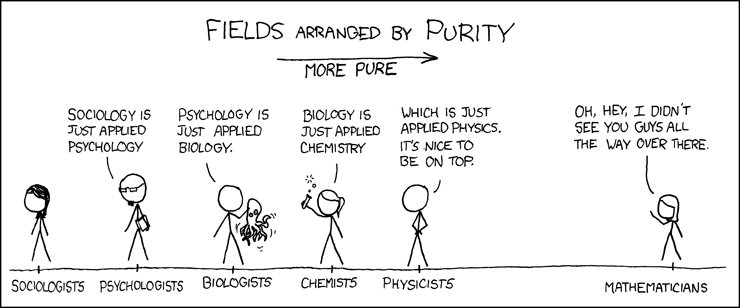
Friday funnies

Purity
Posted in Uncategorized | Leave a comment

Conspiracy Theory Theories

I have surveyed this topic before (see here), and so this fascinating essay on “The Future of the Philosophy of Conspiracy Theory: An Introduction to Conspiracy Theory Theory” by Matthew R. X. Dentith, who edited an entire collection of essays on this subject (see below), just popped up into my Google Scholar “Recommended Articles” feed. Alas, I am so disappointed that I missed the 1st International Conference on the Philosophy of Conspiracy Theory (here), which took place at Pitzer College in February of 2022, as well as the 2nd one (here), which met at the University of Amsterdam in June of 2023. Although a 3rd conspiracy theory conference has yet to be announced, I will be on the lookout …

Posted in Uncategorized | 2 Comments

The Internet is undefeated: Bill *plagiarism for me but not for thee* Ackman edition

For context, see here or here.

Posted in Uncategorized | 5 Comments

Assorted (outer space) links

1. SpaceX wants to impose its ‘own legal regime’ on Mars for human settlements; a space law expert says that’s dubious, but Earth should take it seriously anyway (via Business Insider)

2. Moon’s resources could be ‘destroyed by thoughtless exploitation’, Nasa warned (via The Guardian)

3. A lot is riding on Astrobotic moon lander set for launch Monday on new Vulcan Centaur (via The Orlando Sentinel)

4. For the first time, U.S. government lets hackers break into satellite in space (via Politico)

5. U.S. warns Starlink satellites will start killing people and reveals chance of hitting a human will soon be 61% each year (via The Sun)

6. ‘Terrifying’ video reveals Elon Musk’s huge army of satellites as scientists warn of Starlink’s ‘hidden danger’ (also via The Sun)

7. Two U.S. firms to launch spacecraft to the moon within weeks of each other (via The Washington Post)

Posted in Uncategorized | Leave a comment

Wikipedia Wednesday: list of English words containing Q not followed by U

You’re welcome! https://en.wikipedia.org/wiki/List_of_English_words_containing_Q_not_followed_by_U

Q AND NOT U DC Logo Shirt
Posted in Uncategorized | 2 Comments

Around the web …

FYI: below are links to three of the open tabs on my Internet browser:

1. Smith and Rousseau’s Competing Visions of Commercial Society (via Adam Smith Works)

2. 2023 Word of the Year Is “Enshittification” (via the American Dialect Society; hat tip: Kottke)

3. The intrepid logician Kurt Gödel believed in the afterlife. In four heartfelt letters to his mother he explained why (via aeon; hat tip: Brian Leiter)

Posted in Uncategorized | 1 Comment

The use and misuse of history in (constitutional) law: some additional observations

How should history inform the study, practice, and interpretation of law, especially constitutional law? In a previous post I surveyed two radically different approaches to legal history: history as memory and history as evidence. (See here or below.) Today, I will point out some additional highlights from the four-hour marathon panel on the “use and misuse” of history in law, along with my replies:

Recovery versus creation. Jonathan Gienapp (Stanford), a historian who specializes in the Revolutionary and founding era, posed the following fundamental question during his talk: how much of history is “recovering the past” (i.e. describing what actually happened) and how much is “creating the past” (i.e. telling just-so stories to ourselves about what happened)? My reply: this is precisely why Randy Barnett’s lawyerly approach to history, which I described in a previous post, is superior to Gienapp’s (and Balkin’s) obfuscatory methods. (Even Professor Gienapp himself is unable to describe in words his own approach to history; see here, for example.)

“Constitutional flyover country“. For her part, historian Alison LaCroix (Chicago) made the following observation: when studying and writing about the Constitution, scholars more often than not like to focus on key historical moments like the Philadelphia Convention of 1787 or the ratification of the 14th Amendment in 1868, but what about all the historical events that occurred in-between 1787 and 1868 — or what Professor LaCroix memorably described as “constitutional flyover country”? My reply: LaCroix’s thesis is a red-herring. To see why, it suffices to mention the work of such constitutional law scholars as Jack Balkin, who was on the same panel as LaCroix(!), as well as Akhil Amar and Bruce Ackerman, whose courses I took when I was a student at Yale.

Rupture versus continuity. Lastly, law professor Charles Barzun (Virginia) posed one of the most insightful questions during the entire four-hour marathon panel: when we are studying and writing about history, should we focus on the short moments of rupture or on the long stretches of continuity? My reply: why not both?

history reclaimed about us
Posted in Uncategorized | Tagged , | Leave a comment