L’Affaire Gino updates

We already know that Francesca Gino, an award-winning professor at the Harvard Business School, was accused of publishing at least four studies with fake or doctored data; see here. We also know that a few weeks after her alleged research fraud was exposed to the public on a statistics blog called “Data Colada“, Professor Gino sued the authors of the blog for defamation on 2 August 2023. (She also sued Harvard for gender discrimination; see here.) I now have eight significant developments to report in the Francesca Gino case:

  1. For starters, on 18 August 2023, about two weeks after the Gino defamation complaint was filed in court, Larry Lessig, a liberal Harvard law professor who was one of the most vocal champions of “net neutrality” (perhaps the most inane and inconsequential idea of the early 21st century!), published a brief but vigorous defense of his fellow Harvard colleague. (See here.) Among other things, Professor Lessig’s 765-word blog post portrays the Data Colada bloggers as the proverbial “bad guys” and Professor Gino as the hapless but innocent victim of a social media-driven moral panic.
  2. Twelve days later (29 August 2023), Adam Mastroianni posted this scathing critique of experimental psychology’s “cognitive bias craze” on his “Experimental History” blog. What makes Mastroianni’s essay especially worth reading and relevant to the Gino case is that he not only mentions by name Francesca Gino as well as her co-author Dan Ariely, another prominent professor accused of data fraud; he also explains why their entire field (experimental psychology) is most likely worthless bullshit. (In what other field, Mastroianni asks, do six out of 10 studies fail to replicate, while the field’s core research paradigms remain blissfully intact?!)
  3. A few days later (1 September), the Data Colada bloggers posted the first of two updates about the Gino case on their blog (here), thanking the donors to their legal defense fund. (Remember, Professor Gino had sued them for defamation on 2 August.)
  4. Next (16 September), the Data Colada bloggers posted a second more substantive update, where they subject three of the exhibits in Professor Gino’s case to critical scrutiny.
  5. Then, after a brief lull, things start to move fast. For starters, this past Friday (29 September), Professor Gino herself, the embattled professor at the center of this scientific misconduct storm, launched her own website to proclaim her innocence: “I did not commit academic fraud. I did not manipulate data to produce a particular result. I did not falsify data to bolster any result. I did not commit the offense I am accused of. Period“.
  6. The very next day (Saturday, 30 September), The New Yorker published on its website this in-depth essay by Gideon Lewis-Kraus, who surveys the allegations of research fraud against Dan Ariely and Francesca Gino, both of whom are pictured below. (Update: The New Yorker piece also appears in print in its 9 October 2023 edition.)
  7. Also on 30 September, the “Gray Lady,” i.e. the serious and sober-minded New York Times, published a pro-Gino puff piece titled “The Harvard professor and the bloggers” on its website. (The Gino story was also published on the front page of the Business section of this week’s Sunday edition (1 October), under the headline “A dishonesty expert is labeled a liar.”)
  8. Last (for now), Matthew Lilley, a Harvard PhD in economics (i.e. not a mere journalist), dropped this atomic bomb of a blog post today (Wednesday, October 4) tearing apart the arguments put forth by Professor Gino in her defense.

Buckle up your metaphorical seat belts, y’all: it looks like this topsy-turvy ride through the world of pseudo-scientific research (see item #2 above) is going to be wild one!

Posted in Uncategorized | 2 Comments

Happy birthday, Nugget!

She celebrated her first birthday yesterday!
Posted in Uncategorized | 1 Comment

Tag der Deutschen Einheit

Today (3 October) is “German Unity Day“, which commemorates the reunification of the “two Germanies” after the fall of the Berlin Wall in 1989 when the former Communist East Germany joined the free West Germany. (This day has been an official German National Holiday since 3 October 1990, when reunification was formally completed.) Question: Is there an equivalent “European Union Day” to celebrate the formation of Europe’s unified common market?

Posted in Uncategorized | Leave a comment

This day in history: 2 October 1965

For a brief history of the origins of Gatorade (hat tip: my favorite “Gator girl” Sydjia R.), check out this Wikipedia page as well as the tweet and YouTube video below:

PS: My favorite quote (from the video) was this one: “the initial taste left some athletes vomiting.” Personally, I still don’t like the taste of Gatorade.

Posted in Uncategorized | 6 Comments

The tragedy of the outer space commons?

Are there too many or too few satellites in outer space? Check out this recent report on Elon Musk’s massive flotilla of satellites in near-Earth orbit. As it happens, I have proposed orbit and launch-right auctions as an alternative to the tragedy of the outer space commons that is currently unfolding before our eyes.

Posted in Uncategorized | Leave a comment

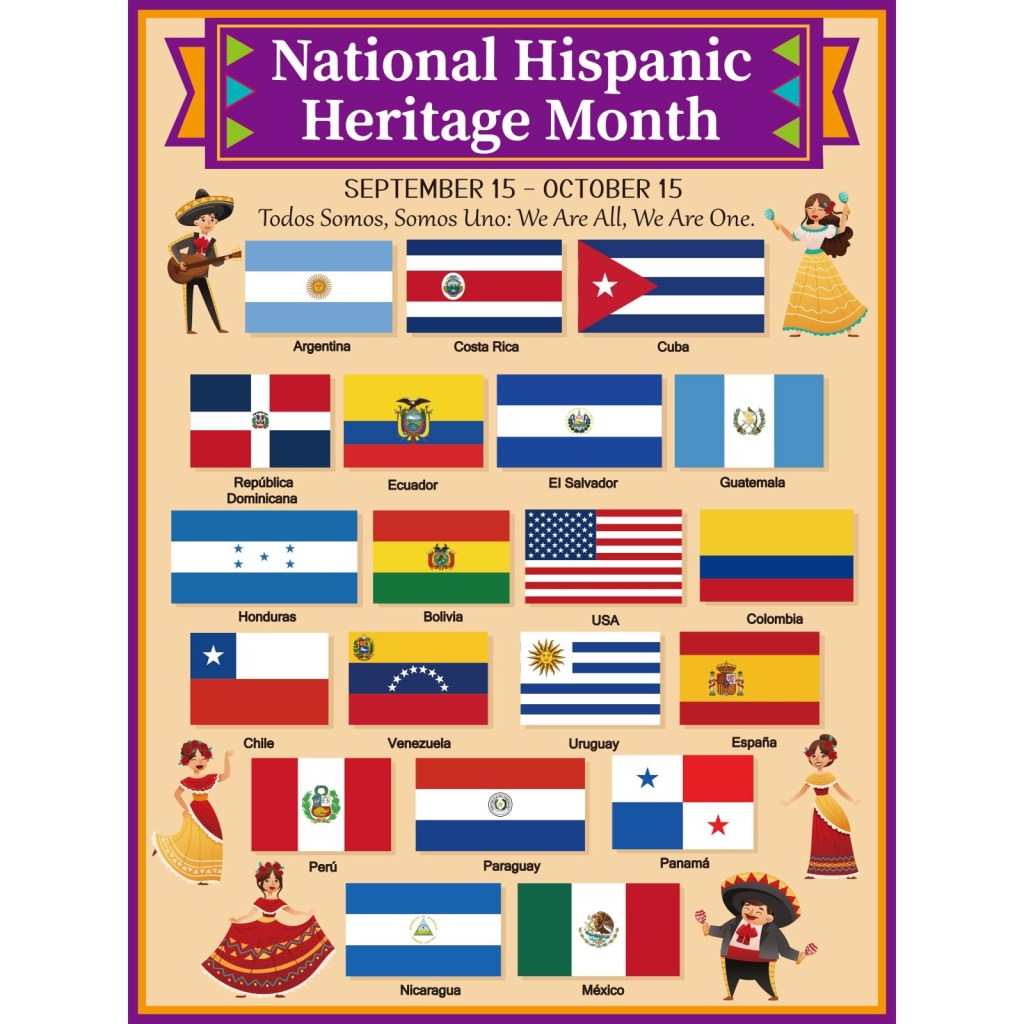
It’s National Hispanic Heritage Month!

But who counts as “Hispanic”? See here, for example. Also, what about Brasil and Portugal?

Posted in Uncategorized | Leave a comment

Anti-stories?

Last month I asked, Are TED Talks still a thing? (See my blog post titled “Against TED?”, which I am reblogging below.) As it happens, I stumbled upon this 2009 TED Talk by my favorite polymath, Tyler Cowen, while I was reading this fascinating essay by author Ian Leslie. Both Professor Cowen’s unorthodox talk (“Be suspicious of stories”) and Ian Leslie’s scathing essay (“Stories are bad for your intelligence”) are super-critical of storytelling. The supreme irony of their “anti-story” critiques, however, is not lost on me: both Cowen and Leslie end up having to tell a story in order to debunk the value of stories! File under: hmmm …

Posted in Uncategorized | Leave a comment

Friday funnies: lunatic-running-the-asylum edition

@cnn

Sen. John Fetterman presided over the Senate floor in his signature shorts and hoodie after Majority Leader Chuck Schumer decided to stop enforcing the Senate’s unwritten dress code. This post replaces a previous version to more accurately describe the dress code decision. #fetterman #johnfetterman #shorts #hoodie #senate #ussenate #senator

♬ original sound – CNN
Posted in Uncategorized | Leave a comment

ChatGPT: resist or join the revolution?

I promised to say a few words about the recent “Teaching with AI” conference that I attended earlier this week. (See my previous post #TeachingWithAI, which I am reblogging below.) First off, let me begin with the big question regarding AI and higher ed: should college professors like me embrace new “GenAI” tools like ChatGPT, Midjourney, Bard, etc., or in the alternative, should we adopt a clean and simple bright-line rule prohibiting the use of A.I. altogether. Or more to the point, should we resist or join the revolution? This, in a word, is why I attended this AI conference: to try to answer this big question.

For my part, although I am already redesigning my courses in order to allow my students to test these A.I. “large language models” or LLMs for themselves (see here), I should disclose my Burkean priors: I am deeply suspicious of radical change, especially when done hastily, and my biggest fear or worst-case scenario regarding “GenAI” is that overuse of these new cheating genies could breed an entire generation of abject idiots! The pro-A.I. crowd, by contrast, tends to minimize the unprecedented and destabilizing nature of these powerful and super-fast A.I. cheating tools. By way of example, many speakers at the “Teaching with A.I.” conference compared ChatGPT to the pocket calculator, i.e. as just another step in our human problem-solving capabilities. Alas, I suspect this analogy is a false one for two reasons: unlike an abacus or pocket calculator, LLMs like ChatGPT are not only amassing and even stealing massive amounts of copyrighted materials and user data; they are also beginning to replace our ability to think for ourselves.

Given my priors and Burkean intuitions, my favorite talk at the conference was titled Thinking Slowly in the Age of AI. (Shout out to my colleagues Bruce Lenthall and Jessica Morris from the University of Pennsylvania for their excellent work. I have posted a link to their slide deck below.) In brief, Lenthall and Morris explained how college professors need to first decide what they want their students to learn from their courses before deciding whether and how to expose students to A.I. But how can we move more slowly and deliberately when the world around us is moving so quickly? On the last day of the conference, for example, OpenAI announced that it is now rolling out new voice and image capabilities in ChatGPT!!! No, you cannot make this up!

Posted in Uncategorized | Leave a comment

#TeachingWithAI

Will A.I. platforms like ChatGPT convert college degrees into worthless pieces of paper? Has higher ed now become all but obsolete? Thanks Google, Meta, and OpenAI (sarcasm voice)! Earlier this week, I attended the Teaching with AI conference at my home institution, the University of Central Florida. (Kudos to my UCF colleagues Kevin Yee, Kirby Whittington, Erin Doggette, and Laurie Uttich for making this happen!) Suffice it to say that I amassed a lot of information during this cutting-edge, two-day conference and will be sharing the main lesson I learned in my next post.

Courtesy of ChatGPT

Posted in Uncategorized | Leave a comment