What is liberalism, and does it matter?

A few days ago, polymath Tyler Cowen brought to my attention “an excellent and benchmark piece” (Cowen’s words, not mine) titled “Why I am a liberal” by Harvard law professor Cass Sunstein. I hate to be “that guy” but Professor Sunstein’s holier-than-thou op-ed is full of glittering generalities as well as a plethora of logical fallacies to boot–including strawmen, slippery slopes, and non sequiturs–beginning with Sunstein’s first claim, which I quote in full below to give the reader a small taste of the wishy-washy nature of what we are dealing with here:

1. Liberals believe in six things: freedom, human rights, pluralism, security, the rule of law, and democracy. They believe not only in democracy, understood to require accountability to the people, but also in deliberative democracy, an approach that combines a commitment to reason-giving in the public sphere with the commitment to accountability

Put aside the fact that no country in the world deploys “deliberative democracy” to any meaningful degree. (Alas, Sunstein’s ideal form of democracy is not only overrated; it died with ancient Athens millenia ago.) In brief, there are two big problems with Sunstein’s Claim #1. The first is what legal philosophers call the level of generality problem. Simply put, concepts like “freedom” and “human rights” and “rule of law” can mean different things to different people, so whose definition is the right one? Consider the law and ethics of abortion, by way of example. Whose freedom or human rights are more worthy of protection, the rights of unborn children or the rights of women with unwanted pregnancies?

In any case, however such open-ended concepts like democracy and human rights and the like are defined, the other fatal flaw with Sunstein’s Claim #1 is that his six values (“freedom, human rights, pluralism, security, the rule of law, and democracy”) are often in direct conflict with each other! Whether it be the inescapable collision between security and liberty during never-ending national emergencies (remember Edward Snowden?) or the eternal tension between the rule of law (stability, binding precedent, etc.) and democracy (topsy-turvy politics, majority rule, etc.), how do we balance or choose among these competing values when they collide? Which value should prevail, and by how much?

Take freedom, for example, the first of Professor Sunstein’s six “liberal” values. The problem with invoking freedom as a value is that all laws, by definition, restrict liberty to a lesser or greater extent, depending on the evil the law is designed to remediate. As a result, the question is not whether Sunstein is “for” or “against” freedom in the abstract. The real issue instead is, when is he prepared to limit the liberty of some actors in order to promote some other important value, such as public health or public safety? Simply invoking a general concept like “liberalism” is of no real help when we are called to weigh and make difficult real-world tradeoffs.

In all, Professor Sunstein rattles off no less than 34 claims in his obnoxious op-ed. (By comparison, the Declaration of Independence, the greatest paean to true classical liberal values, contains only 27 colonial grievances against the King of England.) For my part, I will subject Sunstein’s remaining 33 claims to critical scrutiny in my next few posts.

Hilarious Airport Security Cartoons
Posted in Uncategorized | 6 Comments

This day in American Indian history

On this day (25 November) in 1876, U.S. Army troops raid the Cheyenne village of Chief Dull Knife (pictured below) on the Red Fork of the Powder River in retaliation for General Custer’s defeat at the Battle of the Little Bighorn. For a more complete history of this awful attack and the events leading up to it, see here.

Posted in Uncategorized | 2 Comments

My Thanksgiving break readings

Book: Jorge Almazán, et al., “Emergent Tokyo: designing the spontaneous city” (for a 2024 trip to Tokyo I am preparing for; see also book cover below; hat tip: Kevin Postlewaite).

Survey article: Dirk Bergemann & Marco Ottaviani, “Information markets and nonmarkets” (for my revised retrodiction market paper (see here); hat tip: Google Scholar).

Op-ed: Cass R. Sunstein, “Why I am a [faux] liberal” (for my upcoming reply to Professor Sunstein’s holier-than-thou op-ed; hat tip: the Amazing Tyler Cowen).

Research report: Richard van Noorden, “How big is science’s fake-paper problem?” (for an ongoing research project on data fraud; hat tip: Mark Tuttle via Andrew Gelman).

Book: Kevin Yee, et al., “ChatGPT assignments to use in your classroom today” (for my spring semester course-preps).

Posted in Uncategorized | Leave a comment

Friday funnies

Happy Thanksgiving-break Friday! I had to do a double take earlier this week when I first saw the parody post pictured below via “shitposter” extraordinaire Alex Cohen (@anothercohen):

Posted in Uncategorized | Leave a comment

Happy Thanksgiving!

I first saw this thought-provoking autobiographical tribute to Thanksgiving Day by Comanche author Paul Chaat Smith when I visited the American Indian Museum in Washington, D.C. earlier this year (see here). Alas, I could not find this excellent and entertaining video on YouTube, but it is up and running on Facebook (here) and Instragram (below):

Posted in Uncategorized | Leave a comment

Never mind …

What a difference a day makes four or five days make!

Posted in Uncategorized | Leave a comment

A history of pop culture representations of the JFK assassination (and the Zapruder film)

Once you eliminate the impossible, whatever remains, no matter how improbable, must be the truth.

Sherlock Homes

Tomorrow marks the 60th anniversary of the day President John F. Kennedy was shot and killed in Dallas: 22 November 1963. To mark this somber occasion, check out the seven pop culture artifacts mentioned in this report via The Conversation as well as this excellent essay on “The Endless Assassination of John F. Kennedy” by Sean O’Neal, a writer for Texas Monthly. (This Wikipedia page and this report on “The Secrets of the JFK Assassination Archive” by Scott Sayare, a freelance journalist writing for New York Magazine, are also worth reading.)

In addition, check out the short video below, which surveys the history of the Zapruder film, perhaps the single-most important — and lucrative — piece of evidence regarding this endless enigma, one that was withheld from the public for years and that the greedy heirs of Abraham Zapruder eventually sold to the government for $16 million (greedy because they wanted even more money!). For a more detailed history of this infamous film clip, I recommend this excellent essay by my colleague and friend Brian Frye as well as David Wrone’s book “The Zapruder Film: Reframing JFK’s Assassination“, and for an apology of the Zapruder family’s abject greed, see Chapters 13 & 14 of “Twenty-Six Seconds: A Personal History of the Zapruder Film” by Alexandra Zapruder, who is the granddaughter of Abraham Zapruder.

(Bonus confession: For my part, the JFK case has fascinated me since I was in middle school, when I first learned about the Warren Commission’s shoddy investigation and likely cover-up of what really happened that fateful day.)

Bonus video: “Andy Warhol, Nine Jackies | Videos in American Sign Language (ASL)”

Posted in Uncategorized | Leave a comment

ChatGPT goes to college

To my fellow college professors in search of a new book to read during the upcoming Thanksgiving break, check out this excellent and innovative open-access work “ChatGPT Assignments to Use in Your Classroom Today” by my University of Central Florida (UCF) colleagues Kevin Yee, Kirby Whittington, Erin Doggette, and Laurie Uttich. Happy Thanksgiving!

Posted in Uncategorized | Leave a comment

Music Monday: Moonlights

Moonlight #1 [Dept (뎁트), featuring Sonny Zero (오넷) and OoOo]:

Moonlight #2 (Kali Uchis):

Moonlight #3 (Ludwig van Beethoven, featuring Anastasia Huppman on the piano):

Posted in Uncategorized | Leave a comment

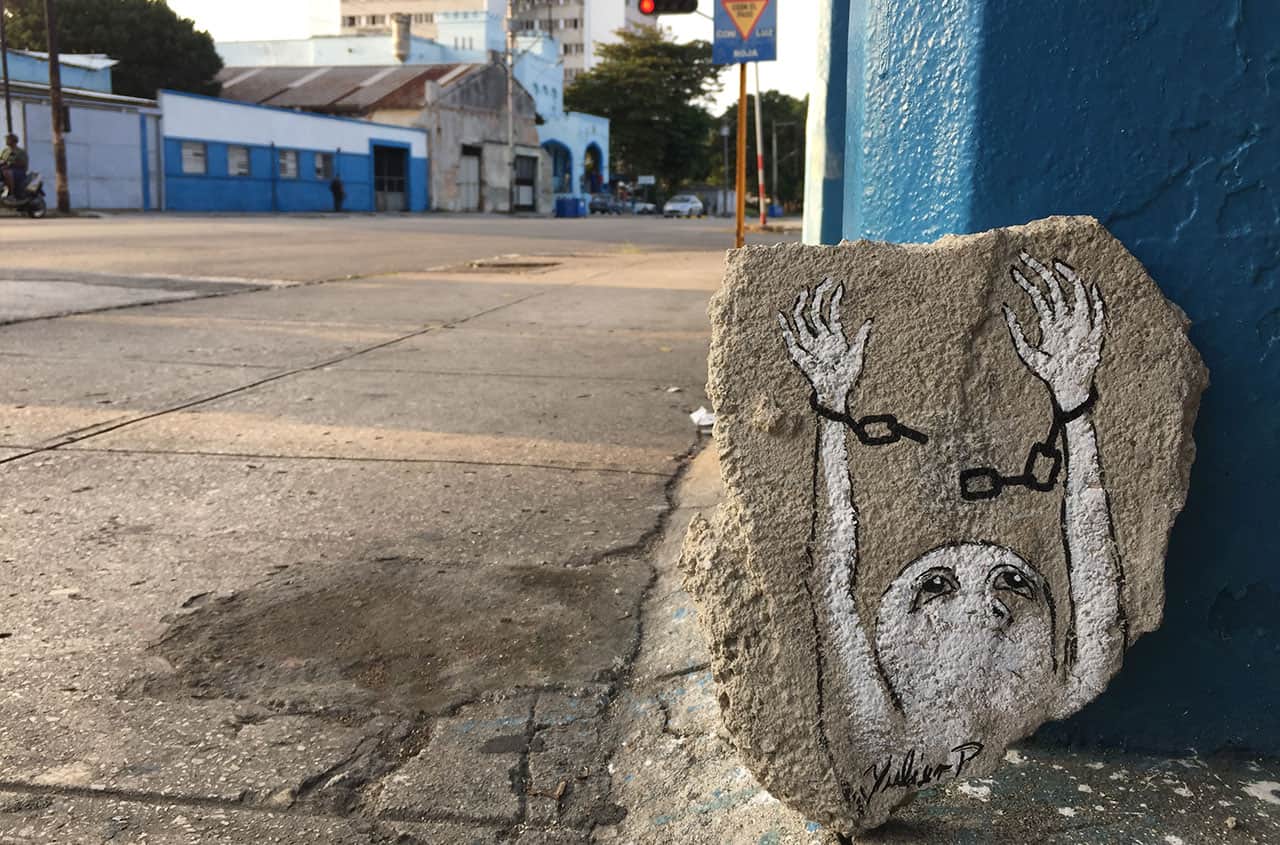
Yoani Sánchez interviews Yulier P.

I have featured Cuban surrealist street artist Yulier Rodríguez (a/k/a Yulier P.) on this blog several times before. Now, I just discovered his Instagram page; in addition, award-winning Cuban author and blogger Yoani Sánchez interviewed the grafitti artist in August of 2023. Her interview is in Spanish and is available here. (Bonus link: a 2020 profile of Yulier P., which is also in Spanish.)

Yulier P. el grafitero que pinta el hambre, el miedo y la desesperación
Posted in Uncategorized | Leave a comment