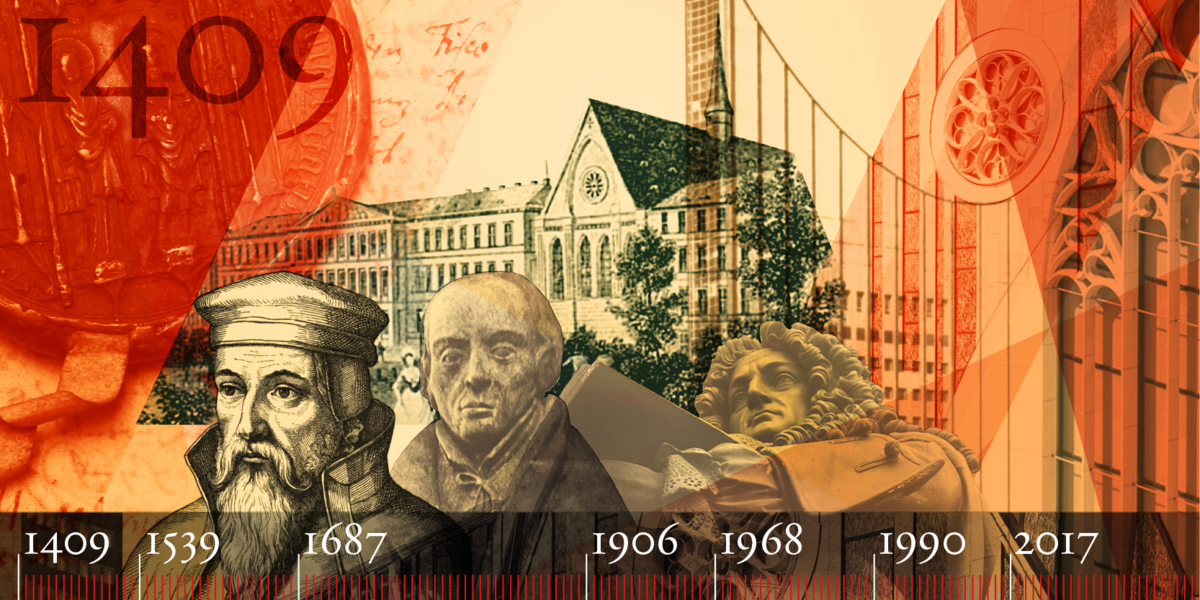
Hafiz (b. 1325, d. 1390) was a prodigious Persian poet who is best known for his magnum opus The Divan of Hafiz (دیوان حافظ), a posthumous compilation of his surviving poems. His stunning tomb, which I hope to visit one day, is located in Shiraz (شیراز), a city in south-central Iran known for its literary history and many gardens; hat tip: mathematician Cliff Pickover (@pickover).
“Rule of law” means that no one is above the law, including the public officials whose duty it is to make, enforce, and interpret ours laws and regulations. (See here or here, for example.) In other words, the same leaders who gave us the TSA should be required to go through TSA lines at the airport like the rest of us, right? Alas, check out this 2010 report from CBS News: “While the rest of the country enters a ‘Constitutional Twilight Zone’ every time they step into an airport, many top politicians and government officials have their rights to privacy fully protected when they fly, reports the Associated Press. Cabinet secretaries, top congressional leaders, and an exclusive group of senior U.S. officials are exempt from … airport screening procedures ….”
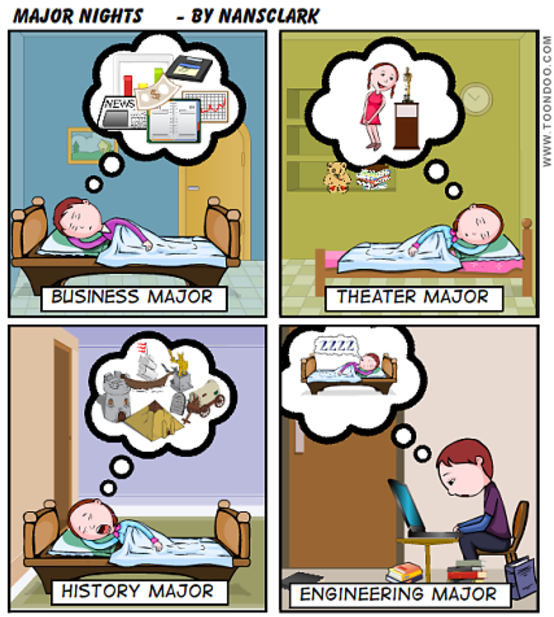
Via Nanette South Clark (Engineering Comic): “I remember what my biggest dream was, so I decided to make a comic about it. I had many 4am homework conversations at Denny’s with my fellow engineering students where we talked about switching majors so we could get a little shut-eye. I was particularly jealous of the geologists because they always looked so happy.”
Image credit: Nanette South Clark (Engineering Comic)
See here. Could someone please inform the sorry-ass editors at Sports Illustrated (or their AI bots) that Coach Prime’s last-place team was only able to muster a single solitary victory against their conference opponents this season? Either we are being trolled by the lamestream media again or the AI systems at this once venerable publication have run amok!
Coach Prime is here, and he's just getting started
I just posted to SSRN a revised and corrected version of my paper “Outer Space Auctions?“, which will be published in the next issue of The Annals of Air and Space Law. Among other things, my new work explains why low Earth orbit is becoming a tragedy of the commons — but don’t just take my word for it, see also here, here, here, or here. In addition, my paper proposes an alternative method (launch and orbit auctions) for allocating the legal right to specific orbits in outer space and concludes with an homage to the late English economist Ronald Coase (pictured below).
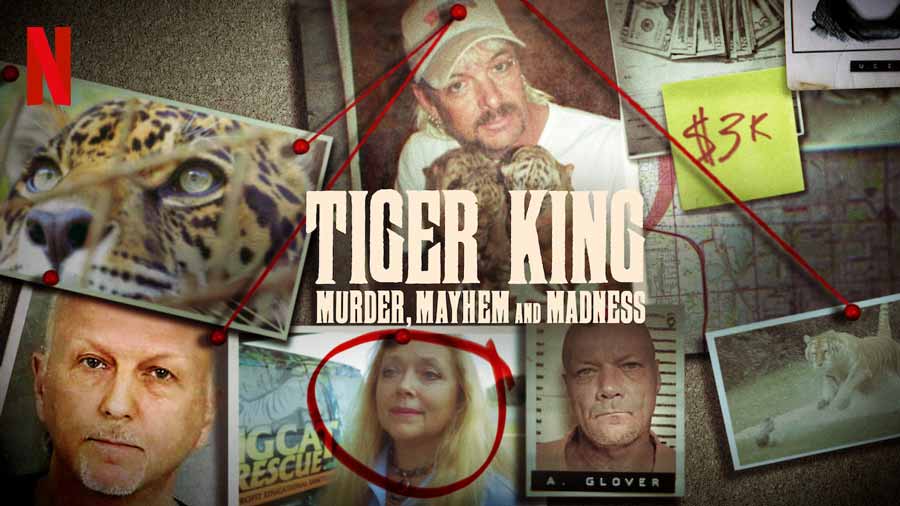
I revisited two of my (still unpublished!) pandemic-inspired papers, “Lockdowns as Takings” and “The Chegg Conspiracy“, in my previous posts. Another pair of pandemic-era works of mine, however, did get published: one in The St Louis University Law Journal (“Teaching Tiger King“, 2021); the other in The University of St Thomas Journal of Law & Public Policy (“The Leibniz Conspiracy“, 2022). In brief, my 2021 “Tiger King” paper (available here), which I co-authored with my graduate and undergraduate teaching assistants, describes how we redesigned our business law survey course from scratch when our home institution moved all instruction online in response to the coronavirus pandemic, while my 2022 “Leibniz Conspiracy” paper (here) was initially inspired by the lamestream media and Big Tech’s Orwelian efforts to bury or belittle the Wuhan lab-leak theory.
I already revisited the first of my pandemic-era papers, “Lockdowns as Takings“, in my previous post. In all, the Wuhan virus inspired four of my scholarly papers, including my proposed criminal indictment “The Chegg Conspiracy“, which I wrote up during the summer of 2021 after I discovered that many of my students were using Chegg and other similar websites to cheat on their online exams in my courses. At the time I posted that paper to SSRN, Chegg stock was worth over $100 a share; today, it is just $10 per share. Thanks ChatGPT!
Remember the ill-advised “stay-at-home” orders during the pandemic? In all, 43 State governors issued emergency (i.e. illegal) orders directing residents to stay at home and non-essential businesses to close in response to the coronavirus pandemic (see here, for example). But as I explained as early as April of 2020 to anyone who would listen (here), those State and local lockdown policies were not only unreasonable restrictions of liberty; worse yet, they also constituted unconstitutional “takings” of property rights: one’s right to labor. Now, over five years later, Joe Nocera and Bethany McLean’s new book about the pandemic, aptly titled “The Big Fail“, contains the following scathing critique of those same lockdown policies:
… lockdowns would be China’s default strategy whenever a cluster of people were infected in a Chinese city. ***
Here’s the odd thing, though: lockdowns also became the default strategy for most of the rest of the world. Even though they had never been used before to fight a pandemic, even though their effectiveness had never been studied, and even though they were criticized as authoritarian overreach—despite all that, the entire world, with a few notable exceptions, was soon locking down its citizens with varying degrees of severity.
In the United States, lockdowns became equated with “following the science.” It was anything but. Yes, there were computer models suggesting lockdowns would be effective, but there were never any actual scientific studies supporting the strategy. It was a giant experiment, one that would bring devastating social and economic consequences.
Nocera and Bethany McLean, The Big Fail, pp. 32-33