Music Monday: Jazzy

I will resume my series on the paradox of politics in my next post; in the meantime, enjoy:

Posted in Uncategorized | Leave a comment

J. S. Mill’s effete and elitist rescue operation

How can we preserve individual liberty while at the same time protect public health and safety? In my previous post, we saw a new type of solution to the paradox of politics: replace liberty with utility. On this view, which can be traced back to Jeremy Bentham, instead of trying to maximize freedom or some other natural right (e.g. private property), the role of the state is to maximize overall utility. This move, however, is a dangerous one. If we take the principle of utility to its logical conclusion — if utility is the be-all and end-all of politics — then individual liberty must not only take a back seat to utility; freedom may also be reduced or taken away when doing so would promote our overall utility.

John Stuart Mill (1806-1873), a second-generation utilitarian, tries to tame or neutralize this slippery-slope danger in two mutually-reinforcing ways. First off, Mill draws a qualitative distinction between higher-order and lower-level utilities or pleasures (“qualitative hedonism”; see generally Moore 2019, §2), and secondly, he replaces utility with progress as his master political principle (“the progress criterion”; see generally Strauss & Cropsey 1987, pp. 790-792):

  1. Qualitative hedonism. Mill modifies Bentham’s crude form of consequentialism by distinguishing between two general categories of utilitarian pleasure: mental pleasures, which come from our intellect, imagination, and moral sentiments, and bodily pleasures, which come from physical sensations and appetites. According to Mill, a truly free person would choose the higher-level mental pleasures over the lower ones, “even at the cost of pain and sacrifice of the inferior pleasures.” (Ibid., p. 789; see also Davies 2022.)
  2. The progress criterion. Where Bentham would swap out liberty for utility, Mill would replace utility with progress. For Mill, the purpose of politics — the end goal of the state — is to promote progress. (See Strauss & Cropsey 1987, p. 791.) But how do we measure “progress”? Here is where Mill’s qualitative hedonism comes into play: the promotion of the pursuit of higher pleasures is at the same time the promotion of progress. Why? Because, for Mill, “[a] society in which people pursue the superior pleasures is more advanced in civilization than one in which they do not.” (Ibid., p. 789.)

Pause. What’s wrong with this Millian picture? For me, the most devastating drawback of Mill’s modification of Bentham is that it contradicts the core egalitarian feature of utilitarianism: the idea that all persons in the utility calculus are supposed to count for one and only one! Or in the immortal words of Jeremy Bentham: “Everybody to count for one, nobody for more than one.”

How can we say, for example, that my love of college football is qualitatively inferior (and thus less deserving of legal protection) to your love of Italian opera or Norse poetry or whatever? Doesn’t it matter that many more people would prefer to watch LSU play against Alabama in college football than a night at the opera or a book of poems? [1] Alas, Mill’s combined qualitative hedonism and progress criterion are effete and elitist sand castles that crumble before the waves of real-world democratic politics, where everybody is supposed to count for one and nobody for more than one.

But in fairness to John Stuart Mill, I have yet to mention his most influential work, On Liberty. In that enduring essay, Mill presents a libertarian solution to the paradox of politics, a solution that also promises to neutralize the danger of Bentham’s appeal to utility without falling into the effete and elitist trap described above. In brief, Mill introduces an outer bound or upper limit to state action: the harm principle. (To be continued …)

Utility Theory in Economics: Meaning, How to Measure & Importance
Continue reading
Posted in Uncategorized | Tagged , , , | 1 Comment

Bentham’s dangerous move

Why do I include the English social reformer Jeremy Bentham (1748-1843) in my survey on the “paradox of politics”? Because Bentham’s solution to the law-liberty dilemma is at once novel, original, and extremely dangerous! Before Bentham, the main goal of most Anglo-American political philosophers was to find a way of protecting us from each other while at the same time preserving or maximizing our natural liberty. Bentham’s approach, by contrast, replaces this emphasis on natural liberty with a totally new and alternative criterion. Simply put, Bentham would swap out liberty for utility. In his landmark work on “The Principles of Morals and Legislation” (first published in 1780!), Bentham presents a crude version of act-utilitarianism:

By the principle of utility is meant that principle which approves or disapproves of every action whasoever, according to the tendency which it appears to have to augment or diminish the happiness of the party whose interest is in question …. I say of every action whasoever; and therefore not only of every action of a private individual, but of every measure of government. (Bentham, An Introduction to the Principles of Morals and Legislation (1780), reprinted in Cohen 2018, p. 365, emphasis added)

In other words, the “principle of utility” is not only total–it applies to every decision, whether made by a private individual or by a collective body–it is also exclusive of any other moral or political value. Life, liberty, and property (and any other natural right, for that matter) are not just secondary values; they are irrelevant! And that, in a nutshell, is why Bentham’s appeal to utility is so dangerous. To see why, consider the following thought experiment inspired by Bernard William’s “Jim and the Indians” scenario (see here or here, for example): if killing an innocent man, enslaving him, or expropriating his wealth would promote the overall good or happiness of everyone else, then by all means: execute him, put him in chains, or steal his stuff. We are not only morally justified in violating the innocent man’s rights; the principle of utility, when taken to its logical conclusion, would require us to do so!

Suffice it to say that subsequent generations of utilitarians have tried to salvage Bentham’s utility criterion in many different ways. (Peter Singer, for example, famously expands the circle of people, including animals, whose interests we must include in our moral calculus.) Among the most heroic attempts to rescue utilitarianism is John Stuart Mill’s. More specifically, as we shall see in my next post, Mill qualifies the principle of utility in three ways …

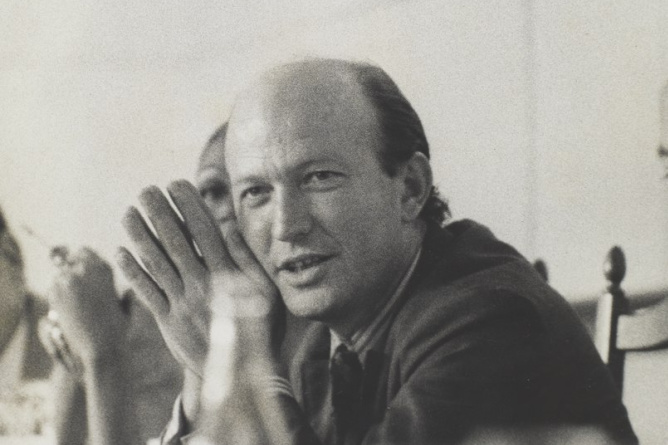
JEREMY BENTHAM 1748 - 1832 (G2, G3a, G3b, G3c, G4, W4)

Posted in Uncategorized | 2 Comments

Property rights in outer space orbits

I will resume my series on the paradox of politics in the next day or two. Today, however, I will be attending the SpaceU Symposium at my home institution, the University of Central Florida, where I will be presenting my work (with Justin W. Evans) on the pros and cons of outer space markets. In summary, outer space orbits, especially in Low Earth Orbit, are becoming more congested. Currently, however, we are giving away these orbits for free. Why not create property rights in orbits instead?

Posted in Uncategorized | Leave a comment

The paradox of politics: part 2

Last month (October 2025), I wrote up a series of blog posts on “the paradox of politics”: the perennial tension between law and liberty, coercion and consent, authority and autonomy. More specifically, I surveyed four of the greatest Anglo-American minds in modern political philosophy: Thomas Hobbes (see here), John Locke (here), David Hume (here and here), and James Madison (here, here, and here). Although these “Four Horsemen of Modern Political Philosophy” present competing solutions to the paradox, they agree on one thing: they define liberty as the freedom to pursue one’s private interests. But is that how we should define the concept of liberty? What other definitions are possible? Starting on Saturday (8 Nov.), I will resume my survey on the paradox of politics with another quartet of European political theorists: Jeremy Bentham, John Stuart Mill, Jean Jacques Rousseau, and Alexis de Tocqueville. As we shall soon see, the members of this competing camp of great minds attempt to solve the law-liberty dilemma in one of two ways: either by presenting a different conception of freedom or by rejecting the idea of natural liberty altogether!

Theoretical framework on liberty in the teaching profession
Posted in Uncategorized | Leave a comment

*Why Space?*

That is the title of this new book-length defense of space exploration, which I have also added to my ever-expanding Thanksgiving week reading list! (I had the honor of meeting the author, the legendary space activist Rick Tumlinson, at a book-signing event on day two of this year’s National Space Society’s “Space Settlement Summit” at the University of Central Florida.)

Posted in Uncategorized | Leave a comment

*Astrophilosophy*

That is the title of this paper by Namrata Goswami, a professor of space security at the USSF-Johns Hopkins University. I had the pleasure of meeting Professor Goswami at the National Space Society’s 2025 “Space Settlement Summit“, which is meeting at my home institution, the University of Central Florida. Suffice it to say that I have added Dr Goswami paper to my Thanksgiving-week reading list!

Space Settlement Summit SSS 2025 with The Economist and UCF
Posted in Uncategorized | Leave a comment

Monday music: Ochi chernye (Dark eyes)

I will begin posting a new series on “the paradox of politics” in the next day or two; in the meantime, enjoy!

Posted in Uncategorized | Leave a comment

*Dia de los Muertos con el Mariachi Monumental de Mexico*

Let’s take a moment to celebrate the memory of our dearly departed loved ones. Or better yet, let’s build them an ofrenda (see here)!

Posted in Uncategorized | Leave a comment

All Saints Day

Today (11/1) is All Saints Day. The painting pictured below (“All Saints Day I”) is one of four works created by the great Russian avant garde artist Wassily Kandinsky in 1911 to commemorate this solemn occasion. More details here.

All Saints Day I
Posted in Uncategorized | Leave a comment