Super Bowl survey: testing the wisdom of crowds effect

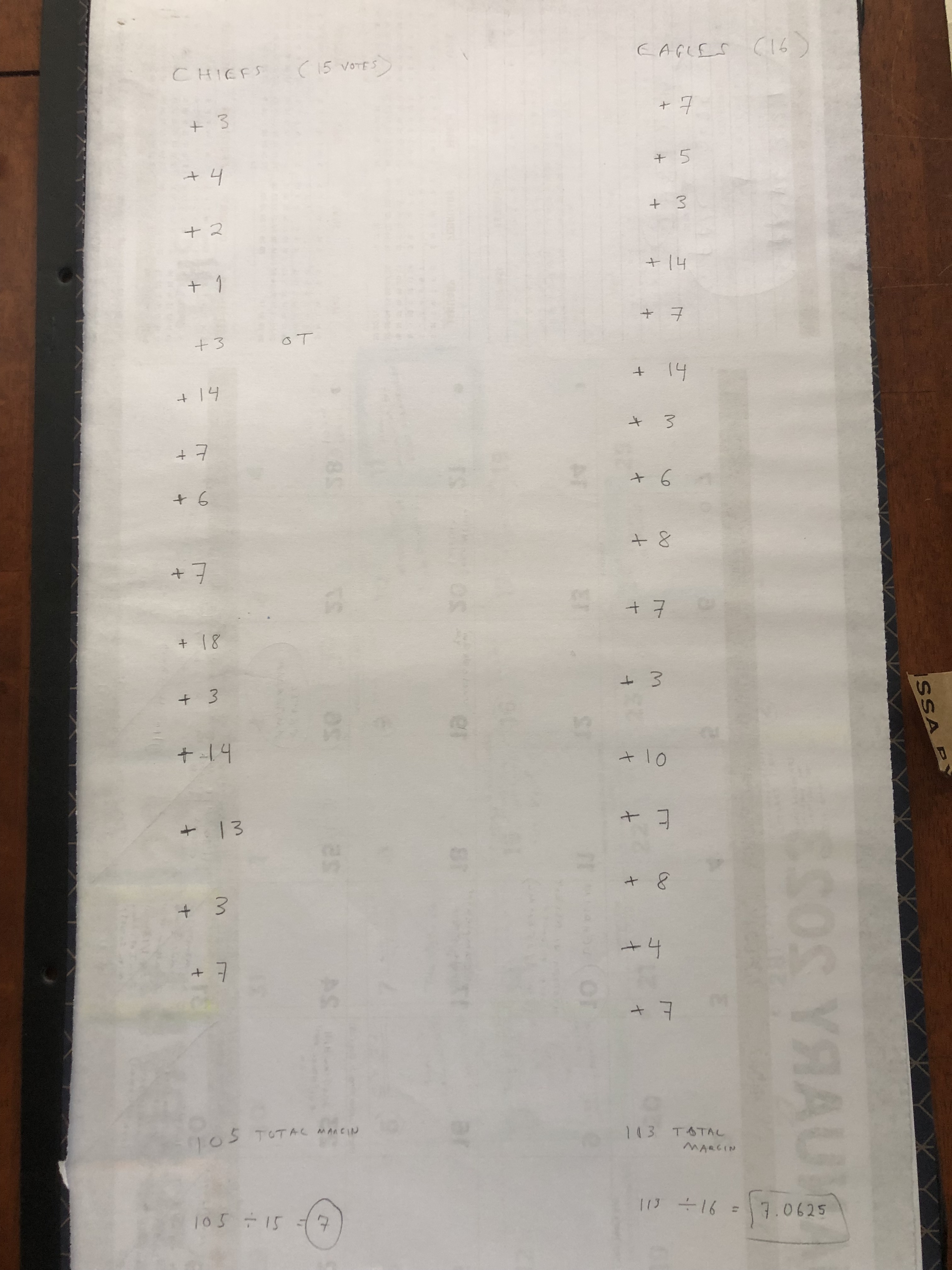
Postscript: My Super Bowl contest was a success. In summary, four of my students–out of a total of 31 participants–correctly predicted that the Kansas City Chiefs would win the championship game by three points. Overall, my “wisdom of crowds” test predicted a close contest, since 15 students picked the Chiefs to win by an average of 7 points, while 16 students thought the Eagles would win by an average of 7.1 points (see my previous Super Bowl LVII post below).

F. E. Guerra-Pujol's avatarprior probability

On Friday 2/10, I invited the students in my business law survey course to predict which team will win the Super Bowl (the Kansas City Chiefs or the Philadelphia Eagles?) and by how many points? Then, on Sunday morning 2/12, I tallied up the results. In summary, a total of 31 students made predictions about the outcome of the championship game: 15 students predicted the Chiefs would win by an average of 7 points, while 16 students predicted the Eagles would win by an average of 7.1 points. These data are pictured in the table below:

For my part, I originally conducted this survey because I wanted to test the so-called “Wisdom of Crowds” hypothesis (i.e., I was going to base my prediction on the aggregate of student predictions), but how should I aggregate these data? By a narrow margin (one vote of over 30 votes cast), more students overall…

View original post 21 more words

Posted in Uncategorized | Leave a comment

Super Bowl survey: testing the wisdom of crowds effect

On Friday 2/10, I invited the students in my business law survey course to predict which team will win the Super Bowl (the Kansas City Chiefs or the Philadelphia Eagles?) and by how many points? Then, on Sunday morning 2/12, I tallied up the results. In summary, a total of 31 students made predictions about the outcome of the championship game: 15 students predicted the Chiefs would win by an average of 7 points, while 16 students predicted the Eagles would win by an average of 7.1 points. These data are pictured in the table below:

For my part, I originally conducted this survey because I wanted to test the so-called “Wisdom of Crowds” hypothesis (i.e., I was going to base my prediction on the aggregate of student predictions), but how should I aggregate these data? By a narrow margin (one vote of over 30 votes cast), more students overall think the Eagles will win, and both groups are equally confident that (on average) their team will win by a touchdown.

Posted in Uncategorized | 4 Comments

Sunday song: Thomas, Bacharach, and David

To commemorate the life and work of Burt Bacharach, who died last week at the age of 94, the Amazing Tyler Cowen reflects on some “Burt Bacharach moments” here. For my part, the first recording that I ever remember hearing on the radio as a child was “Raindrops Keep Fallin’ on My Head“, one of my mom’s favorite songs. (I did not know until now that this ballad was the theme song for the 1969 film Butch Cassidy and the Sundance Kid.) Although this classic tune features the voice of B. J. Thomas, it was composed by none other than Burt Bacharach, along with the great Hal David, who wrote the lyrics.

Posted in Uncategorized | Leave a comment

Spring semester readings

Among other things, below are some of the books I will be reading and studying this semester:

  1. A critique of “stakeholder capitalism”: The Profit Motive by Steven Bainbridge (more details here, via Volokh);
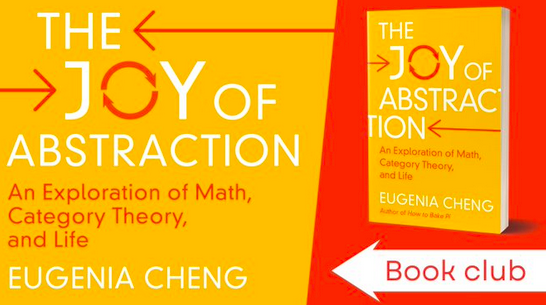
  2. An introduction to category theory, the cover of which is pictured below: The Joy of Abstraction by Eugenia Cheng (more details here, via Azimuth);
  3. A “short history of what we live by”, which was recommended to me by Stephen Carter: Rules by Lorraine Daston (more details here, via Next Big Idea Club);
  4. A collection of essays about Adam Smith: Smithian Morals by Dan Klein (an open access version is available here);
  5. A defense of classical liberalism by one of my favorite Latin American authors (in Spanish): La llamada del tribu by Mario Vargas Llosa (a translation to English is also available here); and
  6. A history of mid-19th century accounting and finance clerks: Accounting for Capitalism: The World the Clerk Made by Michael Zakim (more details here, via the London School of Economics).
Posted in Uncategorized | Leave a comment

Friday funnies

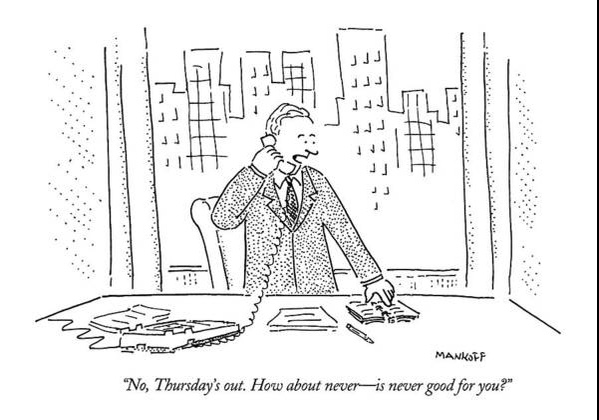
I have two confessions to make today. One is that I have a paid subscription to The New Yorker (since 1995!); the other is that I am New Yorker subscriber just for the cartoons, like the one posted below!

Posted in Uncategorized | Leave a comment

Taking Posner Seriously

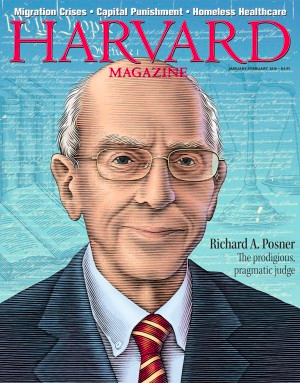
Note: This is the second in a series of blog posts in honor of Richard Posner

In a previous post, I described Richard Posner as “one of the greatest legal theorists and thinkers in history, on a par with such historical figures as the great dissenter Oliver Wendell Holmes, the natural law scholar St Thomas Aquinas, and the classical Roman law jurist Gaius“. Really? How did I come to that conclusion? In this post (and the next one), I will describe my “first contact” with Judge Posner, the moment when I first began to realize that Posner was not just a leading legal light, but a once-in-a-generation original thinker.

My first exposure to Judge Posner occurred in law school. But I have to tell you up front, my professors at Yale did not think very highly of the great Richard Posner. In fact, it would be no exaggeration to say that they totally disdained Posner and everything he stood for, which back in those days (the early 1990s) meant the economic analysis of legal rules or “law & economics” for short. Whether it was out of pure professional jealousy (my professors were by-and-large the same age as Posner) or outright envy (their accomplishments paled in comparison to Posner’s) or just plain spite, these Yale law professors would mention Judge Posner or cite one of his judicial opinions for the sole purpose of criticizing the man and his ideas, to offer an example of what not to think or write.

Alas, this dismissive and sneering attitude toward Judge Posner at first rubbed off on me. As a result, I did not begin to take Posner seriously until after I became a law professor in 1998, when I joined the faculty of the Pontifical Catholic University of Puerto Rico. At first, though, I have to confess that I actually refused to read anything by Richard Posner. As a recent graduate of the Yale Law School and full-time faculty member of a faith-based law school, I already “knew” that Posner’s works were stale and simple-minded. Why? Because the economic analysis of legal rules — especially the version of law & economics most closely tied to Posner, the version called the “Chicago school” — was too conservative, unoriginal, and morally suspect.

Given these negative priors, several more years would pass by before I actually started studying some of Judge Posner’s many multifaceted works on my own initiative, and when I finally did — in December of 2000 — my intellectual life would never be the same again. So, what was my first Posnerian foray, the piece of Posner’s writing that had such a momentous effect on me? As it happens, it was a book, and it had nothing to do with economics. I will identify Posner’s book and explain its effect on me in my next post in this series.

Posted in Uncategorized | 1 Comment

Review of Chapter 4 of Rule of Law: Judgment versus Discretion

Note: Thus far, I have reviewed the first three chapters of Tom Bingham’s classic Rule of Law. (See here, here, and here.) Today, I will review Chapter 4.

Judge Bingham draws a key distinction between “judgment” and “discretion” in Chapter 4 of his book. In brief, for Bingham, the rule of law requires that “questions of legal right and liability should [he really means must] … be resolved by application of the law [i.e. “judgment”] and not the exercise of discretion.” But does this string of words/rule of thumb make any sense in the real world? As it happens, there is a big problem with Bingham’s formulation: the problem of hard cases, a problem made famous in scholarly circles by the late Ronald Dworkin. (See here, for example.)

To the point, the problem with Bingham’s purported distinction between “judgment” and “discretion” is that the exercise of discretion is unavoidable whenever we are dealing with hard cases. Moreover, every case that makes it to the Supreme Court is a hard case. Why? Because, by definition, there are plausible and good-faith arguments on both sides of the legal issue in question. (Otherwise, the case wouldn’t have gone up to the Supreme Court in the first place!) So, what is a “hard case”? Simply put, a hard case is a legal controversy in which a question of law or question of fact is open to multiple — and competing — interpretations.

Is a fish, for example, a “tangible object” under the Sarbanes-Oxley Act? That was the novel legal question posed in the case of Yates v. United States. Do murdering heirs forfeit their inheritance rights? That was the question in Riggs v. Palmer. What about a simple municipal ordinance that prohibits “motor vehicles” in city parks? Does the term “motor vehicle” apply to drones or other unmanned aerial vehicles (UAVs)? That is a variation of a famous hypothetical posed by the legal philosopher H.L.A. Hart, a simple hypothetical from the 1950s that continues to generate tons of scholarly literature to this day. (See here, here, and here, for example.) I could go on and on: the only limit to finding hard cases is one’s imagination!

Is there any way of shutting the lid to this legal Pandora’s box. One possible solution is the doctrine of stare decisis, i.e. binding precedent. Alas, this celebrated common law rule doesn’t always solve the problem of hard cases. Instead, it poses a new problem: the problem of argument by analogy. Simply put, for stare decisis to work, we must agree when two different cases are sufficiently alike so as to merit the same outcome. The problem, however, as every first-year law student learns during the first week of law school, is that there are no universally-accepted rules for deciding when two cases are sufficiently similar. Argument by analogy is often a judgment call!


Posted in Uncategorized | 1 Comment

Business Law and Strategy

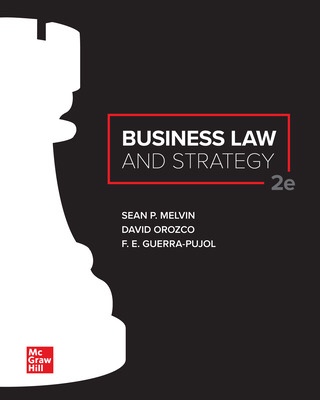
I am taking a break from my break from blogging (sorry!) to report that the new edition of my undergraduate textbook Business Law and Strategy, which I co-wrote with my esteemed business law colleagues Sean Melvin and David Orozco, was just published by McGraw Hill. Among other things, our textbook introduces students to a wide variety of strategic concepts and explains their relation to law, such as asymmetric information, commitment devices, and the hold-out problem, just to name a few.

Posted in Uncategorized | 4 Comments

Break from blogging

I will resume blogging in the next day or two. In the meantime, below are a few more pictures of our new puppy Nugget:

Posted in Uncategorized | Leave a comment

Sunday songs

Following up on this prompt from Sheree via Bee H. (see here), I am posting two songs “specific to me and my beloved” (Sydjia, my wife of 10+ years now) from 2010, the year we started dating. The first one is the musical composition “Hand covers bruise”, the haunting theme music for the award-winning film The Social Network, which we saw on our first date.

The second one is below the fold:

Continue reading
Posted in Uncategorized | 3 Comments