The beautiful city of Santa Barbara in California, where I went to college, takes its name from Saint Barbara, the patron saint of armourers, artillerymen, architects, mathematicians, miners, and the Italian Navy, and today (4 December) is her feast day. (In Spanish, this day is la fiesta patronal en honor de Santa Bárbara.) Among other things, according to this account of Saint Barbara’s life, she was known for her beauty but never married:
“Barbara was born in the mid third century in Heliopolis, Phoenicia [the city of Baalbek in modern-day Lebanon, which is now a UNESCO World Heritage Site; see here] to her rich pagan father Dioscorus. Barbara was really beautiful and her father, in order to preserve her beauty and protect her from the world, locked her up in a very high tower. A case very similar to the fictional story Rapunzel. He only allowed her pagan teachers to see her. *** As a result of her extreme beauty, many men got to hear about her, and suitors from far and near came to seek her hand in marriage. Her father too kept mounting pressure on her to accept one of these suitors. Barbara declined them all and when she could no longer bear the pressure from her father, she asked him to stop pressurizing her into marriage as that could only bring a strain on their relationship.”
How much of this account is fiction and how much fact? Either way, as someone who loves mathematics (I have published several papers on game theory, a branch of mathematics) and who went to college at UCSB, I consider Saint Barbara as my patron saint! Below are four depictions of Barbara via Google Images:
Merry Christmas! Reason magazine just published a fascinating and thought-provoking collection essays on various aspects of space exploration in its December 2022 issue (see here), the cover of which is pictured below. The five essays that most caught my attention were as follows (in alphabetical order, by author):
For my part, I have previously proposed “launch auctions” to allocate orbits in outer space (see here, for example), and I am currently researching this idea further. In the meantime, I will write up short reviews of these excellent essays next week.
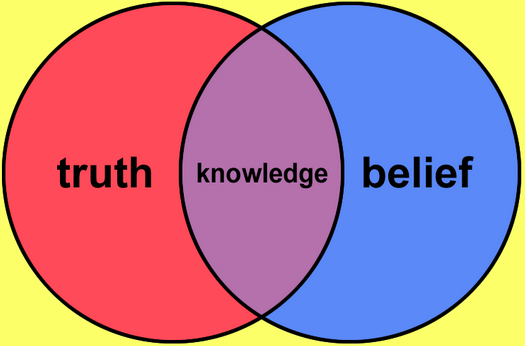
Thus far, we have identified and responded to three possible objections to Hayek’s conception of knowledge. Among other things, we have explored the “social construction” of knowledge (see here) and the “commodification” of knowledge (here), but we have not yet defined what we mean by “knowledge”. Here, I will conclude this series by presenting a specific conception of knowledge: knowledge as belief.
Where should we draw the line between knowledge and belief, between objective and subjective truth, and why does this distinction matter? (As an aside, philosophers, going back to Plato, have debated the knowledge-belief distinction for centuries; for reference, here is a helpful summary of the difference between knowledge and belief.) However this line is drawn, unless you are a Platonist knowledge is not always about truth or some Platonic ideal; sometimes knowledge is based on one’s beliefs, i.e. what one believes to be true, and beliefs (unlike absolute truths) are always tentative. Moreover, this “belief conception of knowledge” has radical implications for Hayek’s defense of the price system. In fact, it totally undermines Hayek’s argument! Let me explain:
For Hayek, prices reflect hidden information–information that is spread out over many dispersed individuals. But what if the price of an asset is based on people’s beliefs? In that case, if the price of an asset merely reflects the aggregate beliefs of people about what they think that good is worth, then the price of a particular asset may or may not reflect its true underlying value but rather what people think the asset is worth. So what? The problem here is that people might be basing their estimate of an asset’s value on what they think other people think the asset worth, and if those other people are doing the same, then we will find ourselves in an infinite loop or regress!
This is the “Keynesian beauty contest” or “beliefs about beliefs” problem that I have blogged about before (see here and here, for example), and to my mind, this potential infinite regress poses the most serious challenge–not only to my proposed “truth market” idea but also to Hayek’s defense of markets more generally. For now, I just want to shout out my colleague and friend David Schraub, who first brought this problem to my attention last month when I presented my truth market idea at a colloquium. (See also his thoughtful comments to my 17 November 2022 blog post (here).) Suffice it to say that this problem is a potentially devastating one to Hayek and me, so I promise to reflect further on David’s comments and respond soon …
I want to resume my four-part critique of F. A. Hayek’s conception of knowledge by exploring what some scholars refer to as the commodification of knowledge. (For an overview of this anti-capitalist literature, check out this book, which sells for $113 and is ironically titled: Not for Sale, the cover of which is pictured below. )
In summary, the commodification literature has two broad intellectual strands: one normative; the other descriptive. The normative part exposes the nefarious role of research universities and science labs in the production of knowledge. See, for example, this guide for educators on neoliberalism or this essay on “The danger of commodifying knowledge” by Alex Nolting, who advocates for radical reform of higher education. The descriptive side, like this informative and wide-ranging paper on “Biocolonialism and the commodification of knowledge” by Laurie Anne Whitt, compares and contrasts western methods of knowledge production with indigenous ones.
But what relevance or connection does this commodification literature have to Hayek’s argument in “The use of knowledge of society” that market prices reflect hidden information–information that is dispersed among many different individuals? In brief, the connection between commodification and Hayek’s argument has three logical steps, which I will outline below. (Before proceeding, however, I want to thank Josephine Baker, a researcher at the New School for Social Research in New York City, for bringing this connection to my attention during her excellent and informative talk at the Southern Economic Association on 21 November 2022.)
Step one is that intellectual property rights (like patents, trade secrets, and copyrights) make it possible for some forms of knowledge to be “commodified” (i.e. owned by private companies or individuals), and these intellectual property rights can be very valuable.
The next step involves the exclusive nature of these IP legal rights: when a private individual or firm has intellectual property rights over an idea (patent and trade secret law) or over the expression of an idea (copyright law), he becomes a monopolist since he is the exclusive owner of that idea.
The last part of this argument combines steps 1 and 2: when knowledge is commodified via intellectual property law (i.e. when ideas are privately owned), the owners of these ideas have a powerful economic incentive to jealously guard their exclusive rights. This incentive, in turn, has the ultimate effect of distorting prices by making it more difficult for ideas to freely spread.
Alas, this is not only a bad argument; it is a naïve one. Why? There are two reasons why. First off, just because people and firms are able to use IP law to assert exclusive rights over their ideas does not mean that there can’t be a competitive market in those ideas. In fact, markets make it possible for people to transfer property rights in the first place. By allowing people to own ideas, we not only create an incentive for people to create new ideas, we also make it possible for those ideas to be traded!
Secondly, IP law in actual practice is not as one-sided or as pro-owner as the anti-commodification literature makes it out to be. Copyrights, for example, are subject to the fair use defense; trade secrets can be reverse engineered; utility patents expire after only 20 years. Yes, we can debate the definition of “reverse engineering” or whether the fair use doctrine should be construed more broadly by the courts or whether the patent system as a whole promotes or hinders technological innovation, but what is not up for discussion is my larger point that markets require property rights. In fact, markets are all about transferring property rights. Without property rights, you can’t have markets, and without markets, you can’t have real-time prices.
I am reblogging my “Boycott Communist China” post of 5 August 2021 to pose the same question I asked back then: Why are we still trading and doing business with an oppressive police state?
Given the cover-up of the Wuhan lab-leak, the crack-down against the pro-democracy movement in Hong Kong, and the atrocities in Xinjang province, why the heck are we still trading with China?
A previous post of mine identified four possible problems with F. A. Hayek’s classic defense of the price system; in this post, I will proceed to the second critique: Hayek does not define “knowledge” in his knowledge paper. Although Hayek does refer to “different kinds of knowledge” in part 3 of his paper, including “scientific knowledge” and “knowledge of the particular circumstances of time and place” (i.e. “local knowledge”), at no point does he provide an overarching definition of what “knowledge” is. (The closest he comes to doing so is when he writes on pp. 521-522 of his paper: “practically every individual … possesses unique information of which beneficial use might be made, but of which use can be made only if the decisions depending on it are left to him or are made with his active cooperation.”)
Why is this glaring omission a problem? Because a lot of so-called knowledge might be “socially constructed” or radically indeterminate. Why? Because knowledge, at a minimum, implies the existence of truth, but the truth of a given proposition, in turn, is often subjective or contested, or both. That is, truth is rarely, if ever, an absolute value; the truth is always up for grabs. (Compare the notion, which is popular today, of “my truth.” By way of example, see my 25 March 2021 blog post on “the social construction of conspiracy theories“. For further reading, you may want to check out “The Social Construction of Reality” by Peter L. Berger and Thomas Luckmann.)
In defense of Hayek, however, one could always reply to a social constructionist by simply asking, So what? Even if knowledge is somehow socially constructed, even if truth is a subjective or contested concept, some propositions are more likely to be more true or more coherent than others by most measures of truth. (As an aside, this is one reason why I prefer to the term “probabilistic truth” and why I favor subjective or personalist methods of probability; see here, for example.) Nevertheless, that said, there are two further points we must address: (1) property rights in ideas or the “commodification of knowledge” problem, and (2) knowledge as belief or the “Keynesian beauty contest” problem. I will address these points in my next two posts.
In a previous post, I identified four possible problems with Hayek’s defense of the price system; here, I will focus on the first critique: the absence of law in Hayek’s analysis. As it happens, I am not the first law professor to notice this omission. See, for example, this blog post from 10 October 2015, where I shout out Richard A. Epstein. Among other things, I wrote: “Markets do not exist in a vacuum. Markets require some kind of legal framework, one that respects people’s property rights and enforces their contracts. But where do we get these legal frameworks and rules from? In the case of the United States, we have a Constitution, which is the supreme law of our land. But isn’t a constitution (and law generally, for that matter) a textbook example of human design and not of spontaneous order?”
More specifically, consider the issue of money (pun intended). At no point does Professor Hayek discuss the indispensable role of money or currency in his 1945 knowledge paper. But doesn’t a “marvelous” price system (his term, not mine) imply the existence of some form of medium of exchange, such as the British Pound, the Japanese Yen, or the Mexican Peso? And unless you think Bitcoin or other cryptocurrencies have any real value, doesn’t a stable monetary currency require some kind of central bank or government agency, whether the currency is backed by a precious metal, like the gold standard of yore, or is government-issued, like today’s so-called fiat money?
In fairness to Hayek, volume two of his three-volume magnum opus on The Constitution of Liberty (available here) contains an extended discussion of the role of law in promoting liberty, while his fellow Austrian economist, the great Ludwig von Mises, explains the private origins of money in his classic treatise on The Theory of Money and Credit. In fact, scholars continue to debate to this day whether indispensable elements like money and law are classic “public goods” (i.e. something that requires government intervention and thus some amount of central planning) or whether these things can be organically and voluntarily supplied by private firms. (For a small sample of this masturbatory intellectual back-and-forth, check out Tyler Cowen’s public-good view here versus David Friedman’s “law as a private good” here.)
Rather than try to adjudicate this decades-long debate (an impossible, Quixotic task, in any case), I will refer to Robert Nozick’s influential defense of the night-watchman state in Anarchy, State, and Utopia, one of my favorite fiction books of all time. Even if government is neither necessary nor sufficient for the price system to work at scale (a proposition I find as fanciful as Peter Pan’s “Neverland”), a good government–one that at the very least identifies and punishes aggressors, enforces contracts, and defines and protects property rights–would be nice. Either way, I will identify another important omission in Hayek’s analysis of the price system in my next post: what does he mean by “knowledge”?
I surveyed F. A. Hayek’s “The use of knowledge in society” during the Thanksgiving break. (See here, here, and here.) Below, I identify four possible objections to Hayek’s defense of the price system:
What about law? First off, for markets (i.e. the price system) to work, there must be rules, and rules by definition require some form of coercion, but Hayek doesn’t talk about about the role of institutions (i.e. courts, custom, law, etc.) in his knowledge paper.
What is “knowledge”? Alas, Hayek never defines the term “knowledge”; why not? Also, according to the post-modern school, knowledge is “socially-constructed”. If so, how does post-modernism affect Hayek’s analysis of the price system?
What about the self-reference problem? Hayek’s argument is that market-determined prices reflect the fragmentary bits of local knowledge held by many dispersed individuals and firms, but what happens when some forms of knowledge are themselves a privately-owned commodity (like tin to borrow Hayek’s own example)? Think of trade secrets, for example.
Lastly (for now), what about beliefs and emotions? If knowledge refers to facts about the world or to reliable theories about how the world works, beliefs by comparison are subjectively-held or probabilistic states of mind about those same facts or theories. Could beliefs play an important role in market systems? Also, what role do emotions (or what John Maynard Keynes called “animal spirits“) play?
Can you think of any other potential objections to Hayek’s analysis; e.g. wealth effects, “market failures”, public goods, etc.? In the meantime, I will address each of the above points in my next few blog posts.
I love the Spanish parts of this 2010 World Cup anthem, but my favorite part is when K’naan sings: “When I get older, I will be stronger/They’ll call me freedom, just like a wavin’ flag.”











The Wall Street Journal (November 28, 2022)

:max_bytes(150000):strip_icc():format(webp)/definition-of-social-construct-1448922_final1-6fe378481ec5483ea8d61e1ca1d20234.png)



 prior probability