The solution to Madison’s dilemma: more factions, more opinions!

Nota bene: this is the eighth of a series of blog posts on “the paradox of politics”.


By a faction, I understand a number of citizens, whether amounting to a majority or a minority of the whole, who are united and actuated by some common impulse of passion, or of interest, adversed to the rights of other citizens, or to the permanent and aggregate interests of the community.” –James Madison, Federalist #10

By now, the identity of X should be obvious to all: he is none other than James Madison. Although this founding father has many achievements to his name — he was elected the fifth president of the United States, served as secretary of state to the fourth president (Thomas Jefferson), drafted the bill of rights, and was the unofficial secretary of the constitutional convention of 1787 — his greatest legacy and claim to fame was his co-authorship (with John Jay and Alexander Hamilton) of the Federalist Papers.

In my previous post, I extended Madison’s famous definition of factions (quoted above) in Federalist #10 to encompass Hume’s emphasis on public opinion as the invisible social glue that keeps governments, whether despotic or democratic, in power. After all, what is a faction but a group of people with a shared opinion about some matter of private or public interest? In short, the relationship between factions and public opinion is a symbiotic one.

Either way, whether our focus (like Madison’s) is on factions or (like Hume’s) on public opinion, let’s recall why factions are so dangerous. They are, in the eloquent words of Madison, “mortal diseases” that generate nothing but “instability, injustice, and confusion.” (pp. 321-322) But at the same time, factions will always arise in a free society: “Liberty is to faction what air is to fire, an aliment without which it instantly expires.” (p. 322) I like to call this tension between factions and liberty Madison’s dilemma: how do we control factions — and avoid the tyranny of public opinion — without getting ridding of liberty?

One possible solution is the election of a man like George Washington, a great statesman who is able to balance the interests of competing factions and bend public opinion toward the common good, but as Madison correctly notes, don’t hold your breath: “It is in vain to say that enlightened statesmen will be able to adjust these clashing interests, and render them all subservient to the public good. Enlightened statesmen will not always be at the helm.” (p. 323)

Madison’s solution to the problem of factions — and to the tyranny of public opinion more generally — is a structural one: regardless of who is in power, if a faction or opinion consists of less than a majority, ordinary politics will keep such activist groups, however vocal, in check. Or in the immortal words of James Madison: “relief is supplied by the republican principle, which enables the majority to defeat its sinister views by regular vote.” (p. 323) Although such vocal activist groups might be able to stir up some trouble, they lack the votes to carry out their nefarious schemes: “[They] may clog the administration, [they] may convulse the society; but [they] will be unable to execute and mask [their] violence under the forms of the Constitution.” (ibid.)

But what happens when a majority is included in a faction? That is, what happens when public opinion is in agreement with the nefarious plans of some specific faction? It is here where Madison’s full genius is on full display. His proposed solution is so elegant and original — and yet so counterintuitive — that I will quote it in full:

“Extend the sphere, and you take in a greater variety of parties and interests; you make it less probable that a majority of the whole will have a common motive to invade the rights of other citizens; or if such a common motive exists, it will be more difficult for all who feel it to discover their own strength, and to act in unison with each other. Besides other impediments, it may be remarked that, where there is a consciousness of unjust or dishonorable purposes, communication is always checked by distrust in proportion to the number whose concurrence is necessary.” (p. 325)

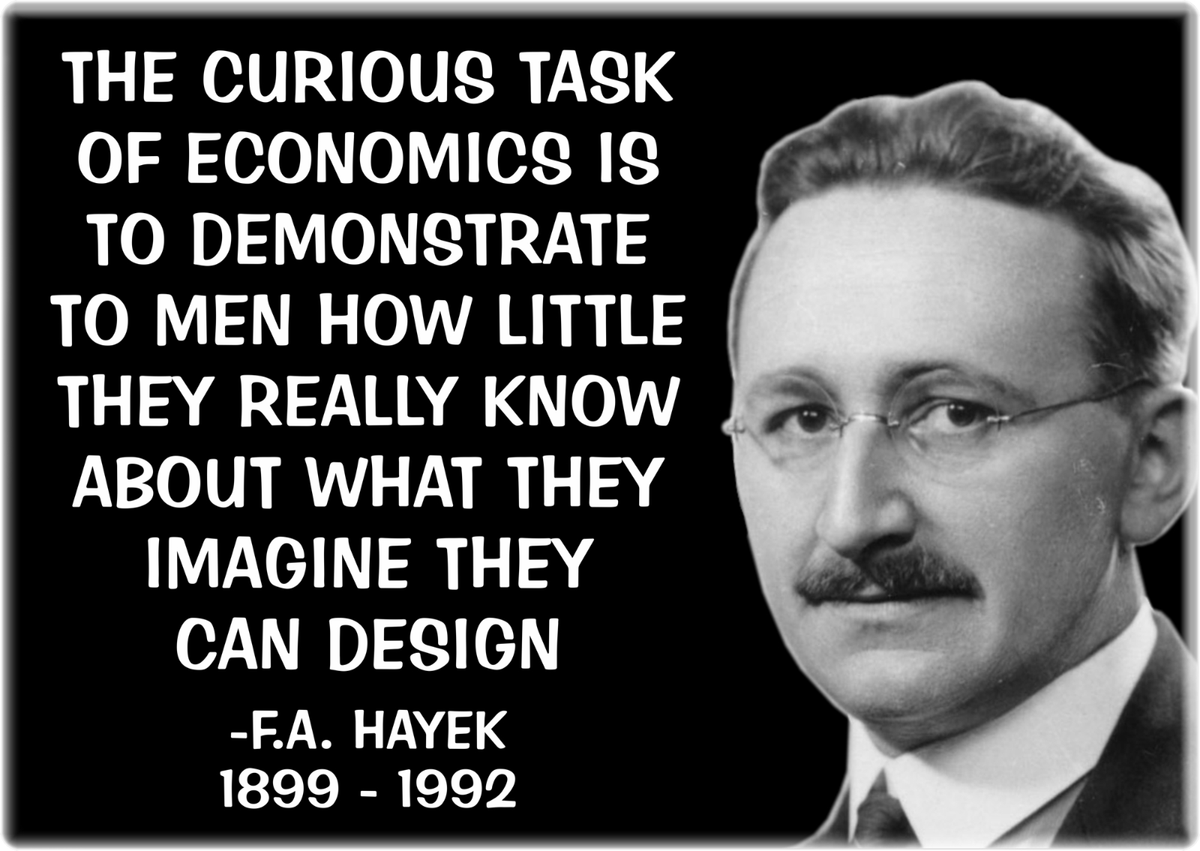
In other words, Madison’s ingenious solution to the problem of factions — and to the tyranny of public opinion — is … wait for it … more factions, more opinions! To paraphrase Mao, let a thousand factions bloom! Why? Because the more factions and niche opinions there are, the more difficult it will be for any one specific faction or opinion to crowd out and dominate the rest.

But what does this Madisonian solution to the problem of factions have to do with the paradox of politics, i.e. with the tension between law and liberty? Everything! After all, all laws are restrictions of liberty, but under Madison’s “extend the sphere” solution, no law will be enacted unless a sufficient number of factions are able to join forces in support of such law. But in the process of joining forces and forming strategic alliances, the leaders of these factions — i.e. the demagogues and opportunists who shape public opinion — will have to compromise in order to secure enough support to get their preferred policies and measures enacted.

In short, it is this Madisonian process of compromise, the give-and-take of negotiation and alliance-formation, that keeps the ever-present dangers of factions and public opinion in check. But is Madison’s ingenious solution to the paradox of politics still relevant to our world? Even before the election (and re-election!) of Donald J. Trump, our national government has grown to monstrous proportions, a monetary Leviathan indeed. According to the Department of Treasury (see here), for example, the federal government spent $6.75 trillion in fiscal year 2024, or almost one-fourth (23%) of our entire GDP (gross domestic product)! I will conclude my series on the paradox of politics with some closing thoughts in my next post.

The Federalist Papers: No. 10
Considering Congress, Part 3: A “Republican Remedy” to the Mortal Disease -  farmdoc daily
Posted in Uncategorized | 1 Comment

Taking Hume’s public opinion theory of morality and politics seriously

Nota bene: this is the seventh of a series of blog posts on “the paradox of politics”.


We saw in my previous post how David Hume replaces natural law and social contracts with public opinion, but is the Scottish skeptic right? Are questions of morality and politics just a matter of public opinion or “the common sentiments of mankind”?

Let’s assume (for now) that Hume is right, that public opinion is the ultimate sovereign. Then what about the rights of those free spirits who dissent from public opinion on a particular topic? In other words, how do we protect ourselves against “the tyranny of the majority”? Also, what about polarization? What happens when the public is split dead even over a given topic? And how do we measure public opinion in the first place?

To my knowledge, only two thinkers have really taken Hume’s public opinion theory of politics seriously and have grappled with these difficult questions. One is John Rawls. The other was a North American contemporary of David Hume. Let’s call him X for now. (I don’t want to reveal his identity yet; instead, I will rehearse his argument to see if you can guess who he is.)

What I like most about X are two things: (1) his poignant diagnosis of the dangers of allowing public opinion to decide policy — among other things, he concedes right off the bat that public opinion, left unchecked and free to rear its ugly head, is a “dangerous vice” and destabilizing force, a “mortal disease” that promotes a “factious spirit” (i.e. an us-against-them mentality) and that generates nothing but “instability, injustice, and confusion” — and (2) his explanation of the central role liberty plays in promoting this mortal political disease.

According to X, there are two methods of curing this mortal political disease: “the one, by removing its causes; the other, by controlling its effects.” (p. 322) But how does one remove the causes of this dangerous vice, the tyranny of public opinion? One is an Orwellian dystopian dictatorship: compel and coerce every person to have the same opinions, the same passions, and the same interests. X, however, rejects this radical solution out of hand (and rightfully so!), for the problem with an Orwellian dictatorship is that people are different. We have different opinions, different passions, different interests, different talents, and “different and unequal faculties of acquiring property”:

“As long as the reason of man continues fallible, and he is at liberty to exercise it, different opinions will be formed. As long as the connection subsists between his reason and his self-love, his opinions and his passions will have a reciprocal influence on each other; and the former will be objects to which the latter will attach themselves. The diversity in the faculties of men, from which the rights of property originate, is not less an insuperable obstacle to a uniformity of interests.” (p. 322)

The other way of removing the causes of this mortal political disease is a Marxist-Leninist revolution: do away with liberty, eliminate the freedom to form opinions, express one’s passions, or pursue private interests. Again, X rightfully rejects this remedy as well:

“It could never be more truly said than of the [Marxist-Leninist] remedy, that it was worse than the disease. Liberty is to [public opinion] what air is to fire, an aliment without which it instantly expires. But it could not be less folly to abolish liberty, which is essential to political life, because it nourishes [public opinion], than it would be to wish the annihilation of air, which is essential to animal life, because it imparts to fire its destructive agency.” (ibid.)

Have you figured out who X is yet? I will reveal his identity and describe X’s ingenious solution to the paradox of politics — i.e. the tension between the dangers of public opinion and the importance of liberty — in my next post. (In the meantime, if only the 20th century had listened to X!)

Kings and Politicians 04: The Tyranny of the Majority – Inspiring and  Challenging Dreamers
Posted in Uncategorized | 1 Comment

Hume’s approach to the paradox of politics: public opinion

Nota bene: this is the sixth of a series of blog posts on “the paradox of politics”; footnotes are below the fold.


We saw David Hume’s devastating take-down of social contract theories in my previous post — governments and property rights did not originate in some fictitious or fanciful social contract; they are founded on force or fraud — but how does Hume resolve the tension between law and liberty? In a word (two words, actually), Hume’s solution to the paradox of politics is public opinion or “the common sentiments of mankind”:

“We shall only observe, before we conclude, that though an appeal to general opinion may justly, in the speculative sciences of metaphysics, natural philosophy, or astronomy, be deemed unfair and inconclusive, yet in all questions with regard to morals, as well as criticism, there is really no other standard by which any controversy can ever be decided.”[1]

But does political philosophy fall under “the speculative sciences of metaphysics, natural philosophy, or astronomy” or is it more like “all questions with regard to morals, as well as criticism”? Or more simply put, is the paradox of politics a science question or a moral/aesthetic one? For Hume, law and politics are practical matters rooted in human nature and social utility. [2] As a result, Hume’s standard for resolving high-level legal and political disputes is not some objective, universal truth grounded in a hypothetical contract; his standard is purely subjective: public opinion.

Hume’s public-opinion approach to political philosophy is not for the feint of heart; after all, public opinion can not only change over time; the public might also prefer a dictatorship over democracy or racial segregation over racial mixing or whatever. [3] Nevertheless, for my part, I find myself in agreement with Hume’s approach to law and politics: there are no universal or objective “right answers” to contentious legal, moral, and political questions, including the ultimate question of how to balance law and liberty. Instead, it is public opinion (“the common sentiments of mankind”) that is the final arbiter of all moral and political questions. For Hume and me, it is public opinion that ultimately decides how much liberty we are willing to give up in exchange for safety and security.

But Hume’s public opinion approach to politics poses two new open practical questions. One is the measurement question: how do we measure public opinion? Is it even possible to measure such a thing in a reliable and accurate manner? The other open question is the problem of conflicting or diametrically-opposed public opinions (plural): what happens when the public is split or polarized over any given matter? (Also, even if an overwhelming majority of the public agrees on X, what about the rights of the minority?) Stay tuned, I will discuss what I consider to be the most compelling and original reply to these questions in my next post. (To be continued …)

David Hume quote: All power, even the most despotic, rests ultimately on  opinion.
Continue reading
Posted in Uncategorized | 2 Comments

David Hume’s devastating take-down of Hobbes, Locke, and Rousseau

Nota bene: this is the fifth of a series of blog posts on “the paradox of politics”; footnotes are below the fold.


“In vain, are we asked in what records this charter of our liberties is registered.” –David Hume, Of the Original Contract (p. 263) [1]

Last week, I began a new series of blog posts on the paradox of politics, starting with Thomas Hobbes and John Locke (see here and here). In brief, both Hobbes and Locke attempt to solve this perennial paradox by positing two imaginary constructs: a world without law or government (the state of nature) and a hypothetical agreement (the social contract). [2] Alas, to quote Jake’s reply to Lady Brett in The Sun Also Rises, isn’t it pretty to think so?

As it happens, it was the great philosopher-skeptic David Hume (1711–1776) who was the first to point out an embarrassing flaw in Hobbes and Locke’s elegant theoretical solution. [3] Simply put, if the social contract is the foundation of government and law, where do we go to look up the actual “terms and conditions” of this fictitious user agreement?

More specifically, in his Enlightenment-era essay “Of the Original Contract” (reprinted in Cohen 2018, pp. 262-269), Hume explains why the social contract theories of Hobbes and Locke (and Rousseau, for that matter) are “not justified by history or experience, in any age or country of the world.” (p. 264) For Hume, government and laws cannot be traced back to some hypothetical or fanciful agreement among illiterate savages; instead, history teaches us that government and laws are almost always the result of conquest and coercion:

“Almost all the governments which exist at present, or of which there remains any record in story, have been founded originally, either on usurpation or conquest or both, without any presence of a fair consent or voluntary subjection of the people.” (p. 265)

To this Humean historical objection, Hobbes and Locke attempt to salvage their social contract theories with yet another make-believe fantasy, the fiction of tacit consent — or in the case of Rousseau, “the general will” or volonté générale. [4] For Hobbes, for example, “The obligation of subjects to the sovereign, is understood to last as long, and no longer, that the power lasteth, by which he is able to protect them” (quoted in Cohen 2018, p. 201), while Locke writes: “If a man owns or enjoys some part of the land under a given government, while that enjoyment lasts he gives his tacit consent to the laws of that government and is obliged to obey them.” (quoted in ibid., p. 228, Locke’s emphasis)

Really? Hume’s take-down of the fiction of tacit consent is so devastating and logically irrefutable that it deserves to be quoted in full:

“Should it be said that, by living under the dominion of a prince which one might leave, every individual has given a tacit consent to his authority and promised him obedience; it may be answered that such an implied consent can only have place where a man imagines that the matter depends on his choice. But where he thinks (as all mankind do who are born under established governments) that, by his birth, he owes allegiance to a certain prince or certain form of government; it would be absurd to infer a consent or choice, which he expressly, in this case, renounces and disclaims.

“Can we seriously say, that a poor peasant or artisan has a free choice to leave his country, when he knows no foreign language or manners, and lives, from day to day, by the small wages which he acquires? We may as well assert that a man, by remaining in a vessel, freely consents to the dominion of the master; though he was carried on board while asleep, and must leap into the ocean and perish, the moment he leaves her. . . .” (p. 266, Hume’s emphasis)

In other words, Hume calls bullshit! But where does this leave us? Does the paradox of politics have no solution, after all? If it takes a theory to beat a theory, what is Hume’s solution to the law-liberty dilemma? (To be continued …)

tacit consent | Grand Strategy: The View from Oregon
Continue reading
Posted in Uncategorized | 1 Comment

Sunday song: Goodbye Stranger

I will resume my series on the “paradox of politics” with David Hume in my next post. In the meantime, I am sharing the song “Goodbye Stranger” by the British rock band Supertramp. One of the ironies of this all-time classic is that it met with only limited success in the UK and did not even break the “top ten” in the US!

Posted in Uncategorized | Leave a comment

Life, liberty, and John Locke

Nota bene: this is the fourth of a series of blog posts on “the paradox of politics”; footnotes are below the fold.


“… where there is no law there is no freedom.” –John Locke, Second Treatise (quoted in Strauss & Cropsey 1987, p. 477)

In my previous post, we saw Thomas Hobbes’s elegant “social contract” solution to the paradox of politics: although men have the natural liberty to do whatever they please in a state of nature, they agree to transfer their liberty and other natural rights to a sovereign in exchange for protection. No mention of Hobbes, however, would be complete without John Locke (1632–1704), for Locke, building on Hobbesian foundations, presents a new and improved social contract solution.

For starters, although Locke’s picture of human nature appears to be more benign and pleasant than Hobbes’s, he ultimately agrees with Hobbes that the state of nature will often resemble a state of war. [1] Why? Because, as Locke himself concedes, “there is no common superior … to appeal to for relief” when one’s natural rights are violated in the state of nature. (p. 217) [2] In addition, Locke agrees with Hobbes that men will replace the state of nature with a sovereign or civil government: “I [Locke] easily grant, that civil government is the proper remedy for the inconveniences of the state of nature, which must certainly be great, where men may be judges in their own case ….” (p. 216, Locke’s emphasis)

So, how is Locke’s social contract theory any different from Hobbes’s. Simply put, Locke turns the logic of Hobbes’s social contract on its head. For Hobbes, we transfer our natural rights when we agree to the social contract for our mutual protection. Hobbes’s sovereign is not only our benefactor and protector; he is also our ultimate master. For Locke, it’s the other way around: we enter into a social contract to preserve our natural rights; the people are the ultimate masters!

There is another crucial difference between Hobbes and Locke: their definitions of natural liberty are totally different. Hobbes, for example, defines natural liberty as the right to do as one pleases: “The right of nature … is the liberty each man hath to use his own power as he will himself for the preservation of his own nature; that is to say, of his own life; and consequently, of doing anything which, in his own judgement and reason, he shall conceive to be the aptest means thereunto.” (p. 180) Locke, by contrast, imposes a limitation on our natural liberty: the harm principle. According to Locke, even when we are in the state of nature, we have a moral or natural law obligation not to harm others:

“The state of nature has a law of nature to govern it, which obliges every one: and reason, which is that law, teaches all mankind, who will but consult it, that being all equal and independent, no one ought to harm another in his life, health, liberty, or possessions.” (p. 214, Locke’s emphasis)

Locke’s harm principle sounds a lot like John Stuart Mill’s, but Locke’s conception of the harm principle is grounded in God-given natural law, whereas Mill’s is grounded in the principle of utility. But regardless of its source (God versus utility), Locke’s harm principle is crucial because it not only explains the ultimate purpose of civil government and law (harm prevention); it also appears to solve the paradox of politics by imposing an outer limit on government power, a red line that neither law nor politics may not cross. But does Locke’s solution (or Mill’s, for that matter) really work? Alas, it does not. (To be continued …)

John Locke quote: All mankind... being all equal and independent, no one  ought...
Continue reading
Posted in Uncategorized | 2 Comments

The ghost of Thomas Hobbes

Nota bene: this is the third of a series of blog posts on “the paradox of politics”; footnotes are below the fold.


Is the paradox of politics, the central tension between law and liberty, soluble? Alas, the most popular solutions generally consist of empty clichés or trite rhetorical devices, such as the oxymoronic idea of “ordered liberty” [1] or the well-worn distinction between liberty (good) and license (bad). [2] Why are these incantations utterly useless? Because they are way too fuzzy in scope to be of much help. Simply put, they fail to spell out where, precisely, we should draw the line between law and liberty.

In place of these tired platitudes, let’s turn to some of the greatest Anglo-American minds in modern political philosophy, beginning with Thomas Hobbes (1588–1679). His elegant but extreme solution to the law-liberty dilemma has two stages. (See especially chapters 13 to 30 of Hobbes’s 1651 treatise Leviathan, available here or here.) First, Hobbes imagines what life would be like in a pre-political state of nature, i.e. a world without any laws or government. Although men in this hypothetical condition enjoy absolute autonomy — what Hobbes’s calls “natural liberty”[3] — this freedom, to put it mildly, is a precarious one. In one of the most famous sentences of all time, Hobbes writes:

“In such condition [the state of nature] there is no place for industry, because the fruit thereof is uncertain: and consequently no culture of the earth; no navigation, nor use of the commodities that may be imported by sea; no commodious building; no instruments of moving and removing such things as require much force; no knowledge of the face of the earth; no account of time; no arts; no letters; no society; and which is worst of all, continual fear, and danger of violent death; and the life of man, solitary, poor, nasty, brutish, and short.” (p. 179)

Next, Hobbes postulates a fictional covenant or “social contract” in which men agree to transfer their natural liberty to an absolute sovereign in exchange for protection:

“… men agree amongst themselves to submit to some man, or assembly of men, voluntarily, on confidence to be protected by him against all others. This latter may be called a political Commonwealth, or Commonwealth by Institution ….” (p. 190)

For Hobbes, we must collectively surrender our natural liberty to a strong central authority. Why? Because without an absolute sovereign or “Leviathan” with unlimited and indivisible power to punish wrongdoers, social life would soon descend into a brutish “war of every man, against every man” (p. 179). In short, we exchange liberty for safety.

Hobbes’s dark view of man — and his drawing of the law-liberty line in such a lopsided fashion — appears harsh, if not extreme. It is even tempting to dismiss this 17th-century political theorist as a proto-fascist, since his theory of politics can be used to justify dictatorships. But in fairness to Hobbes, he lived through some very tough and turbulent times: the English civil wars from 1642 to 1651, one of the most bloody and brutal periods in British history. According to Britain’s National Army Museum (see here or here), a larger proportion of the population in England, Wales, and Ireland were killed or maimed during the Civil Wars than in the First World War!

Yet, be that as it may, Hobbes’s approach to politics has a fatal flaw, one that is even more troubling than the law-liberty dilemma with which we began this series: the sovereign is supposed to protect us from each other, but who protects us from the sovereign? [4] Does this second-order Hobbesian paradox have a solution, or does the ghost of Thomas Hobbes continue to haunt us? Are all governments doomed to end in tyranny? (To be continued …)

The office of the sovereign, be it a…” Thomas Hobbes Quote
Happy birthday, Kleber!
Continue reading
Posted in Uncategorized | 2 Comments

The paradox of politics: prologue

The paradox is this: people rightfully value liberty, but what is the optimal amount? If we have too much freedom to pursue our private interests, some individuals may end up harming others, making social life unstable and intolerable. So, we need laws to punish and deter harms, but which harms and however the concept of “harm” is defined, what is the optimal level of legal restraints? With too many restraints, our personal liberties might be crushed, defeating the purpose of a free society. The perennial question of political philosophy, then, is where should we draw the line between law and liberty? Different political theorists have drawn this crucial line in different ways, so how do we decide who is right? (To be continued …)

PARADOX
Posted in Uncategorized | 1 Comment

The paradox of politics

“The common understanding of politics, since the time of Hobbes and Locke, has taken the balancing of liberty and authority as the central issue.” (Strauss & Cropsey 1987, p. 717)

Thomas S. Kuhn wrote about the “essential tension” between tradition and innovation in scientific research (see here, for example). Starting tomorrow, I will begin a new series of blog posts on what I like to call the “paradox of politics”: the fundamental tension between authority (the power of the collective to compel actions or enforce rules) and liberty (the freedom of the individual to act without external constraint).

A "political spectrum" a self-professed Political Science major on  r/technology handed me : r/EnoughLibertarianSpam

Posted in Uncategorized | 3 Comments

Remembering the October 7 Massacre | IDF
Posted in Uncategorized | Leave a comment