The Journal of Law and Public Policy of St Thomas University in Minneapolis has just published its special symposium issue on “Alternate Realities: Conspiracy Theory and the Constitutional and Democratic Order” (see here), including my paper on “The Leibniz Conspiracy.” Enjoy!
Today (23 August) is Election Day in Florida. Although it is just a “primary”, below is a small sample of some of the “political junk mail” my wife, a registered Democrat, received this month. (Life hack: I am a registered Independent, so none of these glossy materials were addressed to me!)
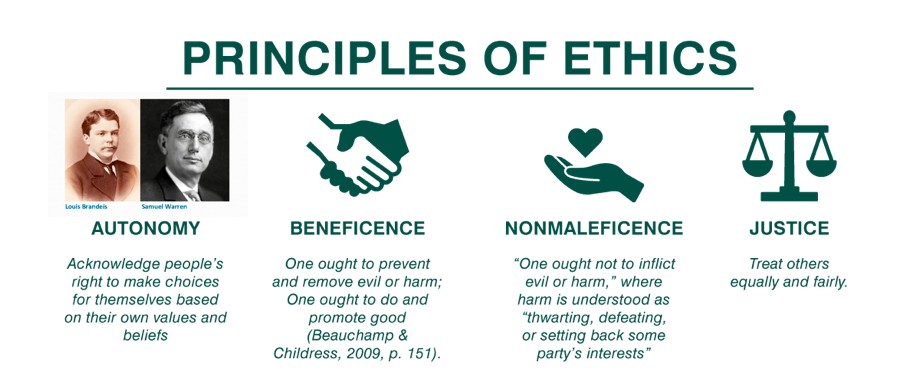
Previously, we identified the “seven basic plots” (see here) and presented the quest narrative in Samuel Warren and Louis Brandeis’s famous article on “The Right to Privacy” (see here). But another classic law review article (the first page of which is pictured below), “The Path of the Law” by the great North American jurist Oliver Wendell Holmes, paints a very different picture of the law. (FYI: Holmes’s influential essay was based on a lecture he gave at Boston University Law School on January 8, 1897; Holmes’s guest lecture was then published as the lead article in the March 25, 1897 edition of the Harvard Law Review.)
For Holmes (unlike Warren & Brandeis), the law is not about autonomy or some other teleological goal; it is first and foremost about making accurate predictions about the outcomes of court cases: “The prophecies of what the courts will do in fact, and nothing more pretentious, are what I mean by the law.” In support of his prediction theory of law, Holmes conjures up one of the most enduring and indelible anti-heroes in the annals of legal scholarship: the bad man. In brief, Holmes’s bad man is an amoral utility-maximizer “who cares nothing for an ethical rule which is believed and practised by his neighbors,” who only wants to avoid legal liability and “keep out of jail if he can.” After introducing this memorable anti-hero, Holmes makes a direct appeal to his audience:
“If you want to know the law and nothing else, you must look at it as a bad man, who cares only for the material consequences which such knowledge enables him to predict, not as a good one, who finds his reasons for conduct, whether inside the law or outside of it, in the vaguer sanctions of conscience.”
But the bad man drops out of Holmes’s essay early on. (Although this fictional figure makes multiple appearances on the first few pages of Holmes’s 1897 essay, he soon disappears entirely from view.) The bad man is instead replaced by the “man of statistics and the master of economics,” both of whom take center stage in Holmes’s story:
“When you get the dragon out of his cave on to the plain and in the daylight, you can count his teeth and claws, and see just what is his strength. But to get him out is only the first step. The next is either to kill him, or to tame him and make him a useful animal. For the rational study of the law the black-letter man may be the man of the present, but the man of the future is the man of statistics and the master of economics. It is revolting to have no better reason for a rule of law than that so it was laid down in the time of Henry IV. It is still more revolting if the grounds upon which it was laid down have vanished long since, and the rule simply persists from blind imitation of the past.”
Given this dragon reference, it is tempting to describe Holmes’s classic essay as a story about “overcoming the monster.” But who is the monster in Holmes’s story? For his part, legal scholar Thomas Grey has described “The Path of the Law” as a quest narrative. (See Professsor Grey’s 1997 essay “Plotting the path of the law.”) On this reading of Holmes’s essay, Holmes himself is the hero of his own story, and his quest is a legal-theoretical one: finding the true meaning of law:
To an imagination of any scope the most far-reaching form of power is not money, it is the command of ideas…. We cannot all be Descartes or Kant, but we all want, happiness. And happiness, I am sure from having known many successful men, cannot be won simply by being counsel for great corporations and having an income of fifty thousand dollars. An intellect great enough to win the prize needs other food beside success. The remoter and more general aspects of the law are those which give it universal interest. It is through them that you not only become a great master in your calling, but connect your subject with the universe and catch an echo of the infinite, a glimpse of its unfathomable process, a hint of the universal law.
In some ways, however, Holmes’s story is also about “rebirth.” Christopher Booker, for example, describes the basic sequence of a rebirth story in Chapter 11 of his magnum opus Seven Basic Plots. In summary, a rebirth narrative often unfolds as follows:
First, a young hero or heroine falls under the spell of an evil power, but all seems to go reasonably well for a while.
Eventually, however, the danger or threat returns in full force, and it appears as if the evil power will triumph.
The story then concludes with a miraculous redemption, and the protagonist changes his ways and becomes a better person.
As it happens, all these elements are present in “The Path of the Law”. The evil power in Holmes’s story, for example, is money. To have a successful career and become wealthy, a lawyer must be able to make accurate predictions about the law. But a lawyer who falls under the spell of money, who uses the law solely to guide self-interested clients, is trading off happiness for wealth. What really matters for Holmes is not money but the “command of ideas.” He thus concludes his essay by appealing to the “remoter and more general aspects of the law” and invites his audience to “catch an echo of the infinite, a glimpse of its unfathomable process, a hint of the universal law.” In other words, Holmes’s narrative is thus really a story about rebirth. To be a good lawyer or law scholar, it is not enough to make accurate legal predictions. One must also nourish one’s intellect.
Thus far, we have revisited two of the most influential law review articles of all time, “The Path of the Law” (this post) and “The Right to Privacy” (my previous post). The most cited article, however, is “The Problem of Social Cost” by Ronald Coase. If the hero of “The Path of the Law” is Holmes himself (and men of intellect more generally), and if the hero of “The Right to Privacy” is the common law itself, who is the hero of “The Problem of Social Cost”? (We will revisit Coase’s classic article later this week.)
I will resume my analysis of the “seven basic plots” in legal narratives in the next day or two; in the meantime, I am reblogging my favorite song from the Hamilton musical. (I posted “Ten Duel Commandments” two years and one day ago, and it’s still my favorite Hamilton song.)
Mine is “Ten Duel Commandments” hands down! In addition to the musical beat and the lyrics, I like how Lin-Manuel Miranda breaks down the intricate formal rules of this deadly and fascinating ritual. Here is the Wikipedia page for Ten Duel Commandments. Bonus link: Here is a previous blog post of mine on “Dueling for Dummies.”
We identified “the seven basic plots” in my previous post, but of these seven plot devices, what type of narrative or story do lawyers, law professors, and judges like to tell? To begin exploring this question, let me introduce you to one of the most cited and most influential law review articles of all time: “The Right to Privacy” by Samuel Warren and Louis Brandeis, which was published in volume 4 of the Harvard Law Review. In summary, Warren and Brandeis (1890, p. 193) begin their famous article by telling the following quest-like story:
That the individual shall have full protection in person and in property is a principle as old as the common law; but it has been found necessary from time to time to define anew the exact nature and extent of such protection. Political, social, and economic changes entail the recognition of new rights, and the common law, in its eternal youth, grows to meet the new demands of society. Thus, in very early times, the law gave a remedy only for physical interference with life and property, for trespasses vi et armis. Then the “right to life” served only to protect the subject from battery in its various forms; liberty meant freedom from actual restraint; and the right to property secured to the individual his lands and his cattle. Later, there came a recognition of man’s spiritual nature, of his feelings and his intellect. Gradually the scope of these legal rights broadened; and now the right to life has come to mean the right to enjoy life … the term “property” has grown to comprise every form of possession–intangible, as well as tangible.
What is remarkable about this particular quest is its historical sweep, for the protagonist or hero of Warren and Brandeis’s story is not a person. It is “the common law,” a massive body of Anglo-American legal precedents going back centuries. This body of judge-made law has been the subject of many scholarly studies–from Sir William Blackstone’s four-volume Commentaries to Oliver Wendell Holmes’s 1881 book The Common Law–but Warren and Brandeis were the first to cast “the common law” as an actual hero, a protagonist on an epic, never-ending ethical quest: the pursuit of human autonomy or “the full protection in person and in property” of every individual.
This story is so captivating and compelling that Warren and Brandeis’s privacy article is one of the few works of legal scholarship to have actually changed the law. Today, judges in the United States generally recognize four types of privacy harms or privacy invasions, including intrusion into one’s private life and affairs, public disclosure of embarrassing private facts, false light, and misappropriation of one name or likeness for financial advantage, and courts continue to cite “The Right to Privacy” in many different types of cases. [See generally Restatement (Second) of Torts, § 652, available here.]
To sum up my analysis thus far: Samuel Warren and Louis Brandeis told a concise, cogent, and compelling story in their classic article on “The Right to Privacy”, but is their story true? After all, autonomy is not the only ethical or moral value embodied in the law. As it happens, the great Oliver Wendell Holmes, writing seven years later, would tell a much different tale about the common law. (I will describe Holmes’s alternative narrative in my next post.)
I mentioned Christopher Booker’s reductionist but intriguing taxonomy of “Seven Basic Plots” in my previous post. In summary, according to Booker, the seven types of story-sequences or plot devices are as follows:
“Overcoming the monster” (see chapters 1 & 2 of Booker’s book) in which the protagonist, the hero or heroine of the story or “H” for short, sets out to defeat an evil force;
“Rags to riches” (see chapter 3) in which H acquires power, wealth, or a mate (or all three!), loses it all, and then ends up on top;
“The quest” (chapter 4) in which H sets out to acquire an important object or to get to a location but must confront many temptations or other obstacles along the way;
“Voyage and return” (chapter 5) in which H goes to a strange land and, after learning important lessons unique to that location, returns wiser;
“Comedy” (chapters 6 & 7) in which H finds himself entangled in a perplexing situation but is somehow, against all odds, able to get the girl (or vice versa);
“Tragedy” (see chapters 8-10) in which H suffers from a character flaw that is ultimately his undoing;
And last but not least, “rebirth” (chapter 11) in which an external event or threat leads H to change his ways and become a better person.
How do these plot devices or story-sequences apply to legal narratives? My initial reaction, when I first began to consider this question, was to identify the most compelling or entertaining stories about lawyers or the law — books like Harper Lee’s classic To Kill a Mockingbird (1960) or any of John Grisham’s best-sellers; or movies like A Few Good Men (1992), My Cousin Vinny (1992), or Legally Blonde (2001); or TV shows featuring such iconic lawyer-protagonists like Perry Mason, Matlock, or (my all-time favorite) anti-hero Saul Goodman, the crooked conman lawyer in Vince Gilligan’s Breaking Bad and Better Call Saul series — and then show how these works of popular culture can be used to illustrate Booker’s narrative categories. I even thought of conducting a comprehensive survey and meta-analysis of TV lawyer ads in the Orlando, Florida market in light of Booker’s taxonomy.
But as tempting or fun as this sounds, I quickly vetoed that approach. Such a matching exercise is not only too facile. (We already know that movies like My Cousin Vinny and Legally Blonde are comedies and that most lawyer ads fall into Booker’s “rags to riches” category.) Worse yet, such an exercise would also be pointless. Is Better Call Saul, for example, a tragedy or a story about rebirth, or both? Either way, who cares? What’s the point? (What really matters instead is, Are those shows worth watching?) Instead, I want to look at legal narratives not from the perspective of popular culture but from the perspective of the legal profession itself. How do lawyers, law professors, and judges talk about the law? What kind of stories do we tell? I will explore this question in my next post by introducing the top three most-cited law review articles of all time: (1) “The Problem of Social Cost” by Ronald Coase (1960), (2) “The Right to Privacy” by Samuel Warren and Louis Brandeis (1890), and (3) “The Path of the Law” by Oliver Wendall Holmes (1897).
That is the title of this 2004 book by Christopher Booker (1937–2019), a British journalist who wrote a weekly column for The Sunday Telegraph. (FYI: Here is his Wikipedia page.) I am generally highly skeptical of all such reductionist taxonomies, but this one nevertheless intrigues me because of my background in law, for over the years I have heard countless times how the practice of law is similar to story-telling. (By way of example, check out this series of 34 books, all of which are published by West Academic, called “Law Stories“.) If this comparison between the practice of law and story-telling is true, if law is ultimately about telling stories, then what type of stories do lawyers and judges and law professors like to tell? I will further explore this question in light of Booker’s seven-fold taxonomy of plots in my next few posts …
Via Marginal Revolution, polymath Tyler Cowen asks, “Which is the hingy-est century?” — a question that he also recently posed to the philosopher William MacAskill; see here. (By “hinge-y”, Professor Cowen means “the quality of living in a time that is highly influential.”) Why not narrow it down to the most hingy-est decade? (For my part, I would say the years between 1785 and 1795.)
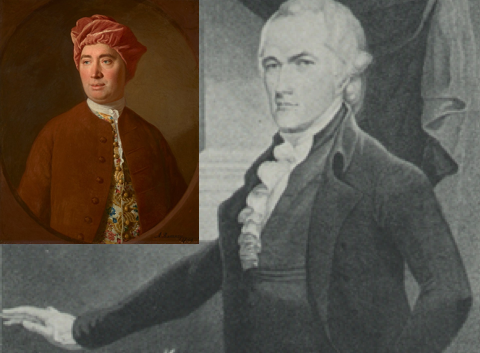
The very last “Federalist Paper ” — Federalist #85, written by Alexander “Non-Stop” Hamilton — was first published on August 13 and 16, 1788 (happy 234th anniversary!) in the The New York Packet and The Independent Journal. Among other things, Hamilton acknowledges that the proposed Constitution was “imperfect”:
“I never expect to see a perfect work from imperfect man. The result of the deliberation of all collective bodies, must necessarily be a compound as well of the errors and prejudices, as of the good sense and wisdom of the individuals of whom they are composed. The compacts which are to embrace thirteen distinct states, in a common bond of amity and union, must as necessarily be a compromise of the dissimilar interests and inclinations. How can perfection spring from such materials?”
But Hamilton not only defends the necessity of compromise; he also explains why imperfection is inevitable in human affairs by quoting from David Hume’s 1742 essay on “The Rise and the Progress of the Arts and Sciences“:
“… to balance a large state or society … whether monarchical or republican, on general laws, is a work of so great difficulty, that no human genius, however comprehensive, is able by the mere dint of reason and reflection, to effect it. The judgments of many must unite in the work: EXPERIENCE must guide their labour: TIME must bring it to perfection: and the FEELING OF inconveniences must correct the mistakes which they inevitably fall into, in their first trials and experiments.”
In fact, Hume may have played a much greater role in our constitutional politics than most people realize. (See here, for example.) Maybe we should add the great Scottish philosopher and historian next to Hamilton on the Twenty Dollar Bill!
To commemorate the 40th anniversary of the release of the original Blade Runner film (1982), I am reposting my 2011 paper “Clones and the Coase Theorem“, which I co-authored with my colleague and friend Orlando Martinez. (Shout out to Daniel Nina for introducing us to this classic sci fi film noir!) Below is the scene featuring the hypothetical “Voight Kampff Machine” (VKM) used to determine whether a person is a replicant or a biological human: