Personally, out of respect for our Native Americans, I have decided to stop celebrating the Fourth of July, but that said, I still admire the original design of Betsy Ross’s flag and the Jeffersonian ideal that all men are created equal and have natural and non-transferable (i.e. “inalienable”) rights.
You may have already heard that track and field star Sha’Carri Richardson (pictured below) has had to apologize for testing positive for marijuana. (If not, see here or here, for example.) But truth be told, this is absolute and unmitigated bullshit because the wrong person apologized for this unfair situation. Simply put, it is the US Olympic Committee (Team USA) that should be apologizing to Ms Richardson and to her fans and that should be taking all necessary steps to allow her to compete in the 100 meter dash at the upcoming Olympics!
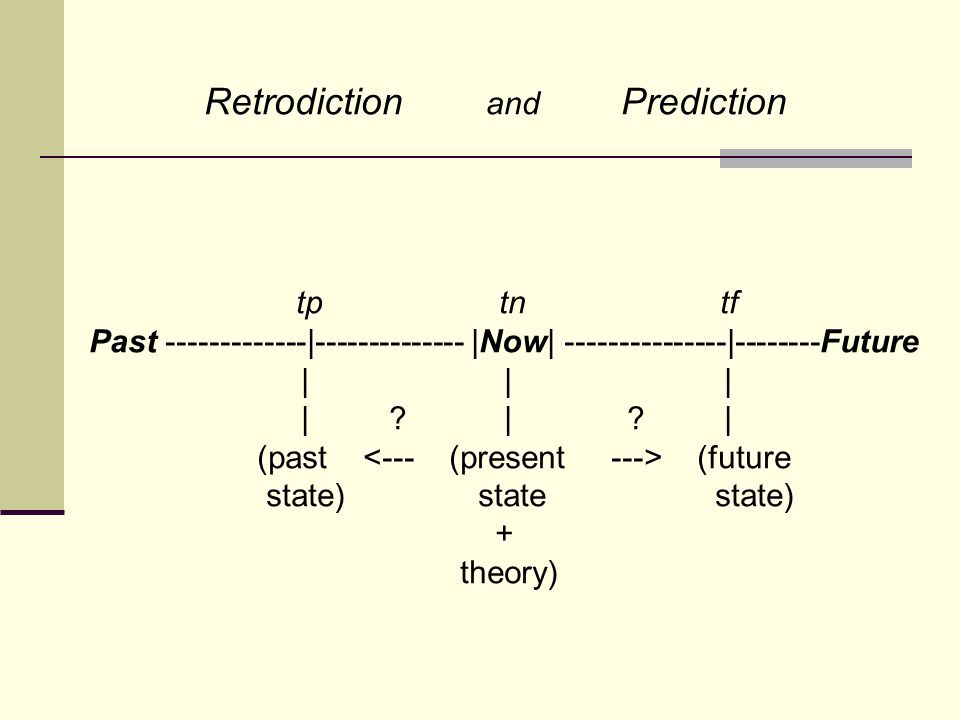
You may have heard of “prediction markets” such as Intrade, the Iowa Electronic Market (IEM) or the Hollywood Stock Exchange (HSX), but what about a “retrodiction market”, where you can bet on the truth values of past events. Here is an excerpt from my paper “Betting on Conspiracies” (footnotes omitted):
“Why frame conspiracy theories as wagers or bets? Instead of pointless debates with ‘true believers’, instead of talking past each other, as my colleague and friend Paras Chopra has noted in this excellent Twitter thread, allowing people to place bets on their beliefs has the following advantages:
(a) Betting markets provide people a financial and reputational incentive to place winning bets. Generally speaking, the act of placing a bet encourages the voicing of informed contrarian opinions; at the same time, the possibility of financial loss — i.e. the fact that market participants have ‘skin in the game’ — discourages and penalizes the voicing of non-informed opinions.
(b) Betting markets scale well with the number of people and opinions.
(c) Most importantly, betting markets are able to efficiently aggregate disparate sources of information.
Simply put, a betting market allows all points of views to be included and aggregated. Call this advantage ‘cognitive diversity’, or in the words of one source, ‘when dealing with complex issues involving many variables or moving parts, no one can claim to have a complete model or theory from which to make fail-safe predictions. More likely everyone has a partial understanding of the situation, further clouded by his own biases. But when all these partial, biased models are put together, a wonderful thing happens: knowledge accumulates, gaps get filled, while the various biases cancel each other.’ In other words, a group’s collective model is generally more accurate than any individual model. A retrodiction market would harness this cognitive diversity, because anyone who disagrees with the current consensus has a profit motive to participate in the market.”
That is the title of my latest work-in-progress, available here via SSRN. The subtitle of my paper is: Lessons from Kurt Gödel and the Leibniz Conspiracy. Here is the introduction to my paper (footnotes omitted):
“Was Kurt Gödel right about the existence of a secret conspiracy to conceal the ideas of Gottfried Leibniz? Did a small circle of sinister scholars somehow suppress some obscure works by Leibniz? Today, the German polymath Leibniz is known for his co-discovery–independently of Sir Isaac Newton–of the calculus, his metaphysical theory of monads, and his ‘best of all possible worlds’ doctrine, which was famously criticized by the French Enlightenment philosopher Voltaire in his classic 1759 satirical novella Candide. But according to the logician Kurt Gödel, the target of this secret anti-Leibniz plot was G. W. Leibniz’s single-most revolutionary and ambitious idea, an idea that inspired Gödel’s own contributions to mathematics and logic: Leibniz’s proposed universal language or characteristica universalis. Alas, Gödel’s alleged Leibniz Conspiracy raises more questions than it answers. Who would want to suppress the characteristica universalis, and why? And whatever their motives and identities, how could such a deep thinker like Gödel fall for such a far-fetched and improbable conspiracy theory?
“The remainder of this paper will thus be organized as follows: Part I will describe the “Leibniz Conspiracy” from Kurt Gödel’s point of view. By all accounts, Gödel created the Leibniz Conspiracy after spending countless hours researching the works of Leibniz and discovering significant gaps in the German philosopher’s published works. Next, Part II will explore the internal logic of conspiracy theories, using Franz Neumann’s classic work on ‘Anxiety and Politics’ as my point of departure. Part III will then explore a wide variety of ‘conspiracy theory theories.’ After all, if someone like Gödel, the greatest logician since Aristotle, could fall for a conspiracy theory, perhaps conspiracy thinking is more widespread than commonly believed. Part IV will then survey some recent proposals for combatting conspiracy theories or mitigating their negative effects and explain why these proposed ‘solutions’ are generally worse than the conspiracy-thinking disease they are trying to cure. Accordingly, Part V will make a novel proposal–the creation of a Conspiracy Theory Betting Market. In brief, a betting market would aggregate all available information about the truth values of various conspiracy theories by allowing people to bet on their beliefs about past events.”
Left image: “Gottfried Wilhelm Leibniz, German Mathematician.” Source: Science Photo Library. Middle image: “Diagram of the Characteristica Universalis.” Source: Wikimedia Commons. Right image: KURT GODEL (Watercolor on Paper) by LAUTIR. Source: Saatchi Art.
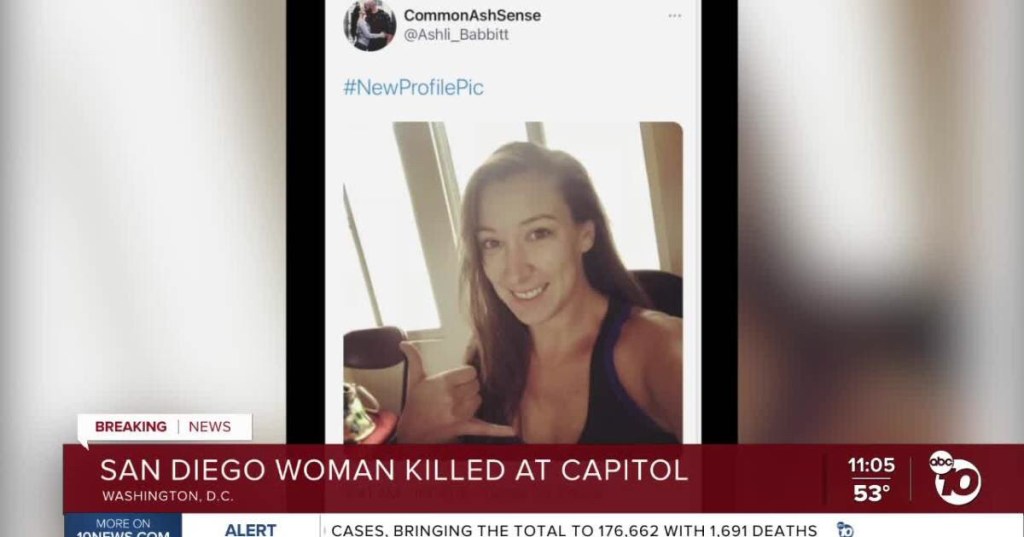
Who killed Ashli Babbitt (pictured below) on January 6? The Capitol Police or the Secret Service? (FYI: See this recent report in The Spectator, suggesting that it was someone associated with Vice President Mike Pence’s security detail, and not a member of the Capitol Police, who killed Ms Babbitt on that fateful day.) Either way, the fact that our government has not brought any charges against Ms Babbitt’s killer–in fact, the government has still not even released his name–should be of great concern to us all. Whatever happened to “equal justice under law”? And why does the “lamestream media” refuse to report on this cover-up?
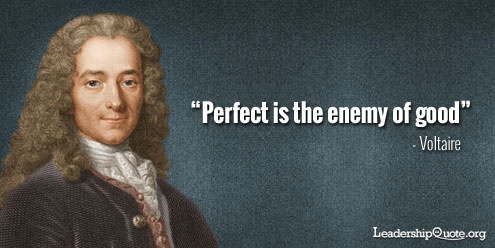
New York City’s attempt to use “Ranked Choice Voting” for the June 2021 mayoral primaries has been a total disaster. (See here, for example.) I warned about this problem last year when I discussed “Quadratic Voting” in this blog post. Admittedly, Quadratic Voting is more exotic and complex than Ranked Choice Voting, but either way, the main lesson here is that voting systems need to be simple, not perfect.
When will the free countries of the world take action against the Chinese government on behalf of the people of Hong Kong and the Uyghur Muslims in Xinjiang province? In the meantime, check out these pieces of protest art via Vidar (Street Art Utopia).
Now that I have completed my summer session teaching duties, I will be free to focus on my research and writing for the rest of the summer. Among other things, I am writing up a new paper tentatively titled “The Leibniz Conspiracy” (about which I will be blogging about in the next day or two), and I am reading the following works:
Jim Garrison, On the Trail of Assassins: One Man’s Quest to Solve the Murder of President Kennedy, available here. Since my wife and I visited the Sixth Floor Museum at Dealey Plaza in May (a museum devoted to the events of Nov. 22, 1963 in Dallas), I have immersed myself in the Zapruder film and JFK conspiracy theories. Along with the movies “Parkland” and “JFK”, this is the third book I have read on the subject since the month of May!
Richard Jeffries, Subjective Probability (The Real Thing), available here. Given my “conversion” to Bayesian methods and subjective probability about a decade ago, I am now turning my attention to Jeffries’ work in this area.
Cynthia Saltzman, Plunder: Napoleon’s Theft of Veronese’s Feast, available here. The author and book cover are pictured below. I ordered this book on the strength of Tyler Cowen’s recommendation (see here); my copy of this book arrived yesterday, and I am already on Chapter 2.
Gregory Stock, The Book of Questions, available here.
Nic Van Til, The Commercialization of Outer Space, available here.
This looks like a post-apocalyptic scene from a Cinderella nightmare, but these faux chateaux are real!
It was to be a luxury housing development for wealthy Gulf tourists w/ 732 French-style chateaux, along with a shopping center, Turkish baths, cinemas, and sporting facilities pic.twitter.com/2tMoXmik6Z













 prior probability