Two cheers for Mark Lemley

This is the first blog post in a multi-part series.

Has the time come to regulate the Internet or to break up the big tech companies into smaller firms? In the introduction to his excellent paper “The contradictions of platform regulation” (pp. 304-305), my colleague and new friend Mark Lemley identifies several concerns that many people have about social media and other big tech platforms:

  1. The fact that “[w]e spend much of our lives online—even more today in the wake of the pandemic”;
  2. “the rise of hate speech and misinformation online”;
  3. “growing fears about the loss of privacy”;
  4. the increasing feeling that Big tech platforms like Google and Facebook have for all practical purposes become “entrenched” monopolists, including the many “instances of aggressive behavior by incumbents designed to disadvantage competitors”; and
  5. “the out-sized influence these [tech giants] have come to have on almost all aspects of our lives”.

These are legitimate worries, but is government regulation or antitrust law an effective way of addressing these concerns? Professor Lemley’s contribution to this discussion is to point out that existing calls for regulation will not only produce unintended and perverse consequences; these calls for regulation are in many instances contradictory or self-defeating! I will continue my review of Prof Lemley’s paper and provide some specific examples of this problem — the problem of contradictory Internet regulations — in my next post.

What Does Big Tech Know About You? Basically Everything | PCMag

Posted in Uncategorized | Leave a comment

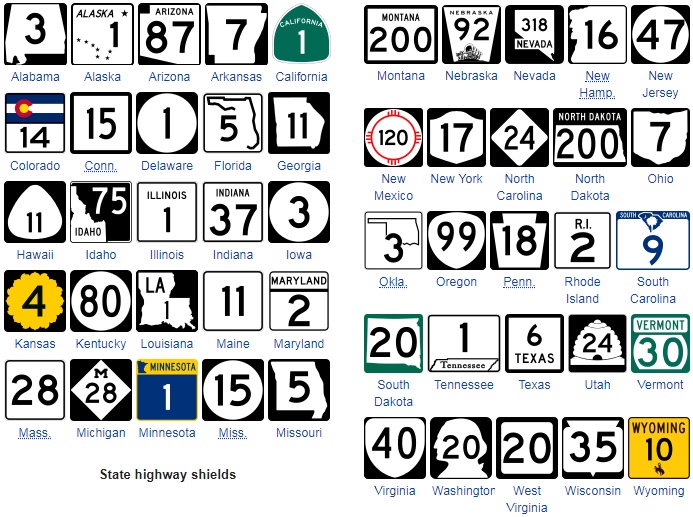
Taxonomy of U.S. road sign designs

Check out this report by Kurt Kohlstedt titled “American Highways 101: Visual Guide to U.S. Road Sign Designs & Numbering Systems”.

Posted in Uncategorized | Leave a comment

Sunday Syllabus: Thinking about Abortion

Stephen E. Sachs, a professor at the Harvard Law School, is leading a discussion group for 1Ls on the law and ethics of abortion. This informal discussion group meets four times during the fall semester, and here is a link to Professor Sach’s elegant three-page syllabus. (You may click on each individual page below to enlarge the page.)

Posted in Uncategorized | Leave a comment

The Evolution of Singapore’s Street Lighting — Remember Singapore

Source: Remember Singapore (9/24)

For the first half of the 19th century, much of Singapore was covered in darkness at night. Although there were candles, oil and kerosene lamps, they were unable to illuminate large areas and were mostly confined to localised spaces such as houses and offices. Oil Lamps The first street lamps were apparently set up in […]

The Evolution of Singapore’s Street Lighting — Remember Singapore
Posted in Uncategorized | Leave a comment

Moon Art

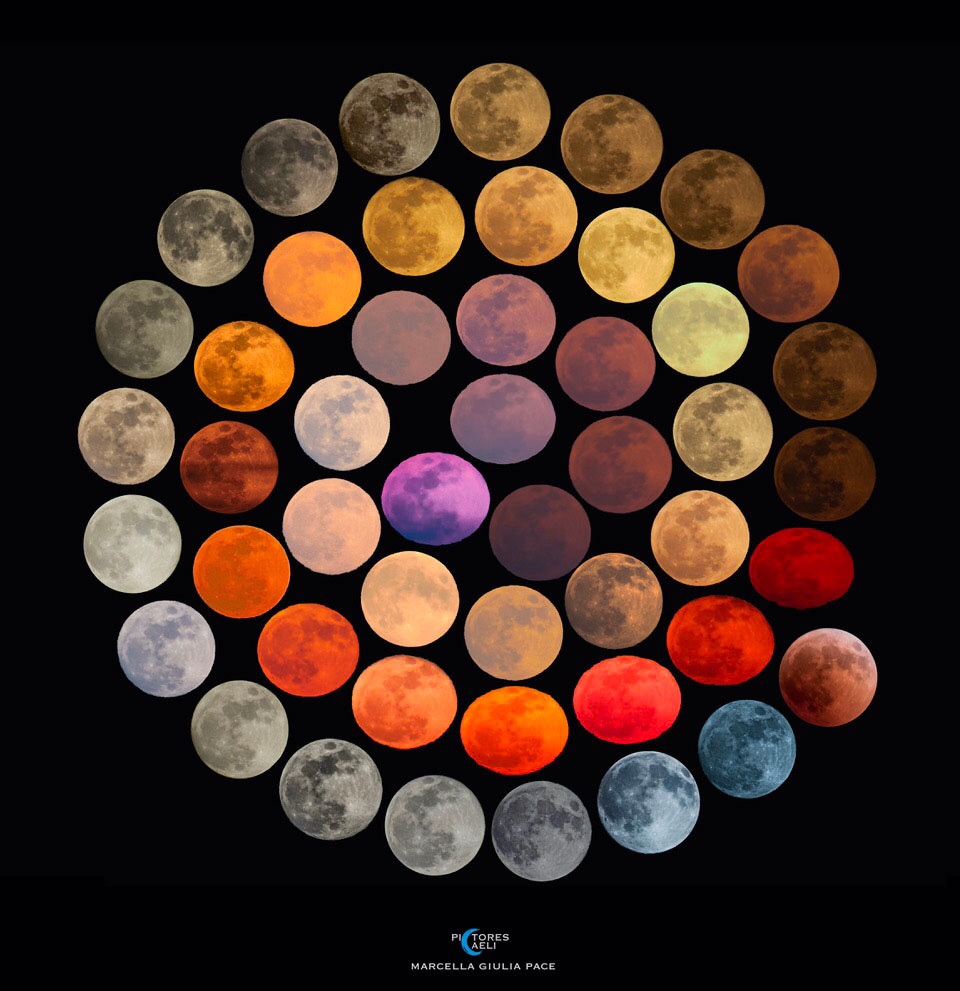
Check out this beautiful collage of the Moon in 48 different hues. This original work of “Moon art” was created by Marcella Giulia Pace. (More details about her project are available here; hat tip: Kottke.)

Posted in Uncategorized | Leave a comment

Social Media Regulation Redux

I recently reviewed Jack Balkin’s paper on social media regulation and ended up giving it a mere “D minus” (see here, for example). But what would an “A plus” platform regulation paper look like? In a word, it would look like this. To the point, in the same volume in which Balkin’s sub-par paper appears, Stanford law professor Mark Lemley has published an excellent essay titled “The Contradictions of Platform Regulation“, which is, simply put, one of the best papers on Internet regulation that I have read thus far. Lemley’s work is deserving of more attention, so I will begin writing up a multi-part review of Professor Lemley’s new paper starting on Monday of next week …

Immediate Self-Contradiction - TV Tropes
Posted in Uncategorized | Leave a comment

The Anti-Facebook

Imagine an alternative social network, one without like buttons or noisy notifications — an anti-Facebook where the feed is reverse chronological, not algorithmic, and where nothing is monetized. Imagine no more …

In particular, check out Minus — https://minus.social/ — a “finite” social network in which each user gets 100 posts, period. According to Minus’s website: “The site’s only visible metric counts down, showing how many posts each user has remaining.” Although users may reply to a post as often as they like, each user is allotted a maximum of 100 posts for life. Check it out for yourself and tell me what you think …

Posted in Uncategorized | Leave a comment

Parking Garage Art

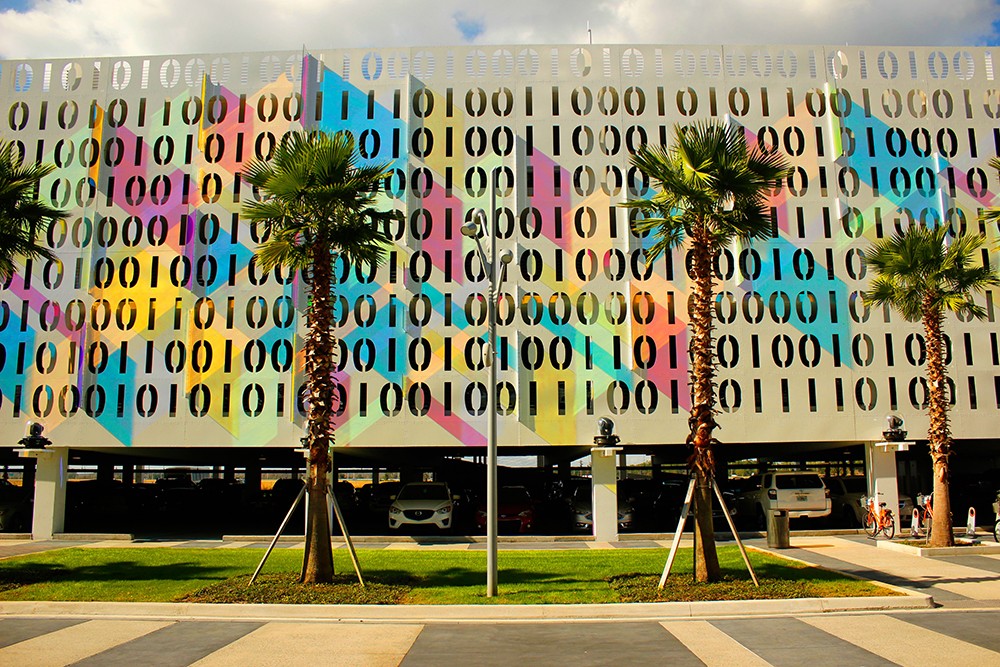
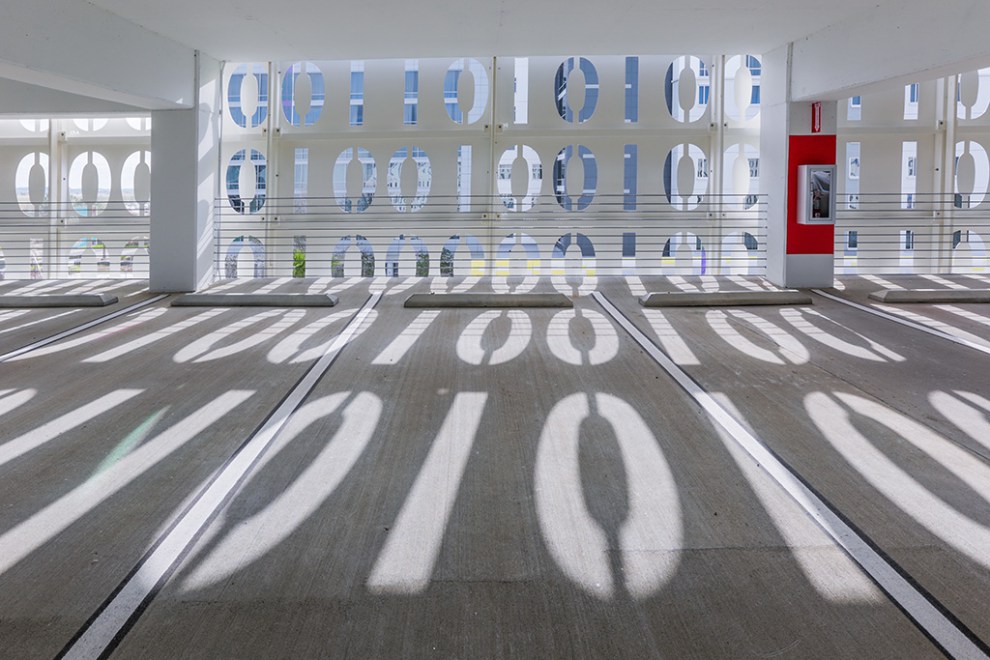
The “code wall” parking garage at the Lake Nona Town Center in Orlando, Florida has to be one of the most beautiful and creative parking structures in the world. For additional details, check out this short entry from the London International Creative Competition (LICC) and this more detailed report by Eva Recinos (via Vice).

Lake Nona is shaping up to be quite the upscale, busy district | Annual  Manual | Orlando | Orlando Weekly
LICC

Posted in Uncategorized | Leave a comment

Throwback Thursday: do you remember the 21st night of September?

Those are the opening words of the 1978 song “September” by one of the greatest North American bands of all time: Earth, Wind & Fire. For me, this song brings back so many beautiful memories from my childhood in Los Angeles, California. (Hat tip: Kottke.)

Posted in Uncategorized | 1 Comment

Fall Update

In addition to my regular teaching duties and service commitments, this fall I will be presenting some of my ongoing research projects (in bold) at the following upcoming conferences:

  1. “Betting on Conspiracies?” at the 2021 Annual Conference of the Central States Law Schools Association (CSLSA), to be held via Zoom on Sept. 24-26. (I will present my paper “Betting on Conspiracy Theories“, which I wrote earlier this year for a special symposium issue of the Journal of Law & Public Policy; in brief, I will propose an open betting market to adjudicate the truth values of conspiracy theories and fake news.)
  2. “Lockdowns as Takings” at the LatCrit 2021 Biennial Conference, to be held in Denver, Colorado on Oct. 8-9. (I began writing this paper in the spring of 2020 and made significant additions and revisions to it this summer; in summary, I will explain why lockdown orders constitute a “taking” of property–specifically, a taking of the labor rights of “non-essential” workers. A draft of my takings paper is available here.)
  3. “Adam Smith in Paris” at the 2021 Annual Conference of the International Adam Smith Society (IASS), to be held in Madison, Wisconsin on Oct. 14-16. (I will present my ongoing work on Adam Smith’s enigmatic private life (see here, for example), with a special focus on his ten-month residency in Paris from late-December 1765 to mid-October 1766.)
  4. “The Chegg Conspiracy” at the 2021 Statewide Symposium of the Florida Undergraduate Research Association (FURA), to be held in Gainesville, Florida on Oct. 22-23, and at the 2021 Annual Conference of the Southeastern Academy of Legal Studies in Business (SEALSB), to be held in Savannah, Georgia on Nov. 11-13. (I will explore the buyer and seller sides of Chegg’s illicit market and propose that Chegg be criminally prosecuted for wire fraud. A draft of this short paper is available here.)
  5. Lastly, I have been invited to contribute a chapter to the forthcoming book “Better Call Saul and Philosophy”. Along with the original “Breaking Bad” series, I am a huge fan of “Better Call Saul”, so I am thrilled to participate in this project. My chapter is tentatively titled “Breaking Bad Promises” and although it is not due until mid-November, I will be blogging about my contribution to this new book soon.
Coming soon – MHSIBCA
Posted in Uncategorized | Leave a comment