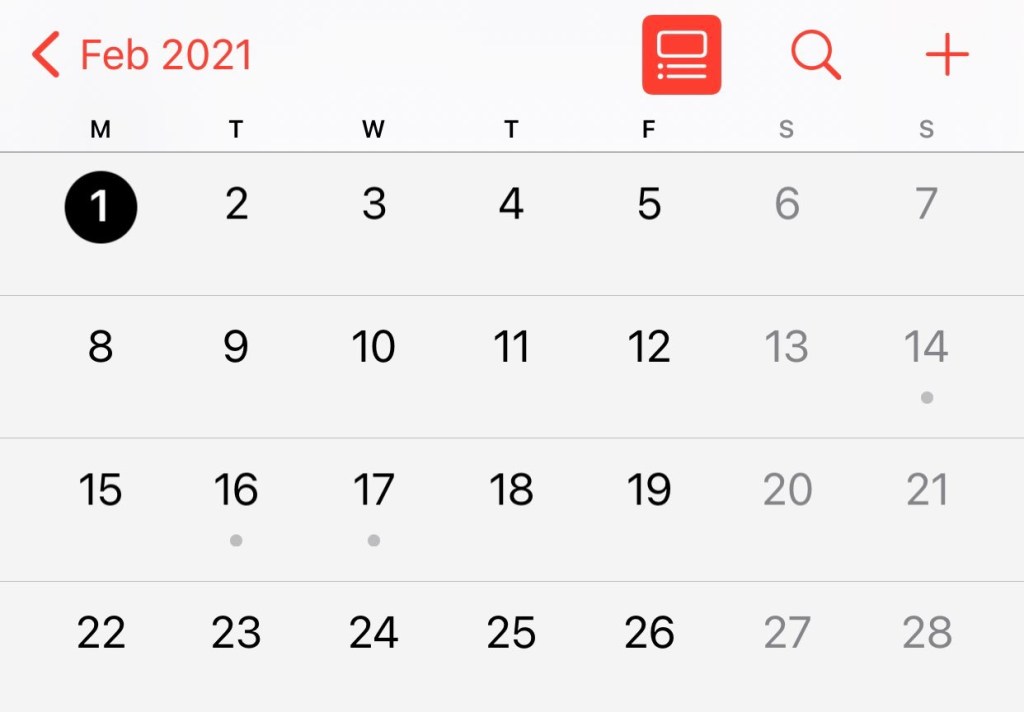
Today is not only the “1st of tha month“; today also marks the start of a “perfectly rectangular” February. More details about this occurrence are available here, via Vox (Yuri Victor).
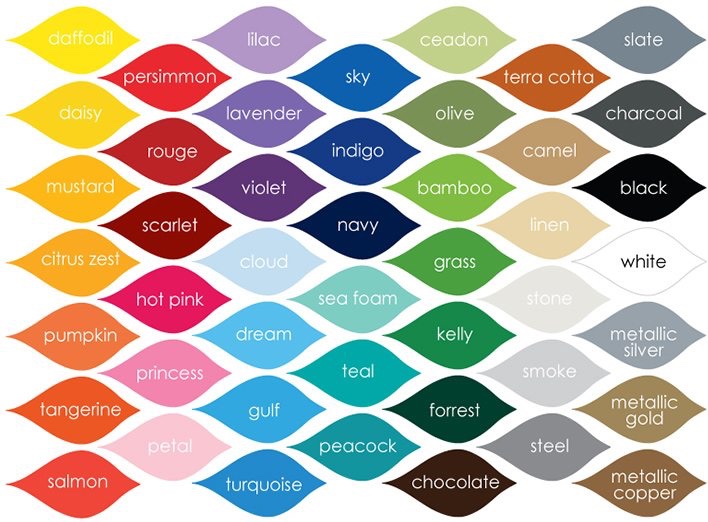
Also, check out this essay by Fahad Muhammad on the psychology of colors. Meanwhile, chemists at Oregon State University have created a new shade of blue! Hat tips: Brian Leiter and @pickover.
Thus far we have been exploring the technique of line-drawing from the perspective of lawyers, moral philosophers, and scholars generally: (a) the ubiquity of line-drawing in law and ethics (why all hard cases in law boil down to line-drawing), (b) the politics of drawing lines (who decides who gets to draw the line?), and (c) philosophical objections to line-drawing (small-mindedness and moral relativism). What about the perspective of students? To his credit, Professor Kerr concludes his beautiful paper on line-drawing by providing three practical pointers for his law students, which I will distill as follows:
“Your in-class rule is just your starting point.”
“… recognize that no legal line is perfect.”
“Listen to how your classmates [or the professor] justify the lines they draw, especially when their lines are very different from your own.”
In other words, when your professor asks you, “Where do you draw the line?,” what he is really asking is for you to do is to somehow translate your moral values into a workable legal rule–a rule that is clear enough for any person to understand and that is fair enough to harmonize whatever conflicting values are at play. In other words, the professor is asking you to perform a difficult, if not impossible, task. That is why whatever rule you propose or whatever line you draw should be considered a mere starting point in an intellectual contest with no end point or finish line: because no rule will be perfect or even close to perfect; because all rules require difficult tradeoffs. That is also why you should listen very closely to what your classmates have to say: to figure out what their deeper values are, to understand what is really at stake whenever we have to draw lines, and to update your Bayesian priors …
Thus far in this series of blog posts, we have explored the reasons why we must draw lines whenever we must formulate a new rule (“rule choice”) or apply an existing rule to new facts (“rule application”), and we have also explored the politics of line-drawing, since oftentimes the way in which a particular legal line is drawn depends on who has the power to draw that line. Here, by contrast, we will explore some “meta” objections to the standard legal and moral question, “Where would you draw the line?” Specifically, the last part of Professor Kerr’s excellent essay on line-drawing (Part V) identifies two related objections to the line-drawing metaphor. One objection is “small-mindedness” (his words, not mine); the other is moral relativism. Let’s consider the “small-mindedness” objection first. Professor Kerr puts it this way:
“[The line-drawing metaphor] frames legal decision making as a technocratic exercise. The options are reduced to various lines. A debate over values is presented as merely a choice as to which line to draw. No matter the real-world stakes of the question, reducing the search for an answer to mere line-drawing makes the issues seem technical and small. It’s as if one were at a restaurant choosing an entrée. Would you like the chicken or the fish?When you put it that way, can the choice really matter?“
In other words, instead of inviting us to ask the big questions–like is this rule consistent with justice?; is this rule consistent with our moral duties?–the line-drawing metaphor reduces difficult legal and moral questions into a purely technical or formulaic enterprise. In reply, I would ask the critics of line-drawing to consider the following possibility: maybe “small-mindedness” and “technicality” are features, not bugs? That is, by breaking down a difficult question, such as how much power should the police have to make a traffic stop, into a standard-form line-drawing exercise, we are able to make the problem more tractable and manageable–more “soluble” to borrow Sir Peter Medawar’s beautiful concept.
My reply, however, takes us to the second objection to line-drawing: moral relativism. Simply put, the line-drawing metaphor not only invites us as a technical or practical matter to draw any number of possible lines; this approach also “relativizes” each of these possible lines, or in the eloquent words of Professor Kerr:
“When professors [ask their students where would they draw the line?], they seek to accommodate different perspectives without saying which are right and which are wrong. A wide range of perspectives is deemed legitimate, and choices among them are merely a matter of perspective.”
How can we respond to this moral relativism objection? Alas, there is no all-wise, all-powerful Solomonic judge or supreme court of pedagogy who can resolve this fundamental philosophical impasse for us. Either you are moral pluralist or “pragmatist”–i.e. you acknowledge that our moral values will often collide, or you believe a wide range of answers are possible to the question, What is justice?–in which case the small-mindedness and moral relativism of line-drawing are features, not bugs, or you are a moral realist or “dogmatist”–i.e. you believe in an all-encompassing hierarchy of values, that there is a single right answer to the justice question–in which case line-drawing is a misguided, if not dangerous, approach.
Whatever your views are about this larger philosophical impasse, this discussion invites us to weigh the pros and cons of line-drawing and to consider alternatives to drawing lines, to ask whether law professors should be analyzing the problems of “rule choice” and “rule application” in in a different way. If so, how? If not, how can we resolve this impasse between classical liberal pragmatism and Platonic dogmatism? Professor Kerr concludes his paper by describing the task of line-drawing as a “platform,” a springboard for students “to debate what matters and how the law should address it.” Kerr then concludes his paper as follows:
“By offering the platform [i.e., by asking you where you would draw a particular legal or moral line], your professor may be opening the door to a wide range of perspectives. But an open door doesn’t require you to accept everything that comes through it.”
In other words, Professor Kerr, perhaps wisely, does not attempt the impossible task of reconciling or harmonizing these opposing philosophical views–pragmatism/moral relativism versus Platonic dogmatism/moral realism. Instead, he concludes his paper down to Earth, so to speak, by providing three practical pointers for law students. I will restate these tips and wrap up my review of Kerr’s essay on Monday …
Note: this is the fourth in a series of six blog posts …
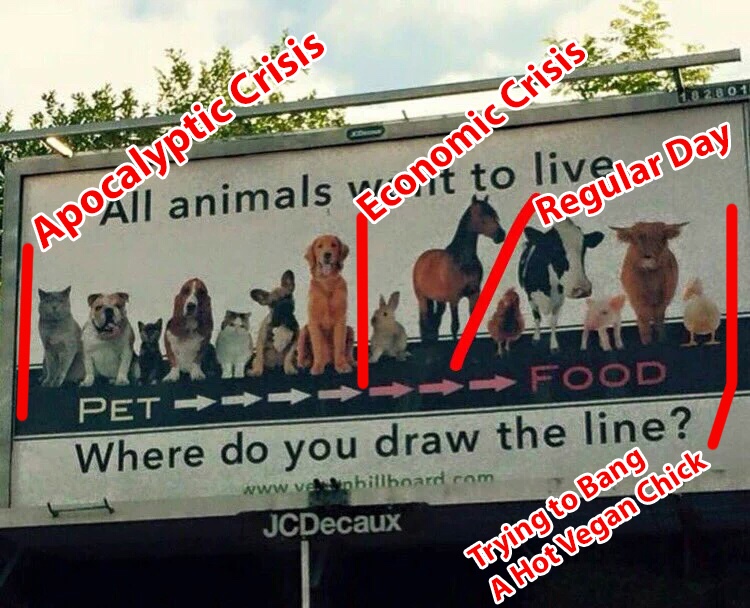
Now that we have identified the reasons why we must draw lines–why it is most questions in law and ethics boil down to difficult line-drawing exercises–let us next consider a second-order line-drawing question. In brief, regardless of where a particular legal or moral line is drawn, we must also ask: who gets to decide where the line should be drawn? In his beautiful essay “Line-Drawing and Legal Education,” Professor Orin Kerr poses this second-order question in Part IV of his paper. That is, whenever we talk about line-drawing in the legal–as opposed to the domains of morals or ethics–we are really asking two different questions. The first-order question is, Where should we draw a given line? The second-order question is, Who gets to decide where that line should be drawn?
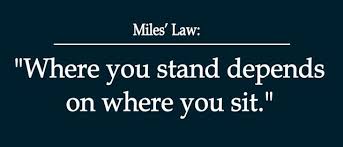
Most people, however, forget to ask the second-level question. But why, pray tell, is this second-order question worth asking? Because, as one of my favorite political philosophy professors in college would say, “Where you stand depends on where you sit,” an idea referred to as Miles’ Law in the scholarly literature on politics. In other words, below the surface of every line-drawing question is a deeper “political” dimension because, more often than not, your institutional role–for instance: as a member of Congress, or as a member of an independent regulatory agency, or as an Article III or State court judge–will shape your views about the first-order question. By way of example, the ability of Congress to draw certain lines might be hampered by the fact that Congress is supposed to have enumerated and limited powers and also by the iron imperative of having to run for re-election every two or six years. Likewise, the ability of a regulatory agency to draw lines might be strictly curtailed under its organic act or enabling legislation. Even the ability of judges to draw lines is limited, since judges’ decisions are supposed to be constrained under the doctrine of stare decisis.
But why does the institutional context of line-drawing (“where you stand depends on where you sit”) make our legal rules a political matter? Because the ability to draw a line presupposes someone with the power to draw that line. As a result, whenever we remember to ask the second-level “Who decides?” question, we are really asking a political question: the question of who has the power to decide where the line gets to be drawn. In an ideal world, “law” would be above or apart from “politics”, but in the real world law is politics because only a specified set of actors or officials will have the power to make these line-drawing decisions!
After his exploration of the politics of line-drawing, Professor Kerr then presents several powerful critiques of line-drawing in the next-to-last section of the paper (Part V), which I consider to be the best part of the entire essay. I will therefore save the best for last and proceed into Part V in my next post …
Note: this is the third in a series of blog posts …
Thus far, I have identified one reason why we must draw lines whenever we must formulate a new legal rule or apply an existing rule to a new case: the problem of competing and conflicting values. In Part II of his essay on “Line-Drawing and Legal Education,” my colleague and friend Orin S. Kerr identifies a second reason why line-drawing is inevitable: what Kerr calls “the problem of scale.” In the words of Professor Kerr:
“Once created, legal rules typically will apply to many people over a long period of time. Every person is unique and special. But we can’t design a different law for each person. Instead, we need to come up with a general approach that will apply for many years to potentially millions of different and unknown people. The scale of law creates inevitable tradeoffs.”
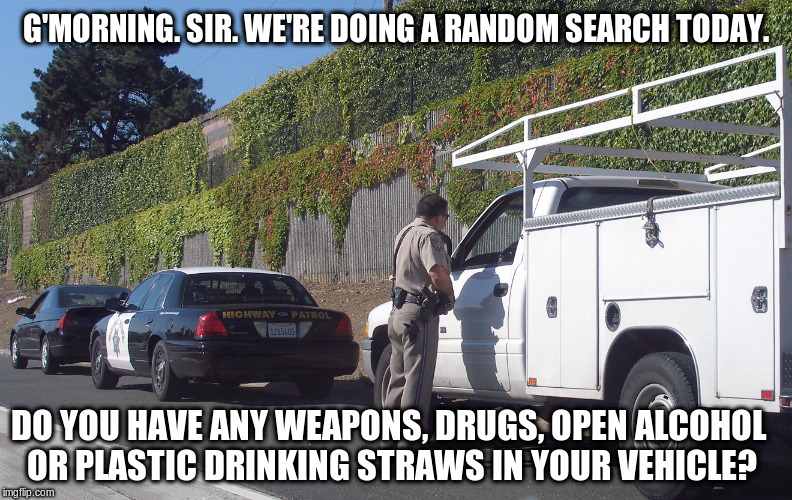
In other words, as “Mister Rogers” never tired of reminding his little viewers, every person is special! Every person is different. But why is this truism relevant to the line-drawing problem? Because whatever rule you prefer for a given situation (such as traffic stops), your proposed rule needs to be simple enough for anyone to understand and easy enough for anyone to enforce. To see why, let’s return to the traffic stop example we saw in our previous post. As Professor Kerr correctly notes (footnote omitted), “the police in the United States currently make more than 50,000 traffic stops on a typical day,” and to complicate matters even further, hundreds of thousands of police officers have the legal authority to make such traffic stops. As a result, any legal rule we create for traffic stops has to account for different kinds of police officers, different kinds of vehicles and drivers, as well as the effects of so many traffic stops across different communities.
Part III of Kerr’s paper provides a third reason why line-drawing is a necessary evil–both “necessary” and”evil” in the figurative sense because line-drawing is an admission that no rule is perfect, that tradeoffs are inevitable. Specifically, imagine what would happen if we refused to draw lines. Consider traffic stops again. Imagine an absolute pro-police rule: the police can pull over any car at any time for any reason. Now, imagine an absolute anti-police rule: stops for traffic violations should never be allowed. Simply put, both of these proposed rules are too extreme because they refuse to make tradeoffs or balance the competing values of promoting the collective good (road safety) while minimizing restrictions on individual freedom (being able to drive where I want without external interference).
Can you think of any other reason why we must draw lines? In the meantime, I will proceed into Part IV of Professor Kerr’s line-drawing paper in the next day or two …
Except for the use of this ugly acronym (WDYDTL = Where do you draw the line?), Professor Orin Kerr’s new 11-page essay on “Line-Drawing and Legal Education” is a beautiful paper, a jurisprudential tour de force containing many valuable and fundamental insights about the nature of law and rule-making. (Although I already handed out my syllabus for this semester, I will nevertheless encourage my students to read the paper.)
In summary, Professor Kerr’s line-drawing paper has five parts, plus a practical conclusion with tips for students. His paper is so important that I will devote my next few blog posts to all five parts (plus the conclusion), beginning with Part I, which provides two concrete examples of group decision-making to illustrate the broad scope of this all-important question in law, “Where do we draw the line?” One example involves a group empowered to design a system of government unemployment benefits; in the other example, the group is asked to design a law on when the police should be able to pull over a car to enforce traffic laws. Let’s focus on the traffic stop example, quoting directly from Kerr’s paper (emphasis added):
“Cars can be very dangerous if not driven safely, and every state has traffic regulations on how cars must be driven and what safety features cars must have in working order. The group is tasked with devising rules on when the police should be able to stop drivers on the road to investigate or address safety violations.
“Once again, group members go around the room and voice their concerns. The first person wants to make sure police have enough power to protect safety by enforcing all traffic safety rules. The second person hopes that the police can use traffic stops to get drunk drivers and other dangerous drivers off the road. The third person expresses concern that the police will use traffic-stop powers to target minority drivers and discriminate against minority groups. The fourth person argues that allowing traffic stops is dangerous because stops can lead to police uses of violent force. And a fifth person chimes in that the rule needs to be clear so the police can know what they’re allowed to do and not do.
“In a perfect world, the group could satisfy all five interests at once. They could ideally design a system that enforces all safety rules, protects the public from dangerous drivers, does not permit targeting minority groups, does not lead to uses of force, and is clear and easy to administer. But again, these interests can clash. Granting the power to investigate any traffic offense may require empowering the police to use force if a person refuses to stop. A rule that prevents targeting minority drivers may require a rule based on an officer’s subjective intent that is difficult to know, making the rule difficult to administer. There is no perfect system that achieves all five goals.”
In other words, line-drawing is inevitable in law when we must choose among competing values–when our values and goals collide–which is almost always. (As an aside, this notion of “conflicting values” is the single-most important lesson I have learned from modern moral philosophy.) Part II of Kerr’s essay identifies a second reason why trade-offs are inevitable, why lines must be drawn whenever we must formulate a legal rule or make a group decision. Stay tuned: we will proceed into Parts II & III of Kerr’s line-drawing paper in my next post …
That is the title of this intriguing short paper by my colleague and friend Orin S. Kerr, a law professor at UC Berkeley. I ask this question (i.e. where should we draw the line between legal and illegal, moral and immoral?) in my law and ethics classes all the time, so I am eager to read Professor Kerr’s paper in the next day or two. I will report back soon …
By a vote of 84 to 15, the Senate has confirmed Janet Yellen’s nomination to be our next Secretary of the Treasury (see here), a position once held by the great Alexander Hamilton. Although I am not a huge fan of the Biden-Harris Administration or their America-first economic protectionist policies (as Bryan Caplan likes to say, both political parties are absurd churches), I love this new song “Who’s Yellen Now?” (I have, however, added a “Keynesian Advisory” for my fellow Hayekians!)










 prior probability