
Check out the tropical painting pictured below by Puerto Rican artist Javi Vecino Cintron. Here is his Instagram page.

Check out the tropical painting pictured below by Puerto Rican artist Javi Vecino Cintron. Here is his Instagram page.
One of the things I absolutely love about Puerto Rico is the huge amount of musical talent and creativity of her people–eveything from salsa and danzon to pop and reggaeton. Below are two of my favorite musical numbers, “Eso ehh!” and “Rakata,” going back to the years 2005 and 2006:
Below is another extended excerpt from the most recent version of my “Adam Smith in Love” paper:
*** One remarkable historical source of this aristocratic double standard–chastity and sexual purity for the poor; romance and sexual liberation for the nobility and the nascent bourgeoisie–are the secret records of the Parisian police or Archives de la Prefecture de Police Paris.[1] In summary, one of the very first police forces in the Western world emerged in 18th-century Paris, and one of its units was the Département de femmes galantes, which was devoted to the demimonde, the exclusive fantasy world of elite prostitution.[2] The Département de femmes galantes, which operated from 1747 to 1771, kept detailed records of the activities of Paris’s high-end sex workers or “kept mistresses.”[3]
What does any of this have to do with Adam Smith? Recall that Doctor Smith lived in Paris from late-December 1765 to mid-October 1766. During this time, Smith attended many plays, operas, and musical concerts. John Rae and Ian Simpson Ross–scholars who have produced two of the most comprehensive biographies of Adam Smith–have commented on Adam Smith’s fondness for the opera during his second sojourn in Paris, i.e. Dec. 1765 to Oct. 1766.[4] What Rae and Ross have left out, however, is the fact that these venues were the center of an elite sexual marketplace, the famed dames entretenues or kept women of Paris. (See generally Kushner, 2013.) Famous for their talent, glamour, and beauty, they were the most highly-sought after women of pleasure in all Europe. (Ibid., p. 3.) Also called femmes galantes, “they earned their living by engaging in long-term sexual and often companionate relationships with men from the financial, political, and social elites, known as le monde (high society).” (Ibid.)
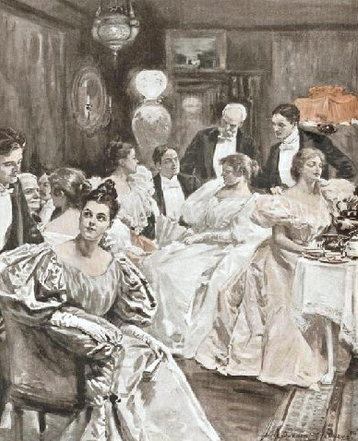
This high-end sexual market, the demimonde, was a highly-structured one, and more importantly for this paper, in mid-18th Century Paris the demimonde overlapped directly with the world of the theater.[5] Although not all theater women were kept mistresses or femmes galantes, “[i]t was widely understood that any woman in the Opéra, and to a lesser degree the other theater companies, was a dame entretenue, or at least wanted to be. Most contemporaries assumed that [female] performers took on patrons because they needed the money and because, in the very act of being on the stage, they were already at some level prostituting themselves.”[6] So, why was the theater the center of this high-end sex market? According to Kushner (2013, p. 5), “being on the stage greatly increased what I am calling ‘sexual capital,’ the desirability of a mistress and hence the prices she could command for her services.”[7] In addition, the Paris theater district was teeming with high-end brothels and places of ill-repute.[8]
To sum up, although there is no evidence of Adam Smith himself keeping a mistress–of partaking in the pleasures of the Parisian demimonde–during his ten-month residency in Paris (late-December 1765 to mid-October 1766), by all accounts (especially Rae and Ross) Doctor Smith was moving in elite aristocratic circles during his travels and that some of the “great men” he met and philosophized with during this ten-month sojourn may have been the kind of wealthy and powerful men who would have kept mistresses or who would have had a more “liberal” (in the classical sense of that term) attitude toward love and sex.
[1] See generally Andrew Israel Ross, 2017.
[2] See generally Kushner, 2013.
[3] Ibid.
[4] See, e.g., Rae, 1895, Ch. 14; Ross, 2010, Ch. 13.
[5] Cf. Kushner, 2013, pp. 4-5: “The demimonde overlapped with the world of the opera and theater: “About a fifth of the kept women under police surveillance at midcentury worked in the theater. Most were in the Opéra or its school, as dancers and singers.”
[6] Ibid., p. 31.
[7] Cf. ibid.: “Theater women tended to dominate the top ranks of the dame entretenues in terms of earnings and status.”
[8] Cf. Kushner, 2013, p. 110: “Many brothels were in the center of town, on the rue St. Honoré or nearby, making them convenient for men leaving the Opéra.”
My wife Sydjia and I are back in town, after a long seven-year absence. My very first visit to “San Juan City” was in October of 1992, when I stayed at the old La Concha Hotel (part of which is pictured below) in Condado, and I then lived on the Island from May 1993 until August of 2009. Suffice it to say that I am filled with a flood of mixed emotions, feelings I will describe in greater detail in the next day or two …

Alternate title: 2020 presidential election results if each State allocated its electors on a pro rata basis instead of winner-take-all.

Hello. I have been making significant revisions and additions to the last part of my most recent work-in-progress “Adam Smith in Love.” Here is an extended excerpt:
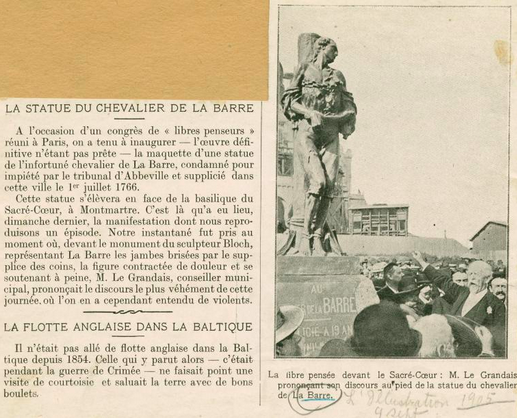
… Smith’s stay in Abbeville may have also been significant for another reason. It was in Abbeville that a young orphan, the Chevalier de La Barre, became the last man in Europe to be put to death for the crime of blasphemy.[1] At the time, “l’affaire du Chevalier de La Barre” attracted attention across France–even attracting the sustained notice of the celebrated atheist and free-thinker Voltaire, who wrote not one but two accounts of the young de La Barre’s prosecution and sentence.[2] Indeed, this case has become so central to the identity and history of modern France that many streets are named after the Chevalier de La Barre and many monuments were subsequently erected in his honor, including a statue (pictured below) standing at the gates of the famous Sacred Heart Cathedral in the Montmarte neighborhood of Paris.[3]
This celebrated case was set into motion in the summer of 1765, while Smith was still in the South of France, when a wooden crucifix was mutilated under mysterious circumstances on the night August of 8-9, 1865.[4] The crucifix was a cherished object, standing atop the main bridge of Abbeville, le Pont-Neuf over the Somme river, a bridge that Adam Smith himself must have crossed when he visited Abbeville in 1766.[5] To this day, the identity of the original vandal or vandals is unknown, but after a lengthy investigation the Chevalierde La Barre was one of several young noblemen–including one Saveuse de Belleval, the son of the lead judge/investigator in the case–who were accused of committing numerous acts of blasphemy and anti-Catholic vandalism.
Although the other suspects either received light sentences or avoided prosecution by fleeing,[6] the unlucky Chevalier de La Barre was apprehended, put on trial in February of 1766, and was adjudged guilty and sentenced to death on 20 February.[7] A few months later (4 June 1766), the Parlement of Paris–a judicial body similar to an appellate court—confirmed de La Barre’s death sentence on appeal.[8] In the end, the unfortunate Chevalier de La Barre was burned at the stake, along with his collection of outlaw books in Abbeville’s town square on 1 July 1766.[9] Could this execution have taken place during Adam Smith’s sojourn in Abbeville? Nay, could the actual reason for Adam Smith’s visit to Abbeville have been to attend this judicial execution in person?
Whatever the timing and motives of Adam Smith’s visit to Abbeville, during the original judicial investigation of the August 1865 cross-mutilation incident, a search of the Chevalier de La Barre’s bedroom led to the discovery of incriminating evidence consisting of a collection of “loasthsome books” (livres abominables, Claverie, 1992, p. 275). In addition to Voltaire’s Philosophical Dictionary, which had been banned in France, among the other outlaw books in de La Barre’s bedroom were the following erotic tomes[10]:
1. Therese philosophe.[11]
2. Le portier des Chartreux.[12]
3. Histoire de la touriere des Carmelites by Meusnier de Querlon.[13]
What this collection of erotic novels all had in common is that they were all “forbidden bestsellers” (cf. Darnton, 1995), they contained lurid illustrations of friars, nuns, clergymen, and others, all naked and engaging in sordid sex acts.
Although to my knowledge there is no mention of these forbidden books or of l’affair du Chevaleir de La Barre in any of Smith’s surviving papers and correspondence, how could the observant Adam Smith have not taken notice of this cause célèbre? After all, Smith had travelled to the scene of the crime, so to speak, that same year (1766) and was not only an admirer but also a friend of Voltaire. I therefore offer the following French conjecture: Adam Smith must have at some point in time heard about l’affaire du Chevalier de La Barre. Further, though more a matter of speculation, if Smith did fall “deeply in love with an English lady” in Abbeville, Smith view of individual liberty may have encompassed both intellectual liberty as well as the freedom to love.
[1] For a detailed histories of this case, see Claverie, 1992; see also Chassaigne, 1920.
[2] See Voltaire, 2000 [1775]; Voltaire, 2000 [1766/1768?]. Voltaire’s first essay about this case is dated 15 July 1766, but some scholars believe this essay was written in 1768. [Insert cite here.] For a summary of Voltaire’s involvement in this notorious case, see Claverie, 1994; see also Braden, 1965, pp. 58-65.
[3] For a picture of this particular monument to de La Barre, see New York Public Library, n.d. Alas, this monument was taken down during the Second World War on orders of Marshal Philippe Pétain and melted down. See Caulcutt, 2020.
[4] See generally Braden, 1965, pp. 42-46. For sources in the French language, see Chassaigne, 1920, Ch. 1; Claverie, 1992, p. 273; Cruppi, 1895, p. 126.
[5] See Braden, 1965, p. 42.
[6] Claverie, 1992, p. 275.
[7] For a transcription of the trial court’s sentence, see Cruppi, 1895, pp. 138-139. See also Chassaigne, 1920, Ch. 8.
[8] Cruppi, 1895, pp. 140-141; Braden, 1965, pp. 44-46.
[9] Claverie, 1992, p. *.
[10] Cf. Chassaigne, 1920, p. iv, who identifies the following three forbidden books found in de La Barre’s bedroom: “le portier des Chartreux, Thérèse philosophe, [et] La tonsure des Carmélites …”
[11] The full title of this bestselling erotic novel is Therese Philosophe ou Memoires pour servir à l’histoire du P. Dirrag et de Mlle Eradice, avec l’histoire de Mme Boislaurier and its anonymous author subsequently identified as Jean-Baptiste de Boyer Argens. For a summary of Thérèse Philosophe, see Darnton, 1995, pp. 89–114, and for a set of illustrations from Therese Philosophe, see Largier & Brett, 2003. This book was first published in The Hague in 1748. See Yassine, 2019, p. 117. According to one scholar (Darnton, 1995, p. 10), Thérèse Philosophe was the number one forbidden best-seller of the eighteenth century. In addition, this libertine novel was so well-known among intellectual circles in Europe that it may have even informed Dostoevsky’s religious and spiritual views. See Brumfield, 1980.
[12] The full title of this erotic tome is Histoire de dom Bougre, portier des Chartreux, écrite par lui-même (i.e. “The Story of Master Bugger, Porter of the Charter House, Written by Himself”) and its anonymous author subsequently identified as Gervaise de La Touche. According to Vicente (2016, p. 187), Le Portier des Chartreux was an “erotic literary icon.” In fact, this forbidden book was so popular that three separate editions of this outlaw tome were published prior to the French Revolution. See Yassine, 2019, pp. 105-106. For some saucy illustrations from this erotic novel, see ibid., pp. 135-137. For additional background information, see Hunt, 1993.
[13] This forbidden book was published in The Hague in 1745. See Yassine, 2019, p. 118. Also, according to Cathy Young (2015), a fourth book, Jean Barrin’s erotic novel Vénus dans le Cloître, was also found on de La Barre’s bookshelf. The full title of Barrin’s work, which was first published in Cologne in 1683, is Vénus dans le Cloître: La Religieuse en chemise, entretiens curieux. See Yassine, 2019, p. 118. As an aside, this erotic novel was so popular that it was translated into English (“Venus in the Cloister, or The Nun in Her Smock”) as early as 1724. Manchester, 1991, p. 38; Saunders, 1990, p. 436.










Welcome to the online home of the IASS
Hopefully It’s Interesting.
In Conversation with Legal and Moral Philosophers
Relitigating Our Favorite Disputes
PhD, Jagiellonian University
Inquiry and opinion
Life is all about being curious, asking questions, and discovering your passion. And it can be fun!
Books, papers, and other jurisprudential things
Ramblings of a retiree in France
BY GRACE THROUGH FAITH
Natalia's space
hoping we know we're living the dream
Lover of math. Bad at drawing.
We hike, bike, and discover Central Florida and beyond
Making it big in business after age 40
Reasoning about reasoning, mathematically.
I don't mean to sound critical, but I am; so that's how it comes across
remember the good old days...
"Let me live, love and say it well in good sentences." - Sylvia Plath
a personal view of the theory of computation
Submitted For Your Perusal is a weblog wherein Matt Thomas shares and writes about things he thinks are interesting.
Logic at Columbia University
Just like the Thesis Whisperer - but with more money
the sky is no longer the limit
Technology, Culture, and Ethics
Just like the horse whisperer - but with more pages
Poetry, Other Words, and Cats





 prior probability