*In search of a global formula*

That is one of the chapter headings of Michael Kempe’s intellectual biography of G. W. Leibniz: The Best of all Possible Worlds: A Life of Leibniz in Seven Pivotal Days (see p. 96 of Kempe’s book). To the point, as I mentioned yesterday, this “global formula” refers to the great German polymath’s Heraclean efforts to develop a working blueprint for a universal thinking machine as well as a “universal symbolic language” (p. 37) to express mathematical, scientific, and metaphysical concepts in order to automate the process of knowledge production and scientific discovery.

But as Michael Kempe notes in Chapter 4 of his beautiful new book (from which the chapter heading quoted above is taken), Leibniz was unable to complete this ambitious project during his lifetime. This observation, however, begs the key question: how much was Leibniz able to accomplish? After all, Leibniz began to work on this project as early as 1666, when he published his Art of Combinations (Dissertatio de arte combinatoria), and he presumably continued to work on his universal thinking machine until his death many decades later in 1716.

There are two possibilities. One is a conspiracy, as no less an authority than Kurt Gödel conjectured. Although this sounds like a rather remote, if not far-fetched, possibility, as I mentioned in my previous post it was Gödel who posited the existence of a centuries-long conspiracy to conceal Leibniz’s efforts to develop his universal thinking machine. On this view, Leibniz was able to carry out, if only partially, his ambitious project, but it was subsequently suppressed by a group of his shadowy enemies.

The other possibility, however, is more benign and thus more plausible. According to Kempe, for example, Leibniz’s decades-long efforts simply stalled out, so to speak, for the main stumbling block for the German polymath was this: how to reduce ideas into formal symbols? For reference, below are three of the most relevant passages from the English-language translation of Kempe’s book:

“But what’s still largely missing [from Leibniz’s efforts to develop a universal thinking machine] are concepts and methods for converting nonnumerical information into numerical values. Words have meanings, refer to things or facts, express a sense. Numbers are meaning-neutral.” (p. 111)

“[Leibniz] is looking for clues to the problem of how to connect nonnumerical and purely numerical information.” (p. 119)

“What is crucial for Leibniz is … the formalization of reality by means of symbols.” (Ibid.)

As a result, Kempe presents the following alternative conjecture: “… Leibniz should be associated not only with the programmatic idea of a universal method for answering all manner of questions by means of formulas, but also with the suspicion that this might not be possible to an unlimited extent.” (Kempe 2024, p. 121) In other words, Leibniz just gave up! Why? Because he was unable to find a way of “formaliz[ing] reality by means of symbols” (p. 119), i.e. he was unable to convert ordinary human language into well-defined symbols.

But what if Kempe’s conjecture, however plausible and reasonable-sounding, is wrong, and what if Gödel’s more malevolent and crazy conjecture of a conspiracy is closer to the truth? I will explore this possibility in my next few posts …

Ars combinatoria [.]. de Leibniz, Gottfried Wilhelm. | Antiquariat INLIBRIS  Gilhofer Nfg. GmbH


Posted in Uncategorized | 2 Comments

Leibniz’s dream; Gödel’s horror

I just finished reading Michael Kempe’s beautiful intellectual biography of G. W. Leibniz: The Best of all Possible Worlds: A Life of Leibniz in Seven Pivotal Days. Among other things, Kempe explores one of the many ways that the great German polymath was centuries ahead of his times: Leibniz’s decades-long effort to develop a blueprint for a universal thinking machine, a kind of proto-A.I. for the nascent Age of Enlightenment.

The ultimate goal of this Quixotic project was nothing less than breathtaking: Leibniz wanted to automate the laborious and time-consuming process of knowledge production and scientific discovery in order to resolve deep epistemological disagreements in all fields of study. For reference, here is how one respected Leibniz scholar, Brandon C. Look (University of Kentucky) via the Stanford Encyclopedia of Philosophy, describes the origins of Leibniz’s ambitious and awe-inspiring intellectual project:

“While there [at the University of Altdorf (Universität Altdorf), a university in Altdorf bei Nürnberg, a small town outside the Free Imperial City of Nuremberg] Leibniz published in 1666 the remarkably original Dissertation on the Art of Combinations (Dissertatio de arte combinatoria), a work that sketched a plan for a “universal characteristic” and logical calculus, a subject that would occupy him for much of the rest of his life.”

But what did Leibniz’s characteristica universalis and calculus ratiocinator consist of? (Although these mysterious-sounding Leibnizian terms of art are often used interchangeably, they refer to two different aspects of Leibniz’s proposed universal thinking machine.) For his part, although the English-language translation of Kempe’s new book does not refer to the characteristica universalis or calculus ratiocinator by name (you will not find any references to these terms in the index), Kempe’s work does contain many tantalizing references to Leibniz’s dream of developing a “universal symbolic language” (p. 37) to express mathematical, scientific, and metaphysical concepts. (See especially pages 109-111 and 121-122 of Kempe’s book.)

As it happens, no less a first-rate thinker than Kurt Gödel, considered to be the greatest logician since Aristotle, was intrigued by Leibniz’s dream. By all accounts (see here, for example), Gödel was not only fascinated by Leibniz’s ideas, especially the possibility of a universal symbolic language or characteristica universalis; the great Austrian logician also further believed that Leibniz’s dream “had been nearly forgotten by society” and “that this was due to a shadowy conspiracy meant to prevent the intellectual advancement of mankind”. Wait, what?! Was this episode in Gödel’s intellectual life just another example of his lifelong “paranoia”, as many of his biographers have claimed? (At the very least, that one of the most logical and rigorous thinkers of all time was himself a proponent of such a far-fetched conspiracy theory shows us just how compelling and pervasive conspiracy thinking can be!)

Although the great Kurt Gödel makes a lone, solitary appearance in the erudite pages of Kempe’s beautiful new Leibniz book (the reference to the Austrian logician appears on p. 121), Kempe makes no reference at all to the possibility of a worldwide conspiracy to suppress Leibniz’s ideas. But what if Gödel’s “Leibniz Conspiracy” were true? Stay tuned, I will consider this possibility in my next two posts …

Posted in Uncategorized | 3 Comments

James Buchanan-Warren Samuels postscript

Earlier this month (1-6 July), I blogged about James Buchanan and Warren Samuels’s disagreement over Miller et al. v. Schoene (the infamous red cedar rust case), a landmark legal precedent that dramatically expanded the power of State and local governments to curtail private property rights without having to pay any compensation, let alone “just compensation” as required by the U.S. Constitution. For reference, below are the links to my relevant blog posts:

  1. James Buchanan versus Warren Samuels (1 July)
  2. Miller v. Schoene (2 July)
  3. Why Miller v. Schoene? (3 July)
  4. The reciprocal nature of the dispute in Miller v. Schoene (4 July)
  5. Buchanan versus Samuels, round 5 (5 July)
  6. Coase’s blind spot? (6 July)

As it happens, both economists not only presented their competing views of this controversial case on the erudite pages of the Journal of Law & Economics (see here, here, and here); they also corresponded with each other at length from May of 1972 until January of 1974, and for me, their private correspondence is even more fascinating and more compelling to read than their formal papers because it is here, behind the scenes, so to speak, where they are each trying to piece together and figure out the true sources of their disagreement.

In all, they exchanged 13 letters, which were subsequently edited and published in 1975. (See James M. Buchanan & Warren J. Samuels, On Some Fundamental Issues in Political Economy: An Exchange of Correspondence, Journal of Economic Issues, Vol. 9, No. 1 (1975), pp. 15-38.) Therefore, to conclude my review of the Buchanan-Samuels exchange, I am including below the fold my favorite excerpts from each of their letters in chronological order; page numbers refer to the published version of their exchange, cited above:

Continue reading
Posted in Uncategorized | 1 Comment

Alasdair MacIntyre postscript

I have been highly critical of the late Alasdair MacIntyre’s 2023 essay On Having Survived the Academic Moral Philosophy of the 20th Century. (See here, here, here, and here.) Today, however, I was going to conclude my review of his essay on a somewhat positive note, for as I mentioned in my opening salvo in this series, I totally agree with Professor MacIntyre’s diagnosis regarding the pervasiveness of disagreement among philosophers. Nevertheless, that said, I find it hard to say anything positive about MacIntyre’s essay. Let me explain:

First off, my main reply to scholars like MacIntyre is this: the optimal level of disagreement in any field is not zero. Secondly and more importantly, I seriously doubt whether MacIntyre’s proposed remedy would have any impact one way or another on the level of disagreement in philosophy. In brief, MacIntyre proposes two cures. One is to expand the list of required courses to obtain a degree in moral philosophy. Specifically, MacIntyre recommends in paragraph 33 of his essay that “courses in social and cultural anthropology and in certain areas of sociology and psychology should be a prerequisite for graduate work in moral philosophy.” Alas, I would prefer just one course on Homer or in 19th-century Russian literature over three dozen anthropology, sociology, or psychology courses!

MacIntyre’s other proposed remedy, which appears in paragraph 34 of his essay, consists of, and I quote, “requir[ing] on the CVs of those who aspire to teaching or research appointments in moral philosophy accounts of their relevant experiences on farms and construction sites, in laboratories and studios, in soccer teams and string quartets, in political struggles and military engagements.” Alas, although MacIntyre’s life-experience requirement is an excellent idea in theory, how would farmers, construction workers, lab scientists, artists, soccer players and coaches, musicians, politicians, and soldiers ever be persuaded to study moral philosophy? And even if we could persuade such a potpourri of “village people” to become academic philosophers, it is not really obvious what impact, if any, such a diverse range of life experiences would have on any of the ongoing substantive debates among, say, Kantians and and consequentialists.

On the other hand, perhaps the main problem with MacIntyre’s proposed reform is that it is not ambitious enough. Why not expand the life-experience requirement to include all PhD candidates in all fields?

YMCA' songwriter Victor Willis wins copyright case
Posted in Uncategorized | Leave a comment

Monday music: Welcome to my world

To my colleagues and friends in France, Bonne Fete Nationale! I will conclude my recap of the late Alasdair MacIntyre’s 2023 essay On Having Survived the Academic Moral Philosophy of the 20th Century in my next post. In the meantime, here is some melancholic music from the Korean hip hop artist sAewoo (세우):

Posted in Uncategorized | 1 Comment

The philosophers’ fallacy: Coase versus MacIntyre

I will begin wrapping up my review of the late Alasdair MacIntyre’s 2023 essay On Having Survived the Academic Moral Philosophy of the 20th Century with three closing thoughts. To begin, my first observation is that the natural law approach to philosophy can be summed in three words: don’t harm others. That is, MacIntyre’s three “unconditional commitments” — avoid harming others, keep your promises, and never lie — boil down to one simple moral rule: the harm-avoidance principle. Why? Because, broadly speaking, broken promises and lies are just specific types of harms. That is, whenever you break a promise or tell a lie, one way or another you are harming someone, either the person to whom the promise was made or the person to whom the lie was told.

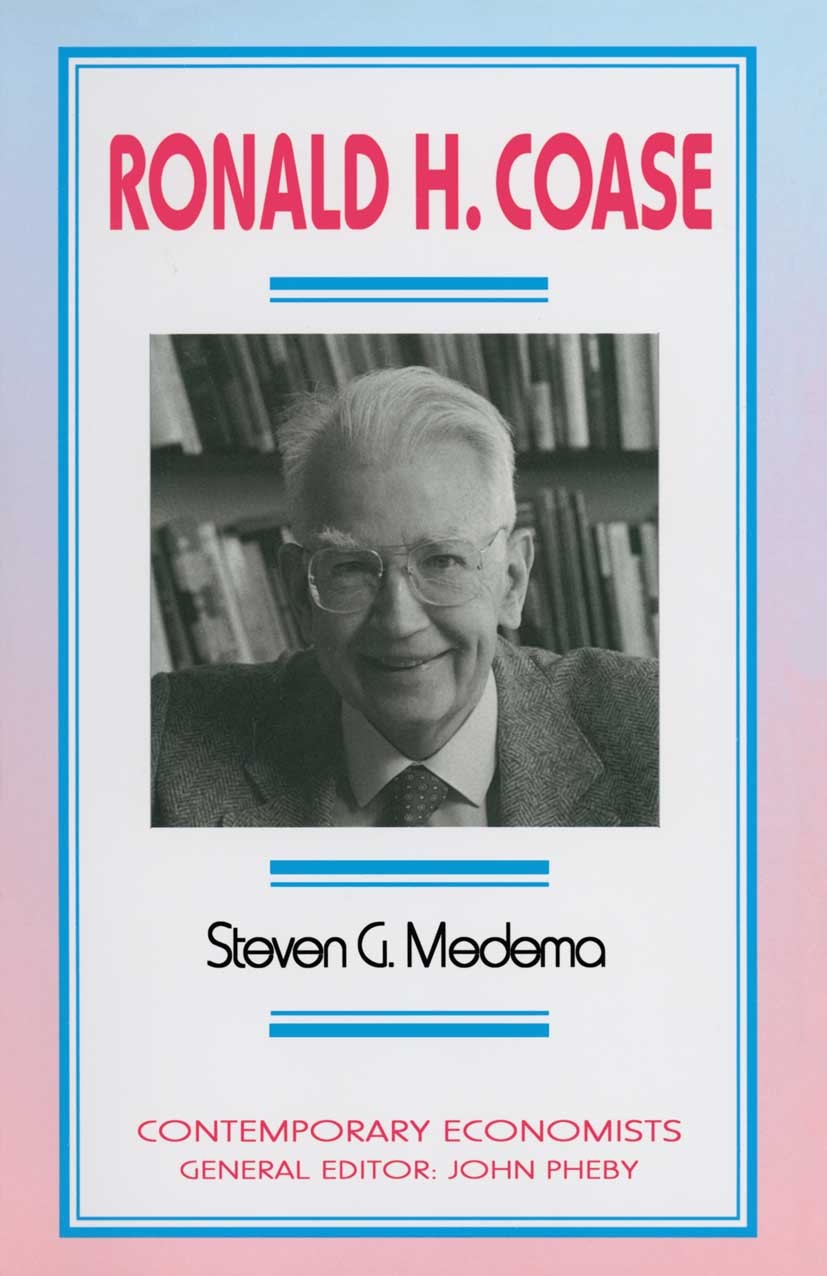
Next, my second point is that any moral philosophy based purely on harm-avoidance is going to be an empty one. Again, why? Because as the late Ronald Coase taught us long ago (see here), harms are almost always a reciprocal problem. Simply put, whenever B accuses A of harming his (B’s) interests, it is almost always the case that both A and B are responsible for the harm, or in the immortal words of Coase (emphasis added by me): “The question is commonly thought of as one in which A inflicts harm on B and what has to be decided is: how should we restrain A? But this is wrong. We are dealing with a problem of a reciprocal nature. To avoid the harm to B would inflict harm on A. The real question that has to be decided is: should A be allowed to harm B or should B be allowed to harm A? The problem is to avoid the more serious harm.” To ignore this fundamental insight is what I call the philosophers’ fallacy.

Lastly, my third and final observation (for now) is that Alasdair MacIntyre is not the only eminent philosopher to commit the philosophers’ fallacy. Consider, for example, John Stuart Mill’s conclusion in his 1859 essay On Liberty: “The only purpose for which power can be rightfully exercised over any member of a civilized community, against his will, is to prevent harm to others.” (For an overview of Mill’s harm principle, see § 3.1 of David Brink’s entry for “Mill’s Moral and Political Philosophy” in The Stanford Encyclopedia of Philosophy (2022), available here.) Mill’s harm principle can, in turn, be traced to Adam Smith, who defines justice as restraint from harming others: “Mere justice is, upon most occasions, but a negative virtue, and only hinders us from harming our neighbor.” (For a survey of the Scottish philosopher’s conception of justice, see James R. Otteson, “Adam Smith on Justice, Social Justice, and Ultimate Justice”, Social Philosophy & Policy, Vol. 34 (2017), pp. 123-143, which is available here.)

But if harms are indeed a reciprocal problem, then we are going to need some external criterion or other moral principle — above and beyond the harm-avoidance principle itself — for balancing competing harms in any given situation, i.e. for deciding which harm to privilege and which to restrain. For Coase, that external moral principle is some form of crass consequentialism: we “must avoid the more serious harm”, i.e. choose the lesser evil. Coase’s economic approach to harms, however, presupposes our ability to assign some type of monetary or other numerical value to competing harms, and here is where Coase’s approach can falter or leave us hanging, so to speak, for what if one of the harms is purely aesthetic? Or, relatedly, what if the competing harms are incommensurable, i.e. what if the competing harms cannot be measured on the same scale?

Is there any way out of this incommensurability conundrum, or is the philosophers’ fallacy simply an unavoidable one in the domains of morals, politics, and law, especially in a highly diverse and pluralistic society like ours? As it happens, I am hoping to address these fundamental philosophical questions in a future work. In the meantime, however, I will formally conclude my review of MacIntyre’s 2023 essay on a more positive note in the next day or two …

Ronald H. Coase | SpringerLink
Posted in Uncategorized | 3 Comments

On having survived MacIntyre’s essay on moral philosophy

This week, we have been revisiting the late Alasdair MacIntyre’s 2023 essay On Having Survived the Academic Moral Philosophy of the 20th Century. To recap, although I agree with MacIntyre’s diagnosis of philosophy (see here), his proposed remedy or scholarly cure is an impotent one for two reasons: he commits the natural law fallacy (here), and then he tries to pull off the old “bait and switch” trick (here), i.e. he substitutes a new moral criterion (the idea of “unconditional commitments”) in place of his original one (the telos of basic goods). Today, I will pick up where I last left off by asking: what do MacIntyre’s “unconditional commitments” consist of, and are they really “unconditional”?

To the point, MacIntyre is not only able to identify three “unconditional commitments” or Kantian moral duties in paragraph 24 of his essay; he also explains the underlying rationale or common thread tying them together: “I am bound by certain unconditional commitments—commitments not to harm the innocent, to be truthful, [and] to keep our promises, commitments that allow us to reason together without the distortions that arise from fears of force and fraud ….” Okay, fine, but who hasn’t broken a promise or told a lie? More generally, why are these three commitments or moral duties “unconditional”?

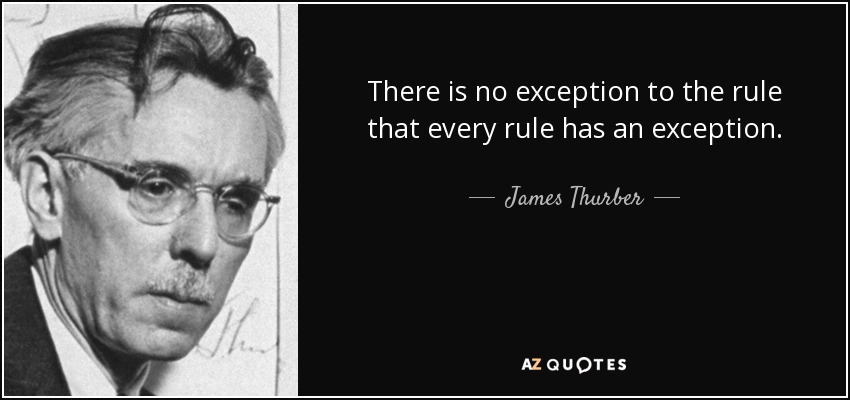
For my part, I am totally willing to concede that most people would agree with MacIntyre’s three general moral principles or commitments. As a general rule, we should avoid harming others, we should keep our promises, and we should tell the truth. The problem, however, is that rules, even moral ones, are never unconditional. Simply invoking a general moral rule in favor of harm-avoidance, truth-telling, or promise-keeping, or calling these general rules “unconditional commitments” as MacIntyre does, won’t get us very far. Why not? Because almost every legal or moral rule, no matter how important, usually has one or more exceptions.

Consider, for example, the third of MacIntyre’s unconditional commitments: promise-keeping. Is it really never morally permissible to break a promise? What about immoral or illegal promises? Or promises made under false pretenses? Or promises made under duress? Or what if keeping a promise, however procured, would itself produce a harm? As it happens, one of the things that struck me the most when I first studied the literature on promise-keeping is that philosophers and legal scholars are deeply divided on these questions. (And well they should be, since the meaning of such terms as “promise” or “duress” — or “truth” for that matter — is open to debate.)

Moreover, an even deeper logical problem is lurking behind MacIntyre’s analysis of unconditional commitments, a problem that bedevils the work of many moral and legal philosophers. Rest assured, I will describe this deeper problem in my next post …

James Thurber quote: There is no exception to the rule that every rule...
Posted in Uncategorized | 2 Comments

Alasdair MacIntyre’s natural law bait and switch

Yesterday, I accused the late Alasdair MacIntyre of committing the natural law fallacy in his 2023 essay On Having Survived the Academic Moral Philosophy of the 20th Century. To the point: he identifies a wide range of basic “goods” that are needed to lead a good life (see my previous post), but he doesn’t tell us where he got his laundry list from, or who is supposed to provide these goods. Today, I will show how MacIntyre tries to dig himself out of this deep natural law hole. As it happens, MacIntyre has a very clever stratagem up his rhetorical sleeve. Instead of trying to solve or refute the natural law fallacy directly, he changes the subject in order to sidestep the problem altogether!

In brief, MacIntyre tries to pull off an intellectual “bait and switch” operation! First, he baits us with his exquisite laundry list of basic goods. After all, who can object to such things as adequate food, clothing, and shelter, let alone love, affection, or practical rationality? But then, having lured us in, MacIntyre substitutes a new moral criterion or touchstone in place of his old one, for he makes no further reference to his laundry list of basic goods in the remainder of his 2023 essay; instead, out of nowhere, he announces in paragraph 27 of his essay “the discovery of the place that relationships structured by unconditional commitments must have in any life directed toward the achievement of common goods” (emphasis added).

To make matters worse, MacIntyre ends up digging himself into an even deeper logical hole, for he also informs us that the ultimate source of these supposedly unconditional moral commitments are “the exceptionless, if sometimes complex, precepts of the natural law.” But this conclusory statement begs the original question posed by the natural law fallacy: how do we know what the precepts of the natural law are in the first place? (Worse yet, if the precepts of the natural law are the same as MacIntyre’s unconditional moral commitments, then MacIntyre has committed a second logical fallacy: circular reasoning!)

So, what do MacIntyre’s unconditional commitments consist of, and are they really “unconditional”? We will turn to these key questions in my next post …

is it bait and switch or just bad business?
Posted in Uncategorized | 3 Comments

Alasdair MacIntyre commits the natural law fallacy

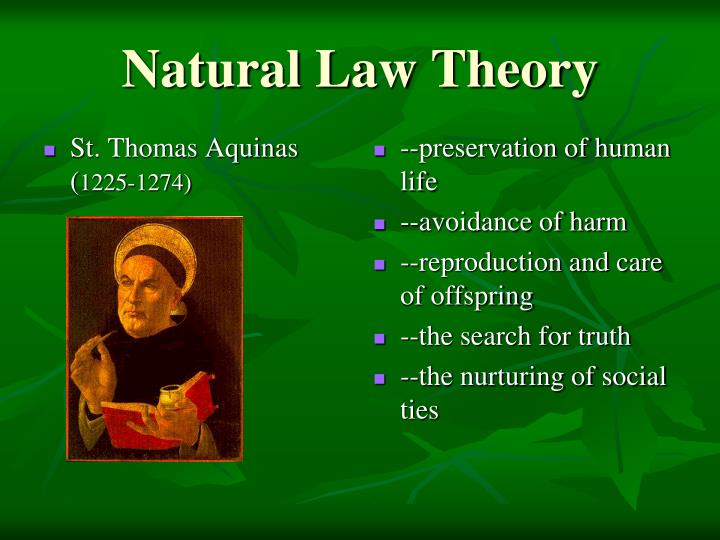
In my previous post, I began my review of the late Alasdair MacIntyre’s 2023 essay On Having Survived the Academic Moral Philosophy of the 20th Century by noting “the pervasiveness of disagreement”, not just among moral philosophers as MacIntyre does, but also among constitutional law professors and legal philosophers more generally. I also mentioned that MacIntyre’s alternative approach to moral philosophy is informed by the natural law tradition of Thomas Aquinas. Today, then, I will pick up where I left off by describing MacIntyre’s natural law approach to philosophy.

In summary, the natural law approach to legal philosophy begins by asking, What is the goal of law? Why do we have law in the first place? By the same token, MacIntyre’s natural law approach to moral philosophy begins by asking, and I quote, “What is it to be a good human being?” (A minor quibble, but I would reformulate MacIntyre’s question by asking, What does it mean to lead a good life?) MacIntyre then proceeds in paragraph 15 of his essay to identify “four sets of goods” that are needed to be good person, i.e. to lead a good life:

First, without adequate nutrition, clothing, shelter, physical exercise, education, and opportunity to work no one is likely to be able to develop his or her powers—physical, intellectual, moral, aesthetic—adequately. Second, everyone benefits from affectionate support by, well-designed instruction from, and critical interaction with family, friends, and colleagues. Third, without an institutional framework that provides stability and security over time a variety of forms of association, exchange, and long-term planning are impossible. And fourth, if an individual is to become and sustain … himself as an independent rational agent, … he needs powers of practical rationality, of self-knowledge, of communication, and of inquiry and understanding.

Notice that with MacIntyre’s natural law formulation of the good life, basic survival goods are not enough for one to flourish. In addition to such basic goods as food, clothing, and shelter to ensure our physical survival, we also need three more types of goods: (1) emotional, especially love and affection from our family and friends; (2) institutional or legal, i.e. a stable legal environment so we can trade with others and make plans; and last but not least, (3) and epistemological, i.e. critical thinking skills. (As a college professor, I especially like the last item on this list of natural law goods: practical rationality and critical thinking more generally.)

After formulating this laundry list of goods, MacIntyre draws the following conclusion in the 16th paragraph of his essay: “there are standards independent of our feelings, attitudes, and choices by which we may judge whether this or that [action or decision] is choiceworthy, whether this or that is good to choose, to do, to be, to have, to feel.” But that said, I can’t help but notice two big blind spots, two gaping holes, in MacIntyre’s approach to ethics: he falls into what I like to call the natural law fallacy, and he fails to define key terms.

Simply put, natural rights are supposed to be timeless and universal, but where does natural law itself come from? Specifically, who says that MacIntyre’s four sets of goods, and only those four, are a necessary or sufficient condition for leading a good life? And who is supposed to provide them? Alas, MacIntyre himself never tells us where his “four sets of goods” come from, or who is supposed to provide them. Nor does he bother to define such critical terms as adequate, friend, institutional, or practical rationality.

So, is there any way to escape these two natural law traps? Is there any way of locating the ultimate source of natural law or of defining key terms? I will address these questions in my next post.

absolute moral judgments

Posted in Uncategorized | 4 Comments

Alasdair MacIntyre’s diagnosis of philosophy: the pervasiveness of disagreement

At the end of my previous post highlighting my summer readings, I singled out the late Alasdair MacIntyre’s stinging critique of academic moral philosophy in his 2023 essay On Having Survived the Academic Moral Philosophy of the 20th Century. Most of all, it was MacIntyre’s eloquent description of the pervasiveness of disagreement among philosophers that really resonated with me:

“Disagreement on fundamental issues is in practice taken to be the permanent condition of philosophy. The range of continuing disagreements is impressive: realists versus antirealists in respect of mathematical, moral, perceptual, and historical judgments; dualists versus materialists in the philosophy of mind; utilitarians versus Kantians versus virtue theorists in ethics; Fregeans versus direct reference theorists in the philosophy of language; and a great many more. Add to these a range of disagreements in religion and politics that, themselves non-philosophical, are closely related to philosophical disagreements: theists versus atheists, conservatives versus liberals versus libertarians versus Marxists.”

Moreover, MacIntyre draws a further distinction between incremental “progress” and creativity in philosophy versus the possibility of a “decisive resolution” of any major philosophical problem (emphasis on the word “never” in the original):

“It is not that there is no progress in philosophical inquiry so conceived. Arguments are further elaborated, concepts refined, and creative new ideas advanced by the genius of a Quine or a Kripke or a Lewis. But this makes it the more striking that there is never a decisive resolution of any central disputed issue. So how should we think about this and respond to it?”

In addition, using the concrete example of the philosophical debate between the defenders of Kantian duty-ethics and the proponents of pragmatic consequentialism, MacIntrye concedes that the problem of disagreement in philosophy is an “interminable” or never-ending one. Why? Simply put, because neither party in any given philosophical controversy “has the resources to defeat the other.”

So, why does MacIntyre’s diagnosis of the pervasiveness of disagreement in philosophy strike a raw nerve with me? Because MacIntyre’s diagnosis applies equally to my field (law) as well. Many legal problems and controversies, especially in the domain of constitutional law, can be described as interminable, such as the never-ending debate between progressive and conservative law professors over their competing pet theories of constitutional interpretation.

Given this interminable state of affairs — given the impossibility of a decisive resolution of these questions among legal academics — what is to be done? As it happens, MacIntyre’s approach to philosophical problems is inspired by the natural law tradition of Thomas Aquinas. I will explore this natural-law-inspired approach in my next post …

A Difficult Marriage? Alasdair MacIntyre and the Postliberal Right  illiberalism.org |
Posted in Uncategorized | 3 Comments