“Such exclusive companies [like the English East India Co.] … are nuisances in every respect; always more or less inconvenient to the countries in which they are established, and destructive to those which have the misfortune to fall under their government.” (WN, IV.vii.c.108)
Adam Smith concludes Part 3 of his lengthy chapter on mercantile colonialism — Chapter 7 of Book IV of The Wealth of Nations — with a scathing critique of the most powerful private corporation of his day, the English East India Company:
” … the trade to the East Indies has in every European country been subjected to an exclusive company…. The greater part of that nation are thereby not only excluded from a trade to which it might be convenient for them to turn some part of their stock, but are obliged to buy the goods which that trade deals somewhat dearer than if it was open and free to all their countrymen. Since the establishment of the English East India Company, for example, the other inhabitants of England, over and above being excluded from the trade, must have paid in the price of the East India goods which they have consumed, not only for all the extraordinary profits which the company may have made upon those goods in consequence of their monopoly, but for all the extraordinary waste which the fraud and abuse, inseparable from the management of the affairs of so great a company, must necessarily have occasioned. The absurdity of this second kind of monopoly, therefore, is much more manifest than that of the first.” (WN, IV.vii.c.91; my emphasis)
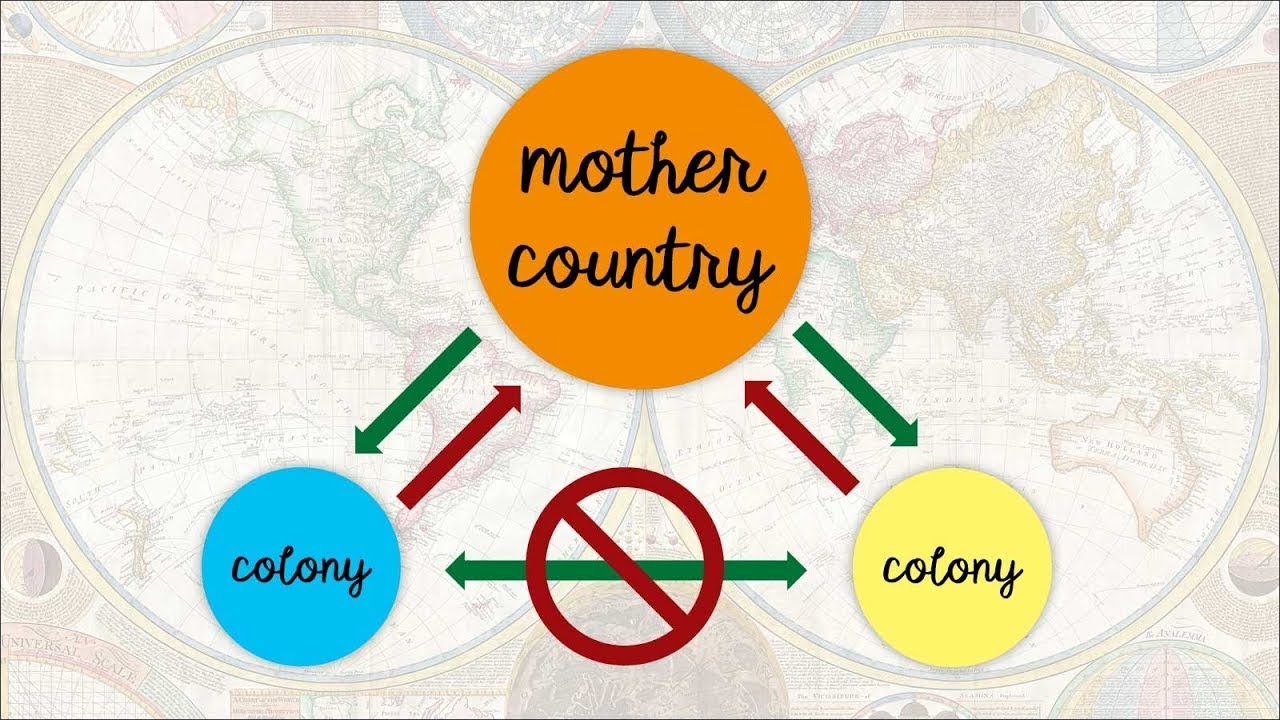
More simply put, Smith is saying that colonial India suffers from a double monopoly. She is not only prevented from trading with any other country except for England (Monopoly #1); to make matters worse, trade between India and England can only be carried out by one company, the English East India Company (Monopoly #2). Smith, however, exhorts Britain to reject “the meanness of mercantile prejudice” (IV.vii.c.106) and permit free trade:
“It is the interest of [the] sovereign … to open the most extensive market for the produce of his country, to allow the most perfect freedom of commerce, in order to increase as much as possible the number and the competition of buyers; and upon this account to abolish, not only all monopolies, but all restraints upon the transportation of the home produce from one part of the country to another, upon its exportation to foreign countries, or upon the importation of goods of any kind for which it can be exchanged. It is in this manner most likely to increase both the quantity and value of that produce, and consequently of his own share of it, or of his own revenue.” (WN, IV.vii.c.102)
By contrast, allowing a private company to rule another country is a recipe for disaster because the economic interest of the beneficiary of this double monopoly (the East India Co. or EIC) and that of the colonies under such a double monopoly (the sundry states of colonial India) are diametrically opposed! Or in the immortal words of Adam Smith:
“It is the interest of the East India Company, considered as sovereigns, that the European goods which are carried to their Indian dominions should be sold there as cheap as possible; and that the Indian goods which are brought from thence should bring there as good a price, or should be sold there as dear as possible. But the reverse of this is their interest as merchants. As sovereigns, their interest is exactly the same with that of the country which they govern. As merchants their interest is directly opposite to that interest.” (WN, IV.vii.c.103; my emphasis)
Last but not least, the Scottish philosopher points out that it’s not the company men who carry out the business of the EIC who are evil or nefarious; it’s the incentives that they are operating under that are evil and nefarious:
“I mean not, however, by anything which I have here said, to throw any odious imputation upon the general character of the servants of the East India Company, and much less upon that of any particular persons. It is the system of government [i.e. the double monopoly mentioned above], the situation in which they are placed, that I mean to censure, not the character of those who have acted in it. They acted as their situation naturally directed, and they who have clamoured the loudest against them would probably not have acted better themselves.” (WN, IV.vii.c.107; my emphasis)
In other words, incentives matter! I will now conclude with the following historical aside: the East India Co.’s trade monopoly with India was not abolished until 1813 — some 24 years after the death of Adam Smith! [1] N.B.: I will proceed to the penultimate chapter of Book IV, i.e. Chapter 8 (“Conclusion of the Mercantile System”), in my next post.

[1] See The East India Company Act of 1813 (53 Geo. 3. c. 155), more commonly known as the Charter Act of 1813.