“Sabor a mí” is a 1959 bolero by the legendary Mexican musician and composer Álvaro Carrillo. Since then, his iconic and beautiful balad has been reinterpreted by many artists. (Indeed, I featured some of these re-recordings in this 2021 blog post.) The version below is performed by Javier Camarena, featuring Jesús Navarro:
N.B.: The blog post below is based on the last part of my talk this weekend at the 2025 South-North Exchange on Theory, Culture, and Law at the Universidad Autónoma de Ciudad de México (UACM):
Previously, I drew a connection between the doctrine of necessity in law and the “state of exception” in the political arena, between Trump’s ingenious legal strategy in defense of his trade wars — i.e. declare an emergency or “state of exception” and then proceed to suspend ordinary constitutional rules under the pretext of that declared emergency — and the well-established legal doctrine of necessity, a doctrine that can be traced back to the Roman law maxim necessitas non habet legem (“necessity knows no law”).
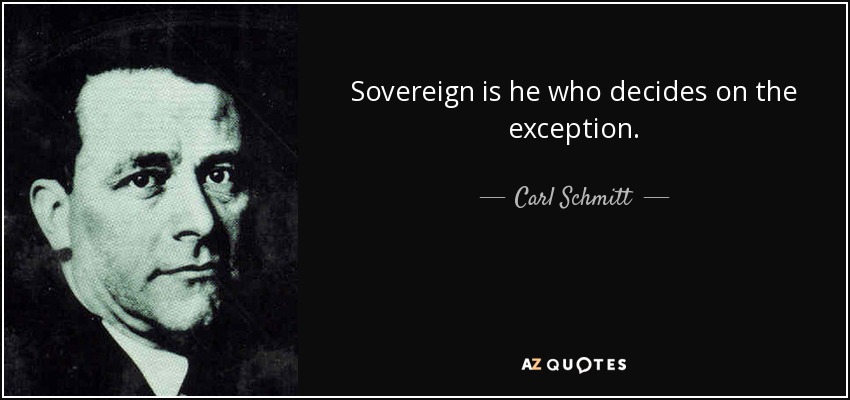
Today, I want to explain why the doctrine of necessity may also capture the true essence of what I have called “Gödel’s Loophole.” In brief, this supposed constitutional loophole refers to a possible “inner contradiction” in the U.S. Constitution, one that could produce a legalized dictatorship. But what if the loophole is not inside the Constitution but outside out it? Consider, for example, the first sentence of Carl Schmitt’s 1922 book Political Theology (available here): “Sovereign is he who decides on the exception.” In other words, it is the state of exception that defines the legal order, not the other way around, or in the immortal words of Schmitt himself: “The exception is more interesting than the rule. The rule proves nothing; the exception proves everything …”
Although the ideas of this great German legal philosopher are often discounted or swept under the rug because of his subsequent ties with the Nazis (see here, for instance), the contemporary Italian philosopher Giorgio Agamben has shown why Schmitt’s famous dictum (“Sovereign is he who decides on the exception”) is more relevant than ever today. Among other things, Agamben cites Schmitt dozens of times in his 2005 monograph State of Exception (available here) and explains why Schmitt’s dictum presents a double paradox, for a state of exception not only creates a legal vacuum in which actions are not bound by the law; it also suspends or annuls the rule of law in the name of protecting the legal order. The Schmittian sovereign — the person who gets to decide what constitutes an emergency necessitating a state of exception — thus stands outside the law and at the same time is its ultimate source.
For my part, building on the ideas of Giorgio Agamben and Carl Schmitt, I now want to present a new and improved version of Gödel’s loophole. Simply put, if X has the lawful power to declare an emergency or state of exception, then by definition he has the lawful power to suspend ordinary legal and constitutional rules during the duration of the emergency — that is, by definition X is a lawful dictator. I have left open (for now) an important second-order problem: can X’s emergency-declaring power be reviewable by the courts or can it be subject to a legislative veto? However this second-order question is answered, my revised version of Gödel’s constitutional loophole describes Trump’s legal playbook in the tariff cases to a “T” (pun intended): Trump is not only suspending the normal rules of constitutional law under the pretext of his declared emergencies; one could further argue that, as president, he has the inherent authority to do so!
N.B.: Below is part 2 of my upcoming talk this weekend at the 2025 South-North Exchange on Theory, Culture, and Law at the Universidad Autónoma de Ciudad de México:
Is there a link between Gödel’s Loophole and President Trump’s tariffs? To explore this possibility, we first have to take a step back and take a closer look at Trump’s legal strategy in defense of his trade war. To the point, as of today (see here, for example) President Trump has signed 21 executive orders, four memoranda, and three proclamations related to trade and tariffs since he re-assumed the office of president earlier this year. On each of these occasions, Trump has officially declared a “national emergency” and has claimed legal authority for his trade war policies under the International Emergency Economic Powers Act (IEEPA).
In other words, a clear legal pattern has emerged: President Trump’s legal theory in support of his trade war is to invoke the IEEPA by declaring a national emergency and then claim that he is acting under the authority of that law. Of course, this strategy is a risky one: the Congress could, in theory, amend or repeal the IEEPA, or a court could declare one or more of Trump’s executive orders — or even the IEEPA itself — unconstitutional, but with every passing day it looks like that is a calculated gamble or strategic risk Trump is willing to take. In the meantime, until Congress acts or until the Supreme Court joins the fray, Trump’s tariff playbook reminds me of the common law defense of necessity in ordinary civil and criminal cases.
In brief, the necessity defense allows you to break the law when you are confronted by an emergency: it operates as a justification or an excuse of an otherwise illegal action when taken to avoid a greater harm. (Consider, for example, the two famous trolley problems in moral philosophy.) But does the doctrine of necessity operate as a blanket justification, i.e. does it “legalize” an otherwise illegal act? Or does it operate as a mere excuse, i.e. the bad act in question is still illegal but the actor cannot be punished for taking it during the emergency? What interests me here, however, is not the underlying rationale of the necessity defense, i.e. whether it operates as a justification or an excuse. What interests me is how Trump’s tariff playbook — invoking a national emergency to bypass both judicial and legislative checks on his trade policies — sheds light on a deep constitutional puzzle called Gödel’s loophole. I will explain why next …
N.B.: Below is an excerpt (part 1 of 3) of my upcoming talk this weekend at the 2025 South-North Exchange on Theory, Culture, and Law at the Universidad Autónoma de Ciudad de México (UACM). The theme of this year’s meeting is “New scenarios in the dispute of rights: authoritarianism, polarization, and democracy.”
Is President Donald J. Trump carrying out an autogolpe or “self-coup” in order to assume full dictatorial powers during his remaining time in office? After all, like the great Franklin D. Roosevelt (FDR) in the 1930s and 40s, Trump has for all practical purposes been ruling by decree since he re-assumed the office of president in January of this year. As of today, for example (see here), Trump has signed no less than 157 executive orders (#14147 through #14303) during the first few months of his second term, but which one of these 157 decrees is the most dangerous or legally dubious one? For me, it’s the first round of tariffs he announced on 1 Feb. 2025, when he signed Executive Order #14193 (“Imposing Duties to Address the Flow of Illicit Drugs Across our Northern Border“). Let me explain:
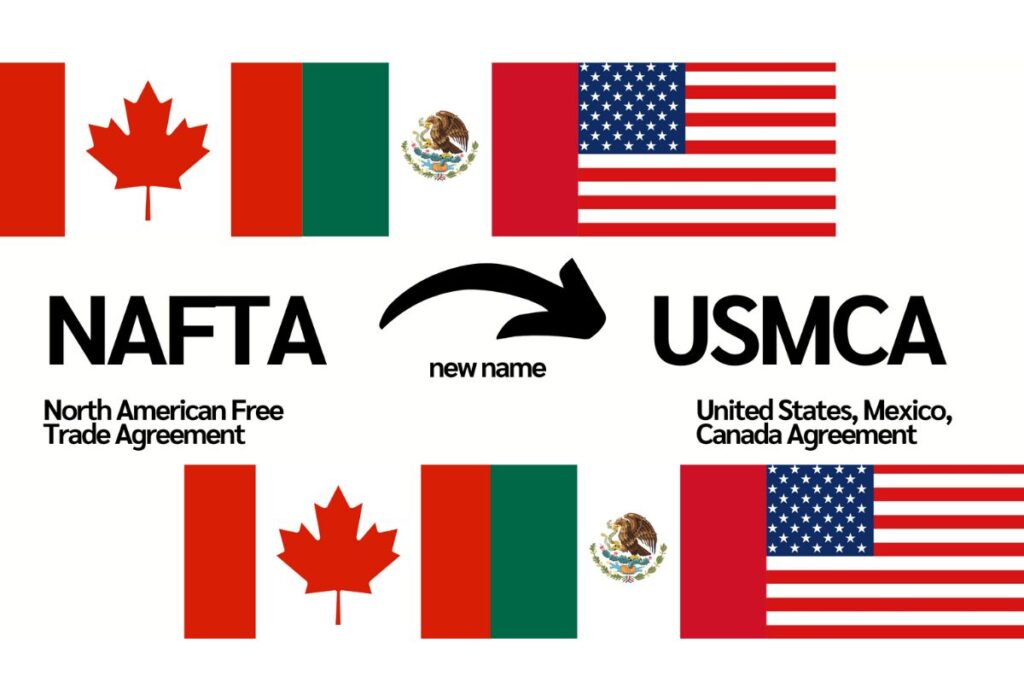
Although this presidential decree attempted to impose an across-the-board tariff of 25% on nearly all goods imported into the U.S. from Canada and Mexico (I say “attempted” because Trump soon backed down), the tariffs themselves are not (from a purely legal perspective) what I found most objectionable about this executive order. No, what I found even more worrisome was that Trump’s decree purported to abrogate a standing treaty, the US-Mexico-Canada Agreement (USMCA). Although President Trump backed down (he postponed the enforcement of the tariffs against Canada and Mexico on two separate occasions and then removed those tariffs altogether from his “Liberation Day” decree on 2 April), his initial instinct was to use the pretext of an emergency (drug smuggling) to effectively abrogate an entire treaty in all but name!
Next, I will explain why President Trump’s attempt to annul the USMCA and his subsequent rounds of worldwide tariffs remind me of a deep puzzle in constitutional law known as Gödel’s Loophole, a supposed “inner contradiction” in the U.S. Constitution that was discovered by the logician, mathematician, and analytic philosopher Kurt Gödel …
Why are the Insular Cases of yore relevant to the current batch of Trump tariff cases of today? Although the legal issues are different, the Insular Cases are still relevant today because they show us how the “constitutional law game” is really played. Let me explain.
As we saw in my previous post, Downes v. Bidwell, one of the leading Insular Cases decided by the Supreme Court in 1901, involved a genuine legal dilemma: two conflicting constitutional provisions. One part of the U.S. Constitution (the Uniformity Clause in Article I) declares that “all duties, imposts, and excises shall be uniform throughout the United States,” while another part of the Constitution (the Territory Clause in Article IV) gives Congress the “Power to dispose of and make all needful Rules and Regulations respecting the Territory or other Property belonging to the United States.” In other words, Downes is a quintessential hard case.
The deeper problem with Downes, however, is that instead of trying to resolve this tension between these conflicting constitutional provisions, the Supreme Court ended up deciding — by a narrow 5 to 4 margin no less — that the Uniformity Clause does not apply to Puerto Rico in the first place! Why not? Because the newly-acquired territory of Puerto Rico was somehow not a part of the United States, or in the infamous words of one of the judges of the Supreme Court (Henry Billings Brown), the Island was “foreign to the United States in a domestic sense.”
Now, let’s fast-forward to 2 April 2025, when President Trump signed Executive Order 14257 (see here). Among other things, Trump’s executive order invokes the International Emergency Economic Powers Act of 1977 (IEEPA) to impose a baseline 10% tariff on all imports into the U.S. (except on most imports from Canada and Mexico). Two weeks later (16 April), a group called the Liberty Justice Center (LJC), a so-called “public interest” law firm like the ACLU or NAACP, decided to challenge President Trump’s executive order in court (V.O.S. Selections, Inc. v. United States), and just last week (28 May), the LJC won a major battle in this tariff legal war: a three-judge panel of the Court of International Trade unanimously ruled that President Trump does not have the authority to impose tariffs under IEEPA. (The case is now on appeal.)
For my part, when I first heard about this case back in April, I thought it was a no-brainer for two reasons: one is that the power to impose tariffs belongs to Congress under Article I of the Constitution, not the president, and in any case (pun intended), the other reason is that the text of IEEPA does not refer to tariffs or import duties. Likewise, when I first studied the Insular Cases in law school — it was my friend and classmate Carlos Soltero, not a professor, who first brought this line of cases to my attention — I too thought it was another no-brainer: Congress may have the power to “make all needful Rules and Regulations” for U.S. territories under Article IV of the Constitution, but at the same time, Congress is bound by the rules set forth in Article I when making such rules and regulations, right?
Somehow, however, five justices of the Supreme Court in Downes v. Bidwell found a way to allow the Congress to have its cake and eat it too — i.e. allow the Congress to violate the plain words of Article I of the Constitution when legislating for Puerto Rico — by inventing out of whole cloth a completely made-up legal rule that continues to be “good law” to this day: the so-called doctrine of “unincorporated” territories, a doctrine that is found nowhere in the Constitution itself. We can now begin to see the relevance of Downes to a case like V.O.S. Selections.
Simply put, the larger lesson of a case like Downes v. Bidwell is a cruel one: the judges of the Supreme Court are not always bound by “law”, especially when the stakes are really high. (Yeah, I still haven’t forgotten Bush v. Gore!) Sometimes, these “judges” are just legislators in robes: they will, pardon my frankness, make shit up during their secret deliberations in order to reach whatever result a majority of them happen to think is the most expedient one. In short, if you want to fight Trump’s tariffs, we will need the Congress to step in at some point. If you put all your eggs in the Supreme Court basket, you will most likely be let down.
In my next few posts, I will revisit Trump’s aborted attempt to unilaterally abrogate the U.S.-Mexico-Canada free trade treaty earlier this year. Although Trump eventually backed down, this now-forgotten chapter in Trump’s destructive trade war may shed light on Gödel’s Loophole, a logical contradiction hiding in plain sight inside the U.S. Constitution.
As I mentioned in a previous post, I see some possible parallels between Downes v. Bidwell, one of the infamous “Insular Cases” decided in 1901, and President Donald J. Trump’s controversial “Liberation Day” tariffs. Although Downes v. Bidwell involved an act of Conrgess (the Foraker Act of 1900), while the Trump tariff cases involve presidential executive orders, one important parallel is that both sets of cases involve trade.
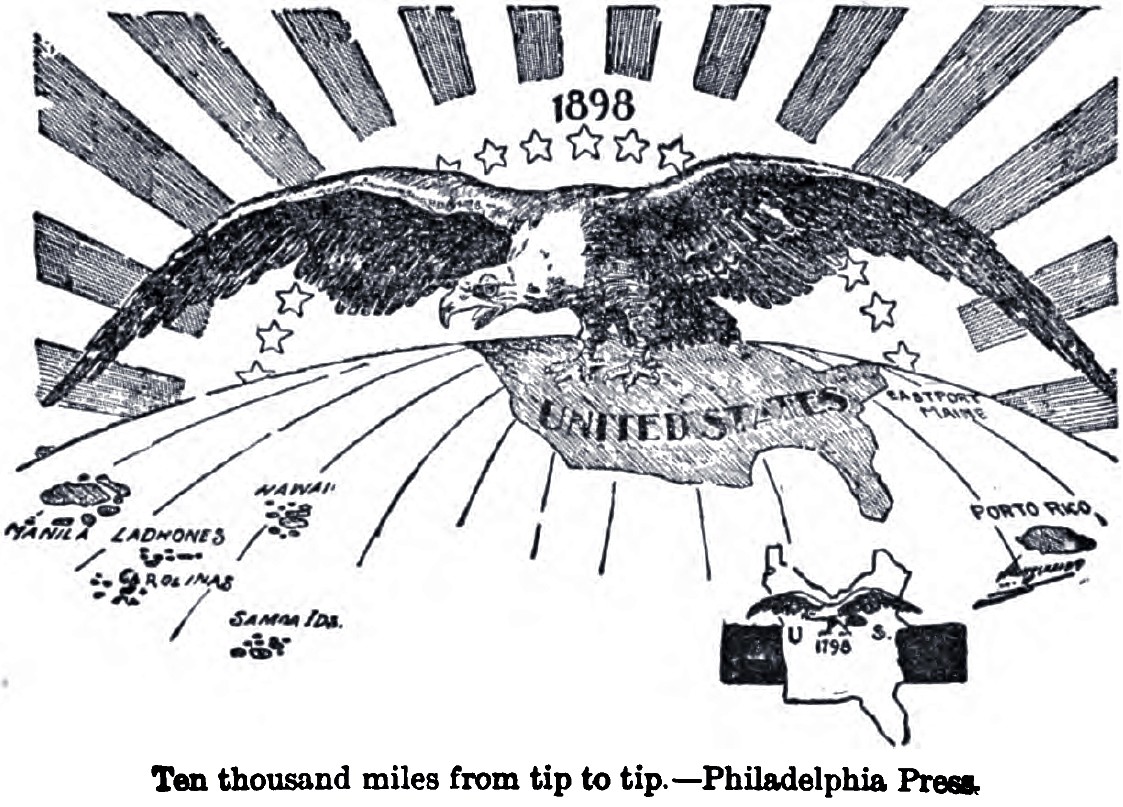
In Downes v. Bidwell, the plaintiff (Samuel Downes) had imported a shipment of oranges from Puerto Rico, a newly-acquired U.S. territory, into the Port of New York. When his shipment arrived, the U.S. customs inspector for the port of New York (George Bidwell) imposed import duties on Downes’ shipment under the Foraker Act of 1900. (Among other things, the Foraker Act established a civilian government for Puerto Rico, which had been acquired by the United States in 1898 and was under U.S. military rule until the passage of this law. In addition, the Foraker Act also levied customs on all imports from Puerto Rico into the United States.)
Downes then challenged Bidwell’s action under the Uniformity Clause of the U.S. Constitution (Article I, Section 8, Clause 1), which declares that “all duties, imposts, and excises shall be uniform throughout the United States.” Since the Foraker Act singled out Puerto Rico for import duties, Downes argued the Foraker Act was unconstitutional. Puerto Rico, however, was a territory, not a State, and the Territory Clause of the U.S. Constitution (Article IV, Section 3, Clause 3) gives Congress the “Power to dispose of and make all needful Rules and Regulations respecting the Territory or other Property belonging to the United States.”
In other words, Downes v. Bidwell involves two conflicting constitutional provisions. On the one hand, the Uniformity Clause in Article I creates a level economic playing field inside the United States by requiring all internal excise taxes, import duties, etc. to be the same “throughout the United States,” but at the same time the Territory Clause in Article IV appears to give Congress plenary power over U.S. territories, including the power to impose import duties. How do we resolve this conflict?
In addition to this particular tension, the Insular Cases as a whole present the following open-ended constitutional question writ large: even if Article I trumps Article IV (i.e. even if the Congress is bound by the rules set forth in Article I when making rules and regulations for U.S. territories), was Puerto Rico legally part of the United States at the time this case was decided, or was it “foreign in a domestic sense” as the Supreme Court would enigmatically rule in 1901? Suffice it to say that a similar internal constitutional conflict and open-ended question will emerge when we take a closer look at the current batch of Trump tariff cases in my next post.
That is the title of my most recent work-in-progress with Alain Alcouffe (University of Toulouse). Below the fold is our revised introduction (footnotes omitted):
You may have heard by now that two different federal courts have invalidated most of President Trump’s tariffs. Below are some relevant links via the Volokh Conspiracy blog:
Both cases, however, are now being appealed, and in the meantime, Professor Jack Goldsmith (Harvard Law School) has identified in this blog post some technical flaws and doctrinal soft spots in these recent rulings. To the point, although the text of the International Emergency Economic Powers Act (IEEPA) does not refer to tariffs or duties at all, this law confers on the president the sole — and, by logical implication, non-judicially-reviewable — power to declare national emergencies in response to “any unusual and extraordinary threat” against the United States.
Alas, who gets to decide what constitutes an “unusual and extraordinary threat”? For my part, I see some possible parallels between the current batch of tariff cases and Downes v. Bidwell, one of the infamous “Insular Cases” decided in 1901. I will discuss these parallels next week. Bonus link: Why Trump likes tariffs.
Alain Alcouffe and I now wish to conclude our series of blog posts on “Adam Smith and the salons of Paris” with a question and with a tentative observation. Specifically, did the salons of pre-revolutionary Paris have any influence on Smith’s intellectual development? Or more generally, why does it matter whether the Scottish philosopher attended some soirées or soupers at these salons during his 1766 sojourn in the French capital? After all, although some scholars claim the salons played a central role in Europe’s literary and intellectual circles, others have painted a less rarified and more snobbish picture of these sumptuous spaces as frivolous and light-hearted affairs. (See, for example, the scholarly work by Antoine Lilti posted below.) Whichever of these competing pictures of the pre-revolutionary salons is the more accurate one, our tentative conclusion is that Smith’s mere presence in these salons may represent a turning point in his intellectual development. Why? Because the salons were not just a special space to exchange ideas or engage in polite conversation; they also epitomized the opulence and luxury of 18th-century Europe and thus may have informed Smith’s argument on the “Progress of Opulence in different Nations” (see Book III of Smith’s Wealth of Nations) and his overall view of “commercial society” more generally. But just how much influence, and in which direction? Those questions will be the subject of future research.








 prior probability