In my previous post, we compared and contrasted Rousseau’s idea of the “general will” with traditional majority rule. According to Rousseau, the general will is aimed at the common good, while majority rule (the “will of all”) is just the sum of our private wills or selfish interests. Today, we will consider a more practical question: is it really possible to put Rousseau’s general will into practice? Alas, the Swiss political philosopher is vague on specifics. At most, he drops two tantalizing hints in this particular passage in Book II of The Social Contract:
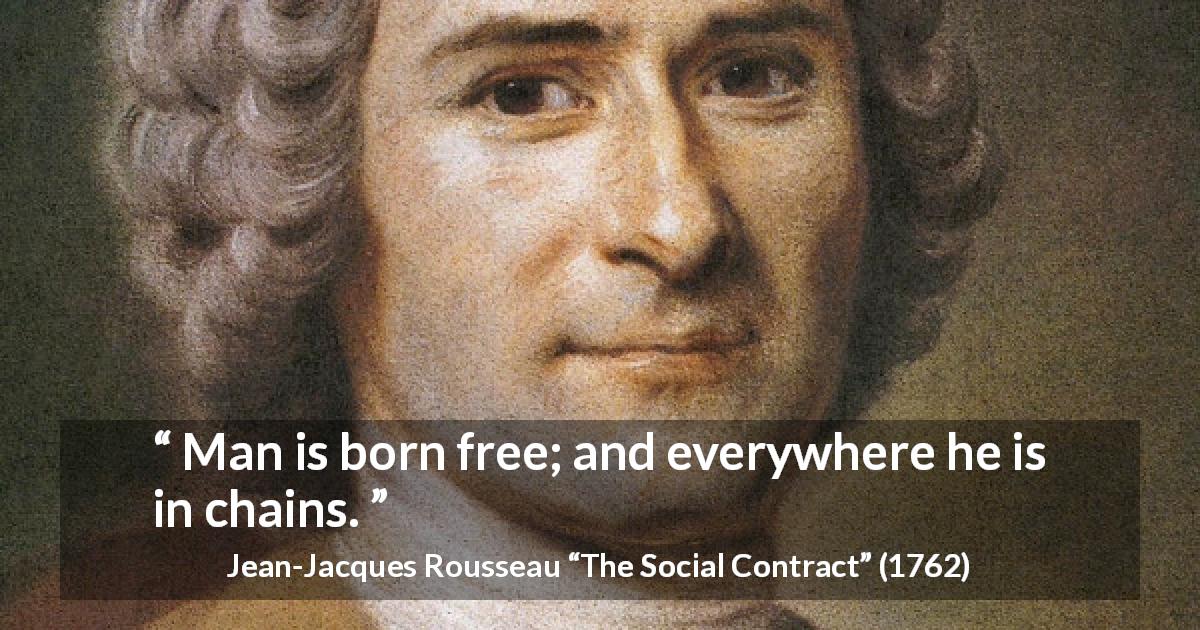
“If, when an adequately informed people deliberates [délibère], the citizens were to have no communication among themselves, the general will would always result from the large number of small differences, and the deliberation [délibération] would always be good.” [1]
In other words, according to Rousseau, two conditions must be met in order to express or measure the general will: (1) the people who are voting must be “adequately informed”, and (2) eligible voters (whoever they are) must cast their votes without speaking or otherwise communicating with each other ahead of time. Say what? Don’t let the words délibère and délibération confuse you. When Rousseau uses these words, he is simply referring to the act of getting together to cast votes and not to the process of debate and discussion preceding a vote.
Nevertheless, although Rousseau is short on specifics (he doesn’t explain what he means by “adequately informed”, for example), he does drop one big logistical hint when he praises “the unique and sublime system instituted by the great Lycurgus,” i.e. the legendary lawgiver of the ancient Greek city-state of Sparta. [2] On this note, it is revealing that Rousseau praises Sparta and not Athens — or his hometown of Geneva, for that matter — for Sparta’s political model (see here) was very different from the classical extended debate model of the Athenian Assembly (here). So, what was Lycurgus’s “unique and sublime system” of voting?
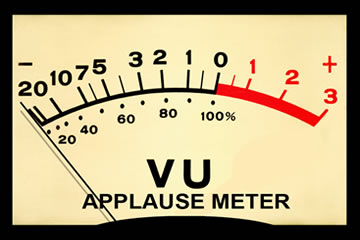
In summary, Sparta had a popular assembly called the Appella, which met once a month. The Appella was a popular body because every male citizen over the age of 30 could participate in the monthly assembly and cast a vote. But the members of this democratic body did not debate or deliberate; they shouted! Or in the words of James S. Fishkin (1995, pp. 23-24), a historian at Stanford:
“Missing in the Spartan method was the entire social context of careful debate and deliberative argument fostered by the Athenian institutions of the Assembly, the citizens’ juries, the legislative commissions, and the Council. Aristotle dismissed the Spartan applaudometer as childish. Yet if we ask which model of ancient democracy we have come closer to realizing in our modern quest for direct democracy, we must concede that there are ways in which the Spartan model is closer than the Athenian to contemporary practices.” [3]
Is this Spartan shouting method of voting or “applaudometer” what Rousseau really had in mind when he wrote The Social Contract? Either way, why does the Swiss philosopher want to dispense with debate and deliberation altogether? In Rousseau’s defense, my best guess is that he did not want the voters to be fooled by demagogues or slogans, [4] for Rousseau’s general will, however it is operationalized, is meant to measure or express a special form of public opinion: specifically, public opinion on what laws or courses of action the voters think is best for the political community as a whole. (Recall that the general is supposed to aim at the common good.)
But this still leaves one remaining open and damning question. After all, people might disagree on what the common good is or what the common good requires. If so, why should the voters in the minority be required to obey the general will? In other words, whatever happened to the tyranny of the majority? Rest assured, I will address this key question in my next post. For now, however, it suffices to say that Rousseau’s ominous answer to this set of questions has haunted us ever since.