Expansion of the President’s Emergency Powers: The Suppression of Rebellion Act of 1861

We have thus far reviewed the Militia Acts of 1792 and 1795 as well as the Insurrection Act of 1807. The legislative trend should now be crystal clear. Each time Congress has enacted legislation authorizing the president to use military force to deal with domestic disorders, the Congress has expanded the president’s emergency powers in one way or another. “The Suppression of Rebellion Act of 1861” would be no exception to this trend. The full text of the rebellion law is available here. In this post, we will focus on Section 1 of the 1861 law, which amended and replaced Section 2 of the old 1795 Militia Act (available here). In full, Section 1 consists of a single sentence and is worded as follows (emphasis added):

“whenever, by reason of unlawful obstructions, combinations, or assemblages of persons, or rebellion against the authority of the Government of the United States, it shall become impracticable, in the judgment of the President of the United States, to enforce, by the ordinary course of judicial proceedings, the laws of the United States within any State or Territory laws of the United States, it shall be lawful for the President of the United States to call forth the militia of any or all the States of the Union, and to employ such parts of the land and naval forces of the United States as he may deem necessary to enforce the faithful execution of the laws of the United States, or to suppress such rebellion in whatever State or Territory thereof the laws of the United States may be forcibly opposed, or the execution thereof forcibly obstructed.”

The 1861 law thus increased the president’s military power in three new ways. First, the rebellion law replaced the previous obstruction standard or trigger with a much lower standard. Specifically, under the old law an obstruction had to be “by combinations too powerful to be suppressed by the ordinary course of judicial proceedings”; under the new law, by contrast, it just had to be “impracticable” to enforce federal laws. In addition, the 1861 law committed to the president’s sole discretion the initial determination whether or not it was “impracticable” to execute the laws. Last but not least, the new law also added “rebellion against the authority of the Government of the United States” to the list of instances under which the power to use military force to “execute the laws” could be invoked.

To sum up, in the words of one scholar (Vladeck, 2004, p. 167, footnotes omitted), “to whatever extent the 1795 Act had removed or changed three important checks on the President’s emergency authority under the 1792 Act, the 1861 Act heavily diluted the major checks that remained.” Of course, it should come as no surprise that Congress would vote to further expand presidential emergency powers during our nation’s most serious political and military crisis, but Congress would further expand the president’s use-of-force powers when it enacted the Civil Rights Act of 1871 in response to the rise of the Ku Klux Klan in the South, so we will revisit the 1871 law in our next post. (Source cited above: Stephen I. Vladeck, “Emergency Powers and the Militia Acts,” Yale Law Journal, Vol. 114 (2004), pp. 149-194.)

Image result for the war between the states

Posted in Uncategorized | Leave a comment

Expansion of the President’s Emergency Powers: The Insurrection Act of 1807

Thus far, we have reviewed the Militia Acts of 1792 and 1795. Those laws authorized the president to activate only state or local militias and only in three specific situations: invasions, insurrections, and obstructions of U.S. laws. But Congress would eventually vote to expand the president’s emergency powers when it enacted the Insurrection Act of 1807, available here. This historic law consists of a single sentence and is worded as follows:

“in all cases of insurrection, or obstruction to the laws, either of the United States, or of any individual state or territory, where it is lawful for the President of the United States to call forth the militia for the purpose of suppressing such insurrection, or of causing the laws to be duly executed, it shall be lawful for him to employ, for the same purposes, such part of the land or naval force of the United States, as shall be judged necessary, having first observed all the pre-requisites of the law in that respect.”

Although the 1807 Insurrection Act did not repeal or modify the proclamation requirement under the old Militia Act of 1795, this law expanded the president’s emergency powers in two significant ways. First, the new law applied to “all cases of insurrection, or obstruction to the laws, either of the United States, or of any individual state or territory.” In other words, the president could now use military force to enforce state laws as well as federal laws.

But more importantly, the 1807 law not only authorized the president to “call forth” state or local militias in these two situations (“insurrection” and “obstruction to the laws”); the new law also authorized the president to activate the U.S. armed forces in these situations. Prior to 1807, the president had to rely on state or local militias to put down rebellions and repel invasions on U.S. soil. Now, beginning with the 1807 law, the president had legislative authority from Congress to use federal troops (in addition to state and local militias) to respond to domestic emergencies.

When Congress enacted the Insurrection Act of 1807, it did not formally amend the language of the existing Militia Act of 1795. That would change when Congress enacted “The Suppression of Rebellion Act of 1861” on the eve of the U.S. Civil War. We will delve into the 1861 law in our next post.

Image result for martial law

Could it happen here?

Posted in Uncategorized | Leave a comment

Repeal and Replace: The Militia Act of 1795

When can a president use military force within the United States to respond to an emergency? As we saw in our previous post, Congress addressed this question for the first time when it enacted the first Militia Act of 1792, available here. But at the behest of President George Washington (see image below), Congress went ahead and repealed and replaced the 1792 law with a new use-of-force law in 1795, available here. The new law made three important changes to the old law:

  1. The new 1795 law removed the judicial certification requirement in situations involving obstructions of federal law. Under the old law, if the president wanted to call forth the militia to enforce a federal law, he first had to obtain from a federal district judge or an associate justice of the U.S. Supreme Court a certification that the laws of the United States are being obstructed “by combinations too powerful to be suppressed by the ordinary course of judicial proceedings.” Under the new law, the president had the power to decide how serious or severe an obstruction was. (The new law still imposed a 30-day time limit on the president’s calling forth power when Congress was in session.)
  2. The new law also modified the proclamation requirement. Under the old law, the president was required to issue a formal proclamation before he used force to respond to an emergency: “whenever it may be necessary, in the judgment of the President, to use the military force hereby directed to be called forth, the President shall forthwith, and previous thereto, by proclamation, command such insurgents to disperse, and retire peaceably to their respective abodes, within a limited time” (emphasis added). The new law, by contrast, deleted the words “and previous thereto.”
  3. Lastly, the new law removed the sunset clause. Unlike the 1792 law, which was temporary, the new 1795 replacement law was designed to remain on the books permanently. Nevertheless, the 1795 Militia Act would be amended in 1803 and would then replaced with a new use-of-force law in 1807. We shall thus review the Insurrection Act of 1807 in our next post.
Image result for calling forth the militia
Posted in Uncategorized | Leave a comment

The Militia Act of 1792

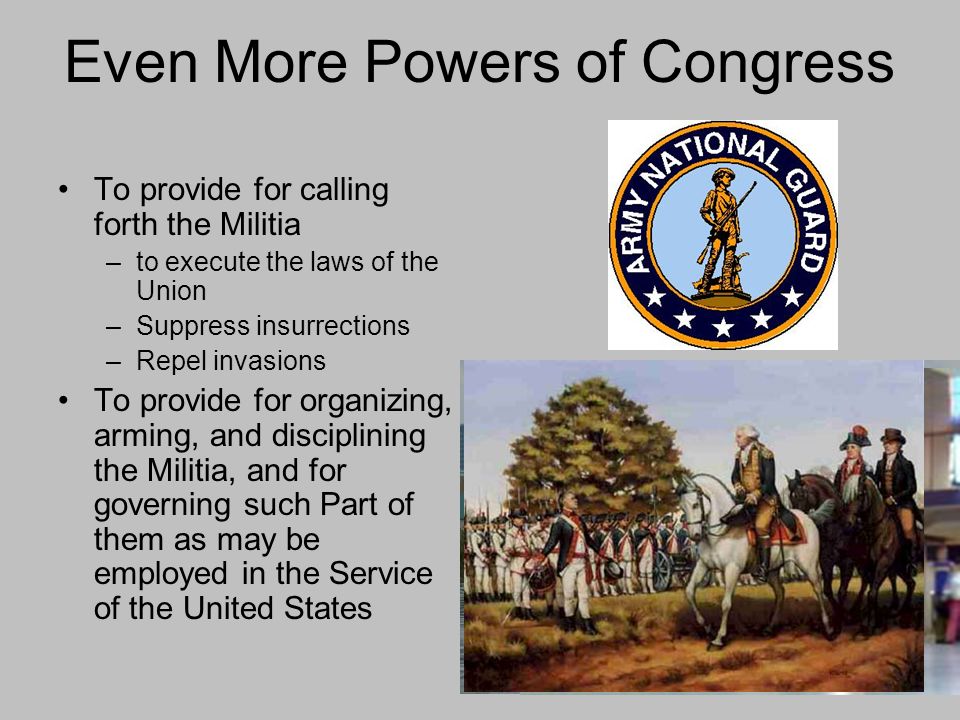
We posed a provocative question in our previous post, where we asked whether President Eisenhower acted lawfully when he sent federal troops into Little Rock in the fall of 1957. Although the president is the “commander in chief” of the armed forces and has the power to enforce federal laws, at the same time Article I, Section 8 of the Constitution gives Congress–not the president–the power “to raise and support armies” and “to provide for calling forth the militia.” (See image below.) Nevertheless, Congress delegated this “calling forth” power to the president early in our nation’s history, when Congress enacted the first Militia Act of 1792, available here. (Congress enacted a second Militia Act a few days later.) In particular, the first Militia Act law spells out three different procedures the president must follow to call forth a militia, depending on the type of emergency he is responding to:

  1. Invasion. When there is an invasion or an imminent threat of invasion, the president may act unilaterally to repel the invasion.
  2. Insurrection. When there is an internal insurrection within a state, the president’s authority to use military force is subject to a state veto of sorts. Specifically, the president must first request authorization from the state legislature or from the governor, if the legislature cannot be convened in time, before calling forth the militia.
  3. Execution of the laws of the union. In order to use military force to enforce federal law, the president must request a certification from an associate justice of the U.S. Supreme Court or from a federal district judge. Specifically, the associate justice or district judge must certify that the laws of the United States are being obstructed “by combinations too powerful to be suppressed by the ordinary course of judicial proceedings.” In addition, the president must also receive authorization from Congress. If Congress is not in session, however, then the president’s authorization to use force automatically expires “thirty days after the commencement of the ensuing session.”

In addition, the 1792 law imposed a proclamation requirement on the president. That is, in any of these three situations, whether it be a foreign invasion, an internal insurrection, or an obstruction of federal law, the president was required to issue a formal proclamation before using force: “whenever it may be necessary, in the judgment of the President, to use the military force hereby directed to be called forth, the President shall forthwith, and previous thereto, by proclamation, command such insurgents to disperse, and retire peaceably to their respective abodes, within a limited time” (emphasis added).

Lastly, it’s also worth noting that the 1792 law contained a two-year sunset provision. Congress, however, reenacted the Militia Act on a permanent basis in 1795. Congress also took this opportunity to make several significant changes to the original law. We will thus review the 1795 replacement law in our next post.

Image result for calling forth the militia

Source: Michael McLaughlin

Posted in Uncategorized | Leave a comment

The Force of Law

One of the most dramatic moments in our nation’s history occurred in sleepy Little Rock, Arkansas in the fall of 1957, when President Dwight D. Eisenhower sent 1,000 U.S. Army paratroopers from the 101st Airborne Division to restore order at Little Rock’s Central High School. But did Eisenhower have the legal authority to unilaterally send troops into Little Rock? In a televised address to the nation on 24 September 1957 (see video below), Eisenhower justified his historic decision on practical grounds: “Mob rule cannot be allowed to override the decisions of our courts.” But Eisenhower’s fateful decision to resort to military force poses many fundamental constitutional questions. What was the source of this power? In a word, was his use of force itself lawful? And if so, what are the limits, if any, to this power.

At that time (1957), the power of the president to deploy troops inside the United States was codified in Sections 331 through 335 of Volume 10 of the U.S. Code. (Today, this delicate power is codified at 10 USC Sections 251-255.) This legislation, in turn, can be traced back to the Militia Act of 1792, a law that was enacted over 200 years ago! President George Washington invoked this law when he responded to the infamous Whiskey Rebellion of 1794. The Militia Act was amended twice (in 1794 and in 1795) and was eventually replaced with a new domestic force law when another Founding Father, the polymath Thomas Jefferson, was still in office: the so-called Insurrection Act of 1807. In our next few posts, we will take a closer look at the texts of the 1792 Militia Act and the 1807 Insurrection Act.

Posted in Uncategorized | 1 Comment

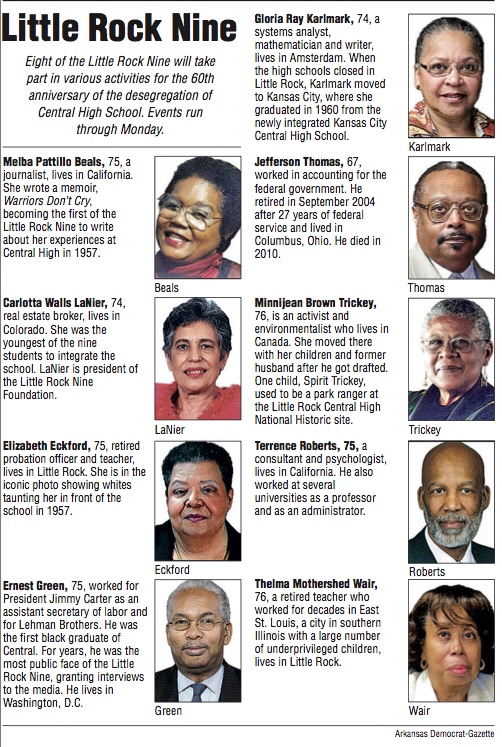
Where are they now? (Little Rock Nine edition)

Posted in Uncategorized | 1 Comment

Language and Little Rock

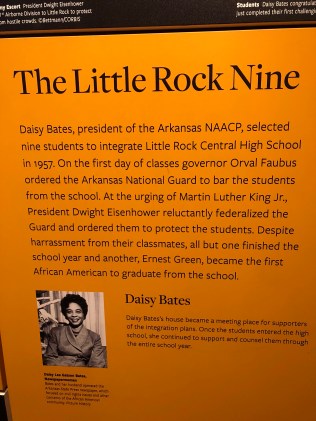
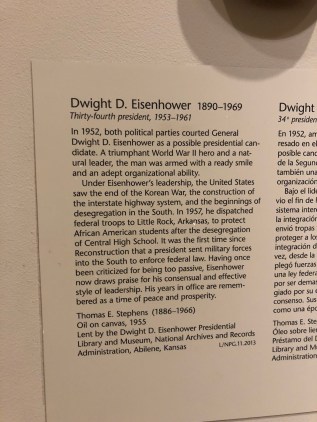
Notice how one museum uses the word “reluctantly” to describe President Eisenhower’s historic decision to send soldiers from the 101st Airborne Division into Little Rock in the fall of 1957, while another museum uses the more pro-active verb “dispatch”. (Photo credit: Sydjia Guerra.)

Posted in Uncategorized | 1 Comment

The evolution of mobile phones

Mobile Phone Size Evolution

Hat tip: Cliff Pickover (@pickover)

Posted in Uncategorized | Leave a comment

Weighted Population Map of Asia and Oceania

Check out all of Max Roser’s weighted population maps here, via the website “Our World in Data”. (Hat tip: kottke.)

Credit: Max Roser

Posted in Uncategorized | Leave a comment

Where is Ms Bingbing?

Via Channel NewsAsia: “China’s highest paid movie star Fan Bingbing … has not been seen in public since July …. The 36-year-old actress has been a household name in China for years and tasted Hollywood success with a role in the 2014 blockbuster ‘X-Men: Days of Future Past’. *** But she has gone quiet in recent months, following allegations of tax evasion. In [a] report by Beijing Normal University published earlier this month, 100 Chinese stars including popular actor Jackie Chan and award-winning actress Zhang Ziyi were ranked according to their professional work, charity work, and personal integrity. But with a pass requiring a score of more than 60 per cent, only nine celebrities made the cut, with Chinese actor Xu Zheng topping the list at 78. [Ms Bingbing] had a score of zero.” (Hat tip: Tyler Cowen. Credit for the image below: Fergus Ryan.)

Posted in Uncategorized | 3 Comments