Summer readings (part one)

Now that the Summer of 2018 is upon us, here’s what we are reading (and watching) this week:

1. “Finding law” by Stephen A. Sachs. This 60-page essay addresses a fascinating theoretical question in legal theory: Do judges make law or find law when they decide cases?

2. “Surprising originalism” by Lawrence B. Solum. This law review article, based on Professor Solum’s “2018 Regula Lecture” at the University of Akron, identifies (or should we say, purports to identify) several ways in which “public meaning originalism” (a conservative theory of constitutional interpretation) is surprising.

3. “Blockchain and the law” by Primavera De Filippi and Aaron Wright. In the words of one reviewer (J. J. Roberts), this book “attempts to do for blockchain what the likes of Laurence Lessig and Tim Wu did for the Internet and cyberspace–explain how a new technology will upend the current legal and social order.”

4. “Smoky the cowhorse” (pictured below) by Will James. We added this tome to our reading list as soon as we discovered (thanks to Tyler Cowen, who blogs compulsively at Marginal Revolution) that this children’s book was the most influential book that the self-described “errant economist” Thomas Schelling had ever read. (Full disclosure: Tom Schelling is one of our intellectual heroes.)

5. Mr Rogers’ 2002 commencement speech at Dartmouth (see our previous post). Now that we have seen the documentary “Won’t you be my neighbor?” about Mr Rogers’ life and TV career, we are more fascinated than ever by the spirit and legacy of Fred Rogers. We might even try to watch an entire episode or two of his classic TV show, Mr Rogers’ Neighborhood. (Many of these episodes are now available on YouTube.)
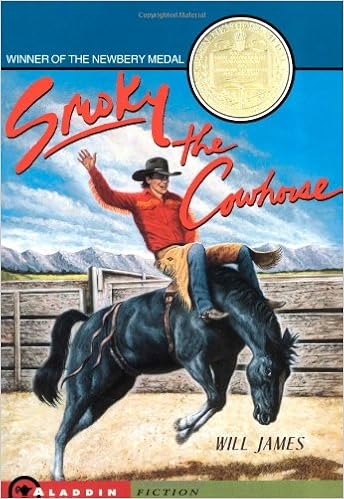

Image result for smoky the cowhorse pdf
Posted in Uncategorized | 1 Comment

Where is Mr Rogers?

The renowned TV personality Fred McFeely Rogers (yes, minor spoiler alert, “McFeely” was his real middle name!) was the host of the enduring PBS series Mr Rogers’ Neighborhood from 1968 to 2001. (Mr Rogers died on 27 February 2003. Below is a commencement speech he gave at Dartmouth in the spring of 2002.) A 90-minute documentary about Mr Rogers, aptly titled “Won’t you be my neighbor?,” is now in wide release, and it discloses many surprising facts and special secrets about Mr Rogers’ life and his long-standing TV career. On a personal note, however, I must confess that I was rarely ever able to watch an entire episode of his show, even as a child! The Land of Make-Believe never resonated with me. Of course, I loved the theme song, and I never tired of Mr Rogers’ trademark ritual at the beginning of each episode, where he would remove his perfectly-tailored sports coat, carefully hang it up in his closet (in the living room!), and slip into a comfy, brightly-colored sweater. Perhaps this simple ritual fascinated me because it was so foreign to my own Cuban-Californian family life. But I digress. My wife Sydjia and I loved the documentary. We were left with the impression that we need a Mr Rogers now more than ever! Go see it for yourself …

Posted in Uncategorized | 7 Comments

Gentle reminder

Posted in Uncategorized | 2 Comments

Which one of these shabby characters puts children in cages?

Posted in Uncategorized | Leave a comment

Relative plausibility or bayesian verdicts?

Note: This post (sorry for the delay), my tenth and final one on Ron Allen and Mike Pardo’s “relative plausibility” paper (available here, via SSRN), is based on my 2015 paper “Why don’t juries try range voting?,” which was published in the Criminal Law Bulletin.

Thus far, we have explored the pros and cons of Ron Allen and Mike Pardo’s relative plausibility theory of juridical proof, but as we say in academia, it takes a theory to beat a theory, so in place of plausible relativity, why not ask jurors to engage in full-fledged “Bayesian voting”? The type of Bayesian voting I am proposing here is “jury scoring” and is often called “range voting” in the literature on voting systems. (See Warren D. Smith, Range Voting, Paper No. 56 (2000), available at math.temple.edu/[tilde]wds/homepage/works.html; Claude Hillinger, “The Case for Utilitarian Voting,” 23 Homo Oeconomicus 295 (2005). See also chapter 14 of William Poundstone, Gaming the Vote (2008). For a glossary of different voting procedures, see Poundstone, at 287-89.) Continue reading

Posted in Uncategorized | Leave a comment

Visualization of global capitalism

More details here, via howmuch.net. Hat tip: digg.

Posted in Uncategorized | 1 Comment

We are all law breakers now (#ThreeFeloniesADay)

Let’s put aside the fact that the American Southwest was stolen from Mexico in an illegal war of aggression. To a Bayesian natural law theorist (admittedly, we are a small number), the relevant question is not whether poor Spanish-speaking Central Americans are “breaking the law” in searching for a better future for their families; after all, given the problem of overcriminalization–the vast number of State and federal criminal laws on the books–, we are all law breakers now. (See below.) The real question is whether the laws being broken are just.

Ilya Somin (George Mason University): “For most people, it is difficult to avoid violating at least some laws, or even to keep track of all the laws that apply to them. For example, it is almost impossible for small businesses to fully obey all the byzantine regulations that apply to them, for home and apartment owners to fully comply with every part of the complex building codes and zoning restrictions that apply in many jurisdictions, or for almost anyone to ensure perfect compliance with our hyper-complicated tax code.”

Stephen Carter (Yale Law School): “70 percent of American adults have committed a crime that could lead to imprisonment.”

Harvey Silvergate (Criminal Defense Attorney):

Posted in Uncategorized | 2 Comments

A puzzle

Update (6/21): One possible answer to this puzzle might be here. Apparently, the producers of the film are posting fake positive reviews.
Screen Shot 2018-06-18 at 11.50.58 AM

More details here, via Mashable.

Posted in Uncategorized | 2 Comments

Natural law theory 101

Via our favorite legal blog (the Volokh Conspiracy), our friend and colleague Ilya Somin, a law professor at George Mason University (and a prolific blogger), explains why “enforcing the law doesn’t justify separating migrant children from their parents” in this excellent blog post. We agree with Professor Somin’s analysis, especially his argument based on natural law: laws cannot trump basic human decency. Here is an excerpt:

Even in the case of otherwise just laws, there must be moral limits to the means used to enforce them. The child-separation policy crosses any reasonable line. It inflicts harm grossly disproportionate to any offense. And most of that harm is suffered by children–people themselves innocent of wrongdoing. Even if their parents acted wrongly in trying to enter the United States, the children had little choice in the matter.

Posted in Uncategorized | 1 Comment

Free MIT math courses

Below is just a small sample of free graduate-level and undergraduate-level math courses available for free via MIT Open Courseware. Check out the complete list of MIT math courses here!

Posted in Uncategorized | Leave a comment
