A plea to Adam Smith scholars (part 1 of 4)

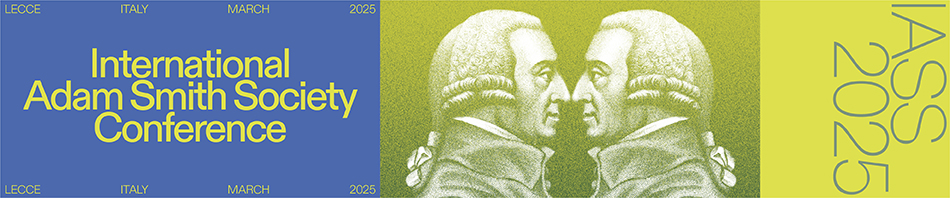
I have been attending the annual meeting of the International Adam Smith Society (IASS) this weekend, one of the intellectual and cultural highlights of my academic year. (This year’s IASS conference took place at the University of Salento in Lecce, Italy!) Today, I want to call out scholars who routinely cite Smith’s “Lectures on Jurisprudence” (circa 1760s) without proper qualification or at least a disclaimer, for it’s one thing to cite one of the Scottish philosopher-economist’s great published works, such as The Theory of Moral Sentiments or The Wealth of Nations, but as I shall explain in my next two posts, it is intellectually dubious — and perhaps even morally wrong — to cite Smith’s early law lectures.
Posted in Uncategorized | 2 Comments

Sunday song: Pyjamas

Hat tip: Palazzo De Noha Boutique Hotel in Lecce, Italy
Posted in Uncategorized | Leave a comment

A new discovery about Adam Smith in Geneva

As I mentioned in my previous post, my colleague and friend Alain Alcouffe and I are researching Adam Smith’s encounters in the Republic of Geneva during his grand tour with the 3rd Duke of Buccleuch. Among our discoveries is the fact that Smith and the young Duke had dinner with Lord and Lady Stanhope in Geneva on Christmas Day 1765! This particular revelation is important because previous biographers — beginning with Dugald Stewart and John Rae — have Smith returning to Paris in mid-December 1765 — i.e. in time to meet Rousseau and say farewell to Hume before their hasty departure from the City of Light on 4 January 1766.

Posted in Uncategorized | 1 Comment

*Adam Smith and Geneva: Some Long-Lasting Encounters*

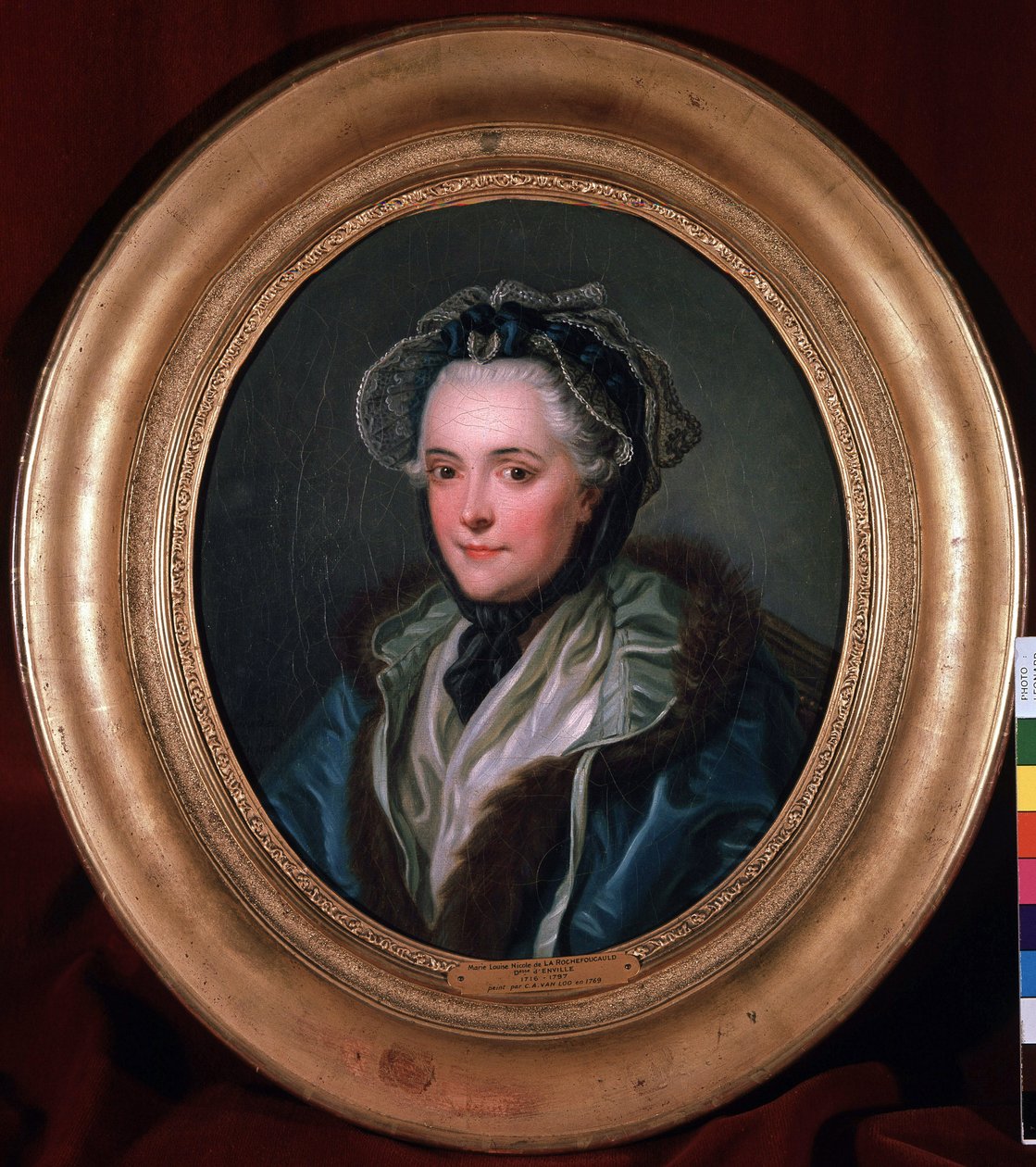
That is the title of my most recent work-in-progress with my colleague and friend Alain Alcouffe. In summary, building on our own original research as well as the previous work of Brian Bonnyman, John Rae, and Ian Simpson Ross, we survey Adam Smith’s encounters with some of the leading figures of the Age of Enlightenment during his sojourn in Switzerland in late 1765/early 1766, including his intellectual hero Voltaire; the naturalist Charles Bonnet (1720-1793), who Smith once described as “one of the worthiest, and best hearted men in Geneva … notwithstanding he is one of the most religious” (letter to David Hume dated 9 May 1775); the biologist-priest John Turberville Needham (1713-1781), who was embroiled in a bitter dispute with Voltaire at the time; the physician Théodore Tronchin (1709-1781), whose son was Smith’s student at Glasgow; the salonnière Marie Louise Nicole de La Rochefoucauld, the Duchesse d’Enville (1716-1797), a possible love interest (pictured below) who may have introduced Smith to Turgot, and her son Louis Alexandre de La Rochefoucauld, 6th Duke of La Rochefoucauld (1743-1792); and last but not least, Lord and Lady Stanhope, who invited Smith to dinner at their home in Geneva on Christmas Day 1765. (Here is a link to our slide deck.)

Portrait of Marie-Louise-Nicole, Duchess of Enville (1716-1797)
Posted in Uncategorized | Leave a comment

International Adam Smith Society Lecce Conference

IASS 2025 (28-30 March 2025): Overview · Unisalento Conferences (Indico)

I will continue my survey of my previous scholarly work next week. In the meantime, I will be presenting a new work-in-progress on “Adam Smith and Geneva: Some Long-Lasting Encounters” — along with my friend, colleague, and co-author Alain Alcouffe — at the University of Salento this weekend, where the next meeting of the International Adam Smith Society (IASS) will take place. Here is the full conference program.

Posted in Uncategorized | Leave a comment

My Gödel papers

In addition to Thomas Bayes and Ronald Coase (cf. my previous two posts), another “beautiful mind” that has captured my imagination is the mathematical philosopher Kurt Gödel. (Shout out to my colleague and friend Orlando I. Martinez-Garcia, who pointed me in Gödel’s direction in the early 2000s.) My most cited paper is Gödel’s Loophole, which revisits the story of Gödel’s discovery of a deep logical contradiction in the U.S. Constitution. I wrote that landmark paper in 2012 and published it in 2014, and in the last few years, I have returned to the Austrian logician three more times:

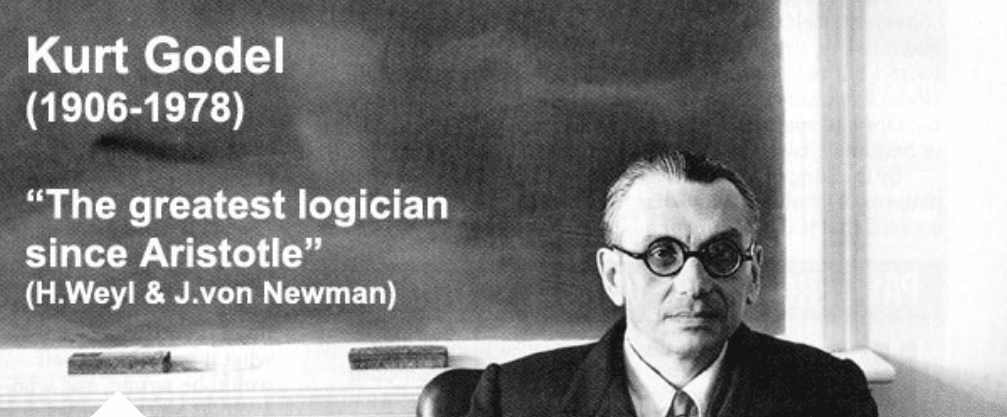
  1. The Leibniz Conspiracy (2022). This paper explores a little-known conspiracy theory that Kurt Gödel himself, the greatest logician since Aristotle, believed in!
  2. Gödel’s Loophole: A Prequel (2024). This paper surveys three “self-coups” that occurred in Central Europe during the interwar period — Yugoslavia in 1929, Austria in 1933, and Romania in 1938 — that Gödel, who lived in Vienna during this time, may have been familiar with and that may have informed his studies of the U.S. Constitution in the 1940s.
  3. Gödel’s Loophole 2.0 (forthcoming). This paper extends the general logic of “Gödel’s loophole” to an otherwise promising new method of AI safety called “Constitutional AI”.
Kurt Gödel: God, mathematics, and the paranormal - EnlightenedCrowd
Posted in Uncategorized | 1 Comment

My Coase papers

One of my intellectual heroes is the English economist Ronald Coase. More specifically, a large chunk of my scholarly work can be traced back to two of his landmark papers: The Federal Communications Commission (1959) and The Problem of Social Cost (1960). I wrote my first “Coase paper” in the summer of 2004 — though I did not get around to publishing it until 2010 (see item #10 below) — and have since published nine more papers extending Coase’s ideas to many different domains:

  1. Outer Space Auctions? (2023/2024). This paper presents a Coasian solution to the problem of space congestion and orbital debris in Low Earth Orbit.
  2. Coase’s parable (2023). This paper explores the origins of Coase’s idea of reciprocal harms.
  3. Coase and the Corleones (2022). This book chapter extends Coase’s idea of reciprocal harms in the context to the famous wedding scene in the original Godfather movie.
  4. Of Coase and Copyrights: The Law and Economics of Literary Fan Art (2020).
  5. Does the Prisoners Dilemma Refute the Coase Theorem? (with Orlando I. Martinez Garcia, 2014). This paper extends the Coase theorem to the Prisoner’s Dilemma.
  6. Trolley Problems (2014). This paper presents a Coasian solution to the trolley problem.
  7. Modelling the Coase Theorem (2012). This paper formalizes the logic of the Coase Theorem.
  8. Clones and the Coase Theorem (2011). This paper extends Coase’s idea of reciprocal harms to the conflict in the original Blade Runner film.
  9. Coase and the Constitution (2011). This paper proposes the creation of “federalism markets” in which governmental powers and functions would be allocated to Congress, the states, or even private firms through decentralized auction mechanisms and secondary markets.
  10. Coase’s Paradigm (2010). I wrote this homage to Coase during the summer of 2004 but did not get around to publishing it until six years later!
Posted in Uncategorized | 2 Comments

My probability papers

My first foray into probability theory was my 2011 paper Chance and Litigation, which explores whether litigation outcomes are random. Although I had not yet rediscovered Bayes’ theorem when I began writing my first probability paper (circa 2008 or 2009), my interest in probability theory inevitably led me to the ideas of Thomas Bayes, and I soon began exploring the logic of inverse probability and extending Bayesian reasoning and subjective probability to several different areas of law, including litigation outcomes, proof problems, jury voting, and judge voting. Most (but not all) of my probability papers were published from 2011 to 2020:

  1. **A Bayesian Model of the Litigation Game (2011). I wrote this paper in Amsterdam during the summer of 2011, and it is my first refereed paper.
  2. *Visualizing Probabilistic Proof (2014). This paper, which I wrote at my in-laws’ house in Tarpon Springs during the summer of 2013, revisits the Blue Bus Case, a famous thought-experiment in law involving probabilistic proof, and presents simple Bayesian solutions to different versions of the blue bus problem.
  3. Judge Hercules or Judge Bayes? (2015). This unpublished paper explores two possible connections between hard cases in law and Newcomb’s Paradox in philosophy. One is that Newcomb’s Problem is like a “hard case” in law — i.e. a choice problem with conflicting and equally logical solutions. The other is that the superior being in Newcomb’s Problem and the mythical Judge Hercules in Ronald Dworkin’s theory of law are the same person.
  4. *Why Don’t Juries Try Range Voting? (2016). This paper builds on the idea of “subjective probability” to propose the use of “range voting”, which I later christened Bayesian voting, by juries. (Jurors would score the evidence presented by the parties at trial on a scale of one to ten or some other specified scale.)
  5. **A Bayesian Analysis of the Hadley Rule (2018). This paper was published in a collection of essays on the law of contracts (see pp. 925-928). Although this is one of the shortest formal papers I have ever written (only nine paragraphs), it underwent ten revisions during the editing process.
  6. *The Case for Bayesian Judges (2019) Like my 2016 jury paper (see item #4 above), this paper builds on the idea of “subjective probability” to propose a simple method of judicial voting.
  7. Subjective Probability and Legal Proof (2020). This unpublished paper presents a Bayesian critique of Ron Allen and Mike Pardo’s “relative plausibility” theory of legal proof. (Among other things, their approach to proof can be “Dutch-booked”.)
  8. Weyl Versus Ramsey: A Bayesian Voting Primer (2020). This unpublished paper compares and contrasts two methods of Bayesian voting or Bayesian preference-aggregation that allow voters not only to rank their preferences but also to express their degree: Quadratic Voting (QV) and Ramsian Voting (RV).

* = published paper; ** = refereed

Posted in Uncategorized | 1 Comment

Sunday song: Камин

The title of this beautiful ballad translates to “fireplace”; the TikTok remix is below the fold:

Continue reading
Posted in Uncategorized | Leave a comment

Blog update: future installments

My last few posts have revisited some of my previous scholarly work, including my first few scholarly papers, my game theory years, and my turn to legal history. I will hit the following autobiographical topics in the days ahead:

  1. Papers I have written inspired by Bayes, Coase, and Gödel
  2. Pedagogical papers
  3. Book reviews
  4. Books and book chapters
  5. My rediscovery of Adam Smith
Union Cosmos Back To The Future Iv Tobecontinued Logo - Orange PNG Image |  Transparent PNG Free Download on SeekPNG
Posted in Uncategorized | Leave a comment