Nozick on preemptive strikes

The second subsection of Chapter 6 (pp. 126-130) anticipates the worldwide controversy over President George W. Bush and Prime Minister Tony Blair’s ill-fated decision to invade Iraq in 2003, which in hindsight, turned out to be one of the worst and costliest decisions in history. Here, Nozick asks, when is a preemptive attack morally wrong, and when is such an attack morally justified?

Recall Nozick’s key question from our previous post: may I prevent others from joining a protection association in the state of nature if I know that their protection association will later prevent me from exercising my natural rights in the future? It turns out that this question and the preemptive war question are analytically the same! Nozick, however, draws an artificial and untenable distinction, invoking the “last clear chance” doctrine from tort law: if an act requires a subsequent decision to commit a wrong — i.e. if the original act itself is not morally wrong — then one may not prohibit that act. As a result (according to Nozick), since the act of creating or joining a protection agency is in itself not a wrongful act, one may not therefore prohibit others from doing so.

So, what about our ill-fated decision to invade Iraq? It turned out Bush (and Blair) lied to the world, that Saddam Hussein did not have weapons of mass destruction (WMDs). But who cares? People lie all the time, so let’s assume that Hussein did have such weapons. According to Nozick’s moral logic, whether the Iraq war was morally justified or not would depend on whether the acquisition of WMDs is itself a wrongful act or not. Given that the U.S. military and a growing number of other countries (including Pakistan, India, and North Korea) now have their own stockpiles of WMDs and the ability to launch those weapons across their borders, does the acquisition of such weapons, by itself, constitute a wrongful act? What would Nozick say about Bush and Blair’s preemptive war? Alas, Nozick died in 2002, but it’s worth pondering how he would have answered this question.

Related image
Posted in Uncategorized | 1 Comment

What is the equilibrium, if any, in the state of nature?

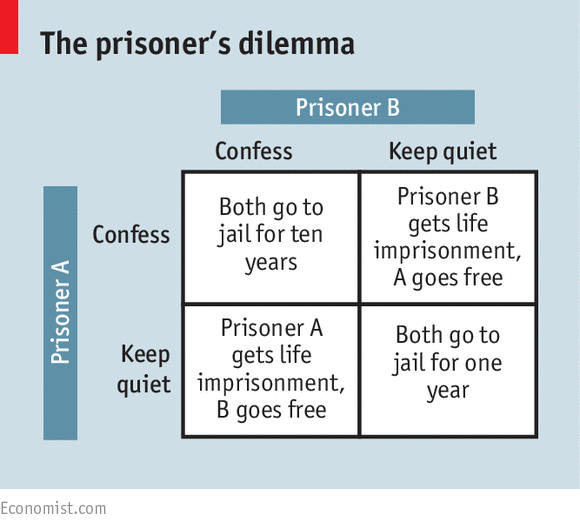
We almost considered skipping Chapter 6 of Anarchy, State, and Utopia, since Nozick himself invites his readers to do so on p. 120: “The reader who wishes to pursue the main flow of our argument may proceed directly to the next chapter.” But as we have noted in so many of our previous posts, Nozick has left too many issues open and ends untied thus far, problems that he promises to tackle in Chapter 6. In addition, Nozick raises two excellent questions in the first subsection of Chapter 6 (pp. 120-125). First, Nozick asks what equilibrium is most likely to occur in a state of nature? To this end, he models the state of nature as a Prisoner’s Dilemma (see example below). According to Nozick, there are four possibilities in all:

Option A: You can join a protection association and allow your neighbors to join one.

Option B: You can join a protection association but prohibit your neighbors from joining one.

Option C: You can refuse to join a protection association but allow your neighbors to join one.

Option D: You can refuse to join a protection association and prohibit your neighbors from joining one.

Given these four possible moves, what course of action is most likely to occur? Nozick says “B” is the most likely outcome, but then he raises a second key question: if a private protection agency in the state of nature has a natural right to prohibit an independent from exercising his right of self-help against due-paying members of the agency (on the pretext that the guilt-finding procedures of independents are too risky), then, in anticipation of this sinister possibility (sinister from the independent’s point of view), why doesn’t the independent have the reciprocal right to preemptively prohibit his neighbors from joining a protection agency in the first place?

For our part, as we mentioned in a previous post, we are skeptical about Nozick’s premise that individuals (and, by extension, protection agencies on their behalf) have a natural right to prohibit others from exercising their rights of self-help. Nevertheless, assuming this premise were true, we would expect the existence of such a right to lead to a Hobbesian war of all against all, especially if Nozick is right about “B” being the equilibrium solution in the state of nature. We will delve deeper into Chapter 6 tomorrow!

Image result for equilibrium game theory
Posted in Uncategorized | 2 Comments

Overview of Chapter 6 of ASU

Before we resume our review of Anarchy, State, and Utopia (ASU), let’s take a snapshot of the overall structure and organization of Chapter 6 of ASU, the last chapter of the first part of the book. This chapter is titled “Further Considerations on the Argument for the State” and is divided into six separate subsections as follows:

  • Stopping the Process (pp. 120-125)
  • Preemptive Attack (pp. 126-130)
  • Behavior in the Process (pp. 130-133)
  • Legitimacy (pp. 133-137)
  • The Right of All to Punish (pp. 137-142)
  • Preventive Restraint (pp. 142-146)

Remember, Nozick is trying to explain how a state or civil government could emerge without violating anyone’s rights, a claim that we find hard to believe. We will begin our review of this important chapter later today …

Image result for the state nozick
Posted in Uncategorized | Leave a comment

End of year review: fall 2017

In addition to my in-depth page-by-page review of the first five chapters of Anarchy, State, and Utopia, I have been working on two other projects this fall. First, I wrote up a short paper titled “The Case for Bayesian Voting” (available here via SSRN), which is a reply piece to Eric Posner and Adrian Vermuele’s thought-provoking (but underspecified) article “The Votes of Other Judges”. (Their insightful article is available here.) In addition, I wrote up the first draft of a “Reacting to the Past” Game Book titled “Hacking Harvard” (available here) for my undergraduate business law and ethics class. (For more information about “Reacting to the Past” and role immersion in undergraduate teaching, check out this wonderful website.) My version of my reacting game is centered around a hacking incident — memorably depicted in the movie “The Social Network” — that occurred at Harvard in the fall of 2003.

Image result for bayesian voting
Posted in Uncategorized | Leave a comment

Winter Break Books

In addition to the first five chapters of Robert Nozick’s classic book “Anarchy, State, and Utopia“, we read, tried to read, or began reading the following few books over the holidays:

1. Karl Sigmund, “Exact Thinking in Demented Times: The Vienna Circle and the Epic Quest for the Foundations of Science“, Basic Books (2017), available here from Amazon. In addition, here is a good review by Tyler Cowen, who alerted us to the existence of this beautiful book.

2. Giorgio Agamben, “What Is Philosophy?“, Stanford University Press (2017) (translated by Lorenzo Chiesa). We are big fans of Agamben’s works, especially his book “State of Exception”, but we found this collection of essays, by contrast, to be obscure and very difficult to read. (Not all was lost, since we also read this excellent review of an earlier work by Agamben.)

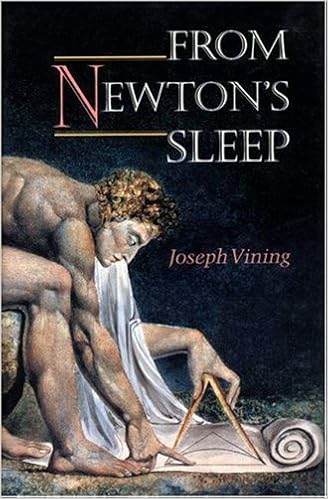
3. Joseph Vining, “From Newton’s Sleep“, Princeton University Press (1995) (pictured below). We’ve just started reading this strangely titled tome, so we’ll have more to say about it in a future blog post.

Image result for from newton's sleep
Posted in Uncategorized | Leave a comment

Happy Three Kings Day!

Image result for three kings day
Let’s keep this party going! We will resume our review of Nozick on Monday or Tuesday.
Posted in Uncategorized | Leave a comment

Nozick’s Panglossian’s claims

It’s time to wrap up our review of Chapter 5 of Anarchy, State, and Utopia (ASU). The last two subsections of Chapter 5 (pp. 113-119) are philosophical garbage disappointing. Why? Because Nozick concludes with two Panglossian claims, and neither rosy conclusion is supported by any actual evidence. First, he claims that a territory’s dominant protection agency will eventually become “a statelike entity” (p. 118), since it will prohibit non-clients from enforcing their rights in their dealings with the clients of the protection agency. Next, Nozick concludes that the phase transition from private protection racket to statelike entity will occur without anyone’s natural rights being violated, since the dominant agency will agree to compensate non-clients by providing them in kind protection services. Seriously? Who is he kidding? Nozick begs a number of fundamental questions in reaching these unsupported and speculative conclusions. In particular, and putting aside the free rider problem we mentioned in our previous post, what if a non-client doesn’t want compensation? What if he wants the right to exact vengeance? In short, why doesn’t the non-client get to decide whether it wants compensation and in what form, and who adjudicates any disputes between the protection agency and non-clients? Why, it’s the protection agency itself! Nozick’s benign “protection agency” is starting to look more and more like a Hobbesian “protection racket,” just as we have argued all along! Not all is lost, however. We will move onto Chapter 6 of ASU on Monday …

Image result for panglossian
Posted in Uncategorized | 2 Comments

Nozick: free protection services for all?

To his credit, Nozick recognizes the reciprocal nature of the relationship between private protection agencies and independents in the sixth subsection of Chapter 5 (pp. 110-113). Specifically, if a protection agency decides to prohibit independents from exercising their right of self-help against due-paying members of the agency (on the pretext that the guilt-finding procedures of independents are unreliable and unfair), such a prohibition would impose a significant disadvantage on independents. So, what is to be done? In a word: compensation.

In summary, Nozick re-introduces his principle of compensation from Chapter 4 of ASU (p. 110, emphasis added by us): “The clients of the protection agency, then, must compensate the independents for the disadvantages imposed upon them by being prohibited self-help enforcement of their own [natural] rights against the agency’s clients.” So far, so good. But, alas, to make this scheme workable, Nozick qualifies his compensation principle in a major way. According to Nozick, the compensation to be paid need not be in money; instead, the compensation can be in kind. In Nozick’s words (p. 112, emphasis added by us), “the dominant agency must supply independents … with protective services against its clients.”

Say what???? Free protection services for all? Although Nozick mentions the possibility of free riders, he is far too quick to dismiss the free rider problem that will most likely result from the compulsory provision of protection services to independents. After all, if independents have a natural right to protection services (if a protection agency prohibits them from using self-help), then what incentive does a person have in the first place of becoming a dues-paying member of a protection agency? Also, go back to the quotes above. Why must? And in any case, why does the protection agency get to decide in what form — in money or in kind — the compensation can take? (In other words, why doesn’t the independent who has been disadvantaged by the self-help prohibition get to decide how it wants to get paid?) To bring this post to a close, suffice it to say that Nozick’s picture of the state of nature is out of focus; his intellectual edifice is on very shaky ground. Can Nozick perfect his theoretical painting in the last two subsections of Chapter 5, or will the entire structure collapse like a proverbial house of cards? We will review the rest of Chapter 5 in our next blog post …

Altruism Still Fuels the Web. Businesses Love to Exploit It | WIRED
Posted in Uncategorized | 3 Comments

Monopolies in the state of nature?

Nozick appears to equivocate in the fifth subsection of Chapter 5 (pp. 108-110). He now claims that everyone has procedural rights (p. 108): “Everyone has the [natural] right to defend against procedures that are in fact not, or not known to be, both reliable and fair.” But as we noted in a previous post (2 Jan 2018), this claim raises a whole new set of complicated questions — questions that the natural law tradition, unfortunately, are unable to answer. In particular, since no guilt-finding procedure will be perfect, what level of imperfection is consistent with fairness and reliability? Nozick also makes another extraordinary conjecture in the fifth subsection of Chapter 5. In brief, building on his earlier conclusion (from Chapter 2 of ASU) that a single private protection agency will end up becoming the “dominant” one in the state of nature, Nozick now further conjectures that this dominant agency will not allow any independent (or any other protection agency, for that matter) to punish its due-paying members, thus claiming a “de facto monopoly” over the use of force against its own members.

These conclusions are not too far-fetched. Think, for example, of Facebook’s dominance in social media or Google’s dominance in Internet search. Before these dominant firms came along, there were plenty of social media sites (remember chat rooms, MySpace, and Friendster?) and plenty of Internet search engines (remember Yahoo!, AOL, and Alta Vista?). But at the same time, as we noted in another previous post (30 Nov 2017), we are skeptical about the emergence of a single dominant protection agency in the state of nature. Unlike Internet services in today’s modern economy, which are based on trade secrets, service marks, and other forms of government-protected intellectual property, there is nothing special or unique about “protection” services. As a result, a private protection agency with the most “muscle” or strongmen will become the dominant one, but why should potential strongmen all join or remain with a single protection agency, especially when there is no way of enforcing promises in the state of nature?

Image result for dominant internet firms
Posted in Uncategorized | 2 Comments

Nozick on natural rights and knowledge

Do individuals have procedural rights in the state of nature? (Or conversely, do victims of harms or their allies have a moral duty to use only “fair and reliable” guilt-finding procedures before imposing any punishment on wrongdoers? Aren’t both formulations of this question the same?) Surprisingly (to us), although Nozick is prepared to announce that “individuals have rights”, he is ambivalent about the moral status of procedural rights in the state of nature! Nozick is considering interactions between “independents” and private protection agencies in the fourth subsection of Chapter 5 (pp. 101-108). More precisely, what if a due-paying member of a protection agency has committed a wrongful act against an independent? May the protection agency prohibit the independent from enforcing his rights? Suffice it to say that Nozick has trouble answering this question because of the uncertain status of procedural rights in the state of nature.

Nevertheless, in the course of considering the status of procedural rights, Nozick poses a new and original and truly thought-provoking question about the possible relationship between knowledge and moral rights (p. 106): “Shall we say that someone doesn’t have a right to do certain things unless he knows certain facts, or shall we say that he does have a right but he does wrong in exercising it unless he knows certain facts?” In other words, there are two ways of interpreting natural rights. Under the first interpretation, my natural right to punish a wrongdoer depends on the state of my knowledge about who the wrongdoer is. Under the second interpretation, by contrast, I have this right regardless of the state of my knowledge, but it would be wrong of me to enforce my rights without the requisite knowledge of who the wrongdoer is. Both interpretations of natural rights also raise a deeper epistemic question: how do we “know” which interpretation is the correct one? Nozick, for example, prefers the second of the two epistemic views of rights, while we prefer the first, simpler one (see image below), but aside from taking a vote, is there any correct or principled way of choosing between either interpretation of natural rights?

Image result for how to choose between two theories

Credit: Alyson Hall

Posted in Uncategorized | 1 Comment