A transaction cost view of moral boundary crossings

Up to now, Nozick has been grappling with the following question: Why not permit all boundary crossings provided compensation is paid? Nozick, however, switches gears and addresses the opposite question in the seventh subsection of this chapter (pp. 71-73): Why not prohibit all boundary crossings to which the victim has not consented to in advance? It is here, in my view, where Nozick provides the most persuasive answer to both questions. In two words: transaction costs! To sum up: when the parties are able to freely negotiate ahead of time the price of a wrongful act or moral border crossing (i.e. a low transaction cost situation), we should allow boundary crossings so long as compensation is paid. By contrast, when ex ante negotiations would be too costly or impractical to take place (i.e. a high transaction cost situation), then moral border crossings should be flat out prohibited and punished as a crime.

Alas, there are several serious problems with the transaction cost approach to moral boundary crossings. To begin with, how do we measure these transaction costs? (As we mentioned in our previous blog post, for example, strategic bargaining and deadlock can occur even in situations with just two parties!) Secondly, even if we could measure transaction costs, where should the line between high and low transaction costs be drawn? Lastly, and most importantly, even if we could establish such a threshold, Nozick has yet to reveal what constitutes a wrongful act or a moral boundary crossing in the first place. In other words: Yes, individuals have rights, but what do these natural rights consist of?

It is my position that this last problem is unsolvable using Nozick’s reciprocal moral framework. If harms or wrongs are the result of activities engaged in both by the wrongdoer and the victim, then concepts such as “harm”, “wrongful act”, “moral boundary crossing”, etc. are incoherent and make no logical sense. Beware: I am not saying that we don’t have an intuitive sense or understanding of harms and wrongs in specific situations; instead, I am only saying that we won’t be able to come up with a coherent, consistent, or principled theory of moral blame for such acts. Furthermore, I take this problem very seriously because I actually agree with Nozick’s reciprocal framework. Consider, by way of example, the ethics of abortion: (1) Does abortion constitute a moral boundary crossing, and if so, (2) should abortions be prohibited and punished as a crime, or should they be treated as private torts — permitted so long as compensation is paid (but to whom?)? In my view, we can’t even begin to answer the second question because there is no coherent, consistent, or principled way of determining whether abortion is right or wrong. Why not? Because of the reciprocal nature of the harm of either allowing or restricting the right to an abortion. On the one hand, allowing women to terminate their pregnancies will harm (some) unborn children, but on the other hand, restricting abortions harm (most) women by restricting their freedom to make their own choices. So, which harm is the greater one? Is there any coherent, consistent, or principled way of answering this harm question?

But wait, there’s more! There is yet another complication with Nozick’s boundary-crossing view of morality. What about activities that don’t produce harms but instead merely create a risk of harm? Nozick will grapple with this delicate problem in the next subsection of Chapter 4 on pp. 73-78 (“Risk”), our favorite part of the chapter by far. We will review the risk subsection tomorrow morning.

Image result for pro choice or pro life
Posted in Uncategorized | 3 Comments

Nozick’s fear argument

For most of Chapter 4, Nozick has been wondering why all wrongful acts are not allowed so long as compensation is paid. Here, in the sixth subsection of this chapter (pp. 65-71), Nozick presents (to his mind) his strongest argument against a permissive or compensation-based view of morality: the argument from fear. In the words of Nozick (p. 66): “Some [types of boundary crossings] we would fear, even knowing that we shall be compensated fully for their happening or being done to us.” This fear argument does not apply to all border crossings; only to those wrongful acts (such as rape, assault, and other forms of physical violence) that generate fear and apprehension. Nozick thus concludes that fear-inducing acts must be prohibited and punished as public crimes. (Presumably, non-fear-producing acts should be allowed so long as compensation is paid.)

Although the fear argument is plausible, three complications trouble us. One difficulty is definitional. Which fears are truly bad and which are too diffuse or idiosyncratic to take into account? “Fear” — standing alone — is way too broad a concept. A related problem is measurement: how is it possible to measure something as subjective as fear, let alone specify ahead of time what level of fear should trigger the prohibition-enforcement rule versus the compensation-enforcement rule? Simply put, how much fear is too much fear? (To his credit, Nozick will grapple with this line-drawing problem in the “risk” subsection of Chapter 4 on pp. 73-78.) But even if we could measure fear and figure out what the fear threshold should be, there is a bigger problem with the fear argument. Aren’t harms or wrongs reciprocal in nature? That is, aren’t harms the result of actions taken by the wrongdoer as well as by the victim? If so, why should we privilege freedom from fear over freedom of action? For example — as Nozick will ask later in the chapter (on page 76, to be more precise) — what if persons who are engaged in fear-producing activities were able to preempt the fear problem by providing tranquilizer pills to their potential victims?

But we are getting ahead of ourselves, for there is yet another problem with the fear argument. In a word, what’s so special about fear? If persons are to be treated the Kantian way, with dignity and respect, why not prohibit all boundary crossings, not just fear-producing ones? Nozick will address this question in the remaining subsections of Chapter 4, and so will we — in our next blog post …

 
Where does fear actually come from?
Posted in Uncategorized | 2 Comments

Bargaining without property rights?

The fifth subsection of Chapter 4 (pp. 63-65) returns to the first of Nozick’s two theoretical questions (p. 63): “why not allow any boundary crossings provided full compensation is paid?” (Nozick will revisit his second question, “why not prohibit?”, later in the chapter.) Here, Nozick identifies two potential problems with such a permissive or compensation-based system of enforcing rights. One problem is that property rights would not be secure or stable, for in the words of Nozick (p. 64), “Anyone [could] seize a good, thereby coming to ‘own’ it, provided he compensates its owner. If several people want [the same] good, the first to seize it gets it, until another takes it, paying him full compensation.” (An economist, however, might be puzzled by this objection, since goods under such a permissive system would end up gravitating towards their highest-value uses! This simple economic argument, of course, is bullshit, since it ignores a person’s ex ante incentive to make goods in the first place!)

The other major objection to a compensation-based system of enforcing rights is the same one we mentioned at the end of our previous blog post: how in God’s name would we calculate the amount of compensation owed to the victim of a moral boundary crossing? According to Nozick (p. 65), the best solution to this problem is “market compensation.” That is, “the compensation paid for a [moral] border crossing [should be equal to] that price that would have been arrived at had prior negotiation for permission taken place.” But as Nozick himself notes (p. 65), unless we really allow such negotiations between the wrongdoer and the victim to actually take place, there is no reliable way of discovering what this market price might be. We would only add that — in the absence of a Nash bargaining solution in which the parties are able to reveal their outside options in a credible and verifiable way and then agree to split the difference –, strategic bargaining behavior between the two parties might prevent them from reaching any deal in the first place, a result known to anyone who is familiar with game theory. Furthermore, putting aside the problem of strategic behavior, we would add one more point (a point we owe to our colleague and friend Terry Anderson): how can any negotiations take place in the absence of well-defined property rights in the first place?

In any case, Nozick will present the strongest critique yet of permissive or compensation-based systems of enforcing rights in the next subsection of Chapter 4 (pp. 65-71): the problem of fear. Stay tuned; we will review that subsection in our next blog post …

Image result for strategic bargaining

Credit: Rohitanshu Kar

Posted in Uncategorized | 2 Comments

Nozick on theories of punishment

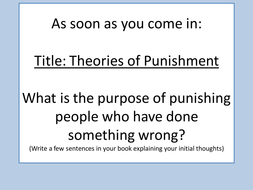
We are now ready to resume our review of Anarchy, State, and Utopia. The fourth subsection of Chapter 4 (pp. 59-63) contains an extended digression into retributive and deterrence theories of punishment. Nozick takes a probabilistic approach to punishment (pp. 59-60), an approach which is music to our ears: “A person’s option of crossing a [moral] boundary is constituted by a (1 – p) chance of gain G from the [wrongful] act, where p is the probability he is apprehended, combined with the probability p of paying various costs of the act [if caught].” According to Nozick (p. 60), these costs include C, the payment of compensation to the victim; D, the emotional costs to the wrongdoer of being caught and tried; and E, the financial costs of getting caught and going to trial. As Nozick notes (p. 60): “Prospects for deterrence look dim if the expected costs of a boundary crossing are less than its expected gain; that is, if p times (C + D + E) is less than (1 – p) times G.” (Being the mathematical geeks we are, we really loved this simple model.)

After building his probabilistic model, Nozick identifies some problems with both retributive and deterrence theories of punishment. One problem with deterrence theories is that they are useless in practice, or in Nozick’s words (p. 61, emphasis in original): “[the maxim] ‘the penalty for a [wrongful act] should be the minimal one necessary to deter commission of it’ provides no guidance until we’re told how much commission of it is to be deterred.” In other words, we need to know what the “optimal level” of wrongdoing is! More fundamentally (p. 61), another problem with deterrence theories “of the utilitarian sort” (but what other kind is there?) is that they tend to “equate[] the unhappiness the criminal’s punishment causes him with the unhappiness a [wrongful act] causes its victim.” (Note that we have replaced the word “crime” in the above quotations with the words “wrongful act” since we don’t want to prejudge whether a wrongful act (i.e. a moral boundary crossing) should be treated as a public crime or a private tort, the central question of Chapter 4.)

By contrast, the main problem with retributive theories, as Nozick nicely points out, is that they set an upper limit to the penalty that may be inflicted on a wrongdoer, since a retributive penalty must be based on the wrongdoer’s degree of responsibility and the degree of harm inflicted. (See Nozick, p. 60: “Let us suppose … that R, the retribution deserved, equals r times H; where H is a measure of the seriousness of the harm of the [wrongful] act, and r (ranging between 0 and 1 inclusive) indicates the person’s degree of responsibility for H.”) But if this upper limit of r times H is set below (1 – p) times G — the expected gain to the wrongdoer — then no deterrence will be achieved. At the same time, however, the retributive approach sheds new light on the right to self-defense and the rule of proportionality. Recall that, under a retributive theory of punishment, H is a measure of the seriousness of the harm of a wrongful act, while r (ranging between 0 and 1) is a measure of the person’s degree of responsibility for H. As a result (p. 62), the retribution model “makes the upper magnitude of permissible defensive harm some function f of H, which varies directly with H — the greater H is, the greater f(H) — and such that f(H) > H.” Furthermore, as Nozick himself notes (p. 62), the variable r — the wrongdoer’s degree of responsibility — is completely irrelevant to this rule of proportionality. (What an original and fascinating insight, by the way.)

Now, let’s return to the central question of Chapter 4: (i) should wrongful acts be prohibited and punished as crimes or (ii) should they be allowed so long as compensation is paid to the victim (i.e. should wrongful acts be treated as torts)? Notice that Nozick’s simple models do not provide a definitive answer to this question. Neither the retributive model nor the deterrence model tell us how to classify boundary crossings, i.e. as a crime or a tort. Worse yet, Nozick’s models yield different ways of calculating the level of compensation to be paid under the permissive or tort approach, since the formula for compensation could be made equal either to r times H or to (1 – p) times G, depending on which theory of punishment we prefer.

Image result for theories of punishment
Posted in Uncategorized | 2 Comments

Further Nozickian Puzzles

Time out! We need to attend to some other time-consuming (and time-sensitive) matters this weekend, so before we proceed with our review of Chapter 4 of Anarchy, State, and Utopia, we wish to pose some additional questions regarding Nozick’s major premise “individual have rights”:

  • Who counts as an “individual” in Nozick’s moral universe? For example, do non-human animals have natural rights? What about artificial entities like corporations? What about unborn children? What about gametes?
  • Do deities (like the Biblical god Jehova, the Inca god Inti, the Greek god Zeus, etc.) have natural rights?
  • Are natural rights (or some subset of our rights) alienable?
Image result for time out
Posted in Uncategorized | Leave a comment

Time out from our extended review of Anarchy, State, and Utopia

Below is a small sample of everyday objects arranged into beautiful patterns. You can check out the rest of artist Adam Hillman’s work here (hat tip: kottke.)

Posted in Uncategorized | 1 Comment

Digression: Nozick’s relevance to legal theory

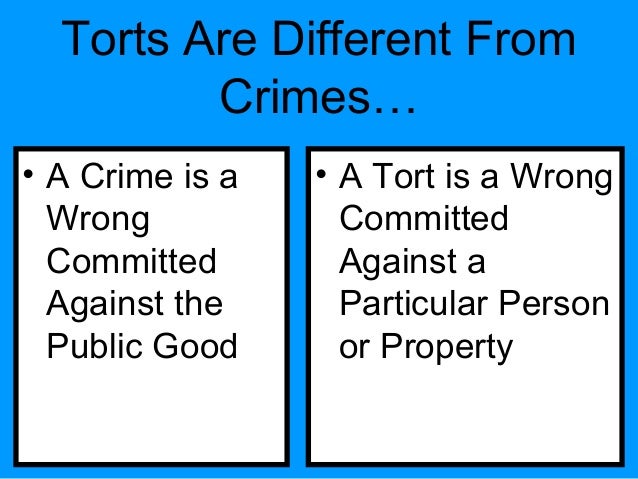
Before we press on with our review of Nozick’s masterpiece Anarchy, State, and Utopia (ASU), we want to say a few words on why Nozick is worth reading and why we are so excited about Nozick’s ideas, especially Chapter 4 of ASU, despite the many criticisms of Nozick’s work we have made thus far. Recall from our previous post Nozick’s distinction between “Compensation Systems” (consisting of moral boundaries that can be crossed so long as compensation is paid) and “Prohibition Systems” (consisting of moral boundaries protected by strict prohibitions against any non-consensual boundary crossings). Doesn’t this distinction look a lot like the existing legal distinction between civil liability and criminal liability?! That, in a nutshell, is why we are so fascinated by ASU, for Nozick is actually trying to answer a hard theoretical and practical question in law: Why are some harmful acts crimes, while others are mere torts or civil wrongs? (Indeed, in some situations — like assault, fraud, trespass, etc. — the same act might constitute both a crime and a tort!) Traditionally, torts are considered private wrongs, whereas crimes are classified as public wrongs. (See image below.) But this traditional explanation begs the question of why private wrongs (unlike public ones) are okay so long as compensation is paid. (In any case, we have never found the public-private distinction to be very persuasive.) In short, Chapter 4 of ASU is essential reading for legal scholars …

Image result for tort crime

Image credit: gellenberger

Posted in Uncategorized | 1 Comment

How to enforce moral borders: compensation or prohibition?

The third subsection of Chapter 4 of Anarchy, State, and Utopia (pp. 58-59) narrows down and reformulates the problem of enforcing moral boundaries in terms of two hard questions (p. 59): (i) why not allow or permit boundary crossings so long as the boundary crosser is required to pay full compensation to his victim? Or in the alternative, (ii) why not strictly prohibit all non-consensual boundary crossings, regardless of the boundary crosser’s willingness or ability to pay full compensation to his victim? (For future reference, let’s call all compensation-based schemes or permissive methods of enforcing moral boundaries “Compensation Systems” and all paternalistic, prohibitive, or punishment systems “Prohibition Systems“.) As Nozick notes, if we were to favor a “Compensation System” of enforcing moral boundaries, two related problems will arise. One is the problem of measurement: how should harms or boundary crossings be measured and priced? The other is the problem of evasion: some fraction of boundary crossers will be able to avoid detection, apprehension, and punishment. Shouldn’t the price of a boundary crossing somehow reflect this risk of evasion, in order to deter future boundary crossings from occurring in the first place? Nozick will delve into these subsidiary “Compensation System” questions in the next two subsections of Chapter 4 (pp. 59-65), and so will we in our next blog post …

Related image

Credit: Lynda Barry

Posted in Uncategorized | 2 Comments

Two views of moral border crossings

The second subsection of Chapter 4 is only two pages long (pp. 57-58), but it deserves our careful attention for several reasons: (i) One reason is Nozick’s geometric visualization of morality. As Nozick puts it (p. 57): “an area in moral space” or moral boundary surrounds every individual. (ii) Another reason is that Nozick raises (yet again!) a fundamental question, an inquiry so important that it will take up the rest of Chapter 4. Specifically, Nozick poses a subtle query about the nature of this geometric moral boundary. Should the moral line surrounding each person be treated as an impenetrable wall — one that others are forbidden to transgress — or merely as a suggestion or default position — a moral line that others are permitted to step over so long as they compensate the person whose moral boundary has been crossed? (Before proceeding, it’s worth noting that this fundamental question must be answered regardless of where this line is drawn, no matter whether you are a pragmatic Humean consequentialist or are committed to universal Kantian duties. Either way, we must also decide what to do when moral “boundary crossings”, to borrow Nozick’s apt metaphor, occur.)

(iii) Yet another reason to pay close attention to pp. 57-58 of Chapter 4 is Nozick’s reciprocal stance towards moral boundary crossings. To borrow Nozick’s own terminology, assume two autonomous individuals, X and Y, and further assume that compensation is required for any border crossing (regardless where we draw the line). Does X have a reciprocal duty to take whatever steps or precautions are prudent in order to reduce the likelihood of Y committing a boundary crossing or to minimize the impact of Y‘s border-crossing once such a violation occurs? For his part, Nozick appears to adopt (at least tentatively) a “reciprocal” view of moral border crossings (p. 58): “We shall tentatively adopt [a reciprocal] view of compensation, one which presumes reasonable precautions and adjusting activities by X.” So, if Y has a moral duty to avoid crossing X‘s moral boundary, then to the extent harms are the product of the actions of both parties (X and Y), X also has a reciprocal moral duty to arrange his affairs so as to reduce the probability of border crossings and to limit his losses when such border crossings do occur.

Although we agree with Nozick that in most cases moral duties are indeed reciprocal — at least to the extent moral (and physical) harms are the product of both parties’ decisions and actions (one of the main lessons of Ronald Coase’s famous paper, “The Problem of Social Cost”) — this reciprocal moral logic is not universally accepted by everyone, least of all by many moral philosophers! Also, we find it very strange that a good Kantian like Nozick (“Individuals have rights …”) would be willing to even consider the possibility of compensation for moral border crossings. After all, doesn’t Nozick’s side-constraint view of morality imply that our moral boundaries should be treated like an impenetrable wall instead of a mere suggestion or default position? To his credit, Nozick will not leave these questions open; he will carefully respond to these potential objections later in the chapter …

Image result for moral line
Posted in Uncategorized | 2 Comments

The problem of independents (in Anarchy, State, and Utopia)

Nozick (pictured below) presents an important theoretical problem in the first subsection of Chapter 4: the problem of independents, or how should a private protection racket deal with non-members? Additionally, Nozick raises a further theoretical problem in a footnote (p. 55): What happens if a non-member’s land is completely surrounded by land owned by members of a protection racket? How can the non-member leave his land to make a living without trespass, i.e. without violating the natural rights of his neighbors? See, for example, Parcel “L” pictured below. (For what it’s worth, Nozick says that he will address the surrounding-person problem in Ch. 7.)

Recall from previous chapters that, according to Nozick, people in a state of nature will establish “mutual protection associations” to protect their natural rights and that these protection rackets will compete with each other for clients until there are just few dominant agencies left, via an invisible hand process. But this hypothetical scenario poses an interesting problem, what if a few persons — or even just one person! — refuse to purchase protection services from any of the protection agencies? How should any of the remaining protection rackets deal with such non-members or “independents”? This scenario poses a problem because an independent retains his “natural” right to punish anyone who violates his rights, but at the same, such a rights-violator might belong to a private protection association. If so, doesn’t the protection agency have a duty to protect its clients? But what about the independent’s ex ante right to enforce his rights? Who wins?

Moreover, in the course of identifying this theoretical problem (the problem of independents), Nozick draws a fundamental distinction between primary or first-order natural rights (e.g. the right to life and property) and secondary natural rights or the right to enforce other rights (e.g. the right to punish or retaliate against someone who has violated one’s substantive rights). We will consider Nozick’s solution to “the problem of independents” in future blog posts …

Options for the Landlocked Michigan Landowner - Outside Legal Counsel PLC |  Hemlock, Michigan
Posted in Uncategorized | 1 Comment