Bayesian updating by judges (part 2)

In a previous post, we introduced Eric Posner and Adrian Vermeule’s paper “The Votes of Other Judges,” which was published in volume 105 of the Georgetown Law Journal. To sum up, Posner and Vermeule present a theory of interdependent judicial voting, i.e. judges on multi-member panels should engage in Bayesian updating when they decide issues of law or questions of interpretation. Specifically, a judge sitting on a multi-member panel should do two things: (i) he should first take into account the way in which his fellow judges have voted, and (ii) he should be willing to change his vote accordingly. Although we agree with the spirit of Posner and Vermeule’s Bayesian approach to judging, their paper is short on specifics. After thirty dense, single-spaced pages devoted to peer disagreement and interdependent voting, their paper concludes with a timid whimper. Talk about an anti-climax! In particular, Posner and Vermeule propose a simple two-stage method of voting–“in the first stage, each judge votes; in the second stage, the judges may change their votes in light of what they learned from the first stage” (p. 189)–but they don’t formalize this two-step method any further. As a result, Posner and Vermeule’s approach to judging is too crude to be of any practical use. They offer a general exhortation–judges should be willing to change their votes (in light of the way their fellow judges have voted)–but they don’t specify the precise conditions under which a judge should actually change his vote.

Nevertheless, Posner and Vermeule are right that judges’ votes contain information (independent of whatever reasons judges may give to justify their votes) and that judges should always update their priors before casting their final and decisive votes, especially in close cases, but is there any way of operationalizing Posner and Vermeule’s theory of interdependent voting? In a word: yes! Let judges engage in Bayesian voting, i.e. let judges express their degrees of belief when voting. (As an aside, this is the main reason why Posner and Vermeule’s exhortation is too crude. In their model, judges are still emitting binary votes, i.e. judges must vote all or nothing: either “for” or “against” the moving party.) Ironically, Posner and Vermeule discuss the importance of degrees of belief (or “confidence levels”) in their paper, but their approach to judicial voting makes no use of confidence levels. In our next post, we will propose an alternative method of Bayesian voting by judges, one in which judges are allowed to disclose their degrees of belief instead of voting up or down.

Image result for bayesian updating

Credit: Lars P. Syll

Posted in Uncategorized | Leave a comment

#HappyHalloween

31 October 2017

Posted in Uncategorized | 1 Comment

Bayesian updating by judges

In their thought-provoking paper “The Votes of Other Judges,” Eric Posner and Adrian Vermeule present a compelling argument why judges on multi-member panels should engage in informal Bayesian updating when they decide issues of law or questions of interpretation. Consider, for example, the U.S. Supreme Court, which is composed of nine judges. The Supreme Court generally schedules an oral argument for each case on its docket, and each side is usually allotted 20 minutes to present their arguments to the Court. At the initial conference meeting after oral argument, the Justices meet in private and reveal to each other how they would decide the case. Suppose five of the Justices say that the ordinary meaning of the statute is clearly X, while four say that it is clearly Y. In the words of Eric Posner, “Shouldn’t all nine update their views and learn from the aggregate information contained in the votes of colleagues? Shouldn’t all entertain the possibility that the vote reveals the statute to be ambiguous?” In the alternative, what if five Justices say that the statute clearly means X, while four say that it is ambiguous as between X and Y. “Should the five obtain some information from the votes of the four, albeit not as much as in [the above case]? … And how about vice-versa–should the four update their own views, in light of the views of the five?” For our part, we think Posner and Vermeule are on the right track. The votes of each judge provide additional relevant information about the case under review. The problem, however, is not whether judges should engage in Bayesian voting, but rather how they should do so. After all, we don’t foresee judges doing formal probability calculations any time soon. (Here is a fun video tutorial explaining the finer points of Bayesian updating. Here is another.) We will address “the how question” in our next blog post.

Image result for bayesian updating

Hat tip: Kevin Binz, via Fewer Lacunae

Posted in Uncategorized | 1 Comment

Review of Posner & Vermuele

Coming soon! (Below the fold is the abstract of Eric Posner and Adrian Vermuele’s thought-provoking paper “The Votes of Other Judges.” We will write up our review in the next day or two.) Continue reading

Posted in Uncategorized | Leave a comment

Punctuation Police Cheat Sheet

Hat tip: Lauren Rad (@laurenclarkrad)

Posted in Uncategorized | 1 Comment

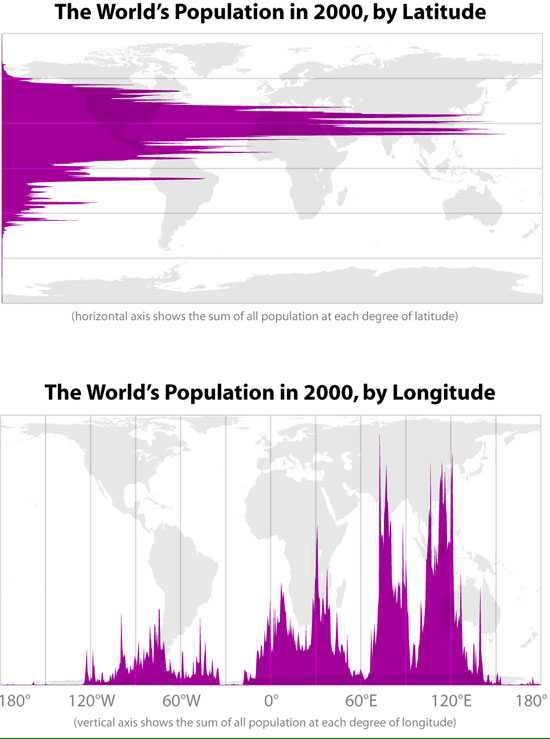
Population by latitude and longitude

Via Reddit: -ImYourHuckleberry- (h/t Cliff Pickover)

Posted in Uncategorized | Leave a comment

27 October 2017

Will Catalonia’s declaration of independence from Spain lead to a second Spanish Civil War? (Here is a link to a previous post regarding Catalan independence.)

Posted in Uncategorized | Leave a comment

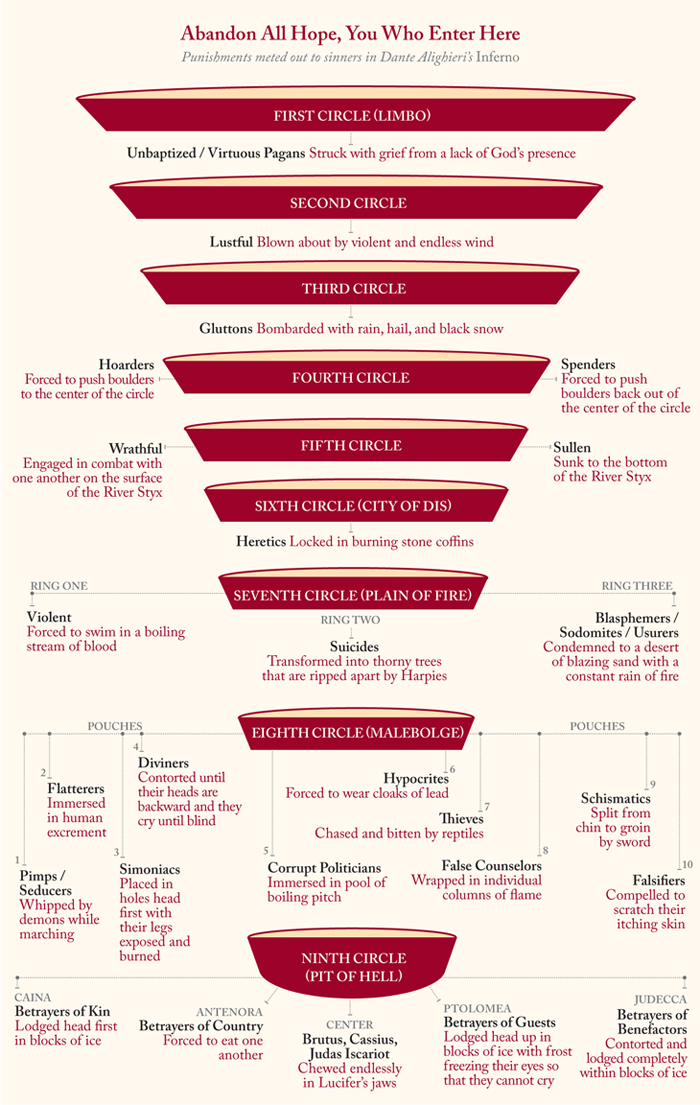
Infographic: the nine rings in Dante’s Inferno

Source: Lapham’s Quarterly (h/t kottke)

Posted in Uncategorized | Leave a comment

26 October 1881

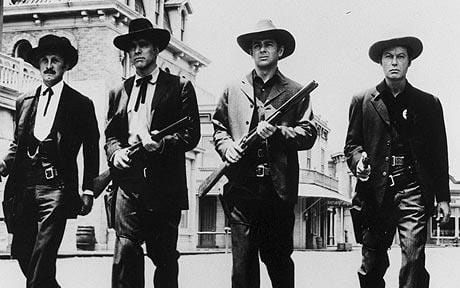
Did you know that today is the 136th anniversary of the historic gun battle between a group of outlaws led by Billy Clanton and the McLaury brothers and a group of lawmen led by Wyatt Earp and Doc Holliday at the O.K. Corral in Tombstone, Arizona Territory? Our friend and colleague Steven Lubet, who brought this fact to our attention, wrote an entire book about this episode and the legal repercussions and miscarriage of justice that occurred after the dust settled. He has also blogged about this historic event here: “Although the shootout is legendary, it is less well known that Wyatt Earp and his brothers, and Doc Holliday, were prosecuted afterward for the murder of Billy Clanton and Tom and Frank McLaury. The Earps were represented by Tom Fitch, one of the most accomplished trial lawyers of the late nineteenth century, who fortuitously happened to be living in Tombstone at the time. The evidence against the Earps and Holliday included eyewitness testimony from the county sheriff, who said that the dead men had been trying to surrender when they were shot down, but Fitch’s brilliant lawyering managed to get the case dismissed at the preliminary hearing.” 

Posted in Uncategorized | Leave a comment

Assorted Links (Boris Diaw edition)

In honor of all-around great guy and French basketball power forward Boris Diaw:

  1. Mon frère Boris, via Jonathan Abrams at Grantland
  2. Boris Diaw, the most interesting man on Earth, via Tim Carmody at kottke.org
  3. Interview with Diaw, who is down to go to Mars, via Alex Wong at GQ
  4. Presenting the most Boris Diaw anecdote imaginable, via Seth Rosenthal at SBNation.com
  5. NBA – YouTube:

Posted in Uncategorized | Leave a comment