Hume on miracles: the good

As I mentioned in my previous post, this week I will offer my own lawyerly take on David Hume’s influential argument against the possibility of miracles: the good, the bad, and the ugly. Let’s start out on a positive note, shall we, with “the good”? (Rest assured, I will consider “the bad” and “the ugly” sides of Hume’s anti-miracle essay in subsequent posts.)

Simply put, what I like the most about Hume’s argument is his lawyerlike and probabilistic approach to the problem of miracles. For Hume, whenever you read or hear a report of a miracle or some other remarkable event — whether it be a UFO sighting, a levitating saint, or Lazarus’ resurrection from the dead — you should weigh the evidence based on your own experience and common sense. Specifically, Hume proposes a two-part probabilistic test for weighing the evidence.

In summary, the first part of Hume’s probabilistic test requires us to assign two separate probability values to the evidence as follows: the probability p1 that the miracle really happened and the probability p2 that the evidence is either mistaken or fraudulent or otherwise defective. The second part of Hume’s test is to compare p1 and p2. To the point, you should believe in the miracle only if p1 > p2.

Moreover, Hume’s exhortation to weigh the evidence is exactly what juries do when deciding law cases. In fact, Hume’s simple probabilistic test reminds me a lot of my colleagues Ron Allen and Mike Pardo’s “storytelling” account of legal proof. (See Ronald J. Allen and Michael S. Pardo (2008), Juridical proof and the best explanation, Law and Philosophy, Vol. 27, pp. 223–268, which is available here. See also Allen & Pardo (2019), Relative plausibility and its critics, International Journal of Evidence & Proof, Vol. 23, pp. 5–59, available here.)

Among other things, Allen and Pardo’s account of legal proof not only makes intuitive sense; their storytelling approach also parallels Hume’s probabilistic two-part test for miracles:

“The proof process involves two stages: (1) the generation of potential explanations of the evidence and events, and (2) a comparisons of the [plaintiff’s and defendant’s competing] explanations in light of the applicable standard of proof. In general, the process depends on the parties to obtain evidence and to offer what they consider to be the best explanation (or explanations) that support their respective cases.” (Allen & Pardo 2019)

In other words, when jurors are deciding cases, what they are really doing is comparing the competing stories of the plaintiff and the defendant, and it is the party who offers the best explanation of the evidence — i.e. the party who tells the best story — who wins. Sound familiar?

This storytelling account of legal proof — like Hume’s probabilistic test for miracles — also has two major virtues. One is that it makes the most intuitive and descriptive sense: jurors do tend to weigh the evidence presented at a trial holistically, and they tend to favor the side whose story is more persuasive, or to borrow Allen and Pardo’s terminology, juries usually prefer the side whose story offers the best explanation of the evidence. The other virtue of the storytelling approach is an aesthetic one: its elegant simplicity. Why is simplicity a virtue? Because more simple or parsimonious explanations are almost always better than complex or convoluted ones, a fundamental principle called “Occam’s Razor”.

Nevertheless, Hume’s probabilistic test, along with Allen and Pardo’s storytelling approach to legal proof, has two big blind spots: (1) the reference class problem, and (2) the unknown probability problem. Stay tuned: I will explain both of these fatal flaws and present an alternative approach to the problem of miracles in my next few posts.
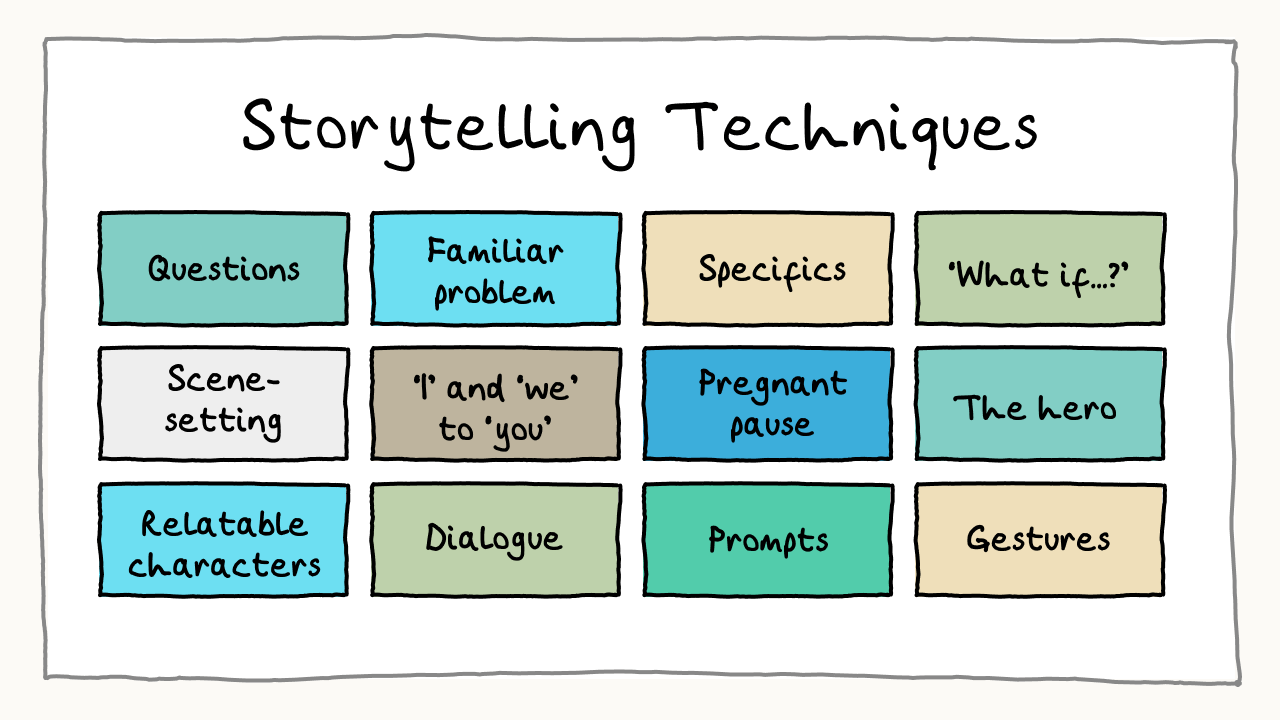

12 Storytelling Techniques for Pitching Your Business

Posted in Uncategorized | 2 Comments

Hume on miracles: the literature

Last week, we surveyed David Hume’s influential argument against the possibility of miracles. (See here, here, and here.) This week, I want to offer my own take on Hume’s argument — the good, the bad, and the ugly — but before I do, I want to begin by making a full disclosure: I will for the most part avoid consulting or mentioning (except in today’s introductory post) any of secondary and even tertiary literature that already exists on this topic.

For starters, the scholarly literature is massive. A quick search for “Hume on miracles” in Google Scholar, for example, generates over 67,000 discrete entries! (Here, for example, is an early response to Hume by one William Adams.) So, what can I contribute to the problem of miracles? In a word, I will use my background knowledge and experience as a law professor — one with a deep interest in economics, history, and probability theory — to offer my own “legal proof” perspective on Hume’s argument.

In the meantime, below are some fairly recent scholarly works that students of Hume and the problem of miracles may wish to consult for future reference:

Primary, Secondary and Tertiary Literature in the Sciences - Primary,  Secondary and Tertiary Sources - LibGuides at Ohio Northern University
Posted in Uncategorized | 1 Comment

Roberta Flack forever

The artist Roberta Flack, whose music made an indelible mark on my childhood, died last month at the age of 88; here is her New York Times obituary.

Posted in Uncategorized | Leave a comment

Hume on miracles: weigh the evidence

Twenty Questions about Hume's “Of Miracles”* | Royal Institute of  Philosophy Supplements | Cambridge Core

Having defined what a miracle is (see here) and having established the relationship between evidence and probability (here), Hume is now ready to finally unveil his novel argument against miracles. To the point, for Hume “no testimony is sufficient to establish a miracle, unless the testimony be of such a kind, that its falsehood would be more miraculous, than the fact, which it endeavours to establish …” (Hume, Of Miracles, Para. 13). In plain English, what Hume is saying here is that even when we have direct evidence of a miracle, such as eyewitness testimony, our inquiry is not over. We still have to weigh the evidence. Specifically, we must consider not only the probability that the evidence is reliable or true but also the probability that it is defective or false, or in the immortal words of David Hume himself:

“When any one tells me, that he saw a dead man restored to life, I immediately consider with myself, whether it be more probable, that this person should either deceive or be deceived, or that the fact, which he relates, should really have happened. I weigh the one miracle against the other; and according to the superiority, which I discover, I pronounce my decision, and always reject the greater miracle.” (Hume, Of Miracles, Para. 13, emphasis added)

Hume thus proposes a simple two-part probabilistic test for evaluating reports of miracles. The first part works as follows: if someone, for example, tells you X — that they saw a UFO or were abducted by aliens — you need to consider two separate probabilities: A and B, where A is the probability that X, the remarkable or unusual event in question, took place — i.e., how likely is it, given your own experience and common sense, that the UFO sighting or alien abduction really occurred? — and where B is the probability that the report is either mistaken or fraudulent or otherwise defective — or in Hume’s words, the probability “that its falsehood would be more miraculous, than the fact, which it endeavours to establish” (ibid.).

Next, after assigning probability values to both of these logical possibilities (A and B), the second and last part of Hume’s test is to compare both probabilities. According to Hume’s probabilistic logic, you should prefer the possibility whose probability value is greater. (Or, put another way, only if the probability of B is somehow smaller than that of A should you believe in X.)

This post concludes my review of Part 1 of Hume’s essay “Of Miracles” (paragraphs 1 to 13). Starting next week, I will present a “Bayesian” critique of Hume’s solution to the problem of miracles and then turn my attention to Part 2 of his essay (paragraphs 14 to 41). In the meantime, I would like you to think about the following question: is there any way a report of a miracle or other remarkable event could ever pass Hume’s probabilistic test?

Posted in Uncategorized | 1 Comment

Interlude: Hume’s definition of miracles

David Hume finally gets around to miracles in Paragraph 12 of his famous essay on this subject (see here), where he writes: “A miracle is a violation of the laws of nature” (Hume, Of Miracles, para. 12; cf. Voltaire 1764/1901, p. 272). For Hume, the textbook example of a miracle is the resurrection of Lazurus of Bethany in the Gospel of John (see John 11:1–44), or in the immortal words of the Scottish essayist, “… it is a miracle, that a dead man should come to life; because that has never been observed, in any age or country” (para. 12).

But is Hume’s definition a circular one? As my colleagues Timothy McGrew and Robert Larmer explain in their 2010 essay on “Miracles” for The Stanford Encyclopedia of Philosophy (available here), Hume’s miracle definition raises many more difficult questions than it answers. For starters, how many “laws” of nature are there? What do these so-called natural laws consist of? And who is the “lawgiver”, so to speak? If it’s God or some other deity, then why can’t the lawmaker violate his own laws, and what does it mean to “violate” a law of nature anyways? Consider again the resurrection of Lazurus. However remarkable or rare this feat is, which natural law in particular did Jesus violate when he performed this miracle?

In any case, if we have multiple firsthand or eyewitness reports of Jesus raising Lazarus from the dead (direct evidence, not just hearsay!), why should we follow Hume in rejecting this testimony out of hand? That is, why should we assume that a law of nature has been violated whenever something strange, unusual, or unexpected has occurred? As we shall see in my next post, Hume’s answer to these questions is an ingenious one!

Posted in Uncategorized | 2 Comments

Hume on evidence and probability

The Economist - Empirical philosopher David Hume was born... | Facebook

The Scottish Enlightenment figure David Hume (pictured above) makes four important preliminary observations about the relationship between evidence and probability in the first part his essay “Of Miracles” (paragraphs 3 to 8). For reference, I will restate Hume’s main points as follows:

  • First off, Hume describes belief as a continuous variable, not a binary one, because one’s belief about a “matter of fact” — i.e. the probability that the fact might, or might not, be true — can vary from very high (i.e. near certainty) to very low (i.e. total disbelief), or in the immmortal words of David Hume: “in our reasonings concerning matter of fact, there are all imaginable degrees of assurance, from the highest certainty to the lowest species of moral evidence” (Hume, Of Miracles, para. 3, emphasis added).
  • From this fundamental premise (i.e. belief is a continuous variable), Hume concludes that the actual level of your degree of belief about a disputed fact should correspond to the amount of relevant evidence available to you: “A wise man, therefore, proportions his belief to the evidence” (para. 4, emphasis added). And he then illustrates this relationship between belief and evidence with a specific example: “A hundred instances or experiments on one side, and fifty on another, afford a doubtful expectation of any event; though a hundred uniform experiments, with only one that is contradictory, reasonably beget a pretty strong degree of assurance” (ibid.).
  • Next, Hume observes that in ordinary life the most common type of evidence we use when making our probability judgments (i.e. when determining how strong or weak our degree of belief should be) are not scientific experiments or clinical trials. The most common forms of evidence we rely on are historical reports and eyewitness testimony: “there is no species of reasoning more common, more useful, and even necessary to human life, than that which is derived from the testimony of men, and the reports of eye-witnesses and spectators” (para. 5).
  • Lastly (and most importantly), Hume says that we judge the credibility of such evidence (i.e. historical reports or eyewitness testimony) in light of our own understanding of how the world works: “the ultimate standard, by which we determine all disputes, that may arise concerning them [eyewitnesses testimony], is always derived from experience and observation” (para. 6, emphasis added). In other words, we don’t automatically accept a person’s testimony at face value. Instead, we ask ourselves whether his testimony is consistent with our own personal experience of the world and, I might add, with common sense:

“The reason, why we place any credit in witnesses and historians, is not derived from any connexion, which we perceive à priori, between testimony and reality, but because we are accustomed to find a conformity between them.” (para. 8)

To be continued …

Posted in Uncategorized | 2 Comments

Transubstantiation and the principle of indifference or equal priors

Thus far this week, I have restated Hume’s “hearsay argument” against transubstantiation (see here) and surveyed some possible exceptions to the hearsay rule in law that might be application to the case of transubstantiation (here). But what is my position regarding this controversy? Am I with Hume or Augustine?

To the point, I would apply the “Principle of Indifference” — an idea from the domain of probability theory — to the question of transubstantiation and the theology of Jesus’ Last Supper. This principle, which can be traced back to John Maynard Keynes’s Treatise on Probability (1921, pp. 41-64), applies when two conditions are met: (i) you are considering two or more mutually-exclusive hypotheses, such as the possibility of transubstantiation during the celebration of the Eucharist, but only one of which can be true, and (ii) you have no direct evidence to favor one possibility over the others. In that case, when you have no direct evidence to favor one outcome over another, you should assign equal probability to each hypothesis.

Or in the words of Lord Keynes (ibid., p. 42) himself:

“The Principle of Indifference asserts that if there is no known reason for predicating of our subject one rather than another of several alternatives, then relatively to such knowledge the assertions of each of these alternatives have an equal probability. Thus equal probabilities must be assigned to each of several arguments, if there is an absence of positive ground for assigning unequal ones.”

In closing, although transubstantiation has all the hallmarks of a self-sealing conspiracy theory (e.g., emotional appeal, unfalsifiability, and in-group/out-group dynamics between true believers and heretics), at the same time both of the conditions mentioned above apply to the case at hand, since we have no direct evidence one way or another telling us whether transubstantiation is true or not. Contra Hume, then, I would start any discussion of the Last Supper by assigning a 0.5 probability to the possibility that transubstantiation might be true. Keep this conclusion in mind as we consider Hume’s other arguments against the possibility of miracles … (to be continued)

St. Mary's Catholic Church - Catechism: 283. What is the meaning of  transubstantiation? Transubstantiation means the change of the whole  substance of bread into the substance of the Body of Christ and
Posted in Uncategorized | Leave a comment

Hume versus Augustine

Previously, I described David Hume’s restatement of John Tillotson’s anti-transubstantiation argument in the form of a logical syllogism. In summary, Hume’s syllogism is this: there is no direct evidence that transubstantiation really occurs during the sacrament of Communion; instead, the only evidence we have that this doctrine might be true are some second-hand statements during the Patristic period, such as the sermons of Saint Augustine. Second-hand hearsay evidence, however, is always weaker or less reliable than direct evidence; therefore, transubstantiation cannot be true. But as I noted at the end of my previous post, this syllogism is incomplete, for Messrs Hume and Tillotson fail to consider any of the standard exceptions to the hearsay rule.

By way of illustration, the Federal Rules of Evidence (see here or here) recognize no less than 23 exceptions to the hearsay rule, including excited utterances, business records, and death-bed or dying declarations. Do any of these hearsay exceptions apply to the problem of transubstantiation? As it happens, there are at least three exceptions to the hearsay rule that might be applicable to the case at hand: statements in ancient documents; market reports and commercial publications; and statements in learned treatises, periodicals, and pamphlets. (For reference, see Rules 803(16), 803(17), and 803(18) of the Federal Rules of Evidence.)

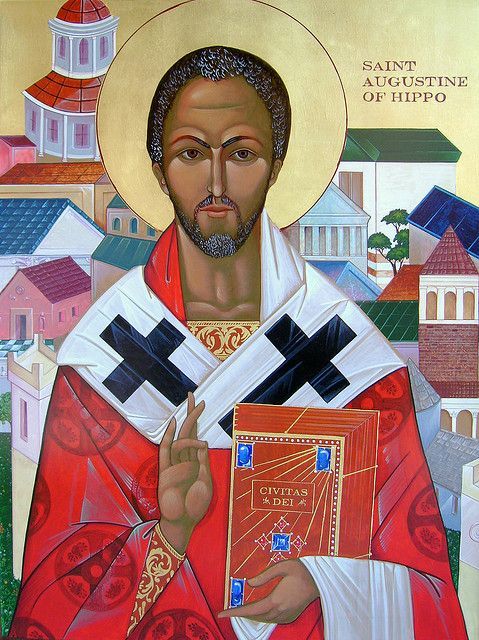
Consider, for example, the collection of sermons of Saint Augustine of Hippo (pictured below) published under the title “Sermons 230-270B on the Liturgical Seasons.” Specifically, in Sermon 234 (418 A.D.) Saint Augustine declares, without citing any supporting evidence, that the bread consecrated in the Eucharist becomes the body of Christ: “The faithful know what I’m talking about; they know Christ in the breaking of bread. It isn’t every loaf of bread, you see, but the one receiving Christ’s blessing, that becomes the body of Christ.” Is Augustine speaking metaphorically here, or is he being literal? Either way, along with Ambrose (AD 340–397), Jerome (347–420), and Pope Gregory I (540–604), Augustine (354–430) is considered one of the Great Church Fathers, so this sermon could easily fall under the exception for an ancient document or a learned treatise — or perhaps even a commercial publication!

But that said, just because a particular piece of evidence regarding transubstantiation — such as a statement in an ancient sermon by a Church father — would be admissible in a court of law under one of the exceptions to the hearsay rule does not by itself mean that transubstantiation is true. We still have to weigh the evidence (i.e. decide how trustworthy it is), draw reasonable inferences from it, and make up our own minds. In my next post, I will turn to another religious figure, the Rev Thomas Bayes (!), and explain why we should (contra Hume and Tillotson) start any discussion of transubstantiation by assigning a 0.5 probability to the possibility that this doctrine might be true.

Class: Discovering St. Augustine of Hippo | St. Augustine by-the-Sea
Posted in Uncategorized | 1 Comment

Hume’s syllogism against transubstantiation

We spent most of the month of February surveying Adam Smith’s analysis of tariffs in Book IV, Chapter 2 of The Wealth of Nations. This month, I want to explore the work of another great Scottish Enlightenment figure: David Hume and his famous essay “Of Miracles“. So, without further ado, let’s dive right in, shall we? Hume begins by invoking the work of a scholar who is little remembered today:

“There is, in Dr. Tillotson‘s writings, an argument against the real presence, which is as concise, and elegant, and strong as any argument can possibly be supposed against a doctrine, so little worthy of a serious refutation.” (Hume, Of Miracles, Para. 1, emphasis added)

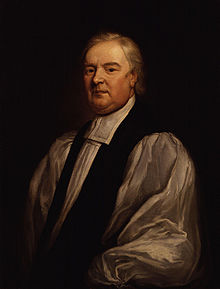
Here, Hume is referring to a controversial work written by one John Tillotson (pictured below), who was the Archbishop of Canterbury from 1691 to 1694. (He was also elected a fellow of the Royal Society in 1672, the same year as Sir Isaac Newton!) Tillotson’s pamphlet is titled A Discourse Against Transubstantiation (available here) and was first published in 1684. (In brief, “transubstantiation” refers to belief that the bread and wine used in Communion become the actual body and blood of Jesus.) After noting that Tillotson’s critique of transubstantiation — or what Hume refers to as “real presence” — is “concise, and elegant, and strong”, Hume then spells out Tillotson’s argument step-by-step in the form of a logical syllogism:

  • Minor premise: Religion is based on direct historical evidence consisting of primary sources, such as the eyewitness testimony of Jesus’ apostles, or in the immortal words of Hume: “… the authority, either of the scripture or of tradition, is founded merely in the testimony of the apostles, who were eye-witnesses to those miracles of our Saviour, by which he proved his divine mission” (Hume, Of Miracles, Para. 1);
  • Major premise: Secondary or after-the-fact hearsay evidence of a historical event is less reliable than direct evidence of that same event: “Our evidence, then, for the truth of [the doctrine of transubstantiation] is less than the evidence for the truth of our senses …” (ibid.). Furthermore, secondary or after-the-fact hearsay evidence becomes less reliable over time: “… it [i.e. the direct evidence recorded by Jesus’ apostles] must diminish in passing from them to their disciples; nor can any one rest such confidence in their testimony, as in the immediate object of his senses” (ibid.);
  • Conclusion: Hearsay evidence cannot be used to refute direct evidence because hearsay evidence is weaker than direct evidence: “But a weaker evidence can never destroy a stronger; and therefore, were the doctrine of the real presence [transubstantiation] ever so clearly revealed in scripture, it were directly contrary to the rules of just reasoning to give our assent to it” (ibid.).

In other words, Hume begins his essay by throwing some hard punches, so to speak, for what Tillotson (as reported by Hume) is saying here is that transubstantiation or “real presence” during Mass cannot be true because this doctrine is nowhere mentioned in the Holy Bible nor by any of Jesus’ own apostles, and in the absence of any primary or direct evidence (such as eyewitness reports by Jesus’ apostles), we cannot use secondary or hearsay evidence to ground the truth of the doctrine of transubstantiation.

Hume’s eloquent and lawyerly restatement of Tillotson’s anti-transubstantiation syllogism looks like a secular slam dunk against taking the words of Jesus during the Last Supper–“this [bread] is my body”–too literally. Why? Because the earliest accounts of Jesus’ life and ministry, including the four canonical gospels, began circulating within 75 years of Jesus’ death, so the closest historical sources we have of the Last Supper are secondary sources. The gospels report Jesus’ actions and words, but it is up to us to assign meaning to those actions and words.

Before proceeding, however, I want to hit pause and offer my own assessment of Hume’s argument against the doctrine of transubstantiation by taking a short detour through the law of evidence, i.e. the rules courts use to determine what types of evidence are admissible when deciding a case. Although it is generally true that hearsay is not admissible, Hume fails to consider any of the well-settled exceptions to the hearsay rule! Accordingly, my next post will survey these exceptions to the hearsay rule and determine whether any of them could apply to the case for transubstantiation.

Portrait of John Tillotson (Wikimedia Commons)
Posted in Uncategorized | 2 Comments

Sunday song: Whiskey drink

Posted in Uncategorized | Leave a comment