Nozick on rights and moral goals versus moral constraints

In the first subsection of Chapter 3, which we reviewed in our previous post, Nozick drew a distinction between two types of libertarian government–minimal states and ultraminimal states–and identified a foundational moral problem with each type of state. Here, we will review the second subsection of Chapter 3 (pp. 28-30), where Nozick reformulates the age-old moral problem of “ends” versus “means” in terms of moral goals and moral constraints. In brief, according to Nozick, there are two ways of applying morality to our actions. One way is by setting a moral goal G or morally attractive “end state” that we hope to achieve. Although this goal-directed view of morality emphasizes ends, Nozick adds a new wrinkle to this approach. According to Nozick, our moral goal or end state need not be the traditionally utilitarian or consequential one of maximizing utility or happiness; it could just as well be the Kantian one of “minimizing the total (weighted) amount of violations of rights” (p. 28). By contrast, the other way of applying morality to our actions is through moral side constraints (p. 29): “don’t violate constraints C.” This approach emphasizes means, i.e. how one’s moral ends are achieved. Under this side-constraint view of morality, the pre-political moral rights of others operate as firm Kantian moral trumps or absolute constraints on one’s goal-directed actions.

Having drawn this distinction between moral goals and moral constraints, Nozick then returns to the question he posed at the beginning of Chapter 3 (p. 28), “how can [a true libertarian] support [an] ultraminimal state, which would … leave some persons’ rights unprotected or illprotected?” As Nozick notes, the problem with this question is that it assumes a goal-directed view of morality–i.e. that a true libertarian’s overall moral goal is to minimize the total weighted amount of rights violations–when, in reality, a libertarian may adopt a side-constraint view of morality (p. 30): “he may place the nonviolation of rights as a constraint upon action, rather than (or in addition to) building it into the end state to be realized.” On the side-constraint view, the ultraminimal state does not itself violate the rights of non-protection-paying customers, “even though it avoids making it more difficult for someone else to violate them” (ibid.).

Alas, Nozick’s analysis of the moral status of an ultraminimal state (private protection racket) raises more questions than it answers. To begin with, what about the other deep question that Nozick raised about the night-watchman state at the beginning of Chapter 3; to wit (p. 27): “If some redistribution is legitimate in order to protect everyone [under a minimal state], why is redistribution not legitimate for other attractive and desirable purposes as well?” In any case, why should we prefer the side-constraint view over the goal-directed view of morality? Nozick turns to this particular question in the next part of Chapter 3 (pp. 30-33): “Why Side Contraints?” So, we will review Nozick’s answer in our next blog post …

Image result for ends versus means

Credit: Laura Patrick

Posted in Uncategorized | 2 Comments

Map placing Pearl Harbor at the center of the world

Hat tip: AJgloe

Posted in Uncategorized | 7 Comments

Nozick’s two problems of libertarian theory

Nozick begins Chapter 3 (pp. 26-28) by drawing a distinction between two types of libertarian government (see image below): a “soft core” libertarian minimal state that protects all its citizens against harm and a “hard core” libertarian ultra-minimal state that only protects its own customers. In Nozick’s own words (p. 26), a minimal state is the “night-watchman state” of libertarian theory, one that is “limited to the [narrow] functions of protecting all its citizens against violence, theft, and fraud, and to the enforcement of contracts.” An ultra-minimal state, by contrast, “provides protection and enforcement services only to those who purchase its protections and enforcement policies” (ibid., italics in original). Also, Nozick identifies two foundational problems, one for each type of libertarian governance.

On the one hand, the problem for proponents of the soft core minimal state is that such a state is necessarily committed to some level of economic redistribution. After all, as Nozick himself concedes, the night-watchman state is redistributive to the extent that it compels some people to pay for the protection of others. Therefore (p. 27), “If some redistribution is legitimate [or morally permissible] in order to protect everyone, why is redistribution not legitimate [morally permissible] for other attractive and desirable purposes as well?” On the other hand, the problem for supporters of the hard core ultra-minimal state is that some people will receive little or no protection from such a state, unless they have purchased a sufficient level of protection services ahead of time. Why is this a problem? Because a true libertarian believes that all persons have rights. Yet, as Nozick notes (p. 28), “how can he [a true libertarian] support the ultraminimal state, which would seem to leave some persons’ rights unprotected or illprotected?” Is there any way to solve or at least side-step either of these problems? We will continue our review of Chapter 3 tomorrow …

Image result for ultraminimal state

Credit: Abel Pitts

Posted in Uncategorized | 2 Comments

Overview of Chapter 3 of Anarchy, State, and Utopia

We will begin our review of Chapter 3 of Anarchy, State, and Utopia later today or tomorrow. Before proceeding, however, let’s take a closer look at Chapter 3’s overall structure and organization. In brief, Chapter 3 is titled “Moral Constraints and the State” and contains nine separate subsections as follows:

(i) The minimal state and the ultraminimal state (pp. 26-28)

(ii) Moral constraints and moral goals (pp. 28-30)

(iii) Why side constraints? (pp. 30-33)

(iv) Libertarian constraints (pp. 33-35)

(v) Constraints and [non-human] animals (pp. 35-42)

(vi) The experience machine (pp. 42-45)

(vii) Underdetermination of moral theory (pp. 45-47)

(viii) What are constraints based upon? (pp. 48-51)

(ix) The individual anarchist (pp. 51-53)

I don’t know about you, but I have always been fascinated by the question of moral constraints and moral reasoning generally (our field is law, and what is law but a form of public morality?), so we can’t wait to jump into this material. How “constraining” are the so-called “rules” of morality, and where do these moral codes come from? In particular, are the “dictates” of morality truly binding on us, or is morality merely aspirational, an artificial human construct? Stay tuned …

Image result for moral constraints

Credit: Brett Cross

Posted in Uncategorized | Leave a comment

North Pole of Mars

Posted in Uncategorized | Leave a comment

Proto-state or protection racket?

Nozick concludes Chapter 2 (pp. 22-25) of Anarchy, State, and Utopia with a hybrid definitional-theoretical question: Is the dominant protection association a state? That is, does the postulated dominant protective association (postulated by Nozick) rise to level of a minimal or proto-state, or is such a private group just a protection racket? (Recall that, according to Nozick, a number of protection rackets will emerge in a state of nature and that these protection groups will end up carving up their own exclusive zones, with a single dominant group selling protection in each territory.) For his part, Nozick defines the state in terms of monopoly (p. 23): “A state claims a monopoly on deciding who may use force when; … furthermore it [the state] claims the right to punish all those who violate its claimed monopoly.” With this definition in mind, he then proceeds to distinguish private protection rackets from states. First, protection rackets are not true monopolies, nor is it morally legitimate for a protection racket to claim a monopoly on the use of force, even in its designated territory. Why not? Because protection rackets are selective enforcers of justice. That is, unlike a true state, which (in theory) offers everyone protection from aggression, a protection racket protects only those who pay for protection. Moreover, protection rackets are able to offer different levels of protection and sell a wide variety of protection packages, or in the words of Nozick (p. 24): “Protection and enforcement of people’s rights [are] treated as an economic good to be provided by the market, as are other important goods such as food and clothing.”

Let’s pause a moment to appreciate what Nozick has just accomplished. In the course of a single chapter, he has solved a problem that has always troubled me, one that has plagued law and political philosophy for generations: How are the commands of a state any different from the commands of a band of robbers, pirates, or bandits? After all, the commands of both “legal” and “extralegal” entities are based on force and coercion, and both types of entities exist to promote the “common good” of its members, however differently the content of such common good is defined. Alas, although we agree with Nozick’s fundamental distinction between proto-states and mere protections rackets, we are totally unpersuaded by the main claim in Chapter 2. Yes, Nozick’s sketch of a spontaneously-emerging competitive market consisting of competing protection rackets is a normatively appealing (to us) picture, but how can this purely theoretical portrait be true? To the point, how can there be a market without some meta-protection agency to enforce the contracts made between individual buyers and sellers of protection? Instead of providing an answer to these fundamental questions, Nozick simply assumes them away. Like a good economist, he simply assumes into existence a perfect world of zero transaction costs and perfect enforcement of contracts, but a good economist might make a bad philosopher. Given his formidable reputation, we fully expect Nozick to redeem himself in his subsequent chapters, so we turn to Chapter 3 next …

Image result for protection rackets
Posted in Uncategorized | 3 Comments

Invisible hand theories

In this post, we continue with our review of Anarchy, State, and Utopia (ASU). We have already reviewed Chapter 1 and the first three subsections of Chapter 2, so let’s just re-grab this philosophical bull by the horns and pick up where we left off. Although the fourth subsection of Ch. 2 contains an extended digression on “invisible-hand explanations” (an aside that could’ve been subsumed in a scholarly footnote or end note), this theoretical detour is by far our favorite subsection of the first two chapters thus far. Up to now, Nozick has left us scratching our heads in disappointment, for Nozick has assumed a Lockean state of nature (we prefer the gritty and ugly realism of Hobbes to Locke’s rose-tinted lens), and he has made many ahistorical and unfounded conjectures about the emergence of protection rackets (we prefer conjectures that can be tested in the real world). The invisible hand subsection, by contrast, introduces a new and helpful way classifying theories. In the words of Nozick (p. 19): “An invisible-hand explanation explains what looks like to be the product of someone’s intentional design, as not being brought by anyone’s intentions.” According to Nozick, a great example of an invisible-hand explanation is the invention of currency (p. 18): “No express agreement and no social contract fixing a medium of exchange is necessary.” Instead, a medium of exchange will emerge spontaneously, even in the absence of a state.

In addition, Nozick contrasts invisible-hand theories with so-called “hidden-hand explanations.” According to Nozick, a hidden hand theory explains unrelated events that are intentionally orchestrated by a single individual or group, while an invisible hand theory, by contrast, explains unrelated events in terms of some spontaneous mechanism lacking any pre-planning or pre-design. (Nozick further distinguishes between two different types of invisible-hand mechanisms–filters and equilibria–but we need not dwell on this technical distinction here.) So, what about “visible hand theories”? Would the “visible hand” be the state? For our part, as much as we appreciate Nozick’s distinction between invisible hand and hidden hand theories (and lament his omission of visible hand theories), Nozick omits the more important question of theory choice. Specifically, what criteria should one use in order to determine whether to accept a theory as true or not, regardless of how that theory is classified? (We will conclude our review of Chapter 2 of ASU later today and jump into Chapter 3 tomorrow morning.)

Image result for invisible hand

Image credit: Julia Suits

Posted in Uncategorized | 1 Comment

Science Twitter

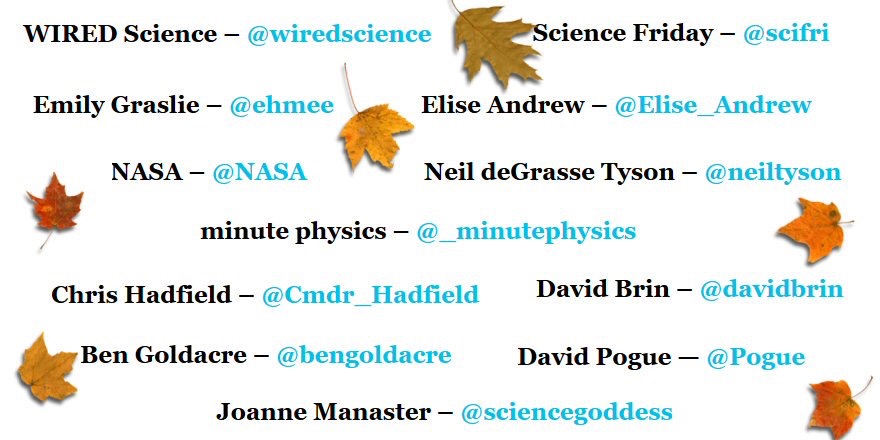
As a public service announcement, below is a listing of some science-related Twitter accounts:

Hat tip: @pickover

Posted in Uncategorized | Leave a comment

Blog on hold

Today is our last day of classes, and we will be flying out to Austin, TX this afternoon to attend a teaching workshop. Our review of Chapter 2 of Nozick’s classic work Anarchy, State, and Utopia will resume on Monday, Dec. 4.

Posted in Uncategorized | 2 Comments

Are Nozick’s protective associations natural monopolies?

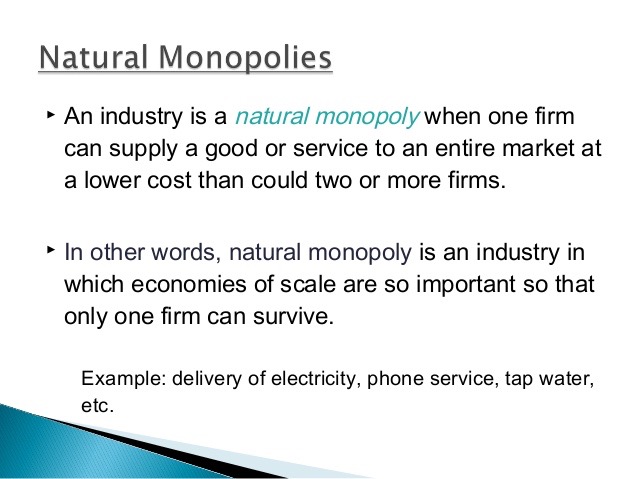
We continue our review of Chapter 2 of Anarchy, State, and Utopia. As we noted in a previous post, Chapter 2 is divided into five subsections. Here, we review the third subsection (pp. 15-17), which is aptly titled “The Dominant Protective Association.” Aptly titled because Nozick conjectures that a single, all-powerful protection society (or a small group of territorial protection rackets) will eventually emerge in a Lockean state of nature: “Out of [Lockean] anarchy, pressed by … market pressures, economies of scale, and rational self-interest, there arises something very much resembling a minimal state or a group of geographically distinct minimal states” (pp. 16-17).

Alas, Nozick’s conclusion is false. Strangely enough (given the plethora of economic jargon in the quote above), Nozick doesn’t refer to the economic concept of “natural monopoly”; yet he is essentially arguing that protection groups are a kind of natural monopoly. If this crazy conjecture were really true, we would expect cities like Chicago or Los Angeles to have one dominant gang or a city like New York to have one single crime family, not five. While it’s true that gangs and crime families divide up territories and strictly enforce their turf, it’s not for reasons of natural monopoly or “economies of scale”. Rather, as soon as we gaze beyond the friendly confines of the Ivory Tower, we see that gangs, crime families, and protection rackets generally are organized (perhaps “arationally”) around family ties or for ethnic, linguistic, or other cultural reasons. But culture, family, and ethnicity are all missing from Nozick’s ahistorical account of the state of nature.

Worse yet (from a truth-value perspective), at the end of this subsection Nozick further speculates that an “outlaw agency” (an aggressive as opposed to defensive association that exists for the sole purpose of engaging in exhortation, pillaging, and plundering) will have a hard time attracting members. Once again, Nozick is off the empirical mark. After all, isn’t the real world (even with the existence of full-fledged states) full of such outlaw agencies?

Posted in Uncategorized | 2 Comments