Adam Smith on the freedom of trade: a coda

President-Elect Trump Announces Creation of External Revenue Service -  Texas Border Business

Should the United States create an “External Revenue Service” as President Trump has recently proposed? As it happens, Adam Smith concludes Book IV, Chapter 2 of The Wealth of Nations (Para. 45) by asking whether “it may be proper to impose taxes upon the importation of foreign goods, in order not to prevent their importation but to raise a revenue for government“? That is, should we recognize a fifth exception to the principle of free trade on top of the first four exceptions Smith has already identified?

Alas, the Scottish philosopher-economist decides to postpone his answer to this particular tax question until later, writing that “I shall consider [this tax question] hereafter when I come to treat of taxes,” which he does in Book V, Chapter 2 of The Wealth of Nations. Smith’s treatment of taxes in Book V, Chapter 2, however, is not for the faint of heart: it consists of almost 200 dense paragraphs spread out across 90 single-spaced pages.

Nevertheless, that said, Smith does provide a tantalizing preview of what his answer might be, for the the very last sentence of Book IV, Chapter 2 of The Wealth of Nations reads as follows: “Taxes imposed with a view to prevent, or even to diminish importation, are evidently as destructive of the revenue of the customs as of the freedom of trade.”

For my part, I will survey Smith’s treatment of taxes starting sometime in April of this year. In the meantime, let us switch gears, leave the world of political economy behind, and explore the work of another great Scottish Enlightenment figure. Yes, I am talking about David Hume and his famous essay “Of Miracles“! I will turn to Hume on Monday, March 3rd.

Posted in Uncategorized | 2 Comments

Adam Smith’s theory of the second best

Review of Kozel (Chs. 6-8): second-best stare decisis | prior probability

One of the greatest ironies of Book IV, Chapter 2 of Adam Smith’s Wealth of Nations is this: on the one hand, it contains some of the strongest arguments ever made in favor of free trade, and yet, at the same time, Smith ends on a pessimistic note. He not only concedes that “freedom of trade” is an unattainable ideal in the real world — or in the immortal words of the Scottish philosopher-economist. “To expect … that the freedom of trade should ever be entirely restored … is as absurd as to expect that an Oceana or Utopia should ever be established in it” (IV.ii.43) — he also concludes that democracy and free trade are mutually incompatible for two reasons: “Not only the prejudices of the public, but what is much more unconquerable, the private interests of many individuals, irresistibly oppose it” (ibid.).

Given this state of affairs, what is to be done? Smith’s answer to this question appears in the penultimate paragraph of Book IV, Chapter 2 of The Wealth of Nations (Para. 44) and can be summed up in two words, DAMAGE CONTROL:

The legislature, were it possible that its deliberations could be always directed, not by the clamorous importunity of partial interests, but by an extensive view of the general good, ought upon this very account, perhaps, to be particularly careful neither to establish any new monopolies of this kind, nor to extend further those which are already established. Every such regulation introduces some degree of real disorder into the constitution of the state, which it will be difficult afterwards to cure without occasioning another disorder.” (Wealth of Nations, IV.ii.44, emphasis added)

In my humble opinion, this timeless passage contains the most succinct and eloquent statement of the theory of the second best ever written — a theory that was not fully developed or formalized by economists until in the 1950s. Simply put, as we saw in my previous post, Smith is a realist: he totally understands why in the real world existing monopolies and trade barriers are not going away anytime soon, for there are just way too many powerful interests who benefit directly from those very restrictions and who stand to lose if those legally-created monopolies and barriers are removed. Smith’s solution to this political reality is thus a pragmatic one: at very least, people in power should not make matters any worse than they already are. Is that too much to ask?

Posted in Uncategorized | 4 Comments

Adam Smith on the politics of free trade

Is “freedom of trade”, whether at home or among nations, an attainable ideal? Adam Smith explains in just a few words why, alas, it is not! For reference, his explanation appears in the antepenultimate paragraph of Book IV, Chapter 2 of The Wealth of Nations (Para. 43), and despite its pessimistic conclusion, this particular passage is so on point, so poetic, and so astute that it not only speaks for itself; it speaks to us today:

“To expect, indeed, that the freedom of trade should ever be entirely restored in Great Britain is as absurd as to expect that an Oceana or Utopia should ever be established in it. Not only the prejudices of the public, but what is much more unconquerable, the private interests of many individuals, irresistibly oppose it…. The Member of Parliament who supports every proposal for [promoting these private interests] is sure to acquire not only the reputation of understanding trade, but great popularity and influence with an order of men whose numbers and wealth render them of great importance. If he opposes them, on the contrary, and still more if he has authority enough to be able to thwart them, neither the most acknowledged probity, nor the highest rank, nor the greatest public services can protect him from the most infamous abuse and detraction, from personal insults, nor sometimes from real danger, arising from the insolent outrage of furious and disappointed monopolists.” (Wealth of Nations, IV.ii.43, emphasis added)

For my part, I won’t mince words or waste any more of our time. Simply put, what Smith is really saying here is that democracy and free trade are mutually incompatible. Given this conundrum, what is to be done? I will explore Smith’s own answer to this question and conclude my series on “The Immortal Adam Smith” in my next post.

✨👁✨ on X: "Mutual Understanding of Incompatible Vibes 🌸🤝🌺 (Illustration  by Alison Zai) https://t.co/AFFH1G8uY2" / X
Posted in Uncategorized | 3 Comments

The aftermath of the Seven Years’ War and Adam Smith’s defense of natural liberty

The Seven Years War - Miniatures – WoFunGames.com

“… though a great number of people should, by thus restoring the freedom of trade, be thrown all at once out of their ordinary employment and common method of subsistence, it would by no means follow that they would thereby be deprived either of employment or subsistence.” (Wealth of Nations, IV.ii.42)

Thus begins Paragraph 42 of Book IV, Chapter 2 of The Wealth of Nations. This is not only the longest paragraph of this celebrated chapter; it also contains two of the most revolutionary claims in the history of political economy — one descriptive, the other normative. In short, the descriptive claim is that labor markets are able to adjust quickly to new conditions; the normative claim is that labor markets should be free.

By way of background, recall Adam Smith’s fourth and final exception to free trade. As I explained in a previous post, he makes a limited exception on humanitarian grounds for pre-existing trade barriers that are already on the books; simply put, if the removal of such trade restrictions would cause mass unemployment at home, then “freedom of trade should be restored only by slow gradations, and with a good deal of reserve and circumspection” (Wealth of Nations, IV.ii.40). But at the same time, the father of economics gives two reasons why this disruption “would in all probability … be much less than is commonly imagined …” (ibid.). I already explained the first reason in my previous post: business firms that already enjoy an absolute advantage in their respective markets — i.e. firms that are able to produce goods more efficiently or cheaply than their competitors overseas — have nothing to fear from free trade.

Smith’s second reason, however, provides an even more powerful argument for free trade because it is more general in scope: He observes in paragraph 42 of Book IV, Chapter 2 of The Wealth of Nations that labor markets are able to adjust rapidly to new conditions. Furthermore, this claim is not just a theoretical one, for Smith provides a compelling historical example in support of his descriptive claim about labor markets. Specifically, he refers to the aftermath of the Seven Years’ War (1756–1763), which is known in North America as the “French and Indian War”, when more than 100,000 British soldiers and sailors “were all at once thrown out of their ordinary employment” in the armed forces:

“By the reduction of the army and navy at the end of the late war [i.e. the Seven Years’ War], more than a hundred thousand soldiers and seamen, a number equal to what is employed in the greatest manufactures, were all at once thrown out of their ordinary employment; but, though they no doubt suffered some inconveniency, they were not thereby deprived of all employment and subsistence. The greater part of the seamen, it is probable, gradually betook themselves to the merchant-service as they could find occasion, and in the meantime both they and the soldiers were absorbed in the great mass of the people, and employed in a great variety of occupations. Not only no great convulsion, but no sensible disorder arose from so great a change in the situation of more than a hundred thousand men, all accustomed to the use of arms, and many of them to rapine and plunder. The number of vagrants was scarce any-where sensibly increased by it, even the wages of labour were not reduced by it in any occupation, so far as I have been able to learn, except in that of seamen in the merchant-service.” (Wealth of Nations, IV.ii.42, emphasis added)

In addition, in the course of marshalling this historical evidence, the Scottish philosopher-economist also identifies an important asymmetry between “the habits of a soldier” and those of ordinary civilians who are already in the workforce: soldiers are glorified government employees who are paid regardless of how well they fight; civilian workers in the private sector, by contrast, are paid only if they show up to work and earn their keep, or in the immortal words of Adam Smith:

“… if we compare together the habits of a soldier and of any sort of manufacturer, we shall find that those of the latter do not tend so much to disqualify him from being employed in a new trade, as those of the former from being employed in any. The manufacturer has always been accustomed to look for his subsistence from his labour only: the soldier to expect it from his pay. Application and industry have been familiar to the one; idleness and dissipation to the other. But it is surely much easier to change the direction of industry from one sort of labour to another than to turn idleness and dissipation to any. To the greater part of manufactures besides, it has already been observed, there are other collateral manufactures of so similar a nature that a workman can easily transfer his industry from one of them to another.” (Ibid.)

For Smith, the ability of labor markets to adapt to new conditions and absorb so many former military men after the war was all the more remarkable given this acute asymmetry. But as Smith himself explains, the reason why labor markets were able to adapt so quickly and absorb so many military men was because no geographical or other artificial restrictions were imposed on where the former soldiers and sailors could work. The lesson here is clear: for labor markets to work their magic, labor markets must be free:

“Soldiers and seamen, indeed, when discharged from the king’s service, are at liberty to exercise any trade, within any town or place of Great Britain or Ireland. Let the same natural liberty of exercising what species of industry they please, be restored to all his Majesty’s subjects, in the same manner as to soldiers and seamen; that is, break down the exclusive privileges of corporations, and repeal the statute of apprenticeship, both which are real encroachments upon natural liberty, and add to these the repeal of the law of settlements, so that a poor workman, when thrown out of employment either in one trade or in one place, may seek for it in another trade or in another place without the fear either of a prosecution or of a removal, and neither the public nor the individuals will suffer much more from the occasional disbanding some particular classes of manufacturers than from that of soldiers. Our manufacturers have no doubt great merit with their country, but they cannot have more than those who defend it with their blood, nor deserve to be treated with more delicacy.” (Ibid., emphasis added)

In the passage above, the Scottish philosopher-economist concludes that ordinary workers should enjoy the same level of “natural liberty” as former military men, and to this end, Smith makes two specific policy proposals: (1) the government should “repeal the statute of apprenticeship” (ibid.), and (2) it should “break down the exclusive privileges of corporations” (ibid.). For Smith, in other words, “freedom of trade” should not be limited to just imports and exports; free trade should extend to labor markets as well!

But how likely is it that either of these reforms would ever be enacted in the real world? Is freedom of trade — or “natural liberty” more generally — whether at home or among nations — an attainable ideal in the rough-and-tumble world of politics? And if not (spoiler alert!), what is to be done? As we shall see in my next post, Adam Smith saves the best for last, for he addresses these big questions head on in the last few paragraphs of Book IV, Chapter 2 of The Wealth of Nations — that is why his work is so timeless; that is why Doctor Smith still speaks to us today!

Posted in Uncategorized | 2 Comments

Adam Smith, absolute advantage, and free trade

We revisited Adam Smith’s fourth and final exception to free trade in my previous post. In summary, the father of economics makes a limited exception for trade barriers that are already on the books. Specifically, if the removal of such pre-existing trade restrictions would cause mass unemployment at home, then “freedom of trade should be restored only by slow gradations, and with a good deal of reserve and circumspection” (Wealth of Nations, IV.ii.40). In other words, Smith makes a temporary humanitarian exception for workers in protected industries.

But at the same time, although Smith concedes that opening protected industries to free trade in one fell swoop might wreak havoc at home, in the next two paragraphs of Book IV, Chapter 2 of The Wealth of Nations (paragraphs 41 & 42) he gives two concrete reasons why this disruption “would in all probability … be much less than is commonly imagined …” (ibid.). One is that labor markets are able to adjust rapidly to new conditions; the other involves the concept of absolute advantage, or in the immortal words of Adam Smith:

“… all those manufactures, of which any part is commonly exported to other European countries without a bounty, could be very little affected by the freest importation of foreign goods. Such manufactures must be sold as cheap abroad as any other foreign goods of the same quality and kind, and consequently must be sold cheaper at home. They would still, therefore, keep possession of the home-market, and though a capricious man of fashion might sometimes prefer foreign wares, merely because they were foreign, to cheaper and better goods of the same kind that were made at home, this folly could, from the nature of things, extend to so few that it could make no sensible impression upon the general employment of the people. But a great part of all the different branches of our woollen manufacture, of our tanned leather, and of our hardware, are annually exported to other European countries without any bounty, and these are the manufactures which employ the greatest number of hands. The silk, perhaps, is the manufacture which would suffer the most by this freedom of trade, and after it the linen, though the latter much less than the former.” (Wealth of Nations, IV.ii.41)

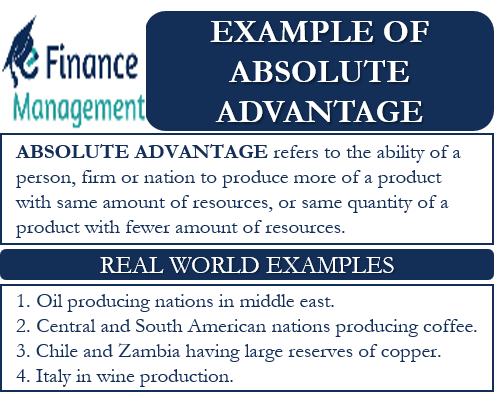
Here, Smith is singling out those unprotected industries that are already exporting products to foreign markets. To appreciate the genius of Smith’s argument, ask yourself, Why are firms in those unprotected industries able to export their goods abroad in the first place? Simply put, because they enjoy an “absolute advantage” in their respective markets, i.e. because they are able to produce goods more efficiently or cheaply than their competitors overseas. But if this is the case, then firms in those unprotected industries have nothing to fear from free trade — their products will continue to enjoy an absolute advantage in the home market!

What about Smith’s second argument for free trade: the ability of labor markets to adjust quickly to new conditions? As it happens, this is one of the most powerful arguments in favor of free trade ever made. We will take a closer look at it in my next post …

Examples of Absolute Advantage
Posted in Uncategorized | 3 Comments

Adam Smith’s fourth and final exception to free trade

Last week, we surveyed Adam Smith’s first few exceptions to free trade, namely (i) his unconditional defense of tariffs designed to promote national security, (ii) his case for what I like to call “targeted tariffs”, i.e. duties on specific imports when equivalent domestically-produced goods are subject to local excise taxes; and (iii) his qualified defense of reciprocal tariffs. Today and tomorrow, we will take a closer look at the last of Smith’s exceptions.

To begin with, the main thing to note here is that Smith’s fourth and final exception to free trade is a limited one: it applies only to those trade barriers — whether they consist of “high duties” or outright “prohibitions” — that are already in place. (See Wealth of Nations, IV.ii.40.)

Specifically, if the sudden removal of such pre-existing trade restrictions would generate mass unemployment at home, Smith makes a humanitarian plea in favor of a gradual — not a sudden or all at once — return to free trade, or in the immortal words of the Scottish philosopher-economist: “Humanity may in this case require that the freedom of trade should be restored only by slow gradations, and with a good deal of reserve and circumspection” (ibid.). Otherwise, “Were those [pre-existing] high duties and prohibitions taken away all at once, cheaper foreign goods of the same kind might be poured so fast into the home-market as to deprive all at once many thousands of our people of their ordinary employment and means of subsistence” (ibid.).

Nevertheless, although Smith concedes that opening protected industries to unbridled free trade in one fell swoop might wreak havoc at home by throwing a lot of people out of work — “The disorder which this would occasion might no doubt be very considerable” (ibid.) — at the same time, he also explains why this disruption “would in all probability … be much less than is commonly imagined …” (ibid.), and in the course of explaining why this fear is exaggerated, Smith ends up making a slam-dunk case for free trade! Stay tuned, for I will turn to this part of Smith’s ingenious argument in my next post.

Neil Faulkner: Fighting unemployment in the 1930s (23 February 2010)
Posted in Uncategorized | 5 Comments

Sunday song: DtMF

I am interrupting my Adam Smith series to confess that this song by Bad Bunny really resonates with me: I lived in Puerto Rico for many years (1993 to 2010), made many friends and lifelong memories along the way, and still miss the Island every day …

Posted in Uncategorized | Leave a comment

Adam Smith’s qualified defense of reciprocal tariffs

What Enlightenment philosophers would have made of Donald Trump – and the  state of American democracy

As I mentioned in a previous post, President Trump recently signed an official memorandum calling for “fair and reciprocaltrade tariffs on all major U.S. trading partners. Putting aside the constitutional question of whether the Congress can delegate this power to the president, what would Adam Smith have to say about the merits of this executive action?

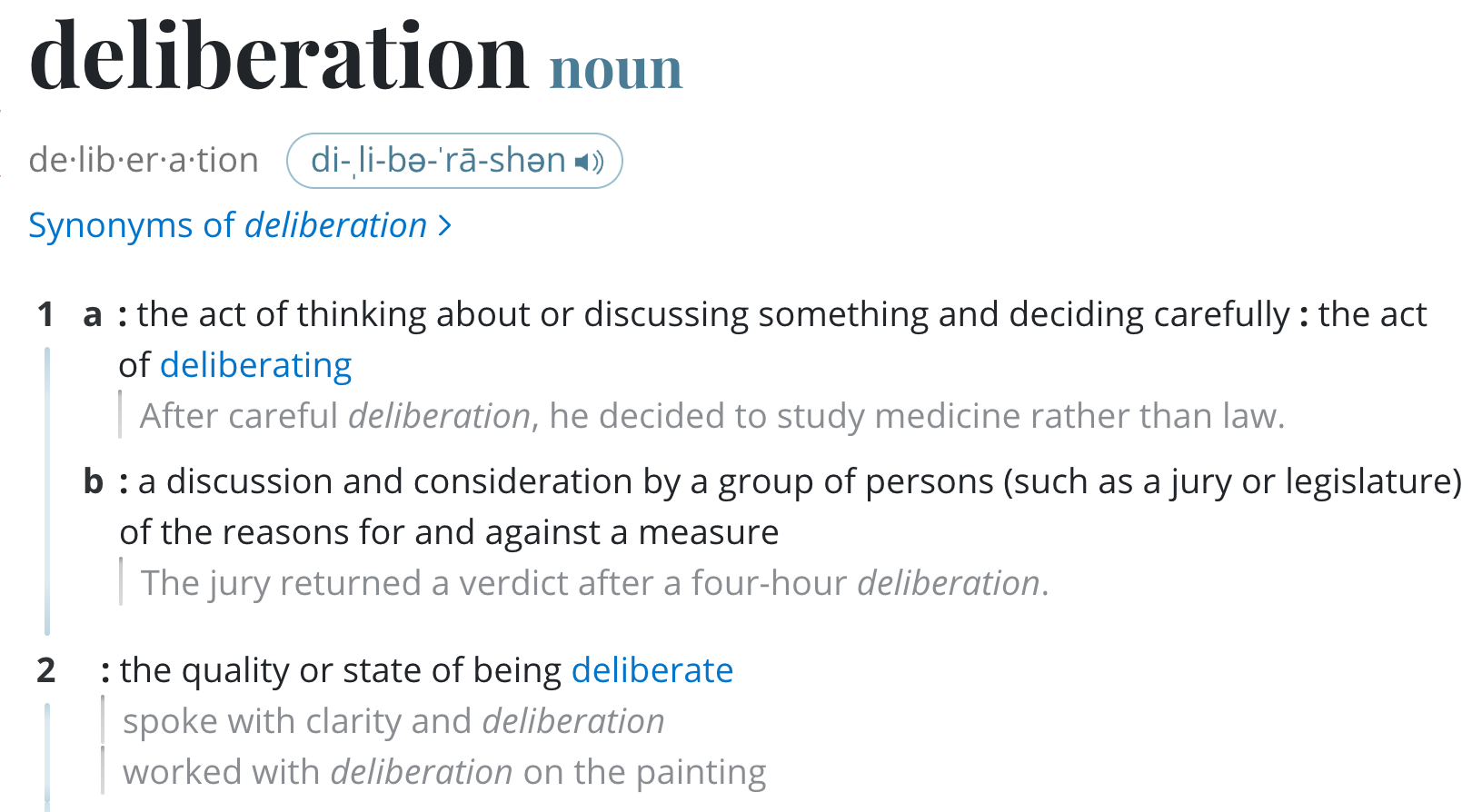
As we shall see in today’s post, it turns out that the Scottish philosopher-economist, were he alive today, would most likely find himself in grudging agreement with President Trump! Why do I say this? Because Adam Smith himself concedes in paragraphs 37 to 39 of Book IV, Chapter 2 of The Wealth of Nations that reciprocal tariffs may “sometimes” be a necessary evil. But at the same time, Smith’s defense of reciprocal tariffs is a qualified one. For Smith, reciprocal tariffs should be imposed only after careful “deliberation” and should be a temporary measure; specifically, they should be imposed only for the purpose of forcing other countries to open up their markets.

First off, the father of economics is a realist. He notes right off the bat that when one country imposes tariffs on another country, revenge and retaliation are in order: “Revenge in this case naturally dictates retaliation, and that we should impose the like duties and prohibitions upon the importation of some or all of their manufactures into ours. Nations, accordingly, seldom fail to retaliate in this manner” (Wealth of Nations, IV.ii.38, emphasis added). Smith then provides a historical example — the 17th-century French-Dutch trade war:

“That minister [Jean-Baptiste Colbert], by the tariff of 1667, imposed very high duties upon a great number of foreign manufactures. Upon his refusing to moderate them in favour of the Dutch, they in 1671 prohibited the importation of the wines, brandies, and manufactures of France. The war of 1672 seems to have been in part occasioned by this commercial dispute. The peace of Nimeguen put an end to it in 1678 by moderating some of those duties in favour of the Dutch, who in consequence took off their prohibition.” (Ibid.)

As an aside, why did Colbert decide to impose tariffs in the first place? Simply put, because he was duped by “the sophistry of merchants and manufacturers, who are always demanding a monopoly against their countrymen” (ibid., emphasis added). Nevertheless, although Smith is willing to concede that reciprocal tariffs — a better term would be “revenge tariffs” — are an inevitable reaction when other countries close their markets to us, for Smith revenge tariffs are, at best, a necessary evil: they should be imposed only after careful “deliberation” and only for the purpose of forcing other countries to open up their markets:

There may be good policy in retaliations of this kind, when there is a probability that they will procure the repeal of the high duties or prohibitions complained of. The recovery of a great foreign market will generally more than compensate the transitory inconveniency of paying dearer during a short time for some sorts of goods.” (Wealth of Nations, IV.ii.39, emphasis added)

But who measures this probability? Who decides “when there is a probability that [the imposition of reciprocal tariffs] will procure the repeal of the high duties or prohibitions complained of”? It is here where Smith makes one of the astute observations in all of political economy:

“To judge whether such retaliations are likely to produce such an effect does not, perhaps, belong so much to the science of a legislator, whose deliberations ought to be governed by general principles which are always the same, as to the skill of that insidious and crafty animal, vulgarly called a statesman or politician, whose councils are directed by the momentary fluctuations of affairs.” (Ibid.)

Now do you see why I started out by saying that Smith might find himself in grudging agreement with Trump? I will resume my series on Adam Smith in the next day or two.

Posted in Uncategorized | 4 Comments

Two more Smithian exceptions to free trade: revenge and inertia

“As there are two cases in which it will generally be advantageous to lay some burden upon foreign for the encouragement of domestic industry, so there are two others in which it may sometimes be a matter of deliberation ….” (Wealth of Nations, IV.ii.37, emphasis added)

Thus far this week (see here, here, and here), we have surveyed Adam Smith’s first two exceptions to free trade. In summary, Exception #1 includes all tariffs, duties, or outright prohibitions in support of national defense, such as the British Navigation Acts, while Exception #2 consists of “targeted tariffs” (my term) on specific imports when the equivalent domestically-produced goods are subject to local excise taxes.

But as the passage quoted above indicates, the father of economics identifies two additional exceptions that may — or may not — be “advantageous” (ibid.), depending on a country’s particular circumstances. For Smith, these last two exceptions to free trade will require further “deliberation” (ibid.) to determine whether they are “advantageous”, i.e. to decide whether their overall benefits outweigh their costs. So, what are these last two Smithian special cases? One (Exception #3) is “revenge tariffs” (my term) or so-called “reciprocal tariffs” (paging President Trump!), or in the immortal words of Adam Smith himself:

“The [first] case in which it may sometimes be a matter of deliberation how far it is proper to continue the free importation of certain foreign goods is, when some foreign nation restrains by high duties or prohibitions the importation of some of our manufactures into their country. Revenge in this case naturally dictates retaliation, and that we should impose the like duties and prohibitions upon the importation of some or all of their manufactures into ours. Nations, accordingly, seldom fail to retaliate in this manner.” (Wealth of Nations, IV.ii.38)

The other exception to free trade (#4) is what I like to call the inertia argument, a pragmatic departure from the general Smithian rule that trade barriers are bad and counterproductive. For Smith, when “a great multitude of hands” (i.e. a large number of workers) are already employed in firms and industries shielded from foreign competition, protectionist tariffs that are already on the books should either remain in place or be reduced only gradually “by slow gradations” to avoid the upheaval of throwing a lot of people out of work all at the same time:

“The [second] case in which it may sometimes be a matter of deliberation, how far, or in what manner, it is proper to restore the free importation of foreign goods, after it has been for some time interrupted, is, when particular manufactures, by means of high duties or prohibitions upon all foreign goods which can come into competition with them, have been so far extended as to employ a great multitude of hands. Humanity may in this case require that the freedom of trade should be restored only by slow gradations, and with a good deal of reserve and circumspection.” (Wealth of Nations, IV.ii.40)

In addition, in the course of explaining these two additional exceptions to free trade, the Scottish philosopher-economist also makes a number of deep and fascinating observations about politics, rent-seeking, and the self-regulating nature of labor markets. Among other things, Smith draws a sharp distinction between “the science of a legislator” on the one hand and “that insidious and crafty animal, vulgarly called a statesman or politician” on the other; he denounces in no uncertain terms “the sophistry of merchants and manufacturers” as well as “the clamorous importunity of partial interests” more generally; and most importantly, he also presents a spirited defense of “natural liberty” and explains why labor markets are able to adjust to new conditions. Each of these observations deserves further study, but in the meantime, I will describe Smith’s qualified defense of reciprocal tariffs in my next post.

New article - Microservices rules #5: Deliberative design
Posted in Uncategorized | 2 Comments

Adam Smith’s digression on the necessaries of life

Adam Smith’s digression on “the necessaries of life” (his term), which occurs in paragraphs 32 to 36 of Book IV, Chapter 2 of The Wealth of Nations, presents one of his most original and compelling arguments in favor of free trade. Here, Smith assumes for the sake of argument that excise taxes on necessary or essential goods have the effect of increasing the overall cost of labor and thus the cost of “all other commodities”:

“Whether taxes upon the necessaries of life, such as those in Great Britain upon soap, salt, leather, candles, &c. necessarily raise the price of labour, and consequently that of all other commodities, I shall consider hereafter, when I come to treat of taxes. Supposing, however, in the meantime, that they have this effect, and they have it undoubtedly …” (Wealth of Nations, IV.ii.33, emphasis added)

Because local taxes on essential goods have the aggregate effect of raising the price of all consumer goods, Smith describes how proponents of tariffs want to extend Smith’s second exception to free trade (see my previous post) to encompass all imports:

“This second limitation of the freedom of trade according to some people should, upon some occasions, be extended much farther than to the precise foreign commodities which could come into competition with those which had been taxed at home. When the necessaries of life have been taxed any country, it becomes proper, they pretend, to tax not only the like necessaries of life imported from other countries, but all sorts of foreign goods which can come into competition with anything that is the produce of domestic industry…. Subsistence, they say, becomes necessarily dearer in consequence of such taxes; and the price of labour must always rise with the price of the labourers’ subsistence. Every commodity, therefore, which is the produce of domestic industry, though not immediately taxed itself, becomes dearer in consequence of such taxes, because the labour which produces it becomes so. Such taxes, therefore, are really equivalent, they say, to a tax upon every particular commodity produced at home. In order to put domestic upon the same footing with foreign industry, therefore, it becomes necessary, they think, to lay some duty upon every foreign commodity equal to this enhancement of the price of the home commodities with which it can come into competition.” (Wealth of Nations, IV.ii.32, emphasis added)

The Scottish philosopher-economist, however, wisely rejects this pro-universal tariff position for two reasons. One is the knowledge problem. Although Smith concedes that local taxes on essential goods will have the overall effect of raising the price of all consumer goods, we don’t know by how much, or in the immortal words of Smith himself:

“… how far the general enhancement of the price of labour might affect that of every different commodity about which labour was employed could never be known with any tolerable exactness. It would be impossible, therefore, to proportion with any tolerable exactness the tax upon every foreign to this enhancement of the price of every home commodity.” (Wealth of Nations, IV.ii.34)

Smith’s other reason for rejecting universal tariffs is even more compelling. For Smith, “taxes upon the necessaries of life have nearly the same effect upon the circumstances of the people as a poor soil and a bad climate” (Wealth of Nations, IV.ii.35, emphasis added). Why do local taxes have the same effect as “the barrenness of the earth” and “the inclemency of the heavens” (IV.ii.36)? Because all three — taxes, barren land, and an adverse climate — make consumer goods more expensive: “Provisions are thereby rendered dearer in the same manner as if it required extraordinary labour and expence to raise them” (IVii.35).

So, what is to be done? For Smith, the answer is absolutely nothing — just leave people alone, and they will figure out what to do for themselves:

“To be left to accommodate, as well as they could, their industry to their situation, and to find out those employments in which, notwithstanding their unfavourable circumstances, they might have some advantage either in the home or in the foreign market, is what in both cases would evidently be most for their advantage.” (Wealth of Nations, IV.ii.35)

But in any case, as Smith correctly notes, the argument for universal tariffs is a logically absurd one:

“To lay a new tax upon them [consumers], because they are already overburdened with taxes [i.e. taxes on essential goods], and because they already pay too dear for the necessaries of life, to make them likewise pay too dear for the greater part of other commodities, is certainly a most absurd way of making amends.” (Ibid.)

Q.E.D.! But wait; there’s more. In the last part of Book IV, Chapter 2 of The Wealth of Nations (paragraphs 37 to 45), the father of economics identifies two additional exceptions to free trade, so I will turn my attention to these last two exceptions in my next post.

Q.E.D. [Quod erat demonstrandum: Which was to be proved.]
Posted in Uncategorized | 3 Comments