Adam Smith’s qualified defense of reciprocal tariffs

What Enlightenment philosophers would have made of Donald Trump – and the  state of American democracy

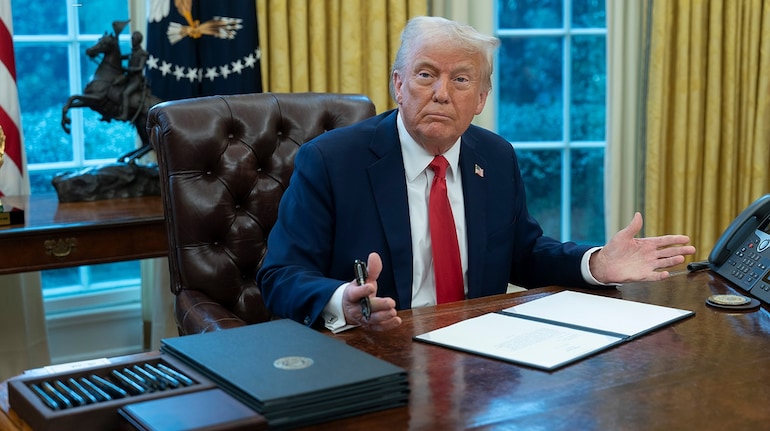
As I mentioned in a previous post, President Trump recently signed an official memorandum calling for “fair and reciprocaltrade tariffs on all major U.S. trading partners. Putting aside the constitutional question of whether the Congress can delegate this power to the president, what would Adam Smith have to say about the merits of this executive action?

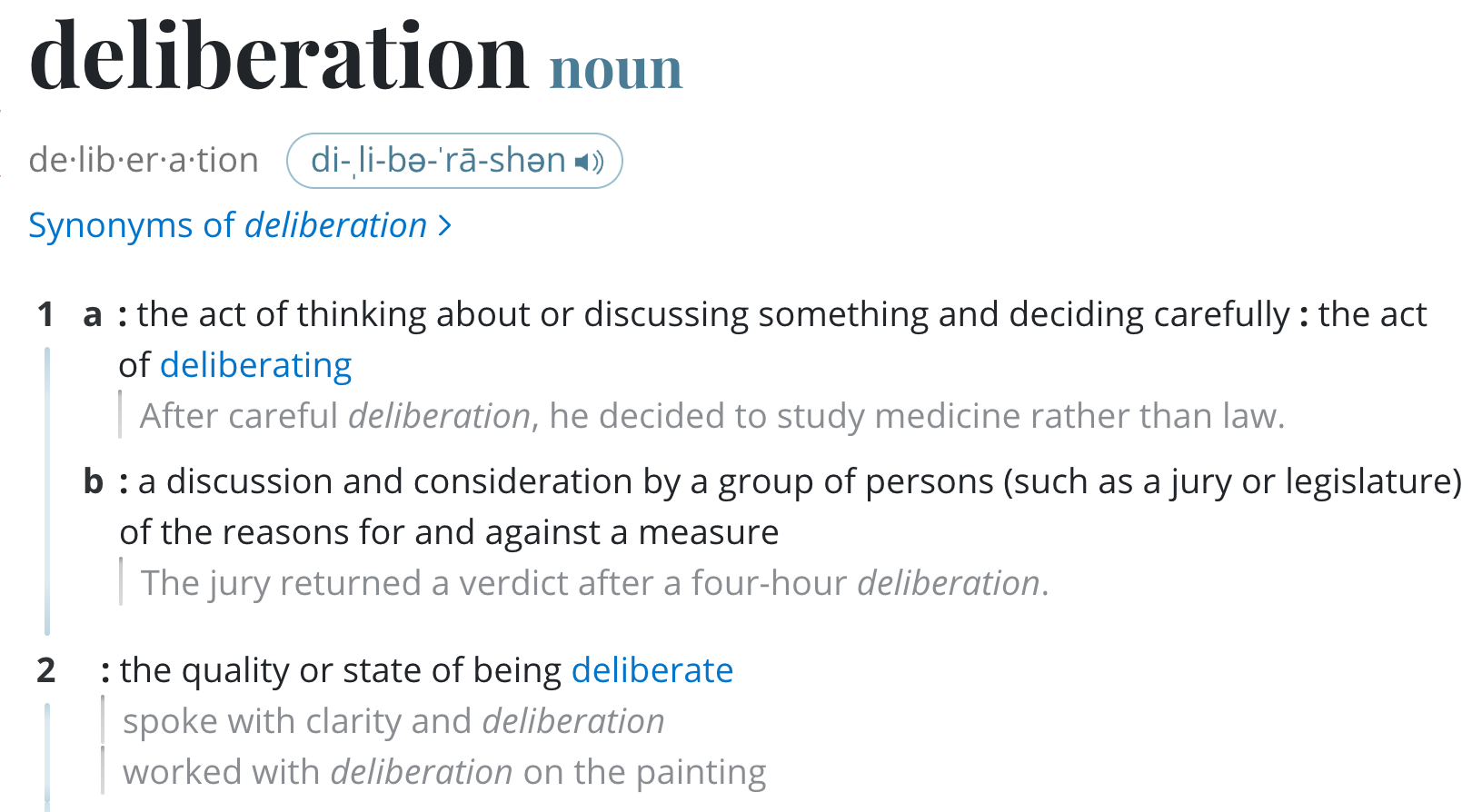
As we shall see in today’s post, it turns out that the Scottish philosopher-economist, were he alive today, would most likely find himself in grudging agreement with President Trump! Why do I say this? Because Adam Smith himself concedes in paragraphs 37 to 39 of Book IV, Chapter 2 of The Wealth of Nations that reciprocal tariffs may “sometimes” be a necessary evil. But at the same time, Smith’s defense of reciprocal tariffs is a qualified one. For Smith, reciprocal tariffs should be imposed only after careful “deliberation” and should be a temporary measure; specifically, they should be imposed only for the purpose of forcing other countries to open up their markets.

First off, the father of economics is a realist. He notes right off the bat that when one country imposes tariffs on another country, revenge and retaliation are in order: “Revenge in this case naturally dictates retaliation, and that we should impose the like duties and prohibitions upon the importation of some or all of their manufactures into ours. Nations, accordingly, seldom fail to retaliate in this manner” (Wealth of Nations, IV.ii.38, emphasis added). Smith then provides a historical example — the 17th-century French-Dutch trade war:

“That minister [Jean-Baptiste Colbert], by the tariff of 1667, imposed very high duties upon a great number of foreign manufactures. Upon his refusing to moderate them in favour of the Dutch, they in 1671 prohibited the importation of the wines, brandies, and manufactures of France. The war of 1672 seems to have been in part occasioned by this commercial dispute. The peace of Nimeguen put an end to it in 1678 by moderating some of those duties in favour of the Dutch, who in consequence took off their prohibition.” (Ibid.)

As an aside, why did Colbert decide to impose tariffs in the first place? Simply put, because he was duped by “the sophistry of merchants and manufacturers, who are always demanding a monopoly against their countrymen” (ibid., emphasis added). Nevertheless, although Smith is willing to concede that reciprocal tariffs — a better term would be “revenge tariffs” — are an inevitable reaction when other countries close their markets to us, for Smith revenge tariffs are, at best, a necessary evil: they should be imposed only after careful “deliberation” and only for the purpose of forcing other countries to open up their markets:

There may be good policy in retaliations of this kind, when there is a probability that they will procure the repeal of the high duties or prohibitions complained of. The recovery of a great foreign market will generally more than compensate the transitory inconveniency of paying dearer during a short time for some sorts of goods.” (Wealth of Nations, IV.ii.39, emphasis added)

But who measures this probability? Who decides “when there is a probability that [the imposition of reciprocal tariffs] will procure the repeal of the high duties or prohibitions complained of”? It is here where Smith makes one of the astute observations in all of political economy:

“To judge whether such retaliations are likely to produce such an effect does not, perhaps, belong so much to the science of a legislator, whose deliberations ought to be governed by general principles which are always the same, as to the skill of that insidious and crafty animal, vulgarly called a statesman or politician, whose councils are directed by the momentary fluctuations of affairs.” (Ibid.)

Now do you see why I started out by saying that Smith might find himself in grudging agreement with Trump? I will resume my series on Adam Smith in the next day or two.
Posted in Uncategorized | 4 Comments

Two more Smithian exceptions to free trade: revenge and inertia

“As there are two cases in which it will generally be advantageous to lay some burden upon foreign for the encouragement of domestic industry, so there are two others in which it may sometimes be a matter of deliberation ….” (Wealth of Nations, IV.ii.37, emphasis added)

Thus far this week (see here, here, and here), we have surveyed Adam Smith’s first two exceptions to free trade. In summary, Exception #1 includes all tariffs, duties, or outright prohibitions in support of national defense, such as the British Navigation Acts, while Exception #2 consists of “targeted tariffs” (my term) on specific imports when the equivalent domestically-produced goods are subject to local excise taxes.

But as the passage quoted above indicates, the father of economics identifies two additional exceptions that may — or may not — be “advantageous” (ibid.), depending on a country’s particular circumstances. For Smith, these last two exceptions to free trade will require further “deliberation” (ibid.) to determine whether they are “advantageous”, i.e. to decide whether their overall benefits outweigh their costs. So, what are these last two Smithian special cases? One (Exception #3) is “revenge tariffs” (my term) or so-called “reciprocal tariffs” (paging President Trump!), or in the immortal words of Adam Smith himself:

“The [first] case in which it may sometimes be a matter of deliberation how far it is proper to continue the free importation of certain foreign goods is, when some foreign nation restrains by high duties or prohibitions the importation of some of our manufactures into their country. Revenge in this case naturally dictates retaliation, and that we should impose the like duties and prohibitions upon the importation of some or all of their manufactures into ours. Nations, accordingly, seldom fail to retaliate in this manner.” (Wealth of Nations, IV.ii.38)

The other exception to free trade (#4) is what I like to call the inertia argument, a pragmatic departure from the general Smithian rule that trade barriers are bad and counterproductive. For Smith, when “a great multitude of hands” (i.e. a large number of workers) are already employed in firms and industries shielded from foreign competition, protectionist tariffs that are already on the books should either remain in place or be reduced only gradually “by slow gradations” to avoid the upheaval of throwing a lot of people out of work all at the same time:

“The [second] case in which it may sometimes be a matter of deliberation, how far, or in what manner, it is proper to restore the free importation of foreign goods, after it has been for some time interrupted, is, when particular manufactures, by means of high duties or prohibitions upon all foreign goods which can come into competition with them, have been so far extended as to employ a great multitude of hands. Humanity may in this case require that the freedom of trade should be restored only by slow gradations, and with a good deal of reserve and circumspection.” (Wealth of Nations, IV.ii.40)

In addition, in the course of explaining these two additional exceptions to free trade, the Scottish philosopher-economist also makes a number of deep and fascinating observations about politics, rent-seeking, and the self-regulating nature of labor markets. Among other things, Smith draws a sharp distinction between “the science of a legislator” on the one hand and “that insidious and crafty animal, vulgarly called a statesman or politician” on the other; he denounces in no uncertain terms “the sophistry of merchants and manufacturers” as well as “the clamorous importunity of partial interests” more generally; and most importantly, he also presents a spirited defense of “natural liberty” and explains why labor markets are able to adjust to new conditions. Each of these observations deserves further study, but in the meantime, I will describe Smith’s qualified defense of reciprocal tariffs in my next post.

New article - Microservices rules #5: Deliberative design
Posted in Uncategorized | 2 Comments

Adam Smith’s digression on the necessaries of life

Adam Smith’s digression on “the necessaries of life” (his term), which occurs in paragraphs 32 to 36 of Book IV, Chapter 2 of The Wealth of Nations, presents one of his most original and compelling arguments in favor of free trade. Here, Smith assumes for the sake of argument that excise taxes on necessary or essential goods have the effect of increasing the overall cost of labor and thus the cost of “all other commodities”:

“Whether taxes upon the necessaries of life, such as those in Great Britain upon soap, salt, leather, candles, &c. necessarily raise the price of labour, and consequently that of all other commodities, I shall consider hereafter, when I come to treat of taxes. Supposing, however, in the meantime, that they have this effect, and they have it undoubtedly …” (Wealth of Nations, IV.ii.33, emphasis added)

Because local taxes on essential goods have the aggregate effect of raising the price of all consumer goods, Smith describes how proponents of tariffs want to extend Smith’s second exception to free trade (see my previous post) to encompass all imports:

“This second limitation of the freedom of trade according to some people should, upon some occasions, be extended much farther than to the precise foreign commodities which could come into competition with those which had been taxed at home. When the necessaries of life have been taxed any country, it becomes proper, they pretend, to tax not only the like necessaries of life imported from other countries, but all sorts of foreign goods which can come into competition with anything that is the produce of domestic industry…. Subsistence, they say, becomes necessarily dearer in consequence of such taxes; and the price of labour must always rise with the price of the labourers’ subsistence. Every commodity, therefore, which is the produce of domestic industry, though not immediately taxed itself, becomes dearer in consequence of such taxes, because the labour which produces it becomes so. Such taxes, therefore, are really equivalent, they say, to a tax upon every particular commodity produced at home. In order to put domestic upon the same footing with foreign industry, therefore, it becomes necessary, they think, to lay some duty upon every foreign commodity equal to this enhancement of the price of the home commodities with which it can come into competition.” (Wealth of Nations, IV.ii.32, emphasis added)

The Scottish philosopher-economist, however, wisely rejects this pro-universal tariff position for two reasons. One is the knowledge problem. Although Smith concedes that local taxes on essential goods will have the overall effect of raising the price of all consumer goods, we don’t know by how much, or in the immortal words of Smith himself:

“… how far the general enhancement of the price of labour might affect that of every different commodity about which labour was employed could never be known with any tolerable exactness. It would be impossible, therefore, to proportion with any tolerable exactness the tax upon every foreign to this enhancement of the price of every home commodity.” (Wealth of Nations, IV.ii.34)

Smith’s other reason for rejecting universal tariffs is even more compelling. For Smith, “taxes upon the necessaries of life have nearly the same effect upon the circumstances of the people as a poor soil and a bad climate” (Wealth of Nations, IV.ii.35, emphasis added). Why do local taxes have the same effect as “the barrenness of the earth” and “the inclemency of the heavens” (IV.ii.36)? Because all three — taxes, barren land, and an adverse climate — make consumer goods more expensive: “Provisions are thereby rendered dearer in the same manner as if it required extraordinary labour and expence to raise them” (IVii.35).

So, what is to be done? For Smith, the answer is absolutely nothing — just leave people alone, and they will figure out what to do for themselves:

“To be left to accommodate, as well as they could, their industry to their situation, and to find out those employments in which, notwithstanding their unfavourable circumstances, they might have some advantage either in the home or in the foreign market, is what in both cases would evidently be most for their advantage.” (Wealth of Nations, IV.ii.35)

But in any case, as Smith correctly notes, the argument for universal tariffs is a logically absurd one:

“To lay a new tax upon them [consumers], because they are already overburdened with taxes [i.e. taxes on essential goods], and because they already pay too dear for the necessaries of life, to make them likewise pay too dear for the greater part of other commodities, is certainly a most absurd way of making amends.” (Ibid.)

Q.E.D.! But wait; there’s more. In the last part of Book IV, Chapter 2 of The Wealth of Nations (paragraphs 37 to 45), the father of economics identifies two additional exceptions to free trade, so I will turn my attention to these last two exceptions in my next post.

Q.E.D. [Quod erat demonstrandum: Which was to be proved.]
Posted in Uncategorized | 3 Comments

Adam Smith’s defense of targeted tariffs

ADAM SMITH’S SECOND EXCEPTION TO FREE TRADE

“The second case, in which it will generally be advantageous to lay some burden upon foreign for the encouragement of domestic industry is, when some tax is imposed at home upon the produce of the latter. In this case, it seems reasonable that an equal tax should be imposed upon the like produce of the former.” (Wealth of Nations, IV.ii.31)

What Adam Smith is saying here is that “targeted tariffs” (my term) on specific imports are justified when equivalent domestically-produced goods (such as soap, salt, leather, and candles) are subject to local excise taxes, and the rationale for Smith’s second exception to free trade is to “leave the competition between foreign and domestic industry, after the tax, as nearly as possible upon the same footing as before it” (Wealth of Nations, IV.ii.31). Otherwise, certain imports would enjoy an artificial price advantage in the home market and “our merchants and manufacturers … will be undersold at home” (ibid.).

But at the same time, Smith limits the scope of this second exception in two ways. Specifically, (1) the tariffs allowed under this second exception should not be extended to all imports, only to the imports of those foreign goods whose local equivalents are taxed, and (2) the tariffs on those specific imports should not exceed whatever the local tax on domestic goods is. In the next four paragraphs of Book IV, Chapter 2 of The Wealth of Nations (paragraphs 32 to 36), Smith explains why his second exception to free trade should not be extended any further. These four paragraphs also contain a fascinating digression on the effect of local taxes on “the necessaries of life”, i.e. essential consumer goods like soap, salt, leather, and candles (see WN.IV.ii.33). Stay tuned: I will explore this important digression in my next post …

Excise Tax: What It Is and How It Works, With Examples
Posted in Uncategorized | 5 Comments

Adam Smith defends the Jones Act?

ADAM SMITH’S FIRST EXCEPTION TO FREE TRADE

“There seem, however, to be two cases in which it will generally be advantageous to lay some burden upon foreign for the encouragement of domestic industry.” (Wealth of Nations, IV.ii.23)

As I mentioned in a previous post, Adam Smith identifies several “exceptions” to free trade in the second half of Book IV, Chapter 2 of The Wealth of Nations. Alas, as we shall soon see, some of these “exceptions” are so sweeping in scope that they could end up sabotaging the case for free trade.

Take, for example, Smith’s first exception: national defense. To illustrate this exception, the Scottish philosopher-economist trots out the “act of navigation” (i.e. the Acts of Trade and Navigation or “Navigation Acts” for short), a series of shipping laws dating from 1660 that strictly regulated trade between Britain and her colonies and with other countries:

“The defence of Great Britain … depends very much upon the number of its sailors and shipping. The act of navigation, therefore, very properly endeavours to give the sailors and shipping of Great Britain the monopoly of the trade of their own country in some cases by absolute prohibitions and in others by heavy burdens upon the shipping of foreign countries.” (Wealth of Nations, IV.ii.24)

Worse yet, Adam Smith not only defends this shipping monopoly on national security grounds; he actually extols the Navigation Acts as, and I quote, “the wisest of all the commercial regulations of England” (WN, IV.ii.30).

What? Is Smith being serious here? The Navigation Acts were the linchpin of Britain’s mercantilist system; among other things, these onerous laws prohibited the use of foreign ships and required the employment of English and colonial mariners for 75% of the crews. (By the way, where have we heard this before? If the old Navigation Acts ring a bell, that’s probably because these onerous laws were the British equivalent of the Jones Act, a modern-day U.S. shipping law that many of my North American readers will be familiar with.)

To his credit, Smith concedes that the Navigation Acts make Britain poorer: “By diminishing the number of sellers, therefore, we necessarily diminish that of buyers, and are thus likely not only to buy foreign goods dearer, but to sell our own cheaper, than if there was a more perfect freedom of trade” (WN, IV.ii.30). But he nevertheless defends the Navigation Acts because “defence … is of much more importance than opulence” (ibid.). For Smith, national security trumps prosperity.

But the fatal flaw with Smith’s premise is that almost anything we do has some connection, however remote, to national security! In any case, it gets worse, for Smith’s next major exception to free trade is even more broad and sweeping than the first one, so stay tuned, I will consider Smith’s second exception in my next post …

The Navigation Acts, 1651-1849
Posted in Uncategorized | 6 Comments

Monday music

Posted in Uncategorized | Leave a comment

The ghost of Adam Smith

Donald Trump says he will announce reciprocal tariffs next week

President Trump signed an official memorandum on Thursday calling for “fair and reciprocaltrade tariffs on all major U.S. trading partners (you can read the presidential memo for yourself here), but as per my previous post, does Trump’s executive action fall into any of Adam Smith’s exceptions to free trade? Before we explore Smith’s exceptions and their scope (i.e. before we consider whether these exceptions swallow up the general rule in favor of free trade), allow me to post a compilation of my previous posts explaining step-by-step Smith’s critique of trade barriers:

  1. The immortal Adam Smith
  2. Adam Smith’s First Law
  3. Adam Smith’s Second Law
  4. The logic of the invisible hand
  5. Adam Smith’s dire warning
  6. Smith’s First Law Redux
  7. Adam Smith and the conspiracy of the merchants
Posted in Uncategorized | 2 Comments

Das Wahre Adam Smith-Problem

(THE REAL ADAM SMITH PROBLEM)

“There seem, however, to be two cases in which it will generally be advantageous to lay some burden upon [imports] for the encouragement of domestic industry.” (Wealth of Nations, IV.ii.23)

Thus far (see here, here, here, here, here, here, and here), we have surveyed the first half (paragraphs 1 to 22) of Book IV, Chapter 2 of The Wealth of Nations, where Adam Smith builds the case for free trade. The second half of this chapter (paragraphs 23 to 45), however, identifies several possible exceptions, such as national defense, and we shall soon see when we resume our series next week, these Smithian “exceptions” are so sweeping in scope that they could end up sabotaging or crippling the original case for free trade, and to my mind, it is this internal contradiction in Smith’s analysis of trade that marks the real Das Adam Smith Problem.

What are the Exceptions to the Fourth Amendment Warrant Requirement? -  Charleston Criminal Defense
Posted in Uncategorized | 2 Comments

Adam Smith in Love?

Is any resentment so keen as what follows the quarrels of lovers, or any love so passionate as what attends their reconcilement?(Adam Smith, The History of Astronomy, Section 1)

Satire: Help: I just drank a love potion and I saw the ghost of Adam Smith  – The Badger Herald

Was Adam Smith speaking from personal experience when he posed the above questions? Either way, I will resume my series on the “Immortal Adam Smith” soon; in the meantime, what better way of celebrating Saint Valentine’s Day than by revisiting my 2021 Econ Journal Watch paper “Adam Smith in Love“!

Posted in Uncategorized | Leave a comment

Adam Smith and the conspiracy of the merchants

THE IMMORTAL ADAM SMITH, PART 7

To prohibit by a perpetual law the importation of foreign corn and cattle is in reality to enact that the population and industry of the country shall at no time exceed what the rude produce of its own soil can maintain. (Wealth of Nations, IV.ii.22)

Thus far, we have surveyed the first few paragraphs (1 to 16) of Book IV, Chapter 2 of The Wealth of Nations, including what I have christened Adam Smith’s “First” and Second” Laws, the invisible hand metaphor, and the idea of absolute advantage. In the next few paragraphs (17 to 22), Smith turns his attention to food markets and concludes that graziers, butchers, and farmers “can have nothing to fear from the freest importation” of cattle, salt, and corn (WN, IV.ii.20). Why not? Because the costs of transporting such goods from one country to another are high relative to whatever absolute advantage one country may have over another in cattle ranching or salt and corn production:

“If the importation of foreign cattle, for example, were made ever so free, so few could be imported that the grazing trade of Great Britain could be little affected by it. Live cattle are, perhaps, the only commodity of which the transportation is more expensive by sea than by land. By land they carry themselves to market. By sea, not only the cattle, but their food and their water too, must be carried at no small expence and inconveniency.” (WN, IV.ii.17)

“Salt provisions are not only a very bulky commodity, but when compared with fresh meat, they are a commodity both of worse quality, and as they cost more labour and expence, of higher price.” (WN, IV.ii.19)

“Even the free importation of foreign corn could very little affect the interest of the farmers of Great Britain. Corn is a much more bulky commodity than butcher’s meat. A pound of wheat at a penny is as dear as a pound of butcher’s meat at fourpence. The small quantity of foreign corn imported even in times of the greatest scarcity may satisfy our farmers that they can have nothing to fear from the freest importation.” (WN, IV.ii.20)

Next, Smith compares and contrasts two major groups of market participants and draws some generalizations about these two groups. According to the Scottish philosopher-economist, “farmers and country gentlemen … are the least subject to the wretched spirit of monopoly” (WN, IV.ii.21), but “merchants and manufacturers”, by contrast, “seem to have been the original inventors of those restraints upon the importation of foreign goods which secure to them the monopoly of the home-market” (ibid.), or in the immortal words of Adam Smith:

“Country gentlemen and farmers are, to their great honour, of all people, the least subject to the wretched spirit of monopoly…. Farmers and country gentlemen, on the contrary, are generally disposed rather to promote than to obstruct the cultivation and improvement of their neighbours’ farms and estates. They have no secrets such as those of the greater part of manufacturers, but are generally rather fond of communicating to their neighbours and of extending as far as possible any new practice which they have found to be advantageous.” (WN, IV.ii.21)

But even more importantly, Smith provides a proto-Marxist explanation for this stark difference between monopoly-loving “merchants and manufacturers” on the one hand and public-spirited “farmers and country gentlemen” on the other. For Smith, where you stand on the issue of the free trade depends on where you sit, so to speak, i.e. town or country:

“Country gentlemen and farmers, dispersed in different parts of the country, cannot so easily combine as merchants and manufacturers, who, being collected into towns, and accustomed to that exclusive corporation spirit which prevails in them, naturally endeavour to obtain against all their countrymen the same exclusive privilege which they generally possess against the inhabitants of their respective towns.” (ibid.)

I will resume my multi-part series on the “Immortal Adam Smith” in the next day or two. In the meantime, I can’t help but notice the irony of Smith’s analysis here: today, it is the farm lobby that has most-successfully lobbied the Congress for perverse subsidies and obscene quotas and tariffs on imports!

The New York Times Archives على X: "Adam Smith, economist behind the  'invisible hand', died this day in 1790. In 1973, NYT looked back at his  beliefs. https://t.co/EnCTfhQIJn https://t.co/Cp72zu7bZu" / X

Posted in Uncategorized | 3 Comments