South Pole Time Zones

Posted in Uncategorized | Leave a comment

Starbuck’s Transcription Error

I think my barista is trolling me.Hat tip: SuperCub (via reddit).
Posted in Uncategorized | Leave a comment

Lubet vs. Goffman

We are not big fans of Alice Goffman’s best-selling book On the run, since we think most of the stories in her book are pure fiction at best. (We have even gone as far as to suggest that “Goffman is the new Margaret Mead,” for accepting uncritically everything she was told by her research subjects.) But did Alice Goffman commit a major crime while she was researching and writing the dissertation on which her book is based? Steven Lubet, a grumpy old law professor at Northwestern, thinks so. He has accused Professor Goffman of the inchoate crime of conspiracy to commit murder under Pennsylvania law. By her own admission, Goffman wanted revenge for the killing of one of her research subjects and close friends, a young man she identifies as “Chuck.” According to Professor Goffman, Chuck was shot in the head by a rival gang member. A few days after his funeral, Goffman states that “the hunt was on to find the man who had killed Chuck.” She describes the plot for revenge thus:  Continue reading

Posted in Uncategorized | Leave a comment

Art Project (Swedish Broccoli Tree Edition)

2015021520150204201412282014112520140507Broccolitree_150503-006_sharp copy

Via kottke, check out the complete series of these sublime pictures of the same tree shot by Patrik Svedberg. Like a modern day Monet, Mr Svedberg has been photographing a single Swedish tree for the last two years and posting the pictures to Instagram.
Posted in Uncategorized | Leave a comment

Are racehorses getting faster? (And are law review articles getting longer and more tedious?)

British researchers Patrick Sharman and Alatair J. Wilson argue that racehorses are indeed getting faster. (Their research on racehorse speeds is available in this scientific paper, the source of the table appearing below. By the way, our mentor Jorge Cordova would have loved this paper!) On a related note, notice the pdf version of Sharman & Wilson’s racehorse paper is only four and one-half pages long, including footnotes. Law review articles, by contrast, tend to be getting longer and more tedious to read–with some notable exceptions. So, why can’t law review articles–whether they be doctrinal, empirical, or theoretical–be more concise and to the point? (Hat tip: Tyler Cowen.)

Posted in Uncategorized | 3 Comments

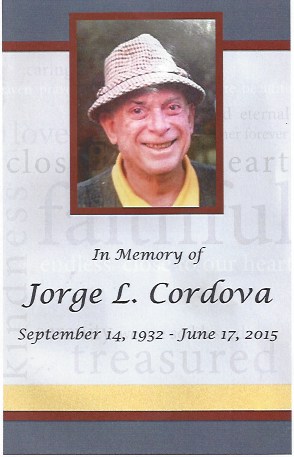
In honor of my mentor and friend Jorge Luis Cordova

 Cordova2

My colleague and friend Jorge Cordova recently went to a better place. Jorge and I both taught law at the Pontifical Catholic University School of Law in Ponce, P.R. for many years. (Before UCF, I started my teaching career in Ponce, while Jorge finished his illustrious legal career there.) Most of the faculty in Ponce–with some notable exceptions–were legal formalists in spirit. But Jorge and I were both interested in the strategic dimensions of law–how laws and legal loopholes are manipulated by legal actors to get the results they want. (Perhaps this interest in legal realism was a function of our legal education: Jorge studied law at Harvard; I studied at Yale.) Moreover, Jorge generously and graciously read and commented on many of my works in progress, shared his law school exams with me, and confided his concerns about the law school administration with me on many occasions. During my tenure in Ponce, of which I have so many fond memories, I ended up spending countless hours in Jorge’s company in his law school office, which was right next door to mine. (We also shared many lunches together at our favorite local restaurant “La Casa del Chef.”) His office was a treasure trove of mementos designed to make you feel at home. I can still remember his big, blue reclining chair, the over-sized picture of his sailboat, and various odds and ends from his Washington, D.C. days. His door was always open–both literally as well as figuratively–unless he had some juicy gossip to share! Suffice it to say that Jorge was so much fun to talk to–always in good spirits and always ready with a good story to tell. In fact, I admired Jorge as an academic role model, and I made good use of his sound counsel on many occasions. I will always remember him …

Posted in Uncategorized | 2 Comments

Ethical Experiments?

Michelle N. Meyer and Christopher Chabris, professors at Union Graduate College in Schenectady, New York, recently published a thought-provoking essay in the Sunday Times on the ethics of nonconsensual “A/B testing” like the Facebook mood contagion experiment, the inconclusive results of which were published in a scientific journal last year. In brief, Professors Meyer and Chabris begin their short essay by posing a rhetorical question: “Can it ever be ethical for companies or governments to experiment on their employees, customers or citizens without their consent?” Most people (ourselves included) would answer “no”–without consent, such experiments cannot be ethical–but the authors challenge this reasoning, arguing persuasively that it is based is on a “moral illusion.” Professors Meyer and Chabris argue:  Continue reading

Posted in Uncategorized | Leave a comment

Consensual Trespass

Hat tip: Rugger420 (via reddit).
Posted in Uncategorized | Leave a comment

“Negotiating the Legal Risks of Daily Fantasy Sports”

That is the latest paper of our friend and colleague, the excellent Marc Edelman (pictured below), who has written up a detailed primer on federal and State anti-gambling laws and their potential application to the world of “daily fantasy sports.” Fantasy sports have become a huge and booming business, but ironically, their legality is not at all clear. You can check out Professor Edelman’s paper here as well as his comprehensive “Treatise on Fantasy Sports and the Law” for free here. (Via SSRN.)

Posted in Uncategorized | Leave a comment

“The Influence of Immanuel Kant on Evidentiary Approaches in Eighteenth Century Bulgaria: A Reply to Professor Kerr”

That is the title of our long-awaited and latest legal research paper, which is now available on SSRN. Why did we write a paper on such a seemingly narrow subject? Well, a few years ago, Chief Justice John Roberts made the following remarks about the state of contemporary legal scholarship:

Pick up a copy of any law review that you see, and the first article is likely to be, you know, the influence of Immanuel Kant on evidentiary approaches in 18th Century Bulgaria, or something. If the academy wants to deal with the legal issues at a particularly abstract, philosophical level, that’s great and that’s their business, but they shouldn’t expect that it would be of any particular help or even interest to the members of the practice of the bar or judges …

Then, earlier this year, Professor Orin Kerr actually wrote up a well-researched paper titled “Immanuel Kant on Evidentiary Approaches in Eighteenth Century Bulgaria.” Kerr, however,  anticlimactically concludes that “it appears very likely [say what?] that Kant had no influence on evidentiary approaches in 18th Century Bulgaria,” much  to our dismay, we might add. We thus decided to write up a short (one page!) reply to Kerr’s masterful analysis. Here is our abstract:

What influence did Kant exert on evidentiary approaches in 18th Century Bulgaria? The seminal work to address this mystery is Kerr, 2015. Although we do not question Professor Kerr’s meticulous research nor impugn his well-reasoned conclusion, we would propose an alternative approach to this important scholarly problem. Briefly, instead of searching through endless old tomes in dark and dusty libraries for a direct correspondence or causal relation between Kant’s work and evidentiary approaches in 18th Century Bulgaria, we would propose the following clean and simple thought experiment: What if Kant were an 18th Century Bulgarian law professor?

(Please note: prior probability will not be blogging on Sundays.)
Posted in Uncategorized | 1 Comment