Place your bets …

Via BloombergBusiness, here is a pdf copy of the 166-page federal criminal indictment against fourteen high-level officials of FIFA, the world soccer federation. If you were to place a bet on this case (with your own money, of course), how many of these FIFA defendants will plea bargain? How many will go to trial? (Bonus Question: does a federal (U.S.) court located in New York City have jurisdiction over the FIFA defendants? Check out one legal scholar’s thoughts (the excellent David Post) on this jurisdictional question here.)

Posted in Uncategorized | Leave a comment

“Roll the dice and take your chances”

In the dramatic courtroom thriller “A Few Good Men,” two Marines are charged with killing a fellow soldier, Private William Santiago. An inexperienced U.S. Navy lawyer, Lieutenant Daniel Kaffee (played by Tom Cruise), is assigned their defense. At first, Lt. Kaffee wants to arrange a plea bargain for his clients, but he ends up going to trial when he suspects that it was their commanding officer, Colonel Nathan Jessep (played by Jack Nicholson), who authorized the killing of Private Santiago. As he prepares for trial, Lt. Kaffee interviews Col. Jessep and asks him if he ordered a “Code Red” in violation of military rules. Col. Jessep resents this line of questioning and replies: “You want to investigate me, roll the dice and take your chances.” This exchange between Lt. Kaffee and Col. Jessep illustrates an important aspect of litigation: going to trial can often be uncertain and risky. We will explore why litigation is so risky in a future post.

Posted in Uncategorized | 1 Comment

What is the largest known star in the Universe?

Posted in Uncategorized | Leave a comment

Abduction 101

The theory of “abduction” or “abductive reasoning” is just a fancy word for “guessing.” From Wikipedia:

Abductive reasoning allows inferring a as an explanation of b. Because of this inference, abduction allows the precondition a to be abduced from the consequence b. * * * As such, abduction is formally equivalent to the logical fallacy of affirming the consequent (or Post hoc ergo propter hoc) because of multiple possible explanations for b. For example, in a billiard game, after glancing and seeing the eight ball moving towards us, we may abduce that the cue ball struck the eight ball. The strike of the cue ball would account for the movement of the eight ball. It serves as a hypothesis that explains our observation. Given the many possible explanations for the movement of the eight ball, our abduction does not leave us certain that the cue ball in fact struck the eight ball, but our abduction, still useful, can serve to orient us in our surroundings. * * * Properly used, abductive reasoning can be a useful source of priors in Bayesian statistics.

Posted in Uncategorized | 1 Comment

“Be careful who you trust”

That’s one of the many basic lessons Ms Ellen Chisa learned while in business school (read her entire essay here):

“There were a couple distinctly different attitudes in the [classroom]. I genuinely try to give advice that helps the person who asks me, removing my personal interest. I try to assume the best of others, and thus think they do similarly for me. While my belief was prevalent in the room, there was also a counter view of ‘the world works best if you serve your own interest and everyone should believe that others are self-serving.’ ”

How about a third view: trust no one–until the would-be “trustee” has done something to earn your trust? (File this entry under “costly signalling vs. cheap talk.” Via Marginal Revolution.)

Posted in Uncategorized | 2 Comments

Requiescite in pace et in amore

According to this report in nj.com, John and Alicia Nash died in a car accident on the New Jersey Turnpike yesterday afternoon (23 May 2015). A tragedy and a reminder that car accidents kill more people than terrorists do … 

Posted in Uncategorized | Leave a comment

Stone Tree Wall

Via imgur.
Posted in Uncategorized | Leave a comment

Copyedit this …

Hat tip: Robert at 101 books.

Posted in Uncategorized | Leave a comment

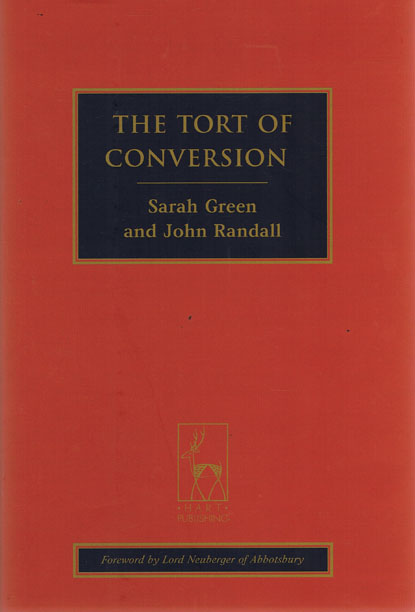
Common law vs. Statutory law (data theft edition)

Posted in Uncategorized | Leave a comment

Happy Cuban Independence Day

Cuba became a republic on 20 May 1902. Supporters of the Cuban Revolution criticize the Cuban Republic of 1902-1958 as a U.S. colony, but weren’t the people of Cuba more free and far better off back then than they are now?

Posted in Uncategorized | Leave a comment