Fair or foul?

Do blacks commit more crimes (statistically-speaking) than people of other races, or is the US criminal justice system a racist system? How else to explain these disgraceful numbers? Hat tip to Max Ehrenfreund of the Wash. Post for bringing this powerful chart to our attention.

Posted in Uncategorized | Tagged , , | Leave a comment

Pop quiz: where’s the hypocrite?

Is he hiding somewhere in Moscow, or is he in plain sight in Washington, D.C.? US Secretary of State John Kerry recently called out our man in Moscow, boy-wonder Edward Snowden, for being a “traitor” (for divulging an unconstitutional mass surveillance program) AND, get this, a “coward” (for not returning to the US to face the trumped-up charges against him). Forgive us for asking, but isn’t this the same John Kerry who burned other soldiers’ Purple Hearts (but not his own P.H.) to protest the war in Vietnam?

Posted in Uncategorized | Tagged , | Leave a comment

TV news = evil ratings vultures?

This photo, in a nutshell, tells you what the news media–except for The Daily Nexus (UCSB’s student paper)–are not reporting. Photo credit: Kenneth Song, John Clow, or Eric Swenson (we aren’t sure which)/The Daily Nexus.

Posted in Uncategorized | Tagged , , , | Leave a comment

The economics of Disneyland ticket prices

Prices and attendance at Disneyland

Given the increase in demand to visit Disneyland, are Disneyland ticket prices too high …  or too low? By the way, what do these data above tell us about the price elasticity of Disneyland tickets?

Posted in Uncategorized | Tagged , , | Leave a comment

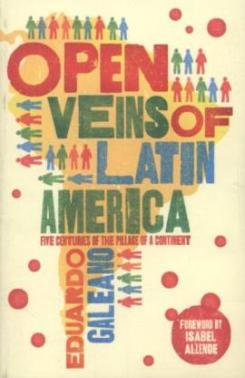
Eduardo Galeano updates his priors!

It is a rare event indeed when an academic or other public intellectual is intellectually honest and updates his or her priors. Consider the case of Eduardo Galeano, a leading Latin American intellectual. Larry Rother of the NY Times writes:

For more than 40 years, Eduardo Galeano’s The Open Veins of Latin America has been the canonical anti-colonialist, anti-capitalist, and anti-American text in that region. Hugo Chávez, Venezuela’s populist president, even put a copy of the book … in President Obama’s hands the first time they met. But now Mr. Galeano, a 73-year-old Uruguayan writer, has disavowed the book, saying that he was not qualified to tackle the subject and that it was badly written … “Open Veins tried to be a book of political economy, but I didn’t yet have the necessary training or preparation,” Mr. Galeano said last month while answering questions at a book fair in Brazil, where he was being honored on the 43rd anniversary of the book’s publication. He added: “I wouldn’t be capable of reading this book again; I’d keel over. For me, this prose of the traditional left is extremely leaden, and my physique can’t tolerate it.”

You can read more about the great Eduardo Galeano updating his priors here. How many other intellectuals have ever changed their minds on something so dear to them?

Pick a value-laden theory, any theory.

Posted in Uncategorized | Tagged , , , | 1 Comment

The Method of Reparations

Note: our comment to Ashok Rao’s recent post was revised and expanded on 26 May.

We are reblogging Ashok Rao’s execellent post “The Method of Reparations” (see below) on the issue of racial reparations. Ashok’s critique of “the vigilante law enforcement system that is local and state police” is especially on point. Also disgraceful is how few of my fellow law professors (myself included) have said or done anything to shed some light (for our students as well as for the public at large) on the large-scale and ongoing injustice that is the “war on drugs,” resulting in the mass incarceration of racial minorities. (By the way, perhaps we should also consider a reparations program for persons convicted of drug crimes, which, after all, are victimless, consensual “crimes.”) Instead, many of my fellow law professors perpetuate the drug-war status quo through our deafening silence or utter indifference … Why do law professors refuse to update our priors on this issue? Are we (collectively) part of the unjust and racially-discriminatory drug-war problem, and not the solution?

Posted in Uncategorized | 1 Comment

Spatial distribution of 48 State capitals

Hey, check out this imaginative Voronoi diagram created by Seth Kadish, and check out his beautiful blog Vizual Statistix too. But please enjoy responsibly.

Posted in Uncategorized | Tagged , , | 2 Comments

Markets in law evasion? A fun example of “collective action” in Stockholm

A group in Sweden known as Planka.nu (rough translation: “free-ride.now”) believes that public transit should be financed through general taxes, not individual fares. Their rationale is that a greater share of the costs of public transit should be borne by affluent citizens and drivers. Moreover, according to this report in the (sexist?) NY Times, Planka has devised a creative strategy to beat the public transport system, so to speak. In sum, Planka requires its members to pool their resources (through a modest $15 monthly fee) and to evade paying the fare every time they use public transport (or “free riding” in the parlance of economics). If members keep their side of this bargain, Planka will cover any of the roughly $180 fines that might result (if the fare evader is ever caught). Spoiler alert: the reason why this model works is that free riders in Stockholm are rarely caught:

Every transit network has its fare beaters, the riders who view payment as either optional or prohibitively expensive. Many cities, most notably New York, view turnstile-jumpers as a top policing priority, reasoning that scofflaws might graduate to more serious crimes if left alone. But in Stockholm, the offenders seem to have defeated the system. * * * The group’s efficiency in evasion has created an enviable business model. Last year, the group took in more than twice as much money — more than $7,500 per month — as it paid out in fines, organizers said. * * * Since Planka’s founding 13 years ago, its legend and influence have grown. Though it has about 500 official members, the organization has helped lead many thousands more to simply stop paying fares on their own, according to transit officials. Mr. Pettersson said that about 15 million trips last year were not paid for — 3 percent of all rides. The Planka Facebook page has more than 30,000 “likes.”

Would this model work in New York City or Paris?

Free riding is fun, but why isn’t it legal?

Posted in Uncategorized | Tagged , , , , | Leave a comment

Three questions for Nate Silver

1. “If people are so inclined to see the world through their tunnel vision, why suppose they are able/willing to be explicit about their biases?

2. “If priors are to represent biases, shouldn’t they be kept separate from the data rather than combined with them?

3. Lastly, putting aside questions 1 and 2 for the moment, doesn’t bias contaminate the Bayesian updating process altogether? For example, if I am biased in favor of X hypothesis being true, won’t my bias cause me to neglect or discount any evidence against my favored hypothesis?

Hat tip to Deborah Mayo, who posed questions #1 and #2 in her recent talk on science and statistics (check out slides 31-33 for a helpful summary of Professor Mayo’s take on the new “data journalism” generally). For our part, my wife and I posed question #3 in an email to Mr Silver long ago (December 2012) but have yet to receive a reply.

                So, what’s the cure for bias?

Posted in Uncategorized | Tagged , , , | 2 Comments

The Science Wars & the Statistics Wars: More from the Scientism workshop

Hey! We are reblogging Deborah Mayo’s set of slides and lecture notes on “The Science Wars and the Statistics Wars” (see below). Professor Mayo has given a lot of thought to the role of statistics (and probability theory) in science and has some important and worthwhile things to say about this subject. Please enjoy responsibly.

Mayo's avatarError Statistics Philosophy

images-11-1 Here are the slides from my presentation (May 17) at the Scientism workshop  in NYC. (They’re sketchy since we were trying for 25-30 minutes.) Below them are some mini notes on some of the talks.

Now for my informal notes. Here’s a link to the Speaker abstracts;the presentations may now be found at the conference site here. Comments, questions, and corrections are welcome.

Firday, May 16 (pm): Carol Cleland argued that inference to possible worlds is the best explanation for how we commonly assign truth conditions to counterfactual conditionals, yet these are not reducible to empirical science. (Physicists seems perfectly happy with multiverses, unfortunately.) Noretta Koertge wonders why hard-headed Susan Haack is concerned to combat scientism, especially given that the general public seems “increasingly reluctant to employ even the simplest principles of scientific reasoning”. Koertge certainly agrees that we should avoid faux trappings of science, but thinks philosophers of science should lean more…

View original post 566 more words

Posted in Uncategorized | Leave a comment