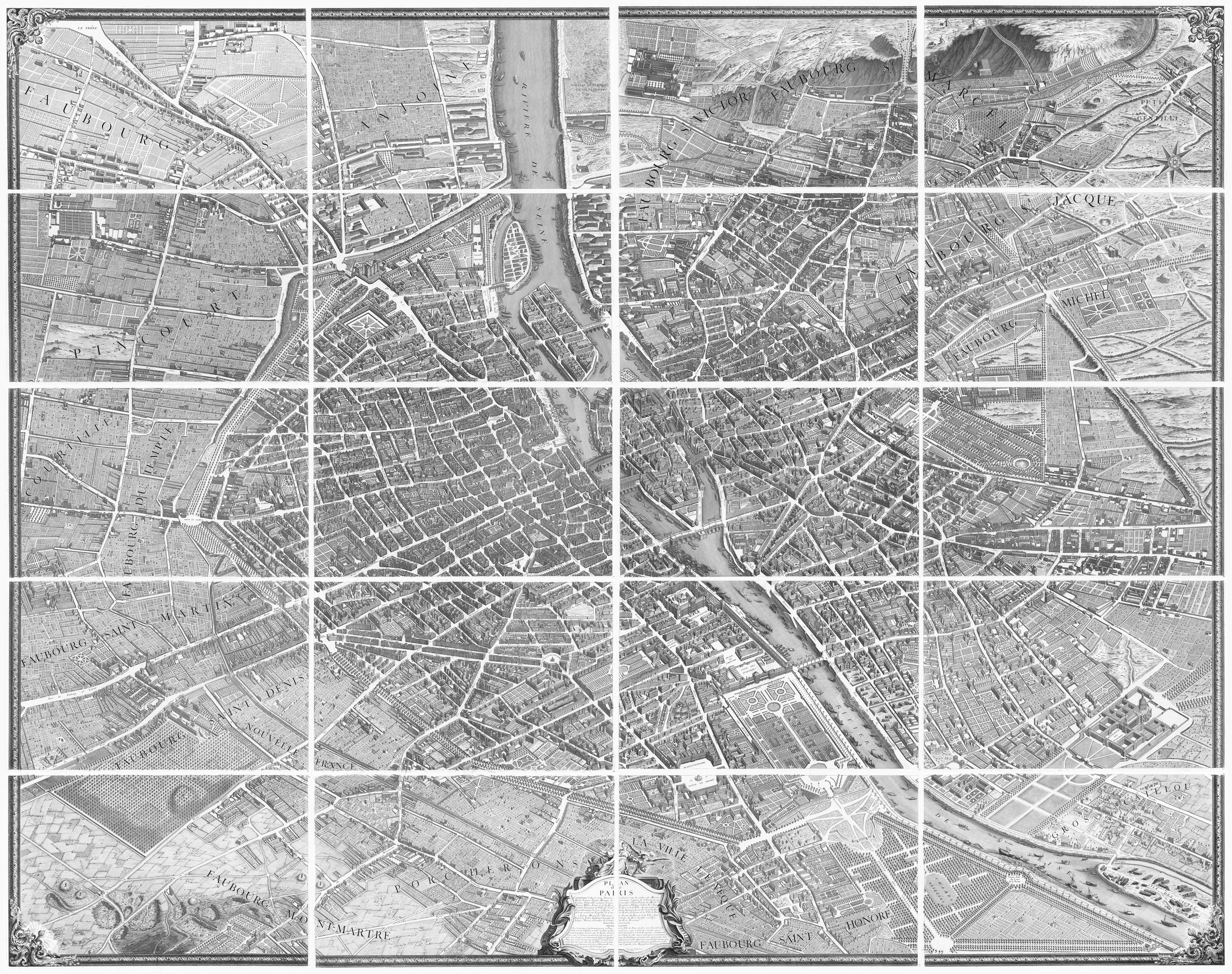
Via Kottke: “Cássio Vasconcellos took aerial photos of scrapyards and arranged the junked cars, planes, trains, and other objects into dense photographic collages.”
My interpretation of the hawk/nightingale fable
In my previous post, I presented two standard interpretations of the fable of the hawk and the nightingale in Hesiod’s 8th-century B.C. poem Works and Days. Today, I will offer my own novel interpretation of this fable. Specifically, what if the fable is an allegory about eternal conflict between making a living and producing lasting art, a conflict that describes the arc of Hesiod’s own life and work, the daily toil that kept him from perfecting and devoting himself to his poetic craft. For starters, Works and Days begins with a hymnic invocation to the Muses calling on them to sing of their father Zeus (lines 1-11), so perhaps the nightingale represents these “Pierian Muses.” (line 1) But what does the hawk represent? According to the introduction to my old edition of Works and Days (pp. 14-15), Hesiod was a promising poet in his youth, but he had to go back to farming after he had some “legal troubles” with his brother, and then “the daily grind [of farming for a living] almost obscured his talents forever …” So, maybe the hawk represents the sands of time. We have only a limited amount of time to make our mark on the world. We don’t know when our time will come–when the hawk of death will swoop us away–but in the meantime we can either make a living or we can strive to create great art like Homer or Hesiod in order to be remembered after we leave the scene. Like the nightingale clutched in the talons of the hawk, we cannot escape our mortality; our time to shine is fleeting …

Two interpretations of the hawk-nightingale fable
I introduced the fable of the hawk and the nightingale in my previous post. Today, I will ask, What is the moral of Hesiod’s beautiful bird fable? Alas, there is no holy grail, no single meaning or interpretation that everyone agrees on. The problem here is not just the multiplicity of possible meanings; rather, it is that even the best or most plausible interpretations of Hesiod’s fable operate at different levels of generality.
By way of example, one possible “micro” interpretation of the fable casts Hesiod as the nightingale and his brother Perses as the hawk. In the third verse of Works and Days (lines 37-44), for example, Hesiod refers to some legal troubles he had with his brother Perses, to whom the poem is dedicated. Although they had agreed to split their disputed property in half (line 39), Hesiod implies that Perses was able to “grab[] the larger part” (line 40) by bribing the “lords” who heard their case (lines 41-42), so on this view, the fable is an allegory of the corrupt legal system where judges put their private interests over justice (Hubbard 1995, pp. 161-162), while Hesiod’s act of composing his poem is like the nightingale’s song or “minstrel’s lovely voice” (line 210), while Perses act of grabbing the larger part of the family estate is like the hawk clutching its prey.
The “macro” interpretation, by contrast, is that the fable is an iron age allegory to illustrate the fate of the fifth race of man, the race of iron. (lines 176-202) After all, the fable immediately follows Hesiod’s description of this fifth age and race, and Hesiod tells us that “Zeus will destroy this race of mortal men.” (line 184) On this fatalistic view of the fable, Zeus is the hawk and man is the nightingale. Yet another possible “macro” interpretation is that the fable is an allegory for divine justice: the hawk is “far-seeing Zeus” (line 176), while the metaphorical nightingale stands for corrupt public officials “who judge dishonestly and swallow bribes” (line 220). (Cf. Nelson 1997, p. 235, footnote omitted: “There is another possibility. As M. Skafte Jensen and others have suggested, Hesiod may mean us to see the helpless party not as himself in the clutch of the kings, but as the kings in the clutch of Zeus.”)
So, how should we decide among these competing “micro” and “macro” interpretations of Hesiod’s hawk-nightingale fable? I will share my preferred interpretation in my next post …

Wikipedia Wednesday: the hawk and the nightingale
https://en.m.wikipedia.org/wiki/The_Hawk_and_the_Nightingale
A fable is a short story, typically with animals as characters, conveying a moral, and one of the earliest recorded fables in the Western literary canon, if not the first, is the fable of the hawk and the nightingale in Hesiod’s 8th-century B.C. poem Works and Days (lines 203-215). Below is the original version of Hesiod’s fable:
And now, for lords who understand, I’ll tell
A fable: once a hawk, high in the clouds,
Clutched in his claws a speckled nightingale.
She, pierced by those hooked claws, cried, ‘Pity me!’
But he made scornful answer: ‘Silly thing.
Why do you cry? Your master holds you fast,
You’ll go where I decide, although you have
A minstrel’s lovely voice, and if I choose, I’ll have you for a meal, or let you go.
Only a fool will match himself against a stronger party, for he’ll only lose,
And be disgraced as well as beaten.’ Thus
Spoke the swift-flying hawk, the long-winged bird.
Hesiod, Works and Days
Suspend the Nobel prize in economics
The Swedes have brushed aside the great Thomas Sowell yet again …
Was Sir Isaac Newton a Scientist?
This weekend (11 & 12 October), I attended the annual conference of the Association of Graduate Liberal Studies Programs (AGSLP). The theme of this year’s conference was the future of the humanities in the age of GenAI systems like ChatGPT. One of my favorite talks, however, wasn’t on GenAI at all, at least not directly. Bevin Carnes gave a fascinating lecture on Was Isaac Newton a Scientist? In brief, although Newton made many landmark contributions to astronomy, mathematics, and physics, over the entire course of his long life he spent more time studying numismatics, religion, and philosophy. For her part, Carnes drew three general conclusions from the interdisciplinary nature of Newton’s wide-ranging intellectual interests:
- Newton made some of the greatest discoveries in the history of science, but he derived meaning and purpose for his scientific work from his work in the humanities [me: what does it mean to “derive meaning” from something?]
- Newton saw all the areas of study he worked within as fundamentally integrated [me: and?]
- Newton crossed modern disciplinary boundaries to integrate sciences with humanities [me: did Newton really “integrate” the two cultures, or did he create an entirely new one?]
Alas, can we really draw any general lessons from the life and work of such a great mind as Sir Isaac Newton, a one-of-a-kind genius whose towering achievements have been surpassed by no one — with the possible of exception of Gottfried Leibniz or Albert Einstein? In any case, how are these three lessons relevant to us today, especially when knowledge has become so technical and hyperspecialized? Regardless how these questions are answered, Bevin Carnes gave me a lot to think about …
Sunday song
Saturday Syllabus
Check out this ambitious “Syllabus for Generalists” created by Cristina Jerney, “an actor, technical writer, and pest based in London”. I say “ambitious” because week one alone covers algebra, geometry, trigonometry, the calculus, physics, chemistry, and biology, along with eight problem sets, three experiments, 29 texts, and dozens of suggested readings! Hat tip: @Kottke
Friday funnies: caption this!
This deadly storm (Milton) unleashed dozens of destructive tornadoes and knocked out power lines across the Florida peninsula, so I am going to call this surreal A.I.-generated image “The Last Stand of Siesta Key”. Hat tip: @DeebsFLA
Throwback Thursday: Trolley Problems
My 2014 paper “Trolley Problems” surveys the two standard versions of the famous (infamous?) trolley problem and solves both versions with a novel thought-experiment of my own: an auction conducted from behind a Rawlsian veil of ignorance!