Wikipedia Wednesday: Chesterton’s fence

https://en.m.wikipedia.org/wiki/Wikipedia:Chesterton%27s_fence

Alas, I have no idea how I stumbled upon this particular Wikipedia entry, but Chesterton’s fence is the Smithian idea that reforms should not be made until the reasoning behind the existing state of affairs is understood, and the original quotation is from G. K. Chesterton’s 1929 book The Thing in the chapter “The Drift from Domesticity”:

In the matter of reforming things, as distinct from deforming them, there is one plain and simple principle; a principle which will probably be called a paradox. There exists in such a case a certain institution or law; let us say, for the sake of simplicity, a fence or gate erected across a road. The more modern type of reformer goes gaily up to it and says, “I don’t see the use of this; let us clear it away.” To which the more intelligent type of reformer will do well to answer: “If you don’t see the use of it, I certainly won’t let you clear it away. Go away and think. Then, when you can come back and tell me that you do see the use of it, I may allow you to destroy it.”

As an aside, G. K. Chesterton was a popular English author known as the “prince of paradox”; bonus link below:

Posted in Uncategorized | Leave a comment

Animali mitici d’Italia

r/MapPorn - Mythical Beasts of Italy
Hat tip: u/Few_Simple9049
Posted in Uncategorized | Leave a comment

Monday music: *Lean back* by potsu

Posted in Uncategorized | Leave a comment

Adam Smith Sunday

Are college professors, lawyers, political pollsters, or opera singers examples of productive or unproductive labour? Does this distinction even make sense? See, for example, this short lecture by the imitable Tyler Cowen explaining Adam Smith’s classic distinction, via Marginal Revolution University:

Or, better yet, read Book II, Chapter 3 of The Wealth of Nations.

Posted in Uncategorized | Leave a comment

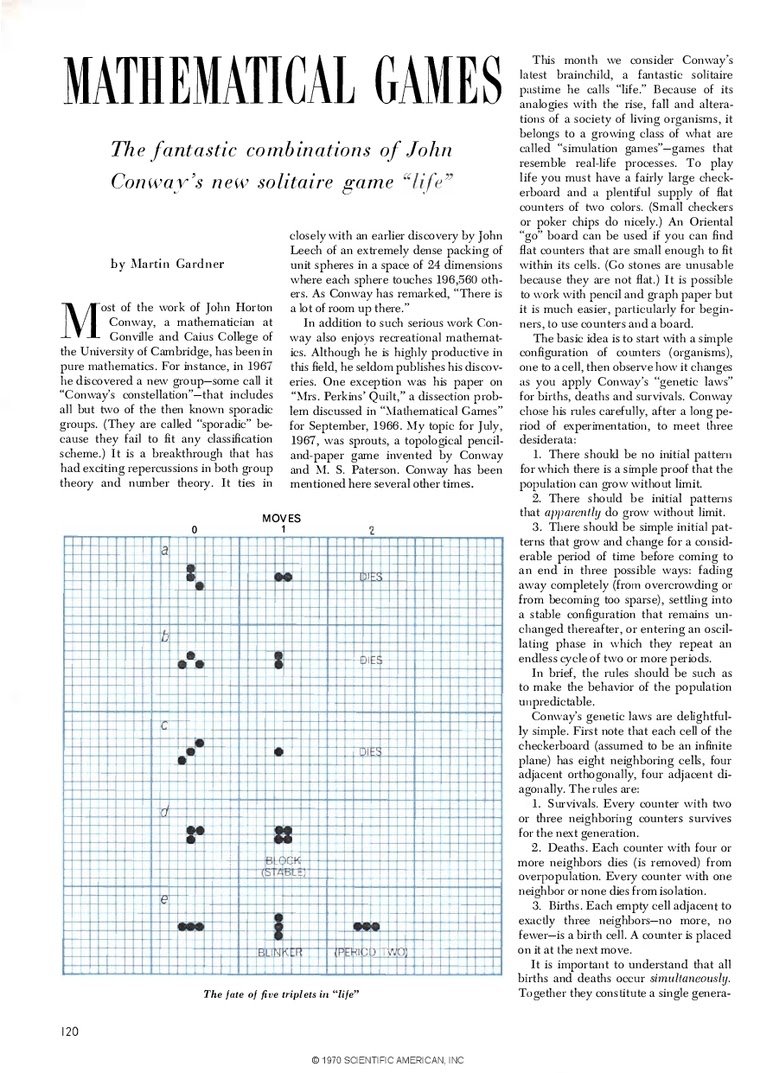
*Martin Gardner and His Influence on Recreational Math*

That is the title of this beautiful homage to the great Martin Gardner by Rebecca DeLee (Liberty University). See also this brief biography titled “A Mind for the Masses“, according to which “Gardner never took a college math course yet his Scientific American columns earned the respect of noted mathematicians.”

Posted in Uncategorized | Leave a comment

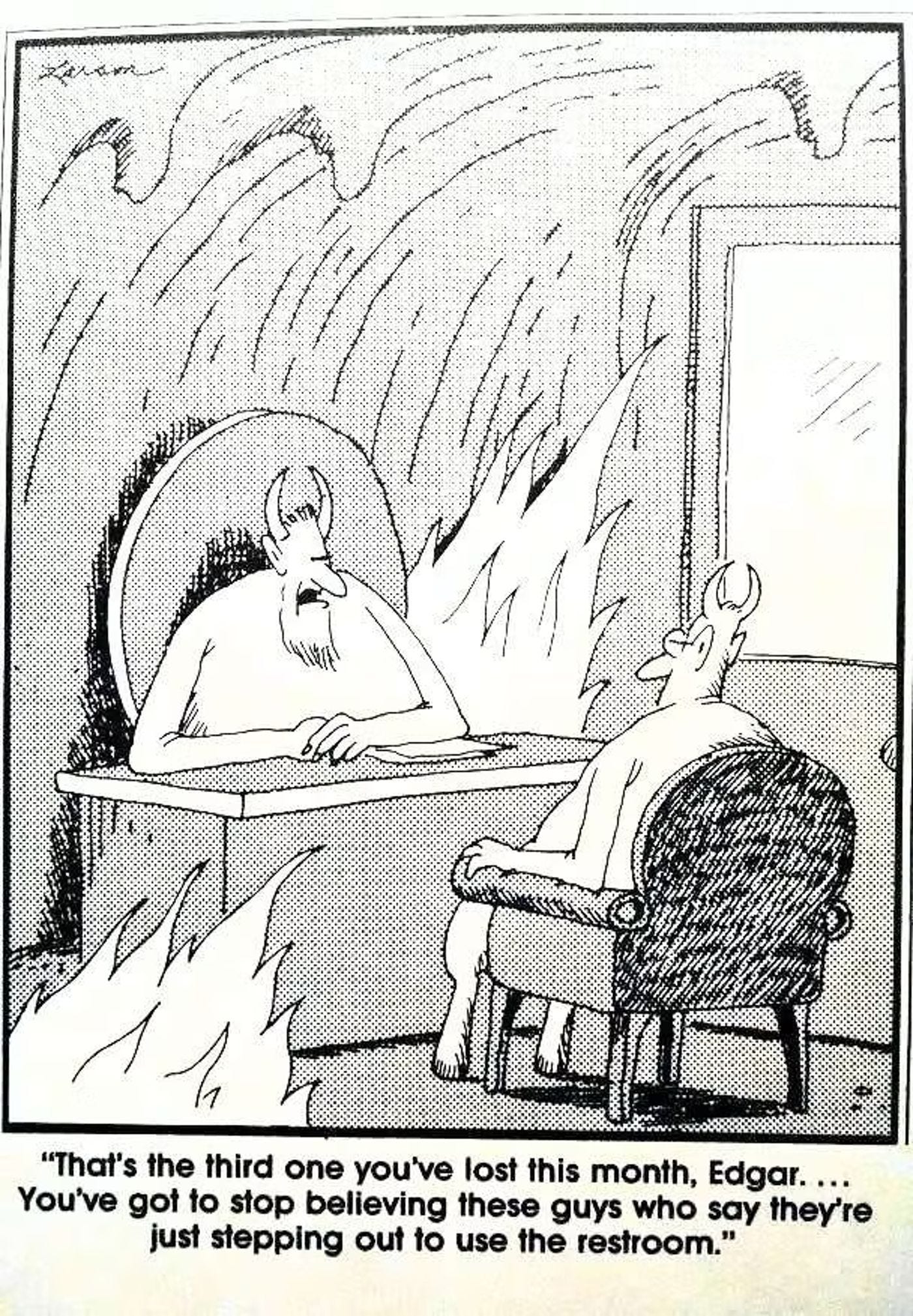
Friday funnies: Far Side edition

Like - The Far Side - by David Azrael
Posted in Uncategorized | 2 Comments

How many married couples have co-authored scholarly papers together?

I know of only two such instances in my field (law): my colleagues Brian Frye and Maybell Romero co-authored “The Right to Unmarry: A Proposal” and, pictured below, my wife and former student(!) Sydjia Robinson and yours truly co-authored a novel thought-experiment paper — published in the National Law School of India Review and available here, via JSTOR — proposing a “Unified Code of Procedure” for both civil and criminal cases!

Update #1 — I stand corrected: my new friends Carissa Byrne Hessick and Andrew Hessick have published at least 10 papers together, including this one comparing and contrasting statutory interpretation of civil versus criminal laws: “Constraining Criminal Laws“!

Posted in Uncategorized | 2 Comments

Wikipedia Wednesday: Illuminati

https://en.wikipedia.org/wiki/Illuminati

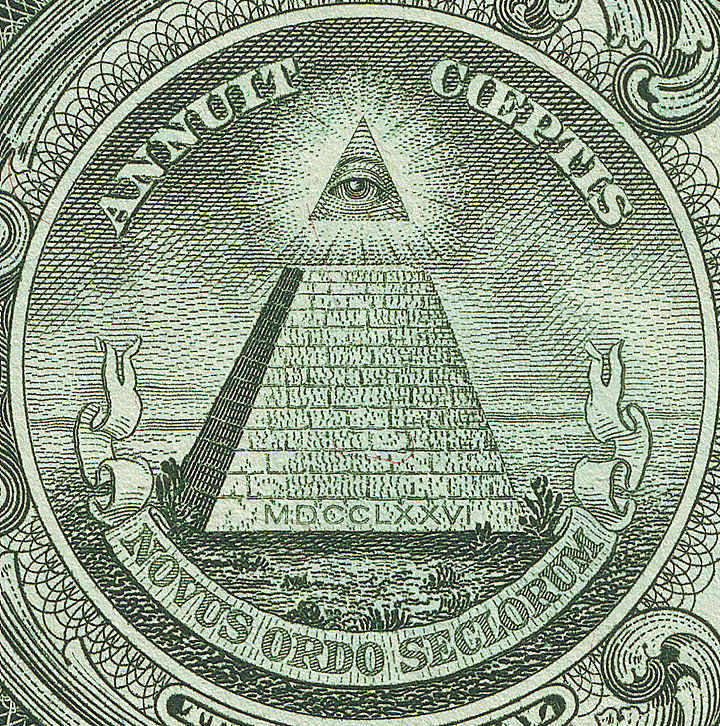
As a follow up to my previous post in honor of the memory of Thomas Konda, I am sharing the Wikipedia link for the entry for “Illuminati” as well as one of my favorite excerpts from this entry, linking to yet another Wikipedia page: “The Eye of Providence, as seen on the US $1 bill, has been perceived by some to be evidence of a conspiracy linking the Founding Fathers of the United States to the Illumina.”

File:Dollarnote siegel hq.jpg
Posted in Uncategorized | Leave a comment

Requiescat in pace: Thomas Konda

I just learned that Thomas Milan Konda died on 29 January 2022 at the age of 74. (Here is his obituary.) Among other things, Professor Konda was the author of Conspiracies of Conspiracies: How Delusions Have Overrun America (University of Chicago Press, 2019), which surveys our obsession with conspiracy theories going back to the heady days of the French Revolution and a secret society known as the “Bavarian Illuminati”. As it happens, I had picked up a copy of Prof Konda’s book back in June of 2022 at my first meeting of the History of Economics Society (HES) but I did not get around to reading his scholarly work until now.

For my part, I once wrote about a little-known conspiracy theory (see here) that might have piqued Prof Konda’s deep and wide-ranging intellectual curiosity: a supposed centuries-old worldwide scheme to suppress the works of the great German polymath Gottfried Wilhelm Leibniz. Although “the Leibniz conspiracy” is a relatively minor one in the scheme of things, it might nevertheless have grabbed Konda’s erudite attention (and that of his readers) because of the man who invented it, the legendary logician Kurt Gödel! Simply put, that one of the most logical and rigorous thinkers of all time could formulate such an elaborate and far-fetched conspiracy theory shows us why beliefs in conspiracies are so compelling, widespread, and unavoidable!

Posted in Uncategorized | 2 Comments

“Best job I’ve ever had …”

Today (11/11) is Veterans Day 🇺🇸

Posted in Uncategorized | Leave a comment