The stark landscape, the humble simplicity of Father Anatoly, the remoteness of the monastery on the White Sea, and the miracles of his redemption converge into a timeless snapshot of lived spirituality. The Patriarch of Moscow, Alexei II, praised The Island for its profound depiction of faith and monastic life.
Sarah Conover
Although I loved The Island–the 2006 Russian film directed by Pavel Lungin, written by Dmitry Sobolev, and starring Pyotr Mamonov as a fictional 20th-century Eastern Orthodox monk–I am giving it three (out of five) stars because the resolution of the film is too pat.
The movie begins with a tragic choice during wartime. It is 1942, a German destroyer captures a Russian coal station, and the Nazis round up the captain and his first mate. The Germans hand the first mate a gun and put him into an impossible moral dilemma: kill your captain, or we kill you.
The next time we meet our tragic sailor, it is 34 years later, and he is a monk who lives in a boiler room next to an Orthodox monastery on a remote island. He is now Father Anatoly, still atoning for his sin. He wears rags, toils all day, and refuses to follow to proper church rituals. As one reviewer puts it (Sarah Conover), “Is Father Anatoli a madman or a holy man? For most of the film we aren’t really sure. By the time the movie ends, we’ve likely made a decision.”
See also this 2023 Scientific American article describing an infamous SAT college entrance exam question that everyone got wrong! (It involves the coin rotation paradox.)
Can you imagine an alternate reality in which both Cuba and Cancun (as well as Baja California and most of northern Mexico!) were all part of the United States? What happened?
Via Smithsonian Magazine: “A previously unknown piece of music composed by Wolfgang Amadeus Mozart when he was probably in his early teens has been uncovered at a library in Germany.”
I am honored and humbled to have been awarded el premio Don Quijote by the Puerto Rico Bar Association (PRBA) in Orlando, Florida last night (see here), especially considering how I have tilted at so many metaphorical windmills during my academic career, such as the use of “range voting” to break the impasse over Puerto Rico’s political status (here), retrodiction markets to test the truth values of conspiracy theories (here), and auctions to solve the tragedy of the outer space commons (here), just to name a few of my more Quixotic causes. Shout out to my colleagues and friends Tony Anthony Suarez, Joel Montilla, and Rebeca Arenas for making this happen, and shout out to my dear wife Sydjia for her patience, love, and good cheer!
We are thrilled to announce a Call for Papers for our 2025 conference at the University of Salento in Lecce, Italy! The conference will take place March…
Imagine the joy of playing "Exposed Chess", which starts with this outrageous opening position. (I created this partly to make you smile, but also to stimulate the neurons in your cerebral cortex.) pic.twitter.com/hn0hbIg6UX
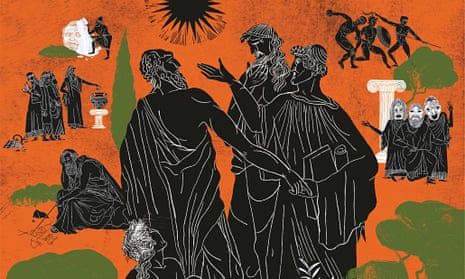
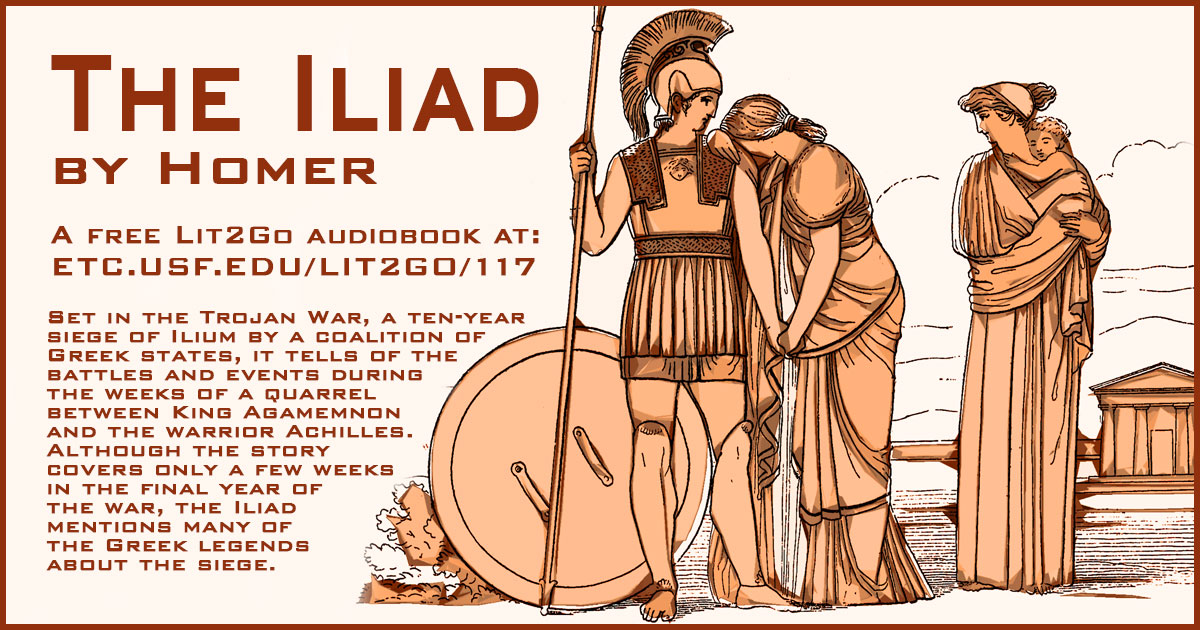
Having read Homer’s Iliad and listened to Dominic Keating’s epic 19-hour readout of this legendary lyric poem, I can now say that the Iliad‘s reputation as the first great literary masterpiece of the Western canon is totally deserved. In addition, during the next few weeks I will be reading the following works of ancient Greek literature and philosophy:
Author’s note: Below the fold is my first formal writing assignment for my graduate seminar on ancient Greek and Roman literature/philosophy. All references to the Iliad are to the Caroline Alexander translation of Homer’s great epic.








 prior probability