“… though a great number of people should, by thus restoring the freedom of trade, be thrown all at once out of their ordinary employment and common method of subsistence, it would by no means follow that they would thereby be deprived either of employment or subsistence.” (Wealth of Nations, IV.ii.42)
Thus begins Paragraph 42 of Book IV, Chapter 2 of The Wealth of Nations. This is not only the longest paragraph of this celebrated chapter; it also contains two of the most revolutionary claims in the history of political economy — one descriptive, the other normative. In short, the descriptive claim is that labor markets are able to adjust quickly to new conditions; the normative claim is that labor markets should be free.
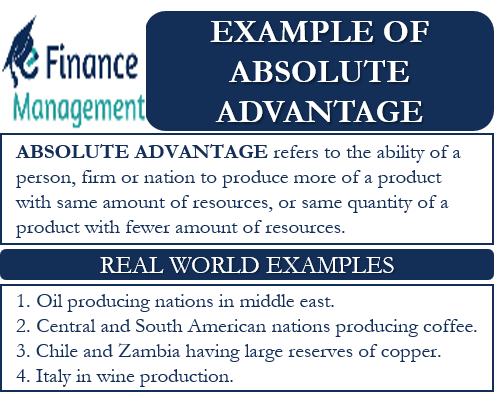
By way of background, recall Adam Smith’s fourth and final exception to free trade. As I explained in a previous post, he makes a limited exception on humanitarian grounds for pre-existing trade barriers that are already on the books; simply put, if the removal of such trade restrictions would cause mass unemployment at home, then “freedom of trade should be restored only by slow gradations, and with a good deal of reserve and circumspection” (Wealth of Nations, IV.ii.40). But at the same time, the father of economics gives two reasons why this disruption “would in all probability … be much less than is commonly imagined …” (ibid.). I already explained the first reason in my previous post: business firms that already enjoy an absolute advantage in their respective markets — i.e. firms that are able to produce goods more efficiently or cheaply than their competitors overseas — have nothing to fear from free trade.
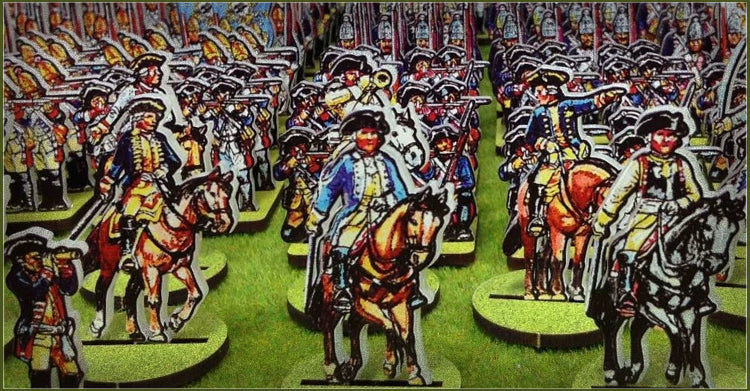
Smith’s second reason, however, provides an even more powerful argument for free trade because it is more general in scope: He observes in paragraph 42 of Book IV, Chapter 2 of The Wealth of Nations that labor markets are able to adjust rapidly to new conditions. Furthermore, this claim is not just a theoretical one, for Smith provides a compelling historical example in support of his descriptive claim about labor markets. Specifically, he refers to the aftermath of the Seven Years’ War (1756–1763), which is known in North America as the “French and Indian War”, when more than 100,000 British soldiers and sailors “were all at once thrown out of their ordinary employment” in the armed forces:
“By the reduction of the army and navy at the end of the late war [i.e. the Seven Years’ War], more than a hundred thousand soldiers and seamen, a number equal to what is employed in the greatest manufactures, were all at once thrown out of their ordinary employment; but, though they no doubt suffered some inconveniency, they were not thereby deprived of all employment and subsistence. The greater part of the seamen, it is probable, gradually betook themselves to the merchant-service as they could find occasion, and in the meantime both they and the soldiers were absorbed in the great mass of the people, and employed in a great variety of occupations. Not only no great convulsion, but no sensible disorder arose from so great a change in the situation of more than a hundred thousand men, all accustomed to the use of arms, and many of them to rapine and plunder. The number of vagrants was scarce any-where sensibly increased by it, even the wages of labour were not reduced by it in any occupation, so far as I have been able to learn, except in that of seamen in the merchant-service.” (Wealth of Nations, IV.ii.42, emphasis added)
In addition, in the course of marshalling this historical evidence, the Scottish philosopher-economist also identifies an important asymmetry between “the habits of a soldier” and those of ordinary civilians who are already in the workforce: soldiers are glorified government employees who are paid regardless of how well they fight; civilian workers in the private sector, by contrast, are paid only if they show up to work and earn their keep, or in the immortal words of Adam Smith:
“… if we compare together the habits of a soldier and of any sort of manufacturer, we shall find that those of the latter do not tend so much to disqualify him from being employed in a new trade, as those of the former from being employed in any. The manufacturer has always been accustomed to look for his subsistence from his labour only: the soldier to expect it from his pay. Application and industry have been familiar to the one; idleness and dissipation to the other. But it is surely much easier to change the direction of industry from one sort of labour to another than to turn idleness and dissipation to any. To the greater part of manufactures besides, it has already been observed, there are other collateral manufactures of so similar a nature that a workman can easily transfer his industry from one of them to another.” (Ibid.)
For Smith, the ability of labor markets to adapt to new conditions and absorb so many former military men after the war was all the more remarkable given this acute asymmetry. But as Smith himself explains, the reason why labor markets were able to adapt so quickly and absorb so many military men was because no geographical or other artificial restrictions were imposed on where the former soldiers and sailors could work. The lesson here is clear: for labor markets to work their magic, labor markets must be free:
“Soldiers and seamen, indeed, when discharged from the king’s service, are at liberty to exercise any trade, within any town or place of Great Britain or Ireland. Let the same natural liberty of exercising what species of industry they please, be restored to all his Majesty’s subjects, in the same manner as to soldiers and seamen; that is, break down the exclusive privileges of corporations, and repeal the statute of apprenticeship, both which are real encroachments upon natural liberty, and add to these the repeal of the law of settlements, so that a poor workman, when thrown out of employment either in one trade or in one place, may seek for it in another trade or in another place without the fear either of a prosecution or of a removal, and neither the public nor the individuals will suffer much more from the occasional disbanding some particular classes of manufacturers than from that of soldiers. Our manufacturers have no doubt great merit with their country, but they cannot have more than those who defend it with their blood, nor deserve to be treated with more delicacy.” (Ibid., emphasis added)
In the passage above, the Scottish philosopher-economist concludes that ordinary workers should enjoy the same level of “natural liberty” as former military men, and to this end, Smith makes two specific policy proposals: (1) the government should “repeal the statute of apprenticeship” (ibid.), and (2) it should “break down the exclusive privileges of corporations” (ibid.). For Smith, in other words, “freedom of trade” should not be limited to just imports and exports; free trade should extend to labor markets as well!
But how likely is it that either of these reforms would ever be enacted in the real world? Is freedom of trade — or “natural liberty” more generally — whether at home or among nations — an attainable ideal in the rough-and-tumble world of politics? And if not (spoiler alert!), what is to be done? As we shall see in my next post, Adam Smith saves the best for last, for he addresses these big questions head on in the last few paragraphs of Book IV, Chapter 2 of The Wealth of Nations — that is why his work is so timeless; that is why Doctor Smith still speaks to us today!



![Q.E.D. [Quod erat demonstrandum: Which was to be proved.]](https://img.libquotes.com/pic-quotes/v1/euclid-quote-lbw0n7a.jpg)