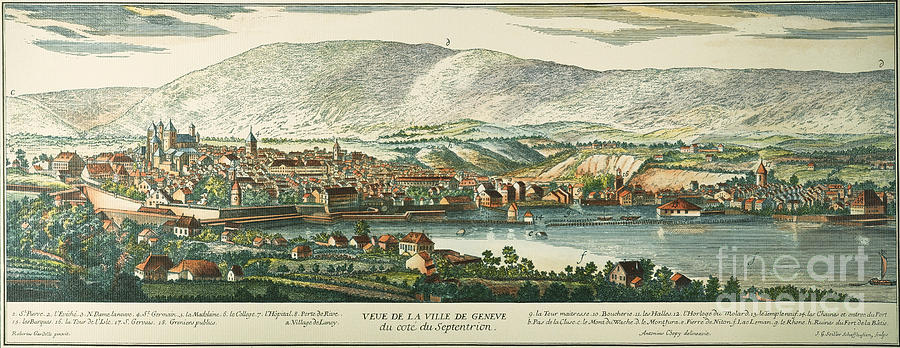
In addition to the great Voltaire and his mistress Madame Denis, Adam Smith met and befriended many other noteworthy men and women during his extended sojourn in the picturesque Swiss city-state of Geneva (pictured below, circa 1780). Among these illustrious individuals are (in alphabetical order) Charles Bonnet (1720–1793); MarieLouise Elisabeth de La Rochefoucauld, the duchesse d’Enville (1716–1797) and her son Louis Alexandre de La Rochefoucauld, 6th Duke of La Rochefoucauld (1743–1792); Georges-Louis Le Sage (1724-1803); Philip Stanhope, 2nd Earl Stanhope (1714–1786), his wife Grizel Hamilton (Lady Stanhope), and their son Charles, who would become the 3rd Earl Stanhope; and last but not least, Theodore Tronchin (1709–1781). Another person, however, who should be added to this list of international luminaries in Adam Smith’s exclusive Geneva circle is “the Syndic Turretin“. [On this note, see John Rae, Life of Adam Smith (1895), p. 191.]
But who exactly was this Turretin, and what did Adam Smith learn from him? Alain Alcouffe and I will turn to those questions in our next post; in the meantime, we will say a few words about Turretin’s title or honorific, “Syndic”. One historical source identifies “Le Syndic Turretin” as the “Mayor” of Geneva [see Warwick Lister, Amico: The Life of Giovanni Battista Viotti (2009), p. 43], while for his part Smith’s biographer John Rae calls him “the President of the Republic” [Rae 1895, p. 191]. But as we shall see in our next post, Turretin was neither a president nor a mayor, properly speaking. Instead, it would be more accurate to describe him as one of four chief magistrates of the Geneva Republic, for at the time, Geneva was led by four syndics. (For reference, see this entry in d’Alembert and Diderot’s famed Encyclopédie.) This observation, in turn, is noteworthy for us because, in his capacity as syndic or magistrate, Turrentin may have been called on to resolve the legal dispute between Voltaire and Charles Dillon (the Dillon Affair), and he may have also been instrumental in his city-state’s decision to issue an arrest warrant against the great Rousseau and ban his works in 1762 … (to be continued)
Thus far, Alain Alcouffe and I have explored two important incidents that coincided with Adam Smith’s sojourn in Switzerland in late 1765/early 1766: (1) the Voltaire-Needham clash over the question of miracles, and (2) the “Dillon Affair” or “Fracas at Ferney”, which led to legal proceedings against a young English hunter. But we have left one key question open: what did Smith really think of Voltaire? To the point, if Smith truly admired this great Enlightenment literary figure as much as Smith’s biographers have led us to believe, then why does Voltaire appear but once in The Wealth of Nations? In fact, Smith refers to Voltaire only in passing toward the end of a lengthy section titled “Of the Expense of the Institutions for the Instruction of People of all Ages” buried deep in the dense pages of Book V of The Wealth of Nations (see WN, Book V, Chapter 1, Part Third, Art. 3, para. 39), where Smith writes:
It is observed by Mr. de Voltaire, that Father Porrée, a Jesuit of no great eminence in the republic of letters, was the only professor they had ever had in France whose works were worth the reading. In a country which has produced so many eminent men of letters, it must appear somewhat singular that scarce one of them should have been a professor in a university. *** The observation of Mr. de Voltaire may be applied, I believe, not only to France, but to all other Roman Catholic countries. We very rarely find, in any of them, an eminent man of letters who is a professor in a university, except, perhaps, in the professions of law and physic; professions from which the church is not so likely to draw them.
To make matters worse, the great Voltaire appears absolutely nowhere (i.e. zero times!) in The Theory of Moral Sentiments (TMS), despite the fact that Smith made substantial revisions to this great work in 1790! For my part (I won’t speak for my colleague, co-author, and friend Alain Alcouffe here), the logical inference I draw from the utter paucity of references to Voltaire in Smith’s two great magnum opera is this: whatever Smith may have first thought of Voltaire (see, for example, the last paragraph of Smith’s 1756 letter to the short-lived Edinburgh Review, which Alain Alcouffe and I discuss here), Voltaire most likely lost most of his luster after Smith had met him in person during his sojourn in Switzerland. Why? Because Voltaire’s pride, vanity, and total lack of “self-command” in the pursuit of his vendetta against John Needham, i.e. Voltaire’s resorting to name-calling and the distorted picture he paints of Needham’s groundbreaking work on spontaneous generation — coupled with his poor handling of the “Dillon Affair”, i.e. Voltaire’s decision to take legal action against the hunter whose dog his own gamekeeper had killed — both of which incidents Smith himself no doubt observed first-hand during his Swiss sojourn — may have simply been too much for the prudent Scottish philosopher to bear.
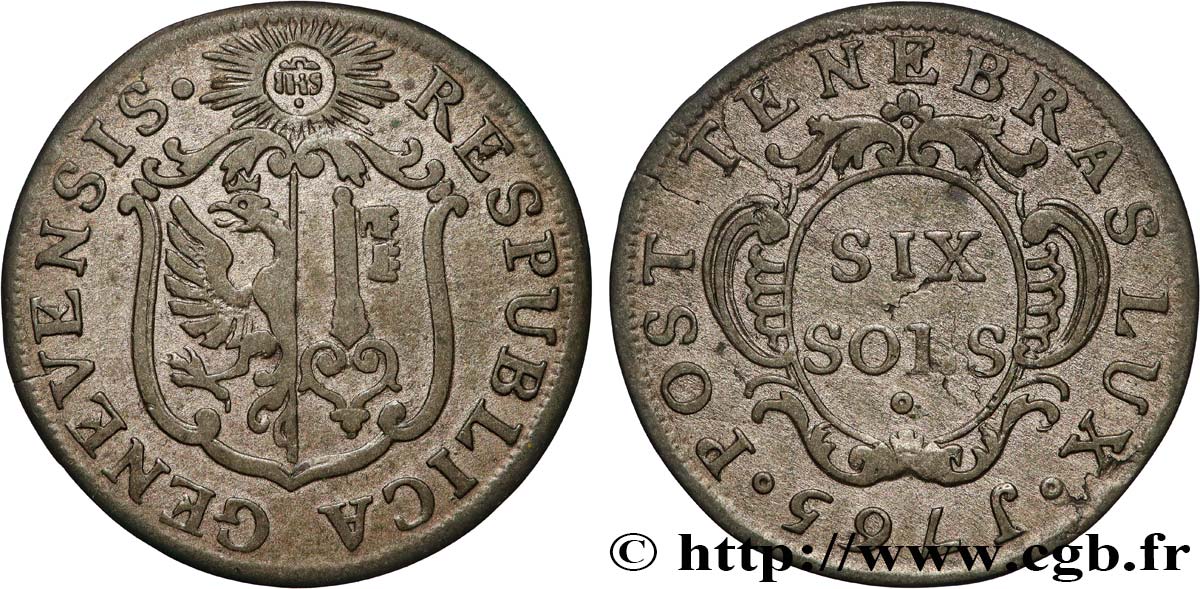
Alain Alcouffe and I will resume our series on Adam Smith in Switzerland soon; in the meantime, pictured below is a Genevan coin for six sols minted in 1765, the year of Smith’s first and only visit to the small but prosperous Swiss city-state during his grand tour years with the 3d Duke of Buccleuch. (More details about the Republic of Geneva’s coinage in the 18th century are available here, via Wikipedia.)
What did Adam Smith discuss with Voltaire during his three-month sojourn in Switzerland? One topic of conversation may have been the Voltaire-Needham controversy that was then playing out in real time in the summer and fall of 1765. In July of that year, Voltaire began writing a series of three pamphlets in reply to a new book by David Claparède on the subject of miracles. (As an aside, Claparède’s book, Considerations sur les miracles de l’Evangile (see here), was in turn a reply to the third letter of Jean-Jacques Rousseau’s collection of letter-essays, Letters from the Mountain.) Although he is little remembered today, at the time Claparède was a prominent Calvinist preacher and theologian in Geneva. Among other things, he gave lectures at the University of Geneva (where Charles Bonnet and Georges-Louis Le Sage also taught) from 1763 to 1798 and was also its rector from 1770 to 1774 (see Campagnolo 2020).
Suffice it to say that Voltaire’s reply to Claparède on the question of miracles is vintage Voltaire: witty, satirical, and scathing. For Voltaire, it was totally ridiculous that God would violate the eternal laws of nature in order to interfere in the mundane affairs of man. Why, he asks, would God make the moon stand still in the heavens for several hours so that Joshua could massacre the Amorites? Soon, however, Voltaire turns his attention from Claparède to Needham, for after the first three of Voltaire’s letters-essays had appeared in Geneva, the English natural philosopher decided to come to Claparède’s rescue, so to speak.
Specifically, Needham began writing his own series of replies to Voltaire in the form of three anonymous pamphlets: (i) “Réponse d’un theologien au docte proposant des autres questions” [hereinafter “Réponse”], (ii) “Parodie de la troisieme lettre du proposant addressee a un philosophe” [“Parodie”], and (iii) “Projet de notes instructives, veridiques, theologiques, historiques & critiques sur certaines brochures polemiques du tem[p]s, adressees aux dignes editeurs des doctes ouvrages duproposant” [“Projet”]. According to Shirley Roe (1985, p. 74 n. 24), Needham’s first two pamphlets were written in August 1765, while the third one was probably written in November 1765. (In addition, Needham published a revised edition of his second pamphlet in February 1766.)
In summary, Needham’s first reply pamphlet, “Réponse”, considers the problem of miracles from a scientific perspective: can the reports of so many miracles in the Gospels, for example, be reconciled with reason and natural philosophy? Voltaire took notice: his fourth letter-essay on miracles is a direct reply to Needham’s first pamphlet. At the time, however, Voltaire did not know the true identity of the author of the “Réponse”, but as soon as he discovered that it was none other than Needham, Voltaire then launched a full-scale personal vendetta against him, starting with his sixth letter-essay on miracles! As Alain Alcouffe and I mentioned in our previous post (“Voltaire’s vendetta”), Voltaire hurls a stream of vicious epithets against his newfound nemesis. Among other things (see Roe 1985, p. 75; Roe 1983, p. 181), Voltaire christens Needham “the eelmonger” (“l’Anguillard“) and falsely accuses him of being an “Irish Jesuit” (“Jésuite Irlandois“), and in addition to these spurious ad hominem attacks, the supposedly-enlightened Frenchman commits the strawman fallacy: Voltaire paints an intentionally inaccurate picture of Needham’s “ridiculous system” (“système ridicule“) and ascribes a godless and dangerous materialist-atheist outlook to him, a worldview that the English natural philosopher himself had repeatedly and vehemently rejected.
Alas, it looks like Voltaire was an extremely touchy literary figure, to say the least, for the Lumière must have abhorred being called out or criticized by name. Two important questions, however, remain unanswered. (1) We know that Adam Smith was in Geneva at this time, but was Smith aware of the Voltaire-Needham clash, and if so, what did he make of it? And (2) we also know that Needham was the young Charles Dillon’s tutor at this time, but did Voltaire’s strongly-worded fifth letter-essay have anything to do with the violent “Dillon Affair” that erupted in December 1765? Alain Alcouffe and I will turn to those two questions when we resume our series on Adam Smith in Switzerland next week …
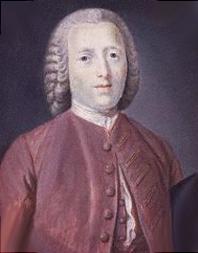
In our previous post “Adam Smith and the Voltaire-Needham Affair“, Alain Alcouffe and I introduced “Collection des lettres sur les miracles: écrites a Geneve, et a Neufchatel” (better known today as Questions sur les Miracles), a series of twenty witty letter-essays that the world-famous Voltaire was busy composing during Smith’s sojourn in Switzerland in the fall of 1765. We also mentioned that some of these letter-essays are addressed to a contemporary natural philosopher and priest, John Turberville Needham (pictured below). That, however, is putting it mildly, for Voltaire did not just “address” some of his pamphlets to Needham; instead, it would be more accurate to say that the famed Enlightenment literary figure launched a full-scale personal vendetta against the English natural philosopher, one that he would pursue in one form or another until his death in 1778! (See generally Roe 1985, especially pp. 73-82.)
Among other things (see Shirley Roe, “Voltaire Versus Needham: Atheism, Materialism, and the Generation of Life,” Journal of the History of Ideas, Vol. 46, No. 1 (Jan.-Mar., 1985), pp. 65-87, p. 75; see also Roe 1983, p. 181), Voltaire christens Needham “the eelmonger” (“l’Anguillard“) and falsely accuses him of being an Irish Jesuit to boot (“Jésuite Irlandois“). (One can only imagine what Voltaire must have thought of him in private!) In addition to these spurious ad hominem attacks, the supposedly-enlightened Frenchman commits the strawman fallacy in many of his letter-essays: Voltaire paints an intentionally inaccurate picture of Needham’s “ridiculous system” (“système ridicule“) and ascribes a godless and dangerous materialist-atheist outlook to him, a worldview that the English natural philosopher himself had repeatedly and vehemently rejected. But these observations beg an important question: If Needham’s scientific theories were so absurd or “ridiculous”, then why did one of the greatest men of letters of the Enlightenment era direct so much fury and invective against them? What fueled Voltaire’s literary and intellectual fire? And did Adam Smith take notice of “Voltaire’s vendetta” during his sojourn in Switzerland?
Suffice it to say, Alain Alcouffe and I will address these questions in our next few posts …
What did Adam Smith and Voltaire discuss during the five or six times that they supposedly met in late 1765 and early 1766? Alas, no one really knows for sure. One source (Samuel Rogers, via Smith’s biographer John Rae) identifies just two possible topics of conversation:
Few memorials … of their conversation remain, and these are preserved by Samuel Rogers in his diary of his visit to Edinburgh the year before Smith’s death. They seem to have spoken, as was very natural, of the Duke of Richelieu, the only famous Frenchman Smith had yet met, and of the political question as to the revival of the provincial assemblies or the continuance of government by royal intendants. (Rae 1895, p. 189)
But this can’t be the whole story, for aside from the legendary martial and sexual exploits of Louis François Armand de Vignerot du Plessis, 3rd duc de Richelieu (1696-1788), who until then was “the only famous Frenchman Smith had yet met” (ibid.), or the contemporaneous “Brittany Affair”, an open and ongoing power struggle between the chief magistrate or procureur of the local courts of Brittany, Louis-René de Caradeuc de La Chalotais (1701-1785), and the governor and royal representative of the region, Emmanuel Armand de Vignerot du Plessis, duc d’Aiguillon (1720-1780), that was unfolding in real time in the fall of 1765, we can now say that Smith and Voltaire must have also discussed what Alain Alcouffe and I call the “Dillon Affair” or “fracas at Ferney” (see here, here, and here).
In addition, we can now add another important item to the list of topics that Smith must have discussed with Voltaire during his visits to Ferney, for when the Scottish philosopher arrived in Geneva in October 1765, Voltaire was writing a series of letter-essays — 20 in all — on a number of theological, political, and scientific questions that might have piqued a curious mind like Smith’s. (See, for example, this early edition of Voltaire’s “Collection des lettres sur les miracles: écrites a Geneve, et a Neufchatel”, the cover page of which is pictured below.) Today, these 20 letter-essays are referred as Voltaire’s Questions sur les Miracles (see, for example, here) or Lettres sur les Miracles (see here), but at the time of Smith’s sojourn in Switzerland, these letter-essays were circulating in Geneva in the form of individual pamphlets.
Voltaire had published his first letter-essay pamphlet in July 1765, and during the course of that year, he published nineteen more (see generally Shirley Roe, “Voltaire Versus Needham: Atheism, Materialism, and the Generation of Life,” Journal of the History of Ideas, Vol. 46, No. 1 (Jan.-Mar., 1985), pp. 65-87, especially p. 73), so along with the Dillon Affair, his letter-essays were no doubt on his mind during Smith’s visits to Ferney. But what about Adam Smith? Did he take notice of any of these letter essays, and if so, did he read them? Although the original pamphlets were signed pseudonymously, Voltaire’s intended audience knew full well that only a mind as brilliant and a pen as witty as Voltaire’s could have written them. But most importantly from the perspective of someone like Adam Smith, many of the letters were addressed directly to John Turberville Needham, who not only happened to be the tutor of the young Charles Dillon — the same Dillon of the “Dillon Affair” described in our previous three posts — Needham was also known to the botanist Charles Bonnet, one of Smith’s acquaintances in Geneva.
It is entirely possible, of course, that Smith was totally oblivious or unaware of the then-raging “pamphlet war” between Voltaire and Dillon’s tutor when Smith made his first visit to Ferney in the fall of 1765. What is more unlikely, however, is that Smith left Geneva without any personal knowledge of this real-time Voltaire-Needham clash. But what was the controversy all about? Why did Voltaire devote so much attention to Needham in so many of his letter-essays? And why would the Scottish philosopher, of all people, take an interest in this ongoing affair? Alain Alcouffe and I will address these questions in our next few posts …
Although Alain Alcouffe and I have already described what we call “the fracas at Ferney” or “Dillon Affair” in our previous two posts (see here and here), we shall now restate the relevant facts and main sequence of events below for reference (our footnotes appear below the fold):
(1) The setting: A hunting party consisting of five men, including one Charles Dillon, a young English aristocrat who had a reputation for gambling [see footnote 1], is trespassing somewhere on Voltaire’s private property, located a few miles northwest of Geneva in the village of Ferney, on the morning of Saturday, Dec. 7;
(2) Inciting incident: Next, one of Dillon’s hunting dogs is killed–most likely by one of Voltaire’s gamekeepers, either by accident or in self-defense (perhaps the dog had attacked the gamekeeper), or if Voltaire’s mistress Madame Denis is to be believed, the hound was killed by “the townspeople of Ferney” (“les gens du village de ferney“);
(3) Escalation of the conflict: Angry at the killing of his dog, Dillon not only threatens to burn down Voltaire’s house; he also rounds up four men armed with rifles and pistols (“quatre personnes armées de fusils et de pistolets“) and returns to Voltaire’s estate on Monday, Dec. 9, searching for the gamekeeper who he believed had killed his bloodhound and threatening to capture him “dead or alive”;
(4) Voltaire retaliates with a lawsuit: The very next day (!), Tuesday, Dec. 10, Voltaire and Madame Denis initiate legal proceedings against Charles Dillon, alleging that “[t]he gamekeeper whom Mr Dillon pursued with force in Ferney, attempting to escape from him, broke his back and is in life-threatening condition” (“Le garde chasse chez lequel Monsieur Dillon alla avec main forte à ferney, aiant voulu se dérober à sa poursuitte, s’est cassé les reins, et est en danger de la vie“);
(5) Voltaire’s mistress’s legal memo: And last but not least, Madame Denis — or perhaps it was Voltaire himself — drafts a legal memorandum dated Dec. 10-11 explaining her side of the story, a copy of which somehow ends up with Adam Smith.
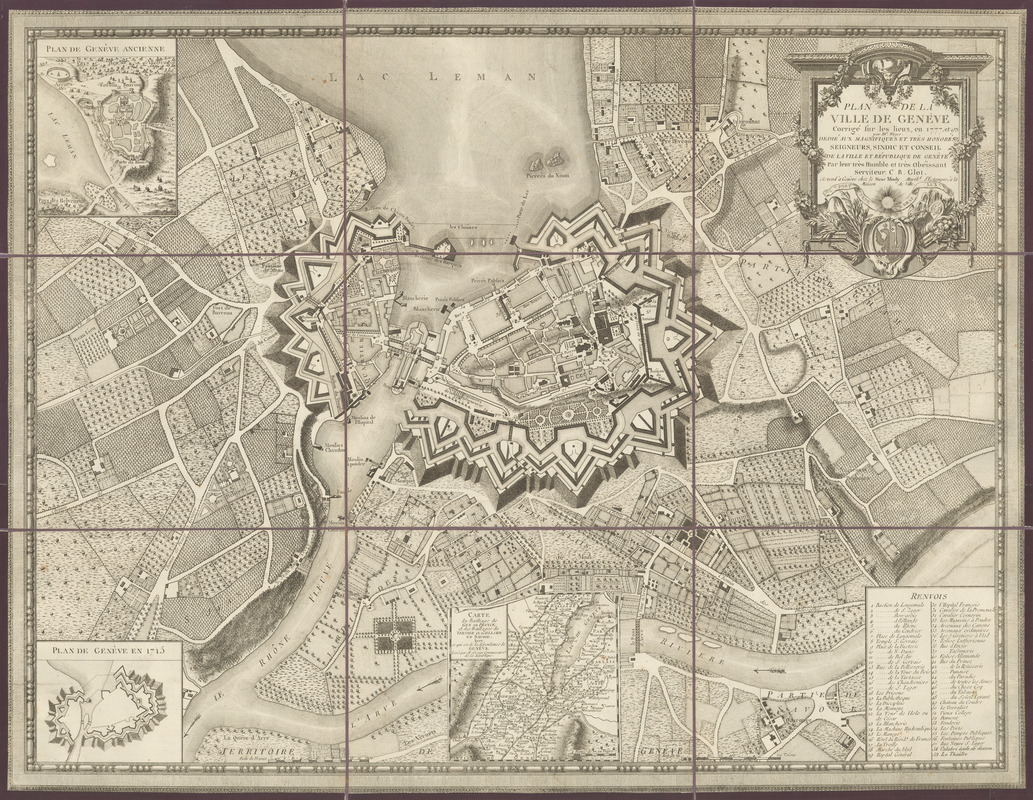
Did Charles Dillon ever answer the charges against him? What was the outcome of this peculiar case? And most importantly, what does Adam Smith have to do with any of the events described above? We know the Scottish moral philosopher and travelling tutor was residing in Geneva at the time (a map of which, circa 1777, is pictured below) and that he was most likely already personally acquainted with the great Voltaire — according to one historical account [see footnote 2], for example, Smith had visited Voltaire five or six times during this period — but what we do not know is why he received a copy of Madame Denis’s memorandum.
In brief, as far as Alain Alcouffe and I can tell, there are three possible reasons why Voltaire, via Madame Denis, might want to keep someone like Adam Smith in the loop:
One possibility is strategic: maybe Madame Denis simply wanted to share her side of the story with Smith and his pupils Duke Henry and Hew Campbell Scott — recall that Smith was still a travelling tutor during his sojourn in Switzerland — or at least put them on notice that something serious had occurred at Voltaire’s estate, especially since her complaint is directed against a young English aristocrat who might have been personally known to Smith or his pupils. (Recall that Geneva’s population was not only small (about 24,000 inhabitants); the Swiss city-state was also a popular grand tour destination for British travellers at the time [see note 3].) Another clue along these lines is that Madame Denis’s legal memorandum is not addressed to Adam Smith in particular; instead, she writes, referring to herself in the third person, that “Madame Denis submits these actions to the judgment of all the English gentlemen currently in Geneva” (“Madame Denis fait juges de ces procédés tous les gentils hommes anglais qui sont à genêve“).
Another possibility might have to do with the pending legal proceedings that Voltaire and Madame Denis had already initiated against Charles Dillon on Tuesday, Dec. 10. That is, perhaps they wanted to recruit Smith to participate in the case, either as an informal advisor or as maybe even as a witness, especially if one of Smith’s previous visits to Ferney coincided with Charles Dillon’s original hunting excursion on Saturday, Dec. 7, or with his return on Monday, Dec. 9, when Dillon rounded up four armed men and chased Voltaire’s gamekeeper. According to one historical source (Samuel Rogers, see note 2), the Scottish philosopher had met with Voltaire no less than five or six times during his sojourn in Switzerland, so it’s possible Smith might have been present at Ferney during one or more of the events described in Madame Denis’s legal memorandum and would thus be needed as a witness.
But the most intriguing possibility is this: what if either Duke Henry or Hew Campbell Scott were out hunting with Charles Dillon when the dog-killing incident took place on the 7th? By her own account, Madame Denis reports in her legal memo that no less than five men were hunting on Voltaire’s private property. She identifies two of these men by name — the wrongdoer Charles Dillon and a local carpenter, Joseph Fillon — but that leaves three unidentified hunters. It is therefore entirely possible that the remaining members of Dillon’s Saturday-morning hunting party included one or both of Adam Smith’s pupils. Moreover, given Dillon, Duke Henry, and Hew’s aristocratic pedigrees and hunting’s widespread popularity as a pastime of the British aristocracy [see note 4], this intriguing possibility cannot be dismissed out of hand.
Alas, we may never know which of the three possibilities described above is the true reason why Madame Denis’s legal memorandum ended up in Smith’s personal possession, but we do know this: at this very moment in time, the great Voltaire was also embroiled in a bitter scientific dispute with Dillon’s English tutor, John Turberville Needham, a leading contemporary natural philosopher and member of the prestigious Royal Society. Did the Dillon-Voltaire dispute have anything to do with the ongoing Needham-Voltaire Affair? Alain Alcouffe and I will entertain this possibility — as well as consider Adam Smith’s possible connection to the Needham-Voltaire controversy — in our next post …
“Plan de la ville de Genève: corrigé sur les lieux, en 1777, et 93 par Mr. Meyer; dedié aux magnifiques et très honorés seigneures, sindic et conseil de la ville et république de Genève”; source: MacLean Collection Map Library.Continue reading →
What really happened at Voltaire’s estate in Ferney during the morning hours of 7 December 1765, and why was the Scottish philosopher Adam Smith notified of this incident just a few days later? Among Smith’s surviving correspondence from his grand tour years is a legal memorandum from Voltaire’s mistress, Madame Denis, dated 10-11 December 1765, and the first paragraph of her legal memo reports that five men were hunting on Voltaire’s private property a few days earlier:
Samedy 7e du mois, vers les onze heures du matin, les gardes chasses de Madame Denis, Dame de ferney, vinrent avertir que des gens du Village de Saconnex chassaient au nombre de cinq dans les allées du bois de ferney qui est fermé de trois portes, et qui fait partie des jardins du château de ferney.
Next, Madame Denis identifies two of the five members of this Saturday-morning hunting party: Joseph Fillon, a carpenter who lived in a nearby village,and Charles Dillon (pictured below), who at the time was a young English aristocrat residing in Geneva as part of his Grand Tour and who later in life would become the 12th Viscount Dillon:
Joseph Fillon, charpentier, demeurant à Saconnez, a déposé aujourd’hui 10 Decembré devant le procureur fiscal, que c’était Monsieur Dillon qui était venu le prendre à Saconney, avec un soldat de la garnison de genêve pour le mener chasser avec lui à ferney. Que lui, Joseph Fillon, lui avait réprésenté que celà n’était pas permis; que Monsieur Dillon lui répondit que Madame Denis lui avait donné la permission et qu’il lui répondait de tout.
Furthermore, according to no less than four witnesses who overheard him, Mr Dillon was not only trespassing; he also threatened to burn down Voltaire’s house(!): “Quatre personnes ont déposés que Monsieur Dillon a dit en leur présence, qu’il mettrait le feu au château“. In addition, Madame Denis reports that Mr Dillon returned to the village of Ferney at midday two days later (9 Dec.) with four armed men carrying rifles and pistols, who then stormed Voltaire’s estate in search of one of his gamekeepers and threatened to capture him dead or alive:
Trois personnes ont déposé que Monsieur Dillon était venu à midy dans le village de fernex hier 9e du présent mois avec quatre personnes armées de fusils et de pistolets, qu’ils sont entrés chez le garde, qu’ils l’ont cherché chez lui et dans les maisons voisines et que Monsieur Dillon a dit en jurant qu’il l’aurait mort ou vif. Madame Denis fait juges de ces procédés tous les gentils hommes anglais qui sont à genêve.
But why did Charles Dillon threaten to set Voltaire’s house on fire in the first place (Saturday, Dec. 7), and why did he then round up the local carpenter (Joseph Fillon) as well as a guard from the Geneva barracks and return to Ferney two days later (Monday, Dec. 9)? What Madame Denis’s legal memorandum fails to disclose is Mr Dillon’s side of the story. She waits until almost the end of her memo to reveal the inciting incident, so to speak, the event that must have ignited Charles Dillon’s initial outburst of anger: someone had killed one of his hunting dogs.
More to the point, it appears Dillon had reason to believe that it was Voltaire’s hired gamekeeper who had killed his dog while he was out hunting on the morning of Saturday, Dec. 7. Although Madame Denis attempts to shift the blame for this canine crime from the gamekeeper to the local townspeople (“mais ce ne sont pas les gardes qui l’ont tué puisqu’il fut tué pendant que les gardes faisaient leur raport juridique, et qu’il le fut par les gens du village de ferney“), the killing of the bloodhound is not in dispute.
Either way, this act of aggression — the killing of one of Dillon’s hunting dogs on Saturday, 7 December — explains why the young English aristocrat decided to round up a local resident (the carpenter, Joseph Fillon) as well as a guard from the Geneva garrison (“un soldat de la garnison de genêve“) and return to Ferney on Monday, the 9th. But the $64 is, What does Adam Smith have to do with any of these events? Why did Madame Denis send him a copy of her legal memorandum? Rest assured, Alain Alcouffe and I will address these questions in our next post …
One of the precious few pieces of actual contemporary evidence we have of Adam Smith’s sojourn in Switzerland is a legal memorandum dated 10-11 December 1765 signed by one Madame Denis. (See Letter #89 in Mossner & Ross, editors, The Correspondence of Adam Smith.) As it happens, this memorandum is addressed not just to the Scottish philosopher but to “tous les gentils hommes anglais qui sont à genêve” (“all English gentlemen currently in Geneva”) and is significant for two further reasons: (1) its author, for Madame Denis was none other than Marie Louise Mignot (pictured below), Voltaire’s niece, housekeeper, and mistress, and (2) its contents: the memo reports a series of incidents (what Alain Alcouffe and I like to call “the fracas at Ferney” or Dillon Affair”) that had occurred in the woods near Voltaire’s residence at Ferney during the previous few days — events so egregious that Madame Denis had decided to press charges and initiate legal proceedings against the alleged perpetrator.
According to Madame Denis’s version of this fracas, the wrongdoer in this case was a young English aristocrat named “Dillon” who was hunting game illegally on Voltaire’s private property and had then hurled some violent threats against Voltaire, Madame Denis, and their hired gamekeeper (who, alas, remains unnamed). But as we shall see in our next post, Madame Denis’s memo does not tell the full story, for the alleged aggressor — Charles Dillon, who was residing in Geneva at this time as part of his Grand Tour and who later in life would become the 12th Viscount Dillon — would have a very good reason to be angry with Voltaire’s gamekeeper.
For now, it suffices to say that Adam Smith may have been a recipient of Madame Denis’s memo because he was most likely acquainted, either personally or by reputation, with the English aristocrat at the center of this legal controversy, especially given the small size of the Swiss city-state where Dillon, his tutor Needham, and Smith himself then resided. Stay tuned: Alain Alcouffe and I will tell you what really happened at Ferney in our next two posts.