On this day (11 April) in 1727, Johann Sebastian Bach’s St Matthew Passion (BWV 244b) was performed for the first time at the Thomaskirche (Church of St. Thomas; see here), a Lutheran church in Leipzig (Electorate of Saxony).
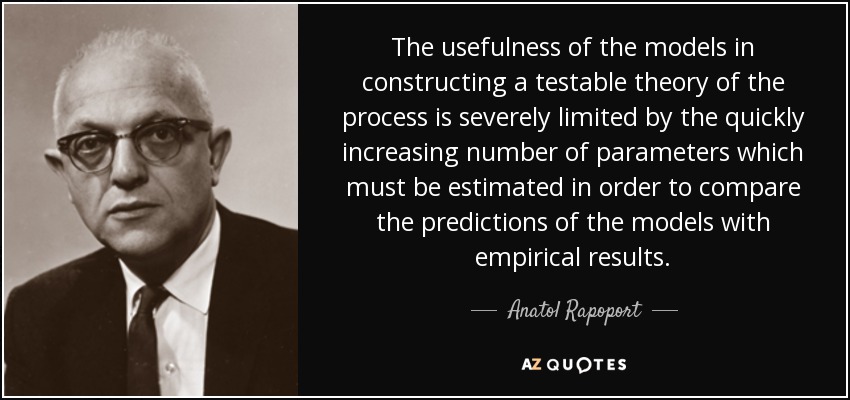
Named after famed game theorist Anatol Rapoport (pictured below), here are his four rules:
You should attempt to re-express your target’s position so clearly, vividly, and fairly that your target says, “Thanks, I wish I’d thought of putting it that way.”
You should list any points of agreement (especially if they are not matters of general or widespread agreement).
You should mention anything you have learned from your target.
Only then are you permitted to say so much as a word of rebuttal or criticism.
Bravo! PS: I discovered Rapoport’s rules in part six of this fascinating blog post by Dr Eiko Fried titled “Antidotes to cynicism creep in academia”.
That is the title of my latest work-in-progress — a compilation of some of my previous blog posts on business ethics, along with some new material. Below is the abstract:
In a brief digression in his best-selling book Capitalism and Freedom, first published in 1962, the late great Milton Friedman famously asserted: “There is one and only one social responsibility of business–to use its resources and engage in activities designed to increase its profits so long as it stays within the rules of the game, which is to say, engages in open and free competition, without deception or fraud.” The Chicago School economist then expanded on this simple idea in a short essay published in 1970, an essay whose provocative title said it all: “The Social Responsibility of Business Is to Increase Its Profits.” As it happens, both Friedman’s 1962 digression as well as his lengthier 3000-word essay invoke the name of the great Adam Smith, but Friedman’s invocation of the Scottish philosopher/political economist begs the question, Is the Nobel laureate’s simple profit-maximization model of business ethics the logical conclusion of Smith’s metaphorical “invisible hand,” or is it a dangerous betrayal of Smith’s true moral ideals? This essay will revisit Friedman’s 1970 essay with this fundamental question in mind.
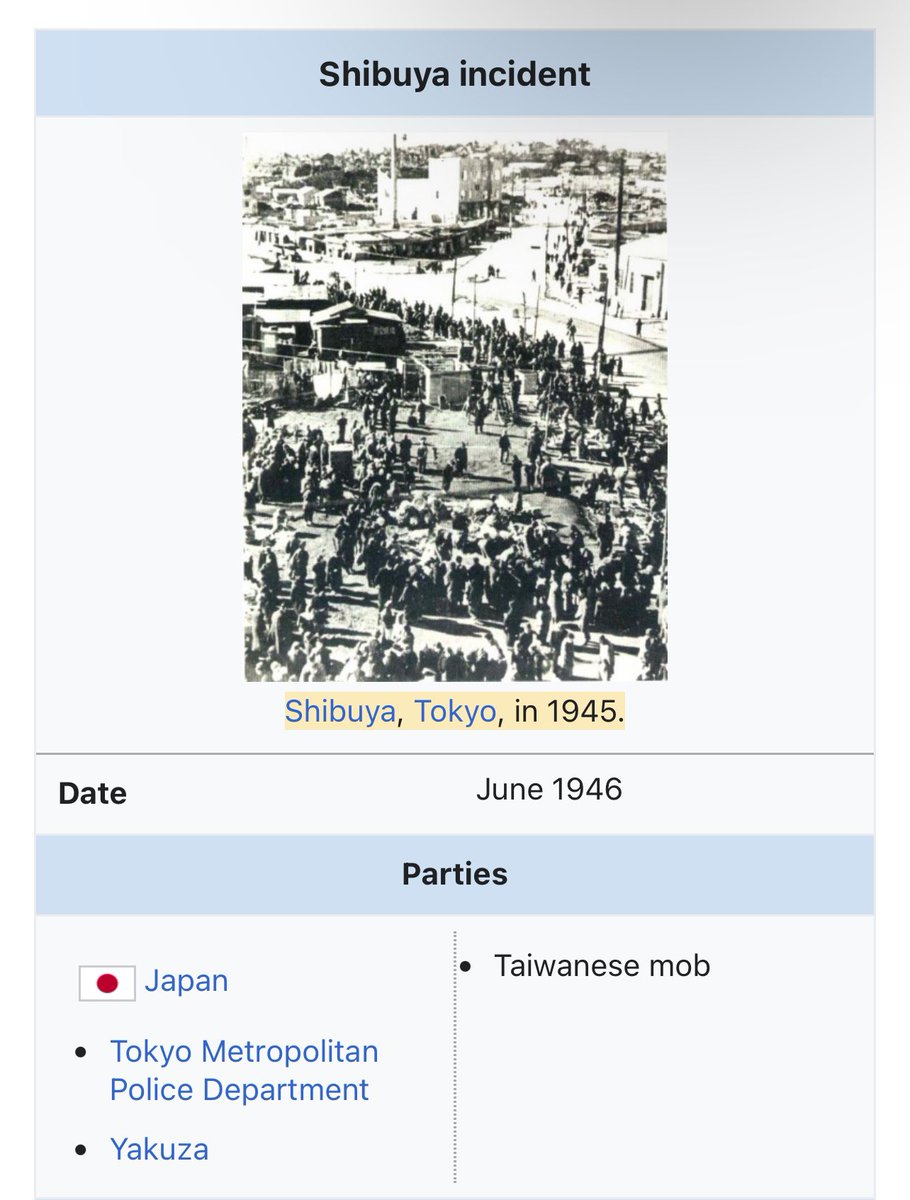
(Not to be confused with the Shibuya incident in Jujutsu Kaisen (呪術廻戦), a manga written and illustrated by Gege Akutami.) Via Wikipedia, links in the original: “The Shibuya incident (渋谷事件, Shibuya jiken) was a violent confrontation which occurred in June 1946 between rival gangs near Shibuya Station in Tokyo, Japan. The years after World War II saw Japan as a defeated nation and the Japanese people had to improvise in many aspects of daily life. In the chaos of the post-war recovery large and very lucrative black markets opened throughout Japan. Various gangs fought for control over them. There were also many non-Japanese “third nationals” in post-war Japan. These “third nationals” or “third-country people” were former subjects of the Empire of Japan whose citizenship then transferred to other countries like China and Korea. The Shibuya incident involved former Japanese citizens from the Japanese province of Taiwan fighting against native Japanese Yakuza gangs. After the fight, the Chinese nationalist government stepped forward to defend the Taiwanese.”












 prior probability