King for a day …

My previous post contained links to my critique of Cass Sunstein’s essay “Why I am a liberal” as well as links to my review of Philip K. Howard’s new book on Everyday Freedom. But both my critique of Sunstein and my review of Howard beg the question, What am I for? Simply put, if I were “king for a day“, what actions would I propose in order to expand the classical liberal system of natural liberty? So glad you asked! My dream political platform would consist of three simple and common sense planks:

  1. FEDERAL LEVEL. At the national level in Washington, D.C., I would repeal the entire Code of Federal Regulations root and branch … all of it! (If the U.S. Congress is unwilling to do this, perhaps the next president could do so via a global Executive Order. Also, moving forward, any proposed regulation must be approved by both houses of Congress in order to become binding law. That’s how you “drain the swamp”, folks.)
  2. STATE/LOCAL LEVEL. At the State and local levels of government, I would abolish zoning, planning commissions, occupational licenses, etc. once and for all. (If State legislatures are unwilling to take this radical but liberating move, then the courts should step in by striking down zoning laws and occupational licenses as unconstitutional takings. That’s how we create affordable housing and expand economic opportunities to all people.)
  3. STATE & FEDERAL LEVELS. Last but not least, at both the State and federal levels I would abolish income taxes, or what I like to call labor taxes. (Better yet, let’s replace all existing taxes either with a VAT or with a land value tax; i.e. “tax landlords, not labor”!)

Suffice it to say, I will further elaborate on each one of these libertarian proposals in future blog posts.

King for a Day | Top Cat Wiki | Fandom
Posted in Uncategorized | Tagged , , , | Leave a comment

Reflections on Sunstein’s liberalism and Howard’s everyday freedom

For reference, below are links to my four-part critique of Cass Sunstein’s 2023 essay “Why I am a liberal” as well as links to my four-part review of Philip K. Howard’s 2024 book Everyday Freedom: Designing the Framework for a Flourishing Society:

CRITIQUE OF CASS SUNSTEIN’S FAUX LIBERALISM

  1. What is liberalism, and does it matter?
  2. Why Cass Sunstein is a faux liberal (part 2)
  3. The hypocrisy of Cass Sunstein? (part 3)
  4. The ethics of liberalism

REVIEW OF PHILIP K. HOWARD’S EVERYDAY FREEDOM

  1. Howard’s tautology, part 1 of 4
  2. Howard’s rhetorical rabbit, part 2 of 4
  3. What Howard gets right, part 3 of 4
  4. What Howard gets wrong, part 4 of 4

FINAL THOUGHTS

Sunstein says he is a “liberal” and against “tribalism”, while Howard says he is for “everyday freedom” and against “red tape”, but in reality — for the reasons I provide in the links above — both are at bottom paternalistic do-gooders who, instead of leaving us alone, want to nudge us in their preferred directions to do x, y, or z (take your pick). Among other things, my critique of Cass Sunstein (especially paragraph #5, quoted below) applies just as much to Howard as it does to Sunstein:

The problem with invoking [‘everyday freedom’] as a value is that all laws, by definition, restrict liberty to a lesser or greater extent, depending on the evil the law is designed to remediate. As a result, the question is not whether [we are] ‘for’ or ‘against’ freedom in the abstract. The real issue instead is, when [are we] prepared to limit the liberty of some actors in order to promote some other important value, such as public health or public safety? Simply invoking a general concept like [‘everyday freedom’] is of no real help when we are called to weigh and make difficult real-world tradeoffs.

Do-Gooder - KVIA
Posted in Uncategorized | Leave a comment

Monday music: *Winter*

Posted in Uncategorized | Leave a comment

Posted in Uncategorized | Leave a comment

What Howard gets wrong: review of Everyday Freedom, part 4 of 4

Note: Below I conclude my four-part review of Philip K. Howard’s Everyday Freedom: Designing the Framework for a Flourishing Society, available here (Amazon).

Previously, we surveyed Philip K. Howard’s three-part critique of modern law: too many rules, too many procedures, and too many rights. But what is to be done? What steps can we take today — short of a revolution or violent overthrow of the existing federal government — to redress these three problems?

It is here, however, where Mr Howard misses the mark. In summary, he proposes three solutions: greater amounts of trust (Ch. 6), greater levels of institutional authority (Ch. 7), and greater involvement in community life at the local level, such as schools, churches, and charities (Ch. 8). Although these solutions may sound great on paper, they are wishful thinking for the following reasons:

  1. Greater amounts of trust. Put aside the most obvious objection to this point: how do we measure “trust”, and how do we know whether the overall level of trust is falling or rising? Another problem with Howard’s “trust” argument is this: he fails to recognize that there is an optimal level of distrust in any human activity, whether it be politics, business, or even love. Yes, trust is a good thing, but if you always trust other people to do the right thing, you will be rolled over sooner or later.
  2. Greater levels of institutional authority. What does Howard really mean when he calls for “greater levels of institutional authority”? Simply put, this fancy jargon is just a euphemism for rolling back unions and labor rights: Specifically, Howard wants to make it easier for employers to fire their employees without having to risk any legal consequences. In fairness to Howard, he might be right about this. The problem, however, is that his call for greater levels of institutional authority (i.e. for making it easier to fire workers) is an inconsistent and possibly hypocritical one. After all, why do federal judges have guaranteed lifetime tenure? If job security — i.e. lifetime tenure — is good for judges (and professors, I might add), then why isn’t it also good for the rest of us?

  3. Greater involvement in community life. Last but not least, Howard calls for greater “community responsibility and social cohesion” (p. 73). Again, let’s put aside the most obvious objection to this point: how do we measure “community life”, and how do we know whether the overall level of participation in community activities is falling or rising? (Case in point: Howard selectively cites Robert Putnam’s Bowling Alone but fails to cite Professor Putnam’s more recent follow-up book Upswing.) Does going to a rock concert count as a community activity, for example? What about trout fishing or horseback riding with friends?

But the biggest problem by far with these supposed solutions is that it is unclear at best what impact they might have on the overall level of human freedom. They might even end up reducing freedom, for Howard sounds more like a paternalistic boomer than a classical liberal champion of natural liberty, especially in the last four chapters of his book, where he tries to nudge us to go to church more often or coach Little League games. While I agree those are worthy activities, my larger critique of Howard’s brand of paternalism is this: you can’t have it both ways: you can’t say you’re for “everyday freedom” in some cases but not in others, such as the freedom to retreat from civic life or the freedom to focus on other less civic-minded pursuits.

Neera Badhwar on Sarah Conly on Paternalism | What's Wrong?
Posted in Uncategorized | 3 Comments

What Howard gets right: review of Everyday Freedom, part 3 of 4

Note: Below I review Chapter 5 (pp. 36-52) of Philip K. Howard’s Everyday Freedom: Designing the Framework for a Flourishing Society, available here (Amazon).

In a previous post, I summed up Philip K. Howard’s three-part critique of modern law, a critique that first appears in Chapter 3 of his beautiful new book Everyday Freedom: too many rules, too many procedures, and too many rights. In Chapter 5, which picks up where Chapter 3 leaves off, Mr Howard elaborates on each one of these points and makes a number of valid points:

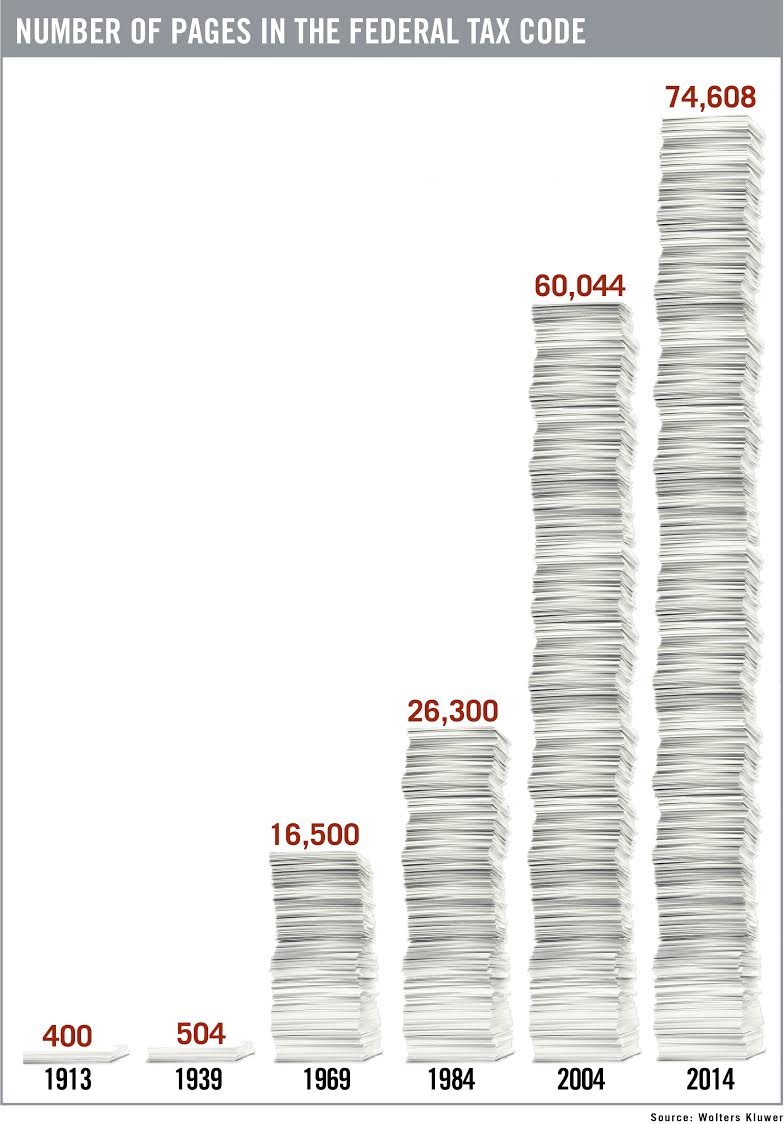
  1. Too many rules. Howard not only denounces the sheer volume of rules and regulations that are currently on the books — in the domain of federal regulation alone, for example, there are 150 million words of binding legal requirements (p. 39) — he also explains why legislatures and public agencies are motivated to produce so many rules in the first place: the desire for certainty or, in Howard’s own words, “the quest for clear law” (p. 37). Ironically, however, as Howard himself correctly notes, the greater the number of laws, the greater the amount of legal and regulatory uncertainty, since many of these rules are contradictory and since no one can “know” with any degree of certainty what the law is.
  2. Too many procedures. Additionally, Howard correctly points out just how time-consuming and expensive it is to get one’s day in court — the culprit here being Byzantine procedural rules — so expensive and so time-consuming that the right to a jury trial — our greatest constitutional right of all, I might add — is all but illusory. Again, Howard’s critique is spot on.
  3. Too many rights. Last but not least, Howard bemoans what one legal scholar (Jamal Greene) calls “rightsism“: the proliferation of legal rights and “protected categories” (p. 45) that began in the 1960s and continues unabated. Why is this so-called “rights revolution” such a bad thing? Because, as Howard correctly notes, rights are invoked strategically by litigious plaintiffs attorneys and so-called “public interest” groups in order to “weaponize[] law” (p. 46) in one of two ways: either to extort money payments from business firms or to bypass legislatures to get courts to impose their preferred public policy outcomes.

Although Howard’s three-part critique of modern law is on point, his proposed prescription or medicine for these ills is off the mark. Stay tuned! I will explain why — as well as conclude my review of Everyday Freedom — in my next post …

The Regulatory Burden in the U.S. is a Whopping $4 Trillion
Posted in Uncategorized | 2 Comments

Howard’s rhetorical rabbit: review of Everyday Freedom, part 2 of 4

Note: Below I review Chapter 4 (pp. 24-35) of Philip K. Howard’s new book, Everyday Freedom: Designing the Framework for a Flourishing Society, available here (Amazon).

In my previous post, I restated Philip Howard’s tautological definition of freedom (“People must have ‘everyday freedom’, by which I mean the individual authority … to act as they feel appropriate, constrained only by the boundaries of law and by norms …“), and I then posed the following key question: where should such boundaries be drawn? For his part, Mr Howard finally gets around to addressing the line-drawing problem in Chapter 4 of his book, so without further ado, here, in his own words, is Howard’s three-part answer:

  1. Law should define boundaries safeguarding against unreasonable acts and enclosing an open field of freedom on which people can interact without fear of abuse or legal ramifications;
  2. The legal boundaries should be defined mainly using broad principles, not detailed rules;
  3. Law should restore clear lines of authority to interpret and enforce these legal principles. When norms are in flux, someone in authority must draw the line.
Howard 2024, p. 27

Alas, this supposed framework, to borrow a British idiom, is too clever by half, for instead of actually answering my line-drawing question, Mr Howard merely restates it! Simply put, he pulls out another rhetorical rabbit from his grab-bag of sophistic tricks. Take, for instance, item #1: “law should define boundaries …” (p. 27). Yes, but where? Specifically, what is “unreasonable”? Or item #3: “someone in authority must draw the line” (ibid.). Again, same reply: yes, but where? Circular reasoning, anyone?

Worse yet, putting aside Mr Howard’s tautological attempt to sidestep or avoid the all-important line-drawing problem, a strong case can be made that the remaining item on his list — item #2 — is flat-out wrong. In his excellent book Simple Rules for a Complex World, for example, Richard A. Epstein explains why simple rules are better than general standards. Alas, Mr Howard not only fails to cite Professor Epstein’s work; he also fails to engage with Epstein’s “simple rules” argument, let alone refute it, in any meaningful way.

Despite these glaring weaknesses, Howard does make some excellent points in the next chapter of his book, Chapter 5, which I shall review in my next post…

No photo description available.
Posted in Uncategorized | 1 Comment

Howard’s tautology: review of Everyday Freedom, part 1 of 4

Although Philip K. Howard’s new book, Everyday Freedom: Designing the Framework for a Flourishing Society, is a slim work (for the record, it is just 84 pages long, not including the endnotes and acknowledgments, so it is even shorter than John Stuart Mill’s classic On Liberty; see here, for example), Everyday Freedom is worth reading because it contains many important ideas. Today, I will review the first part of Everyday Freedom, i.e. up to page 23, starting with the introduction.

After sharing an anecdote about a public school teacher, Mr Howard formulates his clear and bold thesis in the introduction to his book: “People must have ‘everyday freedom’, by which I mean the individual authority … to act as they feel appropriate, constrained only by the boundaries of law and by norms set by the employer or other institution” (p. 5). Alas, while this formulation certainly sounds beautiful, it is a totally tautological or circular one, for it begs the fundamental question: where should the “boundaries of law” (and of norms, for that matter) be drawn? John Stuart Mill, for example, used the concept of harm to draw this line. That is, for Mill, people should be free to act however they wish unless their actions cause harm to somebody else. So, as I began reading Everyday Freedom, I asked myself, where will Mr Howard draw his line? What will be his contribution to this age-old question?

It suffices to say that, instead of diving into these key questions straight away, Mr Howard pulls out a veritable sophistic rabbit from his trusty bag of rhetorical tricks. Specifically, he tries to distract his readers with a red herring or non sequitur in Chapter 1 of his book, where he identifies the main foes of freedom — or should I say, the main foes of his conception of freedom. Among these freedom-reducing enemies or scapegoats are “red tape and legal process” (p. 8); “centralized law and regulation” (p. 9); and “modern law” (p. 10). Alas, the logical fallacy here is glaringly obvious: Mr Howard is painting with too broad a brushstroke. Does he really mean all law and all regulation, or just those that are not justified by some consequentialist cost-benefit test or some alternate deontological rule? Also, what would a “decentralized” system of law look like?

Again, Mr Howard switches gears, so to speak. Chapter 2 surveys the main benefits of letting people do what they want, at least within the boundaries of law and norms. Putting aside the pesky line-drawing problem I mentioned above, there are two reasons why freedom is generally good. One is that it creates personal accountability (i.e. what I like to call the freedom to fail or to make mistakes); the other, it allows people to get things done. Agreed: freedom is generally a good thing; the pesky problem is where to draw the line?

The answer to my line-drawing question, however, will have to wait, for in Chapter 3 Howard picks up where Chapter 1 leaves off. Specifically, he identifies three big problems with modern law: too many rules, too many procedures, and too many rights. Okay, now we are getting somewhere, but Howard’s legal diagnosis poses a new question: how much is “too many?” We will have to read on!

Posted in Uncategorized | Tagged , , | 3 Comments

PSA: Is Trump right about NATO?

File under: “Sorry, not sorry!” For the record, according to this NATO Press Release, only one-third of the countries in the NATO alliance are spending at least 2 percent of their GDP on their defense. The remaining two-thirds NATO members are not.

Trump advisers rush to spin 'off the cuff' NATO remarks - POLITICO
Posted in Uncategorized | 2 Comments

Wikipedia Wednesday: Philip K. Howard

I will be reviewing Mr Howard’s new book Everyday Freedom: Designing the Framework for a Flourishing Society in the days ahead; in the meantime, here is his Wikipedia page: https://en.wikipedia.org/wiki/Philip_K._Howard

TOP 5 QUOTES BY PHILIP K. HOWARD | A-Z Quotes
Posted in Uncategorized | Leave a comment